1/16" vs 1/8" Grout Lines: A Technical Guide for Contractors, Distributors & Project Specifiers
Selecting grout joint width is not merely an aesthetic choice — it is a structural, installation, and liability decision.
For contractors, distributors, architects, and developers, choosing between 1/16-inch and 1/8-inch grout joints directly affects:
- Installation tolerance1
- Lippage control2
- Expansion accommodation3
- Long-term durability
- Maintenance cost4
- Project risk exposure
This technical guide outlines the professional considerations behind grout joint width selection in commercial and residential projects.
1. Industry Standards & Minimum Requirements
According to the Tile Council of North America (TCNA) and ANSI A108 guidelines:
- The minimum grout joint for pressed (non-rectified) tile should be no less than 3x the actual variation in facial dimensions.
- Rectified tile may allow narrower joints, but substrate flatness requirements increase significantly.
Specifying 1/16-inch grout lines without accounting for tile calibration and substrate tolerance can increase the risk of:
- Lippage
- Bond failure
- Edge chipping
- Installation disputes
From a B2B perspective, failure risk translates directly into warranty exposure and labor claims.
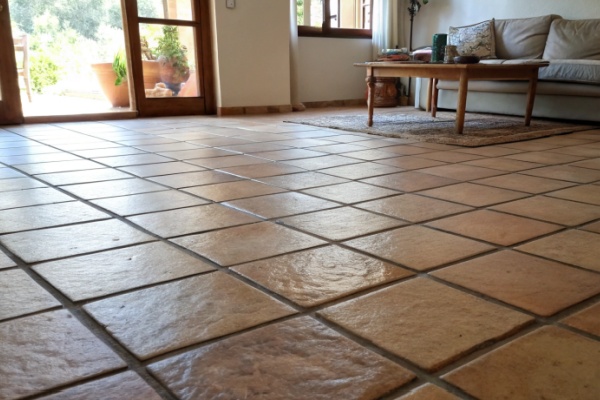
2. Rectified vs Pressed Tile Considerations
Rectified Tile5
- Mechanically finished edges
- Consistent dimensional tolerance
- Suitable for tighter grout joints (1/16") when installed over properly prepared substrate
Pressed or Natural Edge Tile6
- Dimensional variation present
- Requires wider joints (typically 1/8" or greater)
- More forgiving during installation
Distributors and project specifiers should clearly align grout recommendations with tile type to avoid field installation issues.
3. Substrate Flatness7 & Installation Risk
Narrow grout joints require extremely flat substrates.
Industry tolerance standards typically require:
- 1/8" in 10 feet for tiles with narrow joints
- 1/16" in 2 feet for large-format tile
When specifying 1/16-inch grout lines, installers must account for:
- Floor leveling requirements
- Self-leveling underlayment cost
- Extended prep time
- Increased labor precision
Failure to meet substrate tolerances significantly increases callbacks.
For large commercial builds, this risk compounds across square footage.
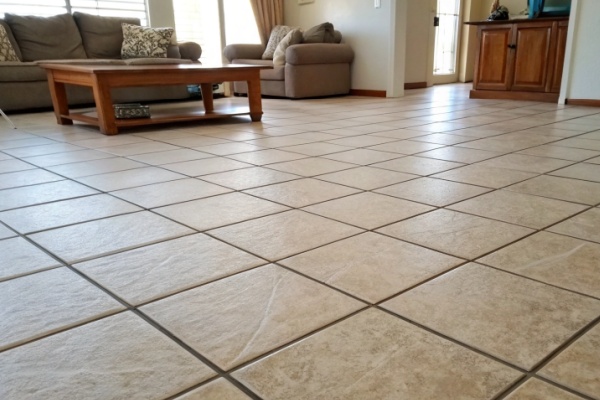
4. Expansion & Movement Accommodation
All tile installations must accommodate:
- Thermal expansion8
- Structural movement
- Moisture variation
While movement joints are separate from grout joints, narrow grout spacing reduces the system's overall flexibility.
In exterior, patio, pool deck, or sun-exposed applications, 1/8-inch or wider grout lines are generally safer for:
- Temperature fluctuation
- Freeze-thaw cycles
- Structural settlement
From a liability standpoint, tighter grout joints increase stress concentration in dynamic environments.
5. Maintenance & Lifecycle Cost Analysis
Grout width impacts long-term maintenance considerations.
1/16-Inch Grout Lines
Advantages:
- Reduced grout surface exposure
- Cleaner visual continuity
Risks:
- Higher crack sensitivity
- More difficult spot repair
- Less tolerance for substrate shift
1/8-Inch Grout Lines
Advantages:
- Better stress distribution
- Easier grout replacement
- Improved slip resistance in wet areas
Risks:
- Larger cleaning surface
- More visible grid appearance
For commercial projects, ease of long-term maintenance often outweighs minimal aesthetic differences.

6. Labor Cost & Installation Efficiency9
In high-volume projects, grout joint width affects labor efficiency.
1/16-inch joints require:
- Higher installer precision
- Longer layout time
- Increased alignment control
- Potential additional leveling systems
1/8-inch joints provide:
- Faster placement tolerance
- Reduced rework
- Lower probability of visible alignment error
For general contractors and developers managing schedule pressure, wider grout lines often reduce installation variability.
7. Application-Based Recommendations
High-Traffic Commercial Floors
Recommended: 1/8-inch minimum
Reason: Improved durability and stress distribution
Wet Areas (Showers, Kitchens, Pool Surrounds)
Recommended: 1/8-inch or wider
Reason: Improved water accommodation and slip resistance
Vertical Accent Walls
Recommended: 1/16-inch (rectified tile only)
Reason: Controlled aesthetic environment with lower structural stress
Exterior Installations
Recommended: 1/8-inch minimum
Reason: Temperature and structural movement tolerance
8. Risk Exposure & Warranty Considerations10
From a B2B perspective, grout joint decisions affect:
- Installer liability
- Product performance perception
- Developer warranty claims
- Long-term brand reputation
Over-specifying narrow grout lines for visual effect can increase:
- Callbacks
- Edge damage complaints
- Grout cracking claims
Clear technical guidelines reduce field conflict and protect all parties in the supply chain.
9. Strategic Recommendation for Distributors & Specifiers
To reduce installation disputes and improve project outcomes:
- Align grout width with tile calibration tolerance
- Provide written spacing guidelines with each SKU
- Educate contractors on substrate flatness requirements
- Recommend minimum 1/8-inch for non-rectified products
- Clarify interior vs exterior spacing standards
Technical clarity strengthens distributor credibility and minimizes downstream issues.

Final Consideration: Aesthetic Preference vs Structural Performance
While 1/16-inch grout lines create a sleek, contemporary aesthetic, they demand higher installation precision and stricter substrate control.
1/8-inch grout lines provide improved installation tolerance, reduced risk exposure, and stronger lifecycle durability — particularly in commercial and exterior environments.
For B2B buyers, the correct grout joint width should be determined by:
- Tile manufacturing tolerance
- Installation environment
- Structural movement risk
- Long-term maintenance expectations
Selecting grout width strategically protects margins, reduces callbacks, and improves overall project performance.
For technical specifications, substrate preparation guidelines, and commercial project consultation, contact our technical support team.
Understanding installation tolerance helps ensure proper tile alignment and reduces the risk of lippage and installation disputes. ↩
Controlling lippage is crucial for achieving a smooth tile surface and preventing trip hazards, especially in high-traffic areas. ↩
Expansion accommodation prevents tile cracking and bond failure due to thermal and structural movements, ensuring long-term durability. ↩
Grout width impacts cleaning and repair efforts, influencing the long-term maintenance cost and appearance of tile installations. ↩
Rectified tiles offer precise edges, allowing for tighter grout joints and a sleek finish, ideal for modern designs. ↩
Understanding the characteristics of pressed tiles helps in selecting the appropriate grout width for easier installation and stress distribution. ↩
Ensuring substrate flatness is key to preventing lippage and ensuring a successful tile installation, especially with narrow grout lines. ↩
Thermal expansion can cause tiles to crack or debond if not properly accommodated, making it a critical consideration in tile projects. ↩
Choosing the right grout width can optimize labor costs and installation efficiency, crucial for large-scale projects. ↩
Understanding warranty implications helps in making informed grout width choices, reducing liability and protecting brand reputation. ↩