Mosaic Series
The Flexible Stone Mosaic Series combines the natural beauty of real stone with the versatility of lightweight flexible stone technology. Designed with intricate mosaic patterns and modular formats, this collection offers a sophisticated solution for creating eye-catching feature walls, backsplashes, shower surrounds, columns, and decorative architectural surfaces. Unlike traditional stone mosaics, flexible stone mosaics are significantly lighter, easier to install, and adaptable to both flat and curved surfaces. The natural stone texture delivers an authentic appearance while reducing transportation, installation, and structural costs. Available in a variety of colors, patterns, and finishes, the Mosaic Series enables architects, designers, contractors, and distributors to achieve distinctive aesthetics without compromising performance.
Showing 5 products
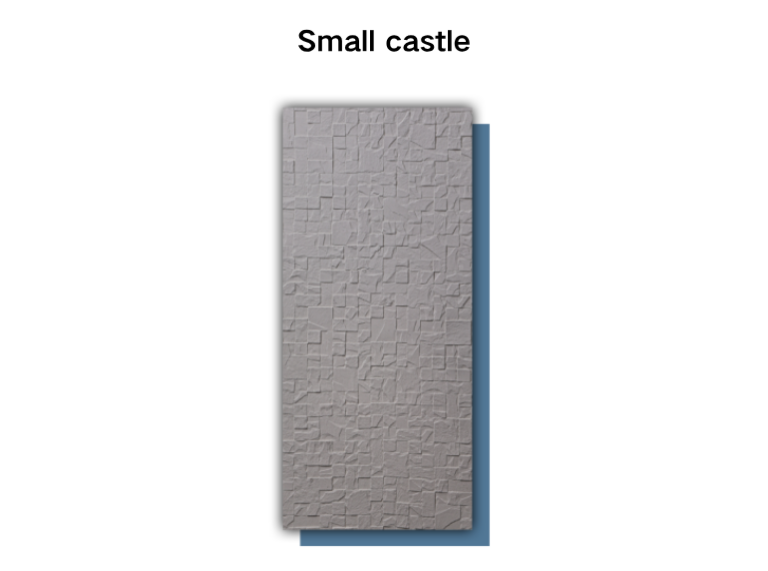
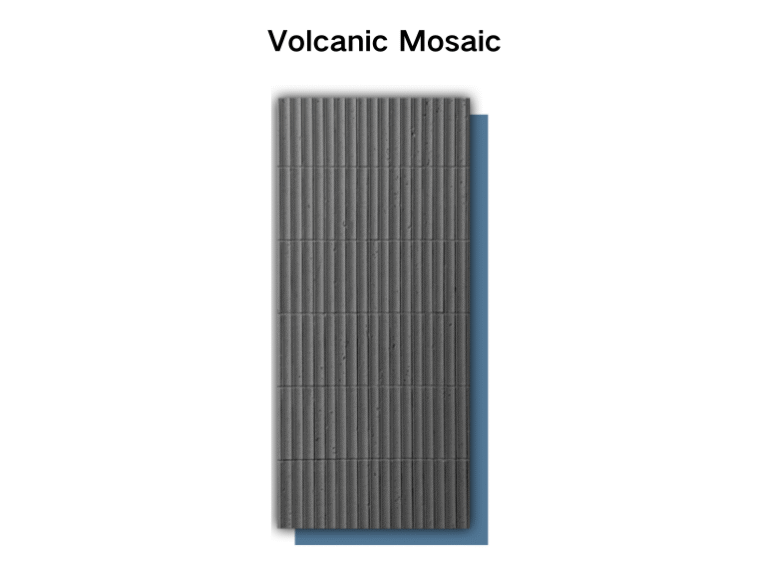
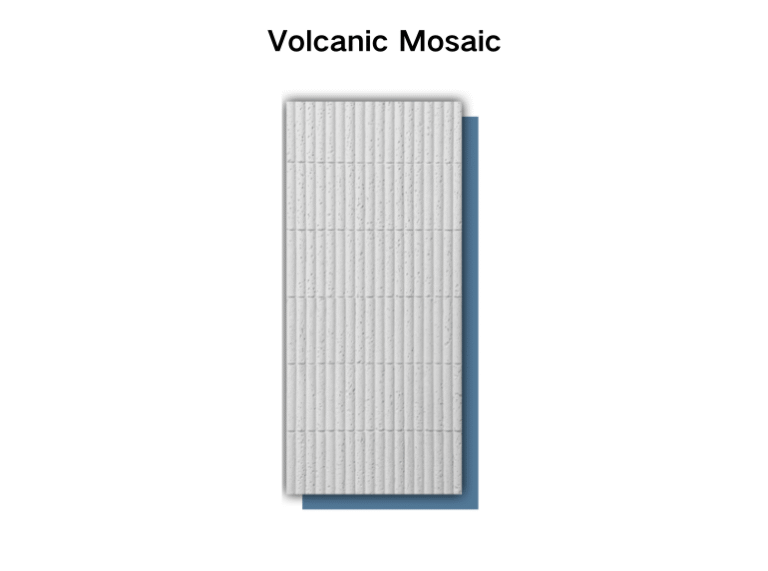
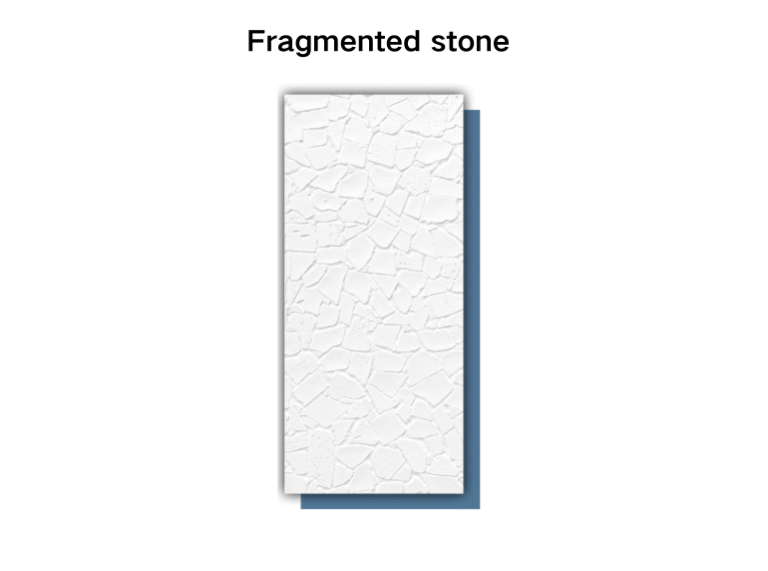
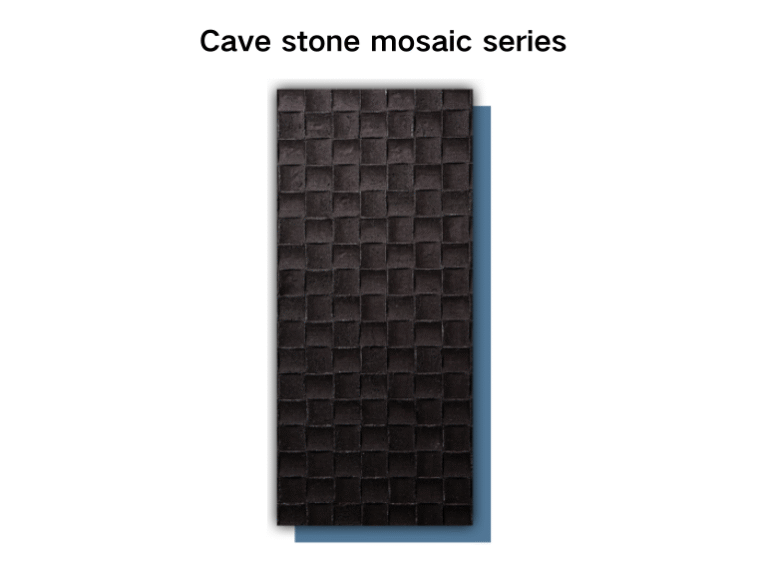
About Mosaic Series
Flexible Stone for High-Rise Buildings: The Complete Architectural and Engineering Guide
Flexible stone represents a paradigm shift in modern architecture. By combining natural stone aggregate with advanced polymer bonding agents, this innovative material delivers the authentic texture, color, and grandeur of traditional stone while possessing the unique ability to bend, curve, and flex. As a leading flexible stone supplier and manufacturer, we engineered this technology to overcome the weight and rigidity limitations that have long restricted natural stone applications on tall structures.
The Evolution of Lightweight Facade Materials
Architectural facades have evolved rapidly from heavy, load-bearing masonry to lightweight engineered systems. High-rise construction demands materials that reduce mass without sacrificing aesthetics or durability.
Traditional Masonry: Heavy, thick, and structurally demanding.
Aluminum & Glass: Lightweight but often lack architectural warmth and variety.
Flexible Stone: The ultimate evolution—combining the organic beauty of natural stone with the ultra-lightweight, high-performance characteristics of modern composites.
The Structural Challenges of High-Rise Buildings
Designing exterior walls for high-rise buildings introduces severe engineering obstacles that traditional materials struggle to accommodate:
Dead Load Accumulation: Heavy cladding increases the structural mass, requiring massive foundations and reinforced columns.
Seismic Vulnerability: Rigidity increases the risk of cracking, fracturing, and detachment during seismic shifts.
Vibration Resistance: Tall buildings naturally sway; facade materials must possess high vibration resistance to absorb structural movement without failing.
Core Material Composition and Specifications
Our flexible stone is meticulously manufactured to meet stringent global engineering standards, ensuring high performance at extreme elevations.
Performance Metric: Composition
Specification Standard: Natural modified mineral powder + Green polymer binders
High-Rise Benefit: Eco-friendly, UV-stable, and highly durable
Performance Metric: Thickness
Specification Standard: 2 mm to 5 mm
High-Rise Benefit: Minimal profile, maximizing usable spatial footprints
Performance Metric: Weight
Specification Standard: 3 kg/m² to 6 kg/m²
High-Rise Benefit: Reductions in structural dead load by up to 80%
Performance Metric: Fire Rating
Specification Standard: Class A / Class B1 (Project specific)
High-Rise Benefit: High-level fire-resistant performance for tall facades
Performance Metric: Flexibility
Specification Standard: Cylindrical bending radius ≤ 200 mm
High-Rise Benefit: Seamlessly adapts to complex architectural designs
Why Choose Flexible Stone for High-Rise Buildings: Safety and Wind Load Benefits
Meeting Modern Architectural Requirements
Skyscrapers today demand materials that push boundaries without adding unnecessary weight. As a premier flexible stone supplier and manufacturer, we engineered this material to solve the exact structural pressures that modern towers face. High-rise architecture requires a delicate balance of extreme durability, flexibility, and lightweight design. Flexible stone for high-rise buildings: safety and wind load benefits are built directly into the material’s DNA, meeting strict global engineering codes while giving architects complete creative freedom on exterior walls.
Balancing Aesthetics, Safety, and Performance
High-rise projects cannot compromise on looks or safety. Our flexible stone delivers the authentic, premium texture of natural rock while eliminating the inherent dangers of heavy cladding.
Aesthetics: Real stone texture, zero faux look.
Safety: Fire-resistant composition with high vibration resistance against seismic shifts.
Performance: Excellent aerodynamic adaptability that handles extreme high-altitude wind pressure without cracking.
Advantages Over Traditional Cladding Materials
Traditional heavy facade materials introduce significant risk and cost to tall structures. Here is how our flexible stone outperforms standard alternatives:
Performance Feature: Weight
Our Flexible Stone: Ultra-lightweight (~4-5 kg/m²)
Traditional Natural Stone: Extremely heavy (~40-60 kg/m²)
Aluminum Composite Panels (ACP): Moderate (~5-7 kg/m²)
Performance Feature: Wind Load Safety
Our Flexible Stone: High adhesion, zero detachment risk
Traditional Natural Stone: High risk of anchor failure
Aluminum Composite Panels (ACP): Risk of warping under high pressure
Performance Feature: Seismic Response
Our Flexible Stone: Excellent vibration resistance
Traditional Natural Stone: Poor; prone to cracking/falling
Aluminum Composite Panels (ACP): Prone to joint deformation
Performance Feature: Fire Safety
Our Flexible Stone: Class A fire-resistant
Traditional Natural Stone: Non-combustible but cracks
Aluminum Composite Panels (ACP): Variable (core material risks)
Performance Feature: Design Flexibility
Our Flexible Stone: Bends easily on curved surfaces
Traditional Natural Stone: Rigid; requires complex cutting
Aluminum Composite Panels (ACP): Limited natural texture options
By switching to flexible stone, developers significantly reduce structural dead load, streamline installation, and ensure long-term architectural design integrity at high altitudes.
The Ultra-Lightweight Advantage: Reducing Structural Load
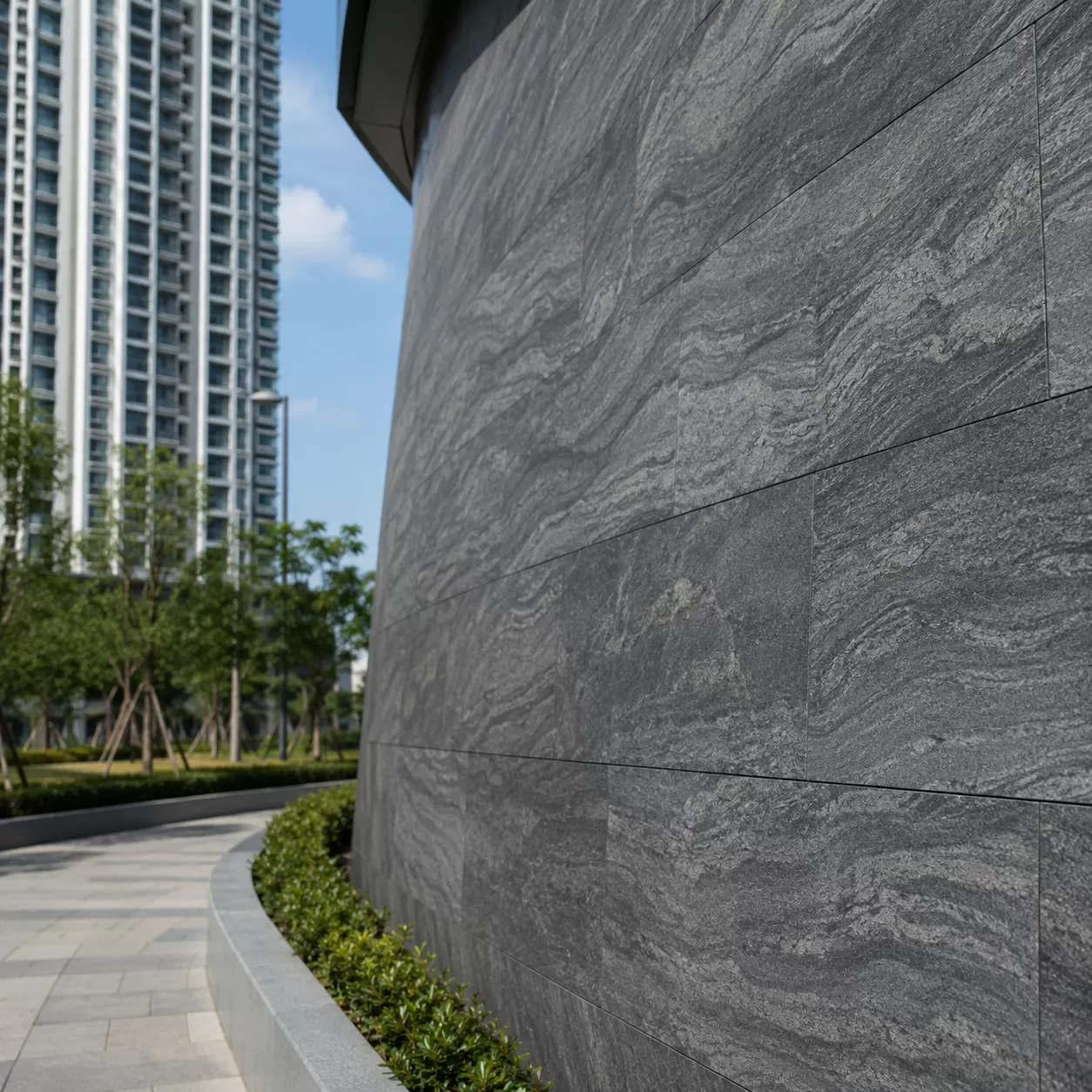
Weight and Thickness Comparison with Traditional Stone
Traditional natural stone cladding is heavy, bulky, and difficult to handle at extreme heights. As a leading flexible stone supplier and manufacturer, we engineered our flexible stone for high-rise buildings to completely eliminate this bulk. It delivers the authentic look and feel of real stone at a fraction of the mass, drastically altering the material profile for exterior walls.
Material Type: Traditional Granite Cladding
Average Thickness: 25mm – 40mm
Average Weight: 70 – 100 kg/m²
Material Type: Porcelain Facade Panels
Average Thickness: 8mm – 12mm
Average Weight: 20 – 30 kg/m²
Material Type: Our Flexible Stone
Average Thickness: 2mm – 8mm
Average Weight: 4 – 6 kg/m²
Minimizing Dead Load in High-Rise Design
Every extra kilogram added to a skyscraper’s exterior forces the internal structure to work harder. By switching from heavy masonry to flexible stone for high-rise buildings, architectural design teams can strip thousands of tons of dead load from the building’s blueprint.
Massive weight reduction: Lightens the facade by up to 95% compared to dimensional stone.
Streamlined engineering: Decreases the size and complexity of internal steel and concrete supports.
Design freedom: Allows for expansive stone aesthetics on soaring exterior walls where traditional stone is physically impossible to install safely.
Reducing Foundation and Structural Costs
Lower structural weight translates directly into massive financial savings. Because our flexible stone minimizes the dead load, engineers can optimize the entire structural framework from the top floor down to the ground.
Substructure savings: Requires far less heavy-duty framing, anchor bolts, and structural steel support systems.
Foundation optimization: Thinner concrete slabs and fewer deep foundation piles are needed to support the tower.
Logistical efficiency: Lighter materials mean faster crane times, cheaper shipping, and reduced on-site labor expenses.
Seismic Performance and Building Movement Mitigation
High-rise structures are built to move, sway, and absorb energy during earthquakes. Rigid, heavy cladding materials perform poorly under these conditions, often cracking or shearing off the backup wall. Our flexible stone provides built-in vibration resistance that adapts to building movement.
High flexibility: Bends naturally with the structural drift and wind-induced sway of tall towers without cracking.
Superior seismic safety: Low mass means the facade generates minimal inertial force during an earthquake, keeping the panels securely attached.
Crack prevention: Easily accommodates thermal expansion and contraction, ensuring long-term durability on complex architectural design projects.
Wind Load Resistance and High-Altitude Engineering
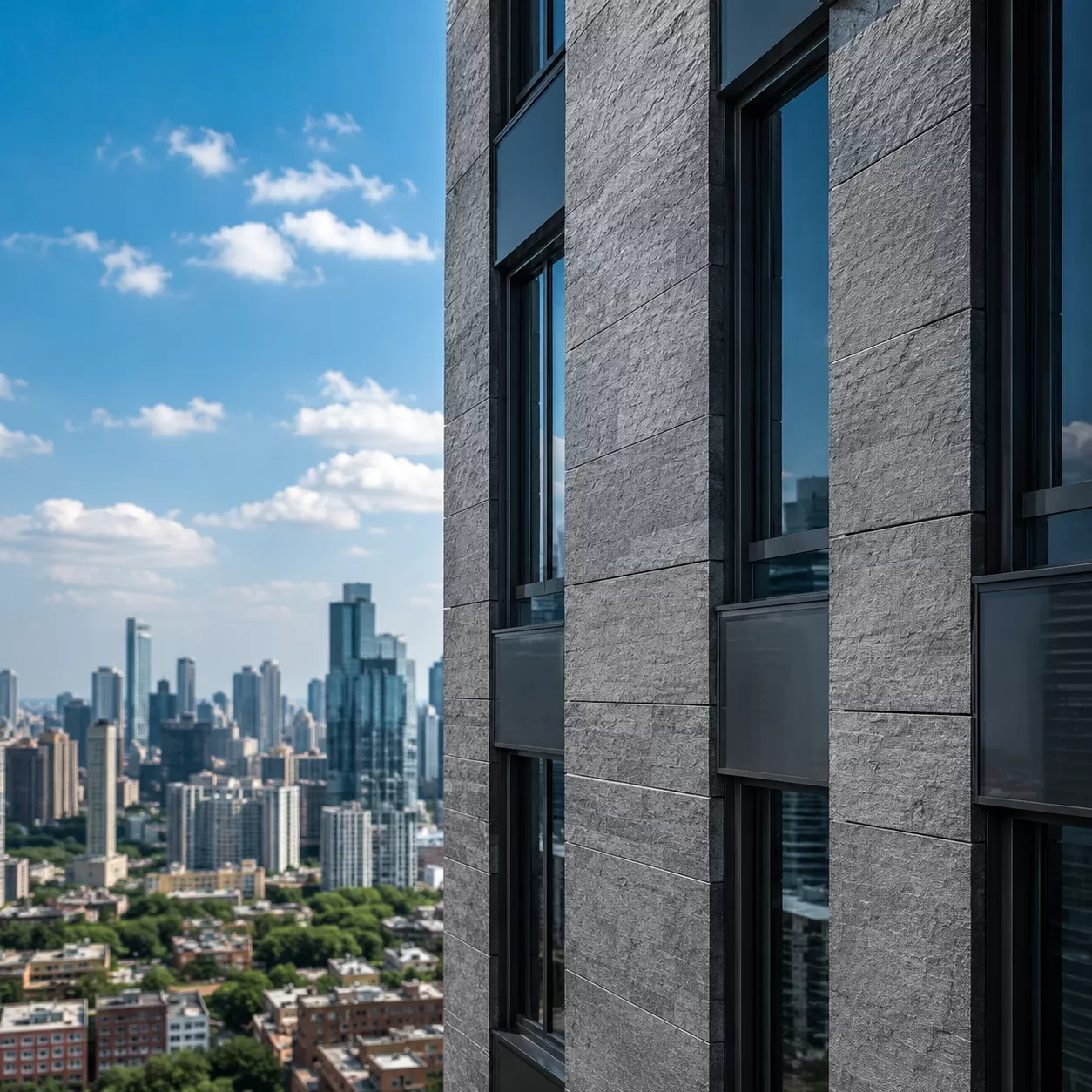
Aerodynamic Performance at High Altitudes
High-rise buildings face intense aerodynamic pressures that increase exponentially with height. Traditional heavy cladding materials alter a building’s profile and create massive drag. As a leading manufacturer, we engineer flexible stone for high-rise buildings to counter these specific forces. Its ultra-thin profile hugs the building substrate, minimizing air resistance and turbulence. By maintaining a sleek aerodynamic footprint, this material reduces the overall wind stress exerted on the skyscraper’s structural frame.
Superior Adhesion and Reduced Detachment Risk
The primary concern for tall structures is facade detachment. Traditional stone tiles rely on mechanical anchors or thick mortar beds that can fail under constant wind cycling. Our flexible stone utilizes advanced full-surface adhesive bonding.
100% Contact Area: Eliminates the hollow spaces found behind rigid tiles.
Vibration Resistance: Absorbs micro-movements and building sway without cracking.
Zero Mechanical Stress: Distributes wind pull-out forces evenly across the entire wall surface.
This continuous bond ensures the material becomes an integral part of the exterior walls, virtually eliminating the risk of falling debris.
Withstanding Extreme Weather and Pressure Changes
Skyscraper facades experience rapid transitions between positive and negative wind pressures. This constant pushing and pulling can cause rigid cladding to fatigue and fail. Flexible stone thrives in these environments due to its inherent elasticity.
Performance Metric: Flexibility
Traditional Stone: Rigid / Brittle
Our Flexible Stone: High Elasticity
Performance Metric: Pressure Tolerance
Traditional Stone: Prone to cracking
Our Flexible Stone: Absorbs pressure changes
Performance Metric: Fatigue Resistance
Traditional Stone: Low
Our Flexible Stone: High (Long lifecycle)
It flexes slightly to absorb sudden pressure drops, ensuring the system remains airtight and structurally intact during severe storms.
Performance in Coastal and Typhoon-Prone Regions
For coastal developments, the combination of high wind loads, salt spray, and torrential rain destroys standard facades. As a dedicated flexible stone supplier, we design our products to survive these harsh realities. The material blocks water penetration while remaining vapor-permeable, preventing moisture buildup behind the facade. It passes rigorous typhoon-level wind load testing, making it the safest, most reliable architectural design choice for high-altitude coastal projects.
Advanced Safety and Fire Performance Compliance
When engineering high-rise buildings, safety cannot be compromised. As a premier flexible stone supplier and manufacturer, we design our materials to meet the absolute highest standards for fire retardancy and structural security on exterior walls.
Fire-Rated Technology and Retardancy Standards
Our flexible stone products are engineered with non-combustible inorganic mineral powders and advanced polymer bonding agents. This unique material composition delivers exceptional fire-resistant performance under extreme conditions.
Flame Spread: Achieves Class A fire ratings, preventing flame propagation up the building facade.
Smoke Development: Emits minimal, non-toxic smoke during thermal exposure.
Heat Resistance: Maintains structural integrity without melting or producing flaming droplets.
Eliminating Falling Object Hazards on Tall Facades
Traditional thick stone cladding poses a severe risk of delamination and falling debris due to building movement, seismic activity, or wind shear.
Lightweight Build: Weighing only 3–5 kg/m², it minimizes gravitational pull and kinetic impact risk.
Vibration Resistance: The natural elasticity absorbs structural shifts, preventing cracking or shattering.
High Adhesion: Advanced polymer bonding ensures the material stays permanently fused to the substrate, eliminating public safety hazards at ground level.
Environmental Safety and Non-Toxic Material Standards
Modern architectural design prioritizes both human health and ecological responsibility. Our manufacturing process ensures a clean, sustainable product from production to installation.
Eco-Friendly Guarantee: Our flexible stone is completely free from volatile organic compounds (VOCs), formaldehydes, and heavy metals. It releases zero toxic gasses during installation or in the event of a fire, ensuring total environmental safety for high-density urban environments.
Technical Specifications and Performance Standards for Flexible Stone for High-Rise Buildings
When we manufacture our flexible stone cladding, we engineer it specifically to solve the safety and wind load challenges of high-rise buildings. This material delivers the look of heavy, traditional masonry without the structural risks.
Below are the core technical baselines that make our product the ideal choice for modern exterior walls.
Material Thickness and Weight Ranges
Traditional stone panels impose a massive dead load on a tower’s skeleton. Our flexible stone cuts that weight dramatically, making it easier to handle and vastly safer at high altitudes.
Property: Thickness
Standard Range: 2 mm to 5 mm
Advantage for High-Rises: Ultra-thin profile, saves valuable architectural footprint
Property: Weight
Standard Range: 3.5 kg/m² to 6 kg/m²
Advantage for High-Rises: Reduced structural strain; easier, safer installation
Tensile Strength and Flexibility Performance
High-rise buildings naturally sway and experience intense structural movement. Our flexible stone incorporates advanced backing materials to ensure exceptional vibration resistance, meaning it moves with the building rather than cracking or snapping.
Elastic Modulus: Engineered to absorb structural shifts without shearing.
Flexibility: Can wrap around curved columns and complex architectural design elements without cracking.
Tensile Strength: High resistance to pulling forces, preventing tearing under immense stress.
Water Absorption and Moisture Resistance
High-altitude exterior walls face relentless rain and pressure differentials. Our material acts as a protective shield, preventing water penetration and subsequent freeze-thaw damage.
Water Absorption Rate: < 0.1%, virtually impervious to driving rain.
Moisture Barrier: Prevents efflorescence (unsightly white salt stains) common in traditional masonry.
Freeze-Thaw Resistance: No cracking or blistering after multiple accelerated freeze-thaw cycles.
UV Resistance and Weathering Durability
Sun exposure at high altitudes accelerates the aging of inferior materials. We utilize high-grade natural mineral pigments and UV-stabilized polymers to ensure the facade looks pristine for decades.
UV Color Fastness: Rated Grade 4-5 (no visible fading or yellowing over extended exposure).
Chemical Resistance: Unaffected by acid rain, industrial pollutants, and coastal airborne salts.
Expected Service Life and Warranty Considerations
As a dedicated flexible stone supplier and manufacturer, we back our products with commercial-grade long-term assurances.
Expected Service Life: Designed to match the lifecycle of the building, easily exceeding 30 to 50 years with minimal maintenance.
Fire-Resistant Rating: Meets top-tier international Class A non-combustible standards for high-rise safety compliance.
Flexible Stone vs Traditional Facade Materials
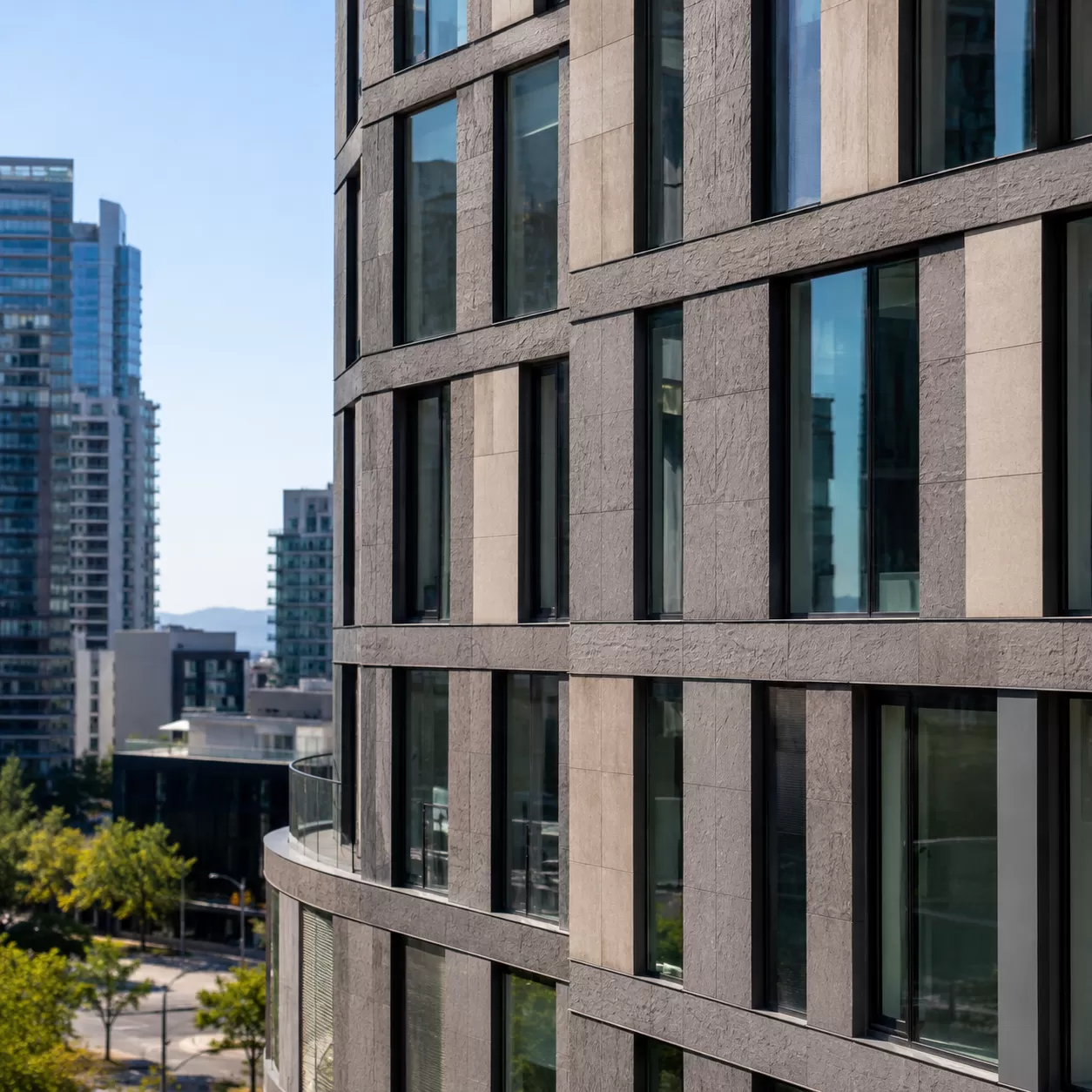
Choosing the right exterior cladding for high-rise buildings comes down to balancing weight, safety, and long-term costs. As a leading flexible stone supplier and manufacturer, we see firsthand how traditional materials fall short under intense real-world conditions. Let’s break down how flexible stone for high-rise buildings stacks up against standard industry options.
Flexible Stone vs Natural Stone Cladding
Traditional natural stone looks premium, but its heavy weight creates massive liabilities at high altitudes.
Weight & Safety: Thick natural stone slabs add immense dead load to exterior walls, requiring heavy-duty mechanical anchors. If an anchor fails, falling debris is catastrophic. Our flexible stone is ultra-lightweight, eliminating gravity-induced safety hazards.
Vibration Resistance: Thick stone is rigid and prone to cracking under structural shifts. Flexible stone offers built-in vibration resistance, bending naturally with building movement without fracturing.
Installation: Natural stone requires heavy cranes, complex engineering, and months of labor. Flexible stone cuts with basic tools and bonds directly to the substrate, saving massive budget on structural support.
Flexible Stone vs Porcelain Panels
Porcelain panels are popular for modern architectural design, but their brittleness poses challenges during high-rise installations.
Feature: Impact Tolerance
Flexible Stone: High; absorbs impacts without shattering
Porcelain Panels: Low; prone to chipping and cracking
Feature: Flexibility
Flexible Stone: Bends around curves and corners easily
Porcelain Panels: Rigid; restricted to flat surfaces
Feature: On-Site Handling
Flexible Stone: Low breakage risk; easy to transport
Porcelain Panels: High breakage rate during transit and installation
Our flexible stone delivers the same premium, stone-like aesthetic as porcelain but eliminates the risk of sharp, shattered shards if the building experiences seismic stress or high winds.
Flexible Stone vs Aluminum Composite Panels (ACP)
Aluminum composite panels offer a modern look, but they carry significant vulnerabilities regarding fire safety and aesthetics.
Fire-Resistant Performance: Many budget ACPs contain combustible core materials that pose severe fire risks on exterior walls. Our flexible stone is inherently fire-resistant, meeting strict international safety codes for high-altitude builds.
Aesthetic Longevity: ACPs can look industrial, dent easily from hail or wind debris, and oil-can (warp) under extreme temperature changes. Flexible stone provides an authentic, textured stone finish that stays perfectly flat and flawless.
Flexible Stone vs Fiber Cement Boards
Fiber cement boards are functional, but they lack the premium appeal and durability required for iconic high-rise developments.
Moisture Absorption: Fiber cement can absorb moisture over time, leading to warping, joint failure, and paint peeling. Flexible stone is highly water-resistant, protecting the underlying structure from driving rain.
Design Freedom: Fiber cement looks flat and artificial. As a specialized flexible stone supplier and manufacturer, we engineer our materials with rich, deep textures that elevate architectural design while maintaining superior wind load safety.
Installation Methods for High-Rise Facades
Substrate Preparation and Adhesive Selection
Getting the base right is non-negotiable for high-rise installations. As a premier flexible stone supplier and manufacturer, we emphasize that the substrate must be completely cured, flat, clean, and structurally sound. Any dust, oil, or unevenness compromises the bond.
For high-altitude applications, standard glues won’t cut it. We use high-performance, polymer-modified structural adhesives specifically engineered for flexible stone for high-rise buildings: safety and wind load benefits. These adhesives provide the necessary elasticity to absorb building movement while ensuring a permanent bond.
Fixing Steps and Joint Design for Wind Resistance
Installing flexible stone at great heights requires a precise, systematic approach to guarantee absolute safety against extreme wind loads.
Adhesive Application: Use a notched trowel to apply the specialized adhesive to both the wall substrate and the back of the flexible stone panel (double-buttering method) to ensure 100% coverage and eliminate air pockets.
Positioning and Pressing: Press the panel firmly onto the substrate, using a rubber roller to smooth out the surface from the center to the edges, securing an immediate, strong tack.
Joint Engineering: Leave a minimum 3mm to 5mm expansion joint between panels. These joints act as pressure-relief valves, letting the facade breathe and flex under intense wind pressure.
Sealing: Fill the joints with high-elasticity, UV-resistant polyurethane sealant to prevent water infiltration while maintaining overall facade flexibility.
Installation on Concrete, Metal, and Insulated Walls
Our flexible stone adapts effortlessly to various exterior walls, making it a favorite for modern architectural design.
Substrate Type: Concrete & Masonry
Preparation Requirement: Must be fully cured; apply a penetrating primer to control suction.
Installation Focus: Direct adhesion with polymer mortar.
Substrate Type: Metal Frame / ACM
Preparation Requirement: Ensure surface is degreased; check structural deflection limits.
Installation Focus: Use high-bonding polyurethane or MS polymer adhesives.
Substrate Type: Insulated Walls (EIFS)
Preparation Requirement: Base coat must be reinforced with heavy-duty fiberglass mesh.
Installation Focus: Ensures a lightweight, fire-resistant exterior finish without overloading insulation.
Quality Control and High-Altitude On-Site Checks
Safety at 200 meters in the air requires strict quality checkpoints. Our on-site protocols focus on eliminating risks before they happen:
Adhesion Pull-Off Tests: Conduct random field trowel tests to verify that the bond strength meets or exceeds engineering specifications.
Open-Time Monitoring: Check adhesive skinning times continuously; never install panels on glue that has begun to dry.
Laser Alignment Checks: Use laser guides to ensure perfect joint alignment, which maintains uniform wind load distribution across the entire facade surface.
Common Installation Mistakes to Avoid
Spot-bonding instead of full-coverage spreading: This creates hollow spaces where trapped air can expand and cause detachment under high vacuum wind pressures.
Ignoring substrate moisture levels: Installing panels on damp walls traps moisture, leading to eventual adhesive failure.
Omitting or narrowing expansion joints: Tight joints lead to buckling when the building experiences natural thermal expansion or structural shifting.
Skipping the rolling process: Simply pressing with hands doesn’t offer the uniform pressure needed for high-altitude vibration resistance. Use a heavy rubber roller every time.
Applications in Commercial and High-Rise Projects
Choosing the right exterior cladding determines a building’s long-term viability, safety, and visual appeal. As a dedicated flexible stone supplier and manufacturer, we engineer premium surfaces specifically optimized for flexible stone for high-rise buildings: safety and wind load benefits. Here is how this innovative material performs across diverse commercial and high-rise developments.
Residential Towers and Apartment Buildings
High-density residential towers require exterior walls that look premium but require zero long-term maintenance. Traditional stone panels put massive structural stress on tall apartment buildings, whereas flexible stone delivers the exact same luxury look at a fraction of the weight.
Vibration Resistance: Prevents cracking during minor structural shifts or high-altitude swaying.
Safety First: Eliminates the risk of heavy stone slabs detaching and falling into crowded public areas below.
Acoustic Comfort: Helps dampen exterior city noise for a quieter indoor living environment.
Hotels and Hospitality Projects
For luxury hotels, the facade is the ultimate branding tool. Our flexible stone offers architects unmatched architectural design freedom to create striking, upscale entryways and soaring exterior features that attract guests.
Key Benefit: Fast installation means shorter construction timelines, allowing hotels to open their doors and generate revenue much sooner than projects using heavy precast concrete or real granite.
Office Buildings and Business Centers
Corporate headquarters demand modern, clean lines and sustainable building materials. Flexible stone panels give office towers a pristine, professional appearance while meeting strict corporate environmental mandates.
Feature: Lightweight Build
Benefit for Office Towers: Lowers the overall building mass, saving money on structural steel.
Feature: High Durability
Benefit for Office Towers: Resists urban pollution, smog, and staining to keep the facade clean.
Feature: Thermal Efficiency
Benefit for Office Towers: Integrates flawlessly with exterior insulation systems to lower energy bills.
Mixed-Use Developments
Mixed-use projects combine retail, dining, and high-rise living into a single footprint. These complex structures require versatile materials that can transition smoothly from a high-traffic retail storefront at ground level to a towering residential facade above.
Uniform Aesthetic: Achieves a seamless look across different structural sections.
Impact Resistance: Tough enough to handle the daily wear and tear of busy retail zones.
Design Variety: Available in diverse textures to differentiate commercial spaces from residential zones within the same complex.
High-Rise Renovation and Retrofitting Projects
Aging high-rise buildings with failing facades present massive safety and engineering challenges. Flexible stone is the ultimate solution for modernization retrofits because it can be applied directly over existing structurally sound substrates like old brick, concrete, or exterior tile.
No Demolition Needed: Saves weeks of messy, loud, and costly teardown work.
Zero Structural Reinforcement: Because the material is so thin and light, old foundations do not need expensive reinforcing to support the new facade.
Fire-Resistant Upgrade: Instantly brings older structures up to modern, stringent fire-resistant safety compliance standards.
Architectural Design Flexibility
As a flexible stone supplier and manufacturer, we design our materials to bend the rules of traditional architecture. Heavy, rigid slabs limit your creativity. Our flexible stone for high-rise buildings provides the safety and wind load benefits required for tall structures while unlocking complete design freedom.
Adapting to Curved and Complex Wall Geometries
Wrapping columns, curves, and organic shapes used to require expensive, pre-cast radius stone. Our flexible stone bends effortlessly to fit complex contours.
No Pre-cutting: Wraps smoothly around sharp corners, columns, and arched exterior walls.
Vibration Resistance: Absorbs structural shifting without cracking on complex geometries.
Flawless Edges: Creates clean, unbroken lines on non-linear architectural designs.
Surface Appearances, Textures, and Global Styles
We match the aesthetic expectations of global markets, replicating the look and feel of premium natural stone without the weight penalties.
Style Category: Classic European
Visual Texture: Travertine & Limestone
Best Market Fit: High-end residential towers
Style Category: Modern Minimalist
Visual Texture: Slate & Raw Concrete
Best Market Fit: Corporate headquarters & business hubs
Style Category: Industrial Chic
Visual Texture: Weathered Sandstone
Best Market Fit: Mixed-use urban developments
Large-Scale Facade Design Possibilities
Achieving a grand, monolithic look on a high-rise is difficult with heavy materials due to joint limitations and structural load.
Massive Formats: Oversized panels create a seamless, continuous visual impact.
Lightweight Handling: Large-scale pieces install quickly at high altitudes without specialized heavy cranes.
Tight Joints: Enables minimal joint spacing for a clean, modern, premium facade look.
Seamless Integration with Modern Building Systems
Our flexible stone integrates perfectly into modern building workflows and prefabricated components.
Curtain Wall Compatible: Bonds directly to unitized curtain wall frames and aluminum composite panels.
Insulation Friendly: Pairs effortlessly with Exterior Insulation and Finish Systems (EIFS) without overloading the substrate.
Smart Prefabrication: Ideal for off-site modular construction, speeding up on-site assembly timelines.
Sustainability and Green Building Benefits of Flexible Stone for High-Rise Buildings
Reducing Material Consumption and Transportation Emissions
As a flexible stone supplier and manufacturer, we design our materials to drastically cut down on environmental waste. Traditional stone cladding requires heavy quarrying and thick cuts, whereas flexible stone uses a fraction of the raw material.
Because it is ultra-thin and lightweight, transportation emissions drop significantly. A single truck can carry up to five times more coverage area than traditional stone, reducing fuel consumption and the overall carbon footprint of high-rise logistics.
Supporting LEED and Green Building Certifications
Using flexible stone for high-rise buildings: safety and wind load benefits goes hand in hand with earning green building credits. Our products directly contribute to LEED v4/v4.1 and other international green building certifications.
LEED Category: Materials and Resources (MR)
Contribution Detail: Environmental Product Declarations (EPDs) and material ingredient optimization.
LEED Category: Indoor Environmental Quality (EQ)
Contribution Detail: Low-emitting materials with zero VOC emissions, ensuring healthy exterior walls.
LEED Category: Energy and Atmosphere (EA)
Contribution Detail: Minimal thermal bridging when paired with modern insulation systems.
Low Environmental Impact Throughout the Building Lifecycle
Our flexible stone delivers a highly sustainable lifecycle for architectural design. From extraction to end-of-life, the material requires low energy to produce and maintain.
Production: Low-heat manufacturing process saves massive amounts of energy compared to traditional ceramics or stone processing.
Operation: Does not require heavy chemical cleaners or intensive maintenance schedules.
Longevity: Features excellent vibration resistance and weathering durability, meaning fewer replacements over the building’s lifespan.
Recyclability and Sustainable Manufacturing
We prioritize circular economy principles in our manufacturing facilities. Our flexible stone composition incorporates recycled clay, natural stone powder, and eco-friendly polymers.
The material is fully recyclable at the end of its life cycle. Leftover scraps from installation can be reprocessed back into production, ensuring a zero-waste loop that protects the environment while delivering high-performance fire-resistant facade solutions for global high-rise markets.
Economic Efficiency and Project Lifecycle Value
Investing in flexible stone for high-rise buildings: safety and wind load benefits are just the start. The real bottom-line value comes from the massive economic efficiency this material brings to large-scale construction. As a leading manufacturer, we design our products to cut unnecessary expenses at every stage of the project lifecycle.
Lower Transportation and Structural Support Costs
Traditional stone cladding requires heavy-duty shipping and massive structural reinforcement. Our flexible stone eliminates these costly requirements.
Freight Savings: Because the material is thin and ultra-lightweight, you can fit significantly more square footage into a single container, slash shipping costs, and reduce fuel consumption.
Lighter Framing: Decks and structural steel don’t need to be over-engineered to hold thousands of pounds of dead load, saving money on raw building materials.
Material Type: Traditional Granite
Average Weight (per m²): 45 – 70 kg
Transport Efficiency: Low (Heavy, bulky)
Material Type: Flexible Stone
Average Weight (per m²): 3 – 5 kg
Transport Efficiency: High (Lightweight, stackable)
Accelerated Project Timelines and Labor Savings
Time is money on a high-rise job site. The ease of handling flexible stone translates directly into faster installation schedules and lower labor overhead.
Fast Application: Crews can apply the material directly to exterior walls using specialized adhesives without complex mechanical anchoring systems.
Fewer Man-Hours: Smaller crews can cover larger surface areas per day compared to heavy pre-cast or masonry teams.
All-Weather Handling: The material is easy to cut and manipulate on-site, minimizing installation delays.
Reduced Installation Equipment Requirements
High-rise construction usually demands heavy cranes, specialized lifts, and reinforced scaffolding to move large stone slabs into place.
No Heavy Cranes: Workers can easily transport rolls or sheets of flexible stone via standard construction hoists or elevators.
Simplified Scaffolding: Lower weight on the exterior staging means safer working conditions and less expensive rigging setups.
Long-Term Maintenance and Facade Longevity
A facade must perform for decades without becoming a financial drain. As a dedicated flexible stone supplier and manufacturer, we engineer our materials for maximum durability and low upkeep.
Vibration Resistance: High-rise structures naturally sway. Our material offers exceptional vibration resistance, meaning it moves with the building rather than cracking or detaching under stress.
Weatherproof & Fire-Resistant: The fire-resistant core protects against elements, while the surface resists UV fading, moisture penetration, and staining.
Minimal Maintenance: No expensive specialized sealing or heavy-duty chemical washing is required over the lifespan of the building, keeping operational costs exceptionally low.
Cost Analysis for High-Rise Facade Projects
Initial Material Costs vs Traditional Stone
When evaluating flexible stone for high-rise buildings, looking only at the price per square meter misses the bigger picture. While the upfront material cost of flexible stone is comparable to high-end porcelain or mid-range natural stone, it eliminates the massive hidden expenses of heavy materials.
As a premier flexible stone supplier and manufacturer, we look at the total project cost. Traditional heavy stone requires thick slabs, complex structural anchoring systems, and heavy-duty fixings that drive up initial procurement budgets. Flexible stone delivers the exact same luxury architectural design without the premium price tag for supporting hardware.
Installation Cost Comparison
Labor and equipment make up a massive chunk of any high-rise budget. Traditional masonry demands heavy scaffolding, cranes, specialized stone cutters, and months of intensive labor. Flexible stone completely changes the math on exterior walls.
Cost Factor: Required Equipment
Traditional Natural Stone: Tower cranes, heavy hoists, specialized brackets
Our Flexible Stone: Standard scaffolding, basic cutting tools, high-grip adhesive
Cost Factor: Labor Speed
Traditional Natural Stone: Slow, stone-by-stone mechanical anchoring
Our Flexible Stone: Fast, direct-glue application with minimal crew
Cost Factor: Structural Engineering
Traditional Natural Stone: High cost for wind load anchors and steel sub-frames
Our Flexible Stone: Low cost; lightweight panels glue directly to substrate
Lifecycle Cost Benefits
The long-term financial performance of a high-rise facade comes down to durability and maintenance. Our flexible stone panels are engineered for extreme weather, offering exceptional vibration resistance that prevents cracking during building settlement or minor seismic shifts.
Zero Risk of Spalling: Traditional stone can crack and detach over time, creating catastrophic liability and repair costs. Flexible stone stays bonded.
Lower Cleaning Costs: The anti-fouling, UV-resistant surface resists dirt buildup, cutting down on expensive high-altitude window-washing and facade-cleaning cycles.
Simple Repairs: If a section is ever damaged, a single lightweight panel can be replaced quickly without dismantling large sections of the facade grid.
Return on Investment for Developers
For developers, time is money. Choosing a fire-resistant, ultra-lightweight facade accelerates the entire construction timeline, leading to a much faster return on investment.
Faster Occupancy: Speeding up the facade installation means handover dates happen months ahead of schedule, unlocking rental and sales revenue sooner.
Structural Savings: Reducing the dead load on the exterior walls allows engineers to downsize the foundation and structural steel requirements, saving millions in raw material costs before the facade is even installed.
Enhanced Marketability: You get a premium, real-stone aesthetic that meets strict international safety codes, maximizing the valuation of the commercial or residential tower.
Project Case Studies and Real-World Applications
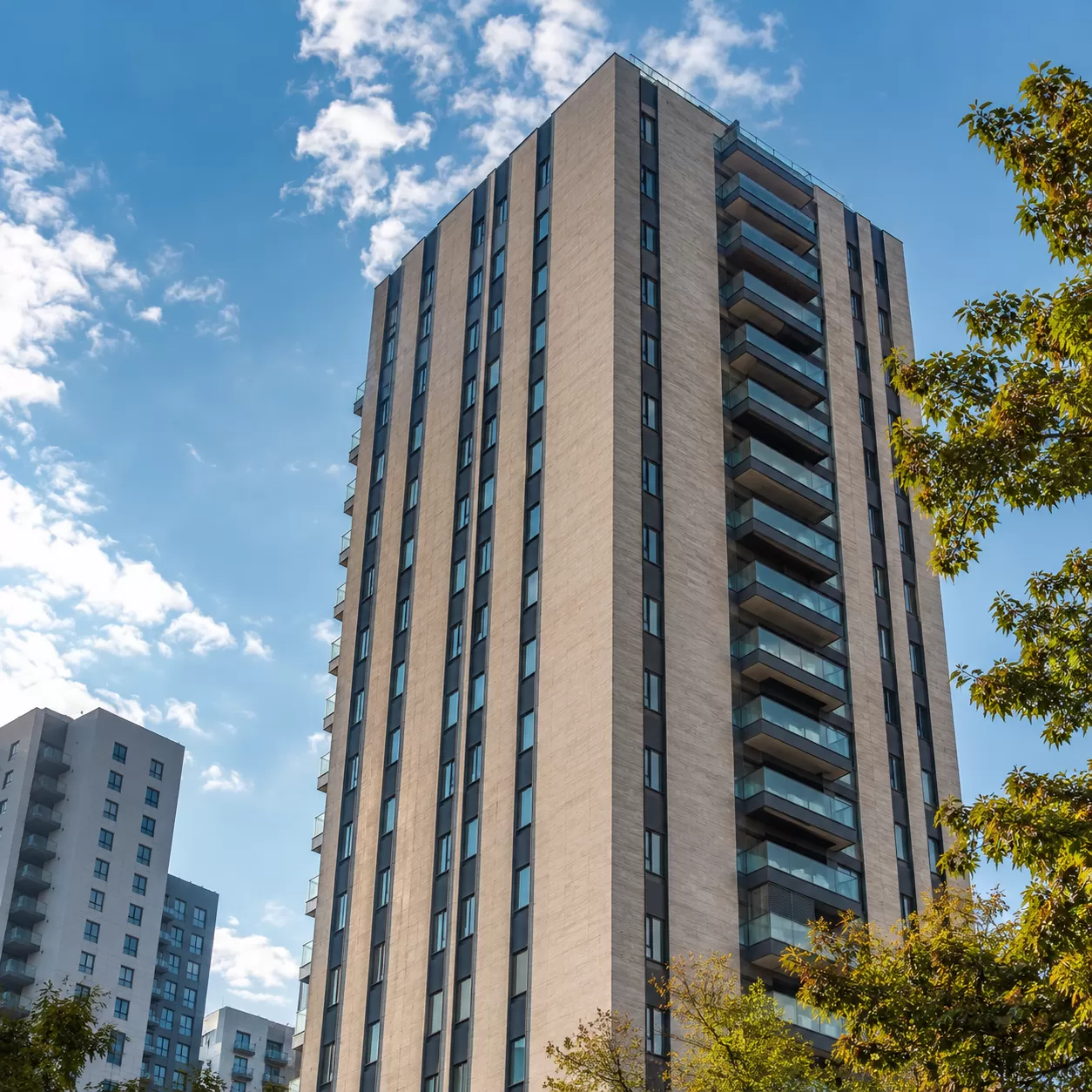
Real-world performance proves why we are a leading flexible stone supplier and manufacturer. Across the globe, architectural designs are transitioning from heavy masonry to smarter, lightweight materials. Below are key examples of how our flexible stone for high-rise buildings provides unmatched safety and wind load benefits.
High-Rise Residential Facade Projects
Project Type: Luxury Apartment Tower
Building Height: 32 Stories (Coastal)
Key Benefit Realized: Zero wind-load damage
High-density residential towers demand long-term durability and safety for tenants below. On a recent 32-story coastal residential project, traditional heavy stone cladding was ruled out due to structural load limits.
By utilizing our flexible stone for high-rise buildings, the project achieved:
Total Weight Reduction: Decreased the exterior wall dead load by over 75%.
Vibration Resistance: The material naturally absorbs micro-seismic shifts and building sways without cracking.
Aesthetic Appeal: Maintained the premium look of natural travertines and slates.
Commercial Tower Applications
Modern office buildings require fast installation and striking exterior walls that withstand high-altitude environments. We supplied flexible stone for a financial center tower featuring a complex, curved podium and a sharp geometric tower facade.
Wind Load Security: Successfully tested to withstand extreme negative pressure at high altitudes.
Simplified Engineering: Eliminated the need for heavy, expensive steel mechanical anchoring systems.
Fire Safety: The certified fire-resistant composition easily met strict commercial building codes for high-occupancy structures.
Frequently Asked Questions
Is flexible stone safe for extreme coastal wind loads?
Yes. Unlike heavy slabs that can catch wind like a sail, flexible stone for high-rise buildings is thin and bonded directly to the substrate with high-strength adhesives. This eliminates the air gap found in traditional rainscreens, significantly reducing the risk of detachment during typhoons or high-velocity coastal winds.
How long does a flexible stone facade typically last on a high-rise?
Our flexible stone is engineered for longevity, typically offering a service life of 25 to 50 years. Because we use UV-resistant pigments and high-grade polymer binders, the material resists fading, chalking, and cracking even under intense high-altitude sun exposure.
Can flexible stone be used for high-rise renovation and retrofitting?
Absolutely. It is one of the best materials for retrofitting. Because it is ultra-lightweight, you can often install it directly over existing old tiles or mosaic finishes. This saves massive costs on demolition, reduces construction waste, and avoids overloading the existing building structure.
Does flexible stone meet international fire safety requirements?
Yes. As a leading flexible stone supplier and manufacturer, we ensure our products meet stringent global standards, typically achieving Class A or B1 fire ratings. It is non-combustible and does not release toxic smoke, making it a safe choice for tall residential and commercial towers.
How does flexible stone compare to porcelain facade panels?
While porcelain is durable, it is brittle and heavy. Flexible stone offers several advantages:
Vibration resistance: It won’t crack during building sway or seismic activity.
Weight: It is roughly 1/4th the weight of porcelain.
Safety: There is zero risk of heavy panels shattering and falling from height.
What maintenance is required for high-rise flexible stone facades?
Maintenance is minimal. The surface is generally self-cleaning with rainwater due to its low static electricity and dirt-resistant coating. For routine checks, a simple pressurized water wash every few years is usually enough to keep the architectural design looking sharp.
Can flexible stone contribute to LEED certification points?
Yes. It supports LEED and green building certifications through:
Reduced carbon footprint in transportation.
Low VOC emissions during and after installation.
Energy efficiency when paired with external insulation systems.
How do I choose a reliable flexible stone manufacturer?
Look for a partner with proven high-rise case studies and comprehensive testing reports. Ensure they provide:
Technical Support: Wind load calculations and adhesive compatibility tests.
Certifications: Fire safety and aging resistance benchmarks.
Quality Control: Consistency in texture and color across large batches.
