Outdoor porcelain tile
What is Outdoor Porcelain Tile & Why Is It Dominating Commercial Landscaping? Commercial-grade outdoor porcelain tile is a highly engineered, vitrified ceramic material fired at extreme temperatures up to 1,200°C. This specialized manufacturing process creates an ultra-dense, non-porous surfacing solution designed to withstand severe environmental stress.
Showing 2 products
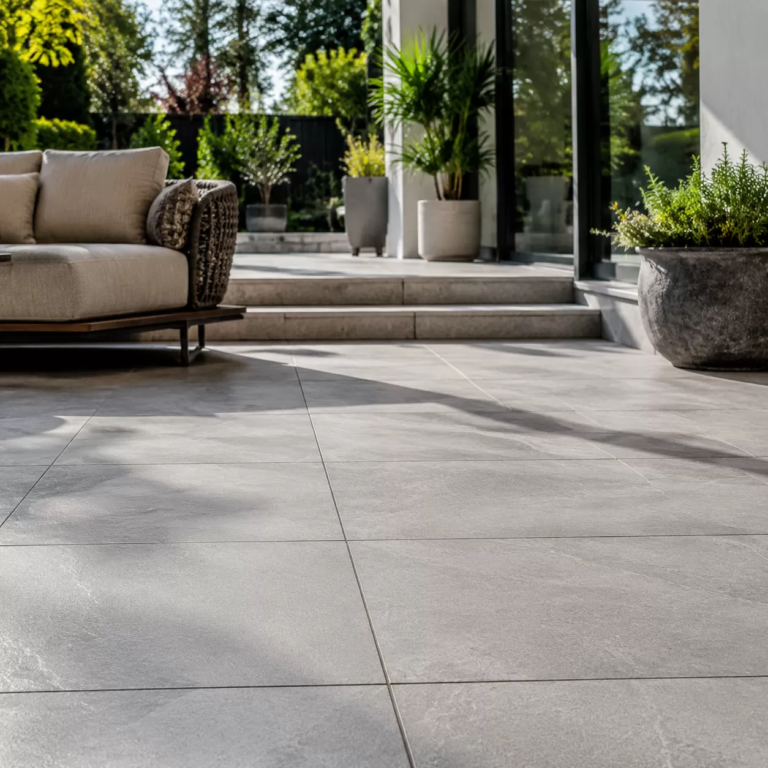
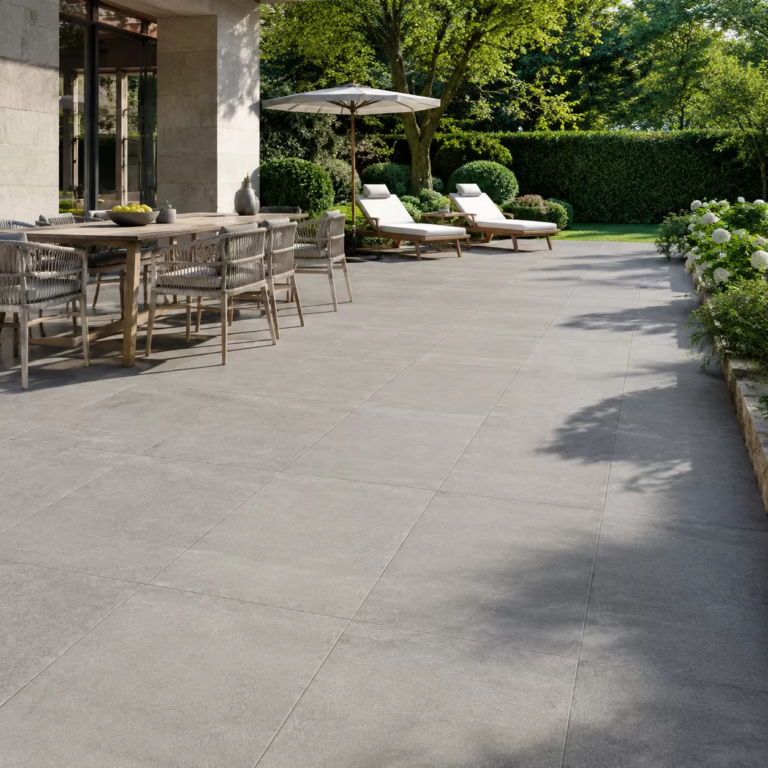
About Outdoor porcelain tile
The Complete B2B Guide to Commercial-Grade Outdoor Porcelain Tile
As a Outdoor Porcelain Tile supplier and manufacturer, we are seeing this material dominate modern commercial landscaping, public plazas, and hospitality architecture. Landscape architects and commercial developers are rapidly replacing traditional concrete and natural stone with porcelain due to its unmatched structural performance, minimal lifecycle maintenance, and superior design flexibility.
Outdoor Porcelain Pavers (20mm/30mm) vs. Standard Exterior Tiles
Understanding the distinction between standard exterior tiles and specialized commercial pavers is critical for structural integrity:
Standard Exterior Tiles (8mm – 12mm): Designed strictly for traditional thin-set adhesive installations over a cured concrete slab. Ideal for residential patios or light-foot-traffic commercial balconies.
Porcelain Pavers (20mm): The industry standard for high-traffic public spaces. Engineered with high breaking strength, these pavers can be dry-laid on grass, gravel, sand, or installed via raised pedestal systems.
Heavy-Duty Pavers (30mm): Advanced structural units engineered specifically for vehicular traffic, public roadways, and industrial urban areas requiring extreme load-bearing capacities.
Specification Feature: Typical Thickness
Standard Exterior Tiles: 8mm – 12mm
20mm Porcelain Pavers: 20mm
30mm Porcelain Pavers: 30mm
Specification Feature: Primary Installation
Standard Exterior Tiles: Adhesive on Concrete
20mm Porcelain Pavers: Dry Lay, Pedestals, Adhesive
30mm Porcelain Pavers: Dry Lay, Heavy Vehicular Mortar
Specification Feature: Breaking Strength
Standard Exterior Tiles: ~1,000 N
20mm Porcelain Pavers: ≥ 13,000 N
30mm Porcelain Pavers: ≥ 25,000 N
Specification Feature: Application Profile
Standard Exterior Tiles: Light Commercial Wall/Floor
20mm Porcelain Pavers: Public Plazas, Rooftops, Pools
30mm Porcelain Pavers: Driveways, Urban Roads, Fire Lanes
Sustainability and Eco-Friendly Credentials (LEED Certification Points)
Specifying commercial-grade porcelain tile aligns directly with global green building standards and contributes significantly to earning LEED (Leadership in Energy and Environmental Design) certification points:
Recycled Content: Manufactured using a high percentage of pre-consumer and post-consumer recycled raw materials.
Solar Reflectance Index (SRI): Light-colored porcelain surfaces offer high SRI values, effectively mitigating the Urban Heat Island effect in dense metropolitan developments.
Low VOC Emissions: Completely inert and free of volatile organic compounds, ensuring zero off-gassing into the surrounding ecosystem.
Longevity & LCA: Exceptional lifespan minimizes replacement cycles, reducing the long-term environmental footprint of the project.
The Technical Specification & Engineering Advantages
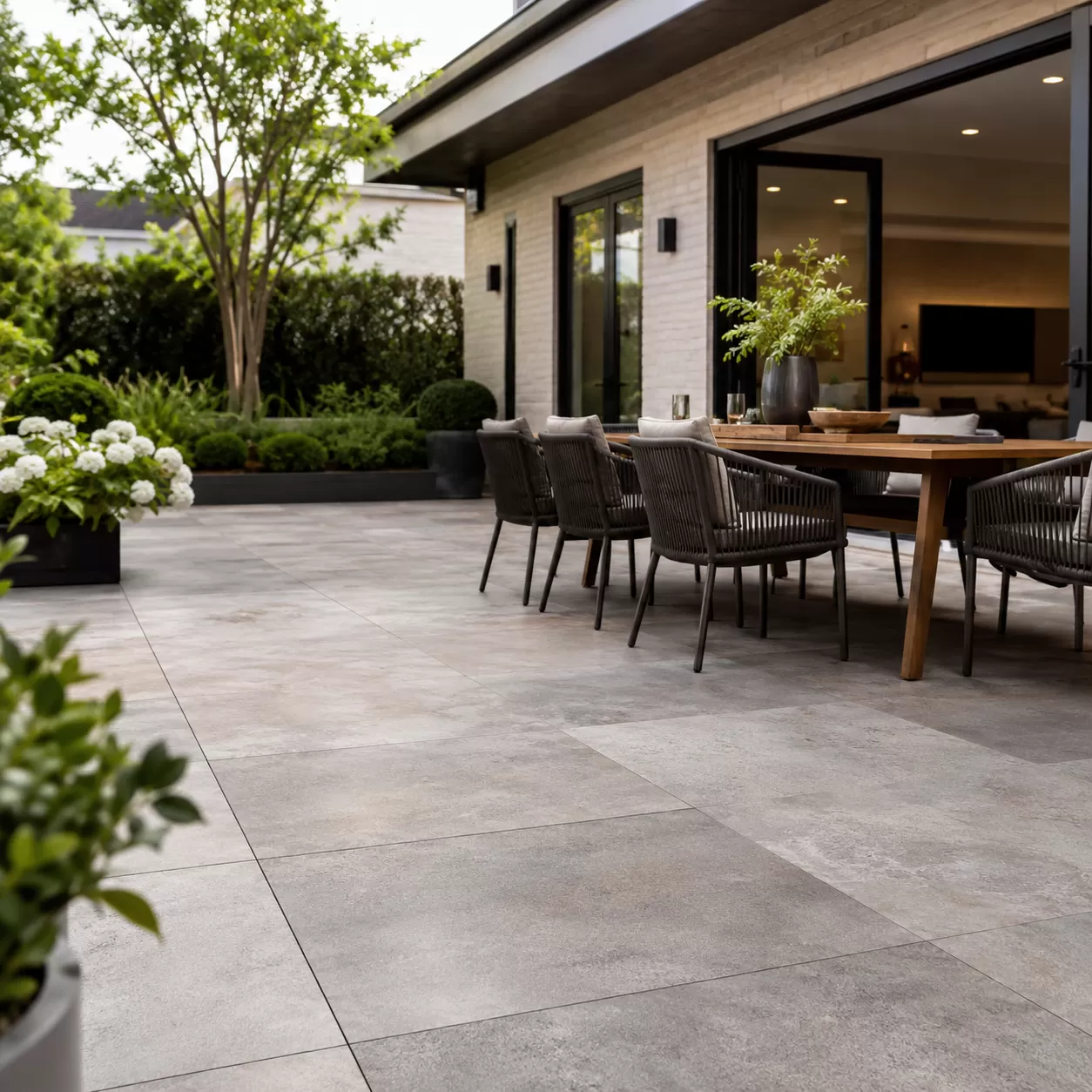
When we talk about commercial-grade outdoor porcelain tile, we aren’t just discussing aesthetics; we are talking about high-level engineering. These tiles are built to survive environments that would shatter standard ceramics or erode natural stone. For B2B buyers, the “spec” is everything—it’s the difference between a project that lasts decades and one that requires a costly rip-out in three years.
Unmatched Durability: Compressive Strength and Load-Bearing Capacity
Our 20mm and 30mm porcelain pavers are engineered for extreme density. Unlike concrete, which can crumble under localized pressure, porcelain handles heavy static and dynamic loads with ease.
Load Bearing: Capable of supporting over 1,000kg per slab (20mm thickness).
Density: Fired at temperatures exceeding 1200°C, creating a vitrified structure that resists cracking.
Application: Ideal for heavy-footfall public plazas and vehicular access areas when installed on a solid bed.
Weatherproof Performance: Freeze-Thaw Resistance and Zero Water Absorption
Water is the enemy of outdoor flooring. Because our exterior tiles have a water absorption rate of less than 0.05%, moisture cannot penetrate the surface.
Feature: Water Absorption
Performance Detail: < 0.05% (Vitrified)
Benefit for Commercial Projects: Immune to frost damage and internal cracking.
Feature: Thermal Expansion
Performance Detail: Minimal coefficient
Benefit for Commercial Projects: No warping or lifting in extreme heat or cold.
Feature: Frost Resistance
Performance Detail: EN ISO 10545-12 compliant
Benefit for Commercial Projects: Perfect for regions with harsh freeze-thaw cycles.
Anti-Slip Safety Ratings: Decoding R-Values and PTV
In public spaces, slip resistance isn’t just a preference—it’s a legal necessity to manage liability. We focus on two primary metrics to ensure our anti-slip tiles meet global safety codes:
R-Values (R11 & R12): This indicates the angle of “slip” on a ramp. For outdoor commercial use, R11 is the standard, while R12 is preferred for high-moisture areas like pool surrounds or inclines.
PTV (Pendulum Test Value): We target a PTV of 36+ in wet conditions, which classifies the surface as having a “Low Slip Potential.”
Chemical, UV, and Stain Resistance for High-Traffic Public Spaces
Public areas face challenges ranging from spilled coffee and oil leaks to constant UV exposure.
UV Stable: Unlike composite decking or dyed concrete, our porcelain won’t fade or “yellow” under direct sunlight.
Stain Proof: The non-porous surface means graffiti, red wine, or motor oil sits on top and can be power-washed away.
Chemical Resistance: Resistant to acids, alkalis, and swimming pool salts, ensuring the finish remains pristine regardless of the cleaning regimen.
Core Commercial Application Scenarios & Project Use Cases
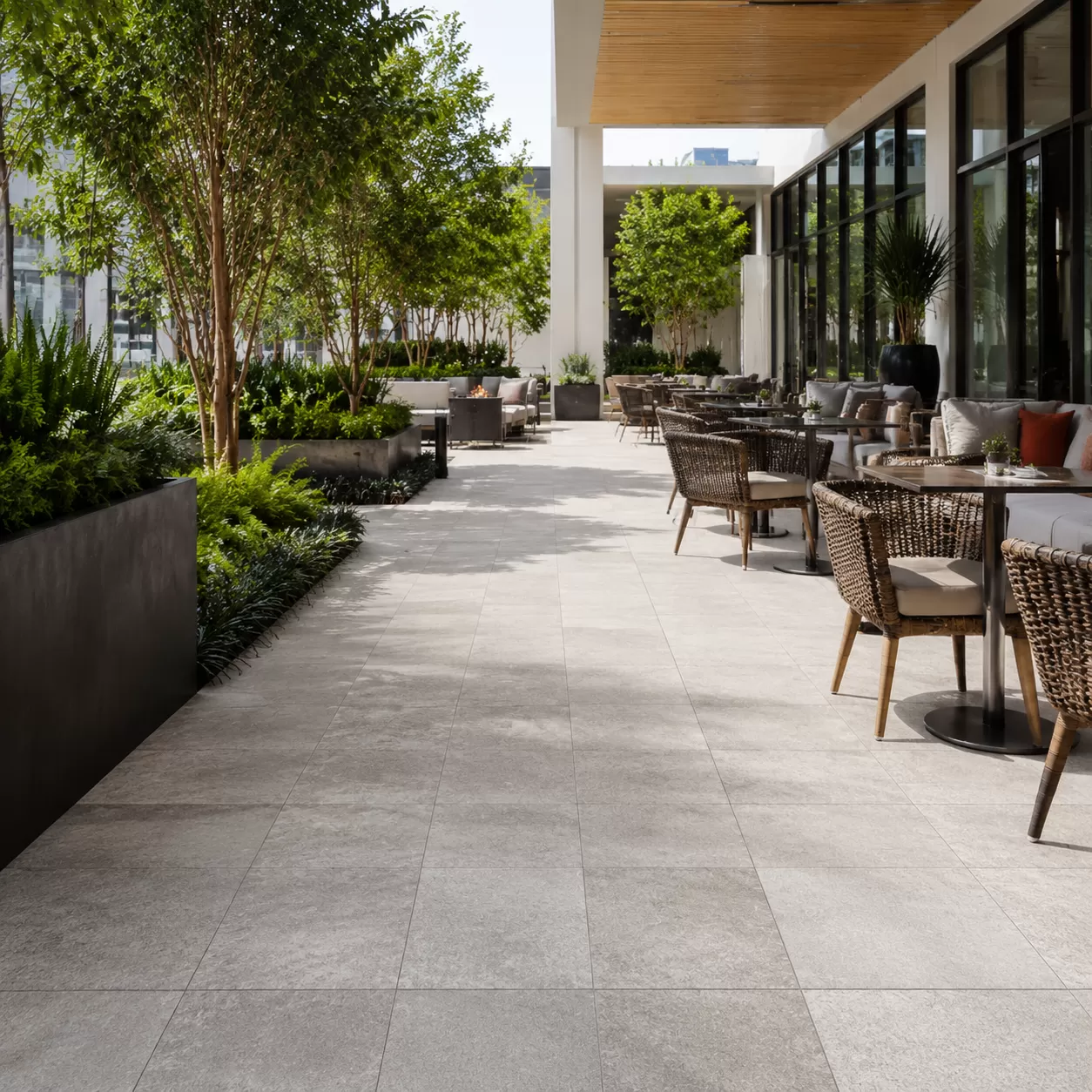
Choosing the right material means matching engineering with real-world foot traffic and architectural demands. As an established outdoor porcelain tile supplier and manufacturer, we build our products to excel across diverse, high-stress commercial environments.
Here is where our commercial-grade outdoor porcelain tile delivers the highest return on investment.
Commercial Patios, Public Plazas, and Urban Walkways
Public plazas and urban walkways face continuous pedestrian traffic, heavy civic equipment, and constant weather exposure. Standard exterior tiles often crack under this pressure, but our heavy-duty porcelain pavers handle the daily grind without shifting or fading.
High Foot-Traffic Tolerance: Resists deep abrasion from heavy shoes, strollers, and skateboards.
Static Load Resistance: Effortlessly supports heavy public furniture, planters, and temporary event staging.
Aesthetic Continuity: Allows architects to seamlessly blend interior lobbies with outdoor public patios.
High-Traffic Driveways, Garages, and Vehicle-Access Areas
Vehicle-access areas require materials with massive load-bearing capacity. When installed over a proper concrete base, our thick exterior tiles easily withstand the weight and torque of moving vehicles.
No Tire Marking: Unlike concrete pavers, porcelain resists black tire rubber stains and hot-tire pickup.
Chemical and Oil Resistance: Motor oil, brake fluid, and de-icing salts will not penetrate or discolor the surface.
Breaking Strength: Engineered to absorb the structural stress of SUVs, delivery vans, and maintenance trucks.
Pool Decks, Wet Areas, and Luxury Hospitality Wellness Centers
Safety and hygiene are non-negotiable for hospitality pools, spa resorts, and public water features. Our specialized slip-resistant textures protect guests while standing up to harsh chemical treatments.
Slip and Fall Mitigation: High-friction surfaces provide secure footing even under standing water.
Chlorine and Salt Proof: The completely vitrified surface will not corrode or pit when exposed to pool chemicals or saltwater systems.
Barefoot Comfort: Engineered to reject extreme solar heat absorption, keeping surfaces cooler under the sun compared to dark natural stone.
Application Area: Plazas & Walkways
Primary Hazard: Heavy foot traffic & stains
Key Product Requirement: High scratch resistance & low maintenance
Application Area: Driveways & Garages
Primary Hazard: Vehicular load & oil spills
Key Product Requirement: Superior compressive strength & chemical resistance
Application Area: Pools & Spas
Primary Hazard: Slip liability & water chemicals
Key Product Requirement: High anti-slip rating & zero water absorption
Outdoor Accent Walls, Facades, and External Cladding Systems
Commercial-grade outdoor porcelain tile isn’t just for underfoot. Large-format porcelain tiles are rapidly becoming the preferred choice for modern building exterior facades and accent walls due to their lightweight durability compared to solid stone slabs.
UV Permanent: Colors will not fade, yellow, or bleach under decades of direct, intense sunlight.
Graffiti and Scratch Resistant: The ultra-dense surface allows for easy removal of spray paint and marker clean-up without damaging the tile.
Weather Shielding: Acts as a highly efficient thermal and moisture barrier for external cladding systems.
Rooftop Terraces, Balconies, and Raised Flooring Projects
Modern urban architecture maximizes vertical space by turning roofs and balconies into functional lounges. Our 20mm and 30mm porcelain pavers are ideal for lightweight raised flooring pedestal systems.
Weight Reduction: Significantly lighter than thick concrete slabs, reducing the structural dead load on the building.
Hidden Services: Raised pedestal systems allow drainage pipes, electrical wiring, and ventilation lines to run cleanly beneath the tile surface.
Instant Access: Individual tiles can be lifted easily for quick roof membrane inspections and routine maintenance.
Advanced Installation Methods for B2B Projects
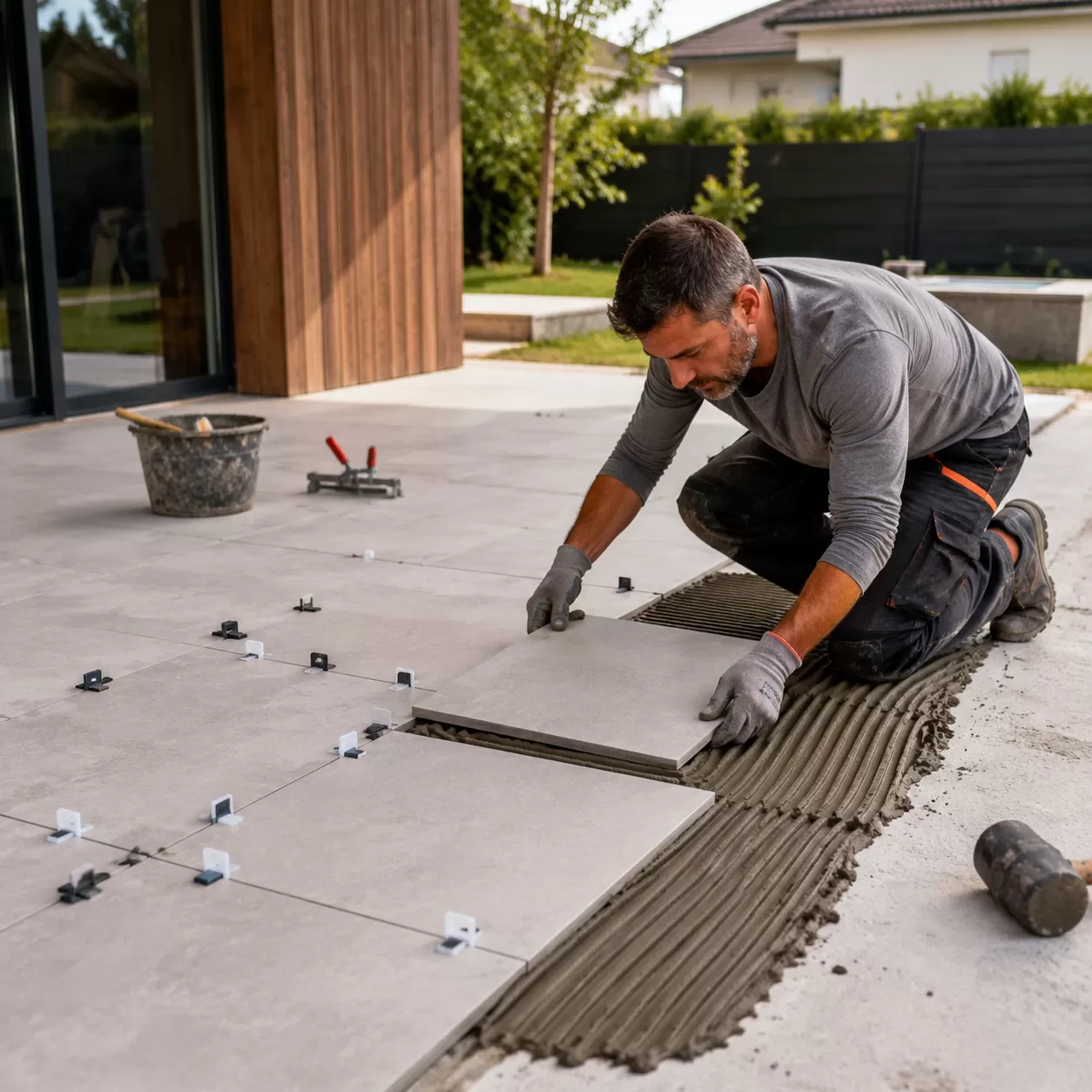
When specifying commercial-grade outdoor porcelain tile for high-traffic or large-scale projects, choosing the right installation method is just as critical as the material itself. As a leading outdoor porcelain tile supplier and manufacturer, we see firsthand how proper execution directly impacts long-term durability and ROI.
Depending on your site conditions, load requirements, and drainage needs, there are three primary engineering methods we recommend for commercial layouts.
Traditional Wet Bed Installation (Adhesive on Concrete Slab)
For permanent high-traffic zones and areas subject to vehicular loads, the traditional wet bed method is the industry standard. This involves bonding exterior tiles directly to a cured concrete slab using high-performance, polymer-modified thin-set mortars.
Best For: Heavy vehicular traffic, public walkways, commercial entryways, and loading zones.
Key Advantage: Offers maximum compressive strength and eliminates tile movement.
Critical Requirement: The concrete base must have a minimum 2% slope for water runoff, and expansion joints must be mirrored precisely through the tile layer to prevent cracking.
Dry Laying on Grass, Gravel, or Sand (For Flexible Landscaping)
Dry laying offers a fast, mortar-free solution for flexible landscaping projects. This method allows porcelain pavers to be set directly onto stable sub-bases, making it ideal for temporary installations or areas where ground shifting is expected.
Substrate: Grass / Turf
Best Used For: Public parks, garden paths, backyard venues
Key Installation Benefit: Instant green integration, easily repositioned
Substrate: Gravel
Best Used For: Large public plazas, perimeter drainage zones
Key Installation Benefit: Superior water permeability, avoids puddling
Substrate: Sand
Best Used For: Beachfront resorts, boardwalk transitions
Key Installation Benefit: Fast leveling, easy access to underground utilities
The Pedestal Raised Flooring System (Plaza & Rooftop Raised Decks)
The pedestal system is a game-changer for modern urban architecture, especially on balconies, rooftop terraces, and uneven public plazas. It involves resting outdoor porcelain tile on height-adjustable polypropylene jacks without any adhesives.
Hidden Utility Routing: Power cables, drainage pipes, and irrigation lines run directly beneath the floor surface, completely hidden from public view but instantly accessible for maintenance.
Flawless Drainage: Rainwater passes straight through the open joints between tiles, eliminating standing water and surface slip hazards entirely.
Structural Efficiency: By eliminating heavy concrete screeds and mortar beds, this system drastically reduces the dead load on rooftop engineering designs.
Slope Correction: Built-in twist heads automatically compensate for base slopes up to 5%, creating a perfectly level walking surface.
Jointing Compounds and Grouting Specifications for Exterior Use
Outdoor environments subject exterior tiles to intense thermal expansion, UV exposure, and heavy moisture. Standard interior grouts will fail quickly under these conditions. For B2B commercial projects, we specify two primary jointing solutions:
Polymeric Sand: Best for dry-laid applications on sand or gravel. It locks the porcelain pavers in place, resists weed growth, and stays flexible enough to handle ground movement.
Two-Component Epoxy Grout: Essential for wet-bed installations in high-traffic zones. It provides zero water absorption, complete chemical resistance, and heavy-duty durability that will not erode under high-pressure commercial power washing.
Minimum Joint Width: Always maintain a minimum joint space of 3mm to 4mm for outdoor installations to accommodate natural thermal movement.
Material Comparison: Porcelain Pavers vs. Traditional Alternatives
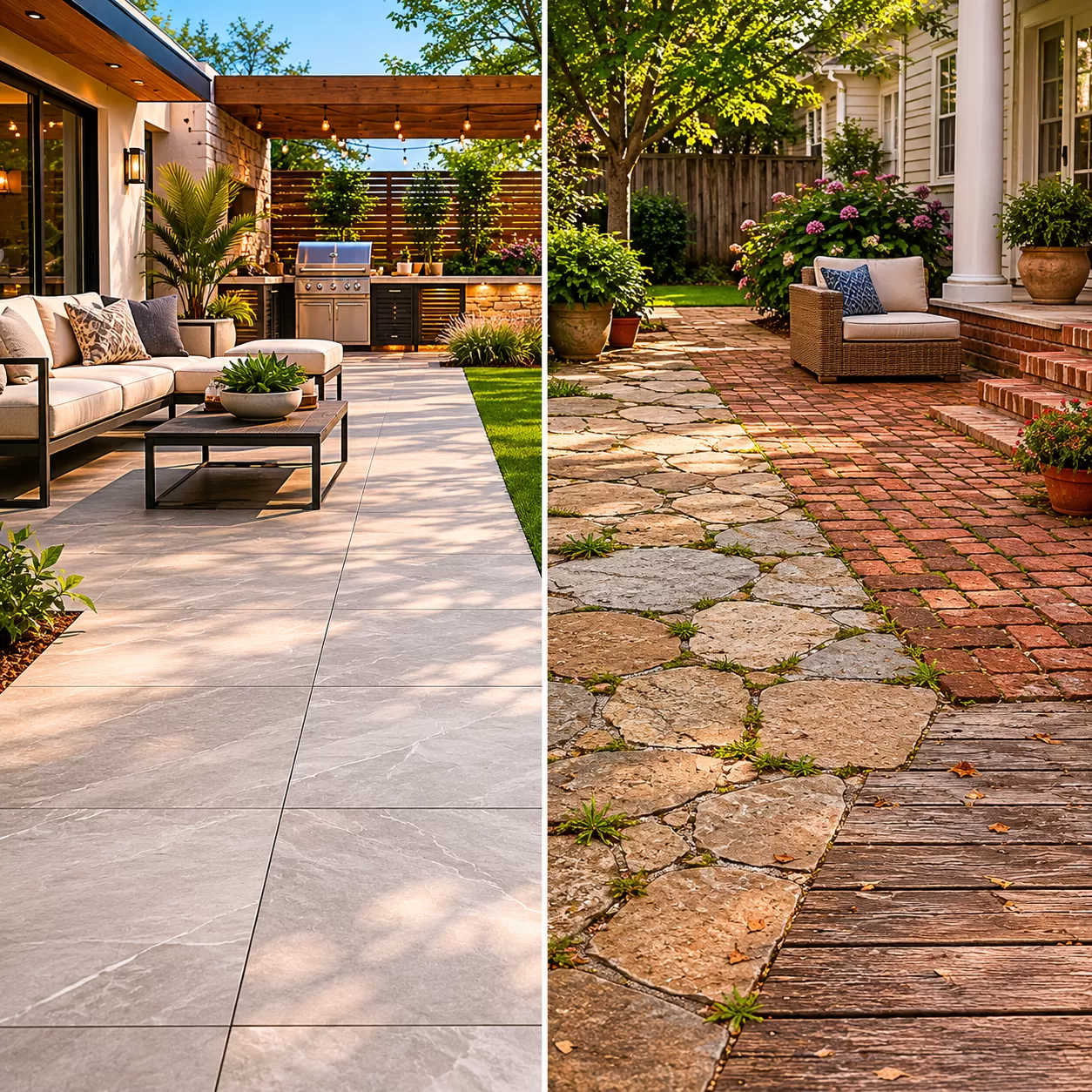
Choosing the right material for commercial landscaping requires balancing upfront budgets with long-term performance. As a leading Outdoor Porcelain Tile supplier and manufacturer, we look at how premium porcelain compares to traditional building materials.
Porcelain Pavers vs. Concrete Pavers: Life-Cycle Cost (LCC) Analysis
While concrete pavers offer a lower initial purchase price, their long-term Life-Cycle Cost (LCC) quickly adds up. Concrete is porous, meaning it absorbs water, oil, and chemicals, leading to surface degradation, severe staining, and frequent replacement costs.
Cost & Performance Metric: Initial Material Cost
Commercial-Grade Porcelain Pavers: Moderate to High
Standard Concrete Pavers: Low to Moderate
Cost & Performance Metric: Lifespan
Commercial-Grade Porcelain Pavers: 50+ Years (No degradation)
Standard Concrete Pavers: 10–15 Years (Fades and cracks)
Cost & Performance Metric: Maintenance Expenses
Commercial-Grade Porcelain Pavers: Near Zero (Pressure wash only)
Standard Concrete Pavers: High (Requires sealing every 2-3 years)
Cost & Performance Metric: Stain & Chemical Resistance
Commercial-Grade Porcelain Pavers: Absolute (Engineered density)
Standard Concrete Pavers: Poor (Absorbs oils and de-icing salts)
Cost & Performance Metric: Total 10-Year Cost ROI
Commercial-Grade Porcelain Pavers: Highly Profitable
Standard Concrete Pavers: Expensive due to upkeep/repair
Porcelain Pavers vs. Natural Stone (Granite, Slate, Travertine)
Natural stone offers distinct aesthetics but introduces unpredictable structural vulnerabilities. Granite, slate, and travertine contain natural fissures that trap water, causing stone splitting during freeze-thaw cycles. Exterior tiles engineered from porcelain replicate these natural textures flawlessly while delivering uniform thickness, calibrated sizing, and predictable technical performance.
Weight Advantage: Porcelain delivers higher breaking strength than natural stone at a fraction of the thickness and weight, reducing freight and structural load overheads.
Color Fastness: Natural stone fades and discolors under prolonged UV exposure. Porcelain utilizes mineral-baked clays that never fade.
Porosity Issues: Travertine and slate require specialty deep-penetrating sealers to prevent moss and algae growth. Porcelain leaves zero room for organic growth.
Porcelain Pavers vs. Composite Decking: Maintenance & Longevity ROI
Composite decking is often selected for modern boardwalks and commercial terraces, but it fails to match the structural longevity of heavy-duty porcelain. Over time, composite boards warp, scratch from heavy foot traffic, and become dangerously slick when wet.
Safety First: Our porcelain options are engineered as certified anti-slip tiles, maintaining high slip resistance in wet weather, whereas composite decking becomes a high liability zone.
Scratch & Indentation Resistance: Moving heavy patio furniture or high-heeled traffic gouges composite boards. Porcelain is scratch-proof and indentation-proof.
Fire Rating: Composite decking is combustible. Porcelain is completely fireproof, making it the legal and safe choice for high-occupancy public plazas and rooftop projects.
Trending B2B Styles and Large-Format Specifications
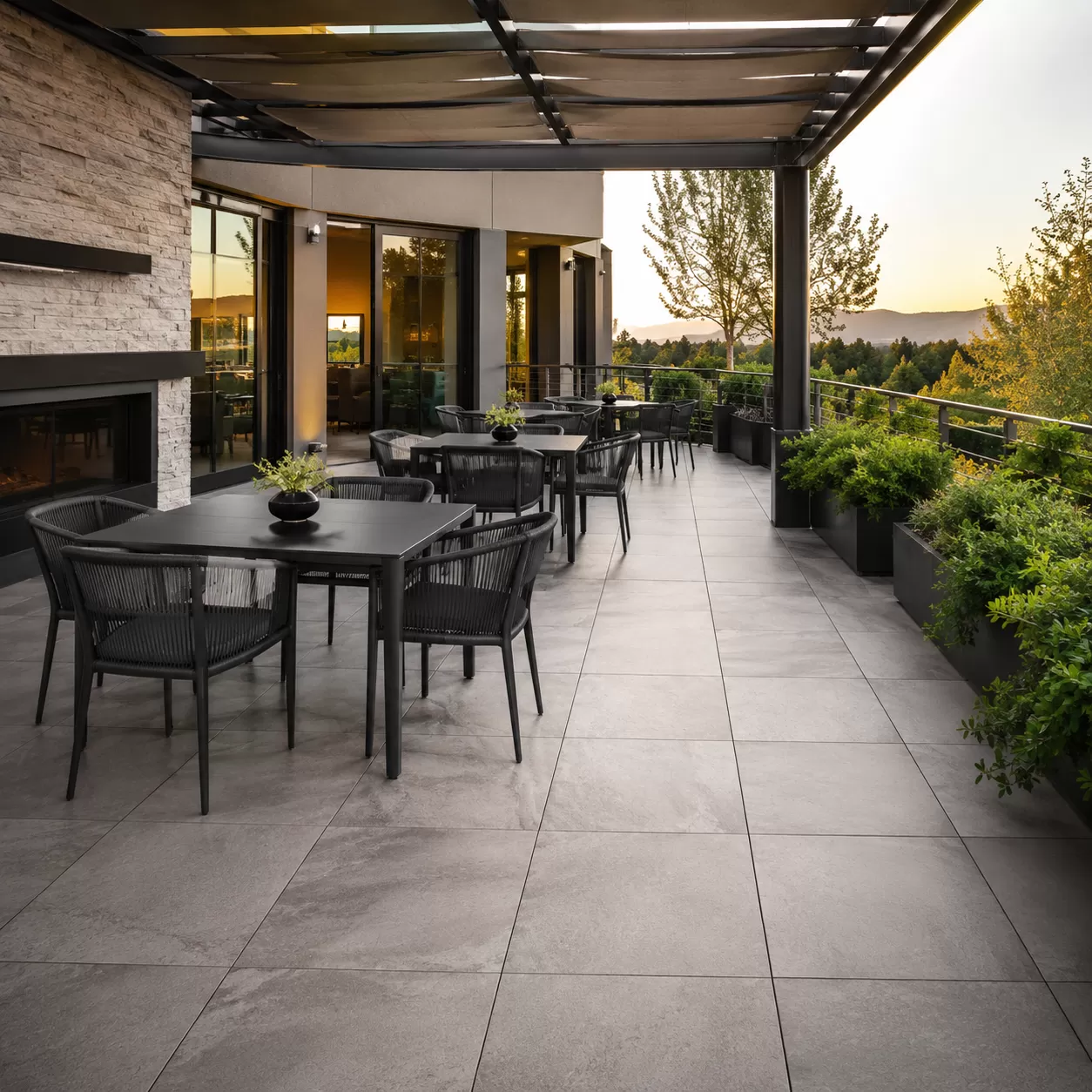
As a leading outdoor porcelain tile supplier and manufacturer, we see firsthand how global architectural trends shift. Modern commercial spaces demand materials that perform flawlessly while matching contemporary design aesthetics. Today’s commercial-grade outdoor porcelain tile options offer the perfect blend of high-end looks and rugged durability.
Architectural Stone and Premium Marble-Effect Outdoor Tiles
You no longer have to choose between the luxury of natural stone and the durability of engineered materials. Our stone- and marble-look exterior tiles replicate the depth, veining, and texture of real quarried stone without the high maintenance, porous surface, or tracking issues.
High Fidelity: Advanced 3D digital printing captures authentic granite, limestone, and travertine textures.
Color Consistency: Unlike natural stone, bulk orders maintain precise color uniformity across thousands of square feet.
Zero Sealing Required: Delivers a luxury marble aesthetic completely immune to acid rain, salt damage, and heavy foot traffic.
Commercial-Grade Rustic and Modern Wood-Look Porcelain Planks
Wood decks rot, warp, and require constant staining. Our wood-look porcelain planks offer a permanent, fireproof alternative for luxury hospitality and corporate outdoor spaces.
Design Flexibility: Available in both weathered, rustic finishes for coastal resorts and sleek, minimal tones for urban rooftops.
Safety First: Engineered with a specialized anti-slip tile texture that keeps public walkways safe even when wet.
Zero Fade: UV-resistant surfaces ensure deep charcoal and rich oak tones won’t bleach under intense sunlight.
Industrial Cement, Concrete, and Minimalist Urban Textures
For modern plazas, civic centers, and high-traffic public squares, the raw, industrial look remains the top choice for architects and landscape designers.
Minimalist Appeal: Clean, understated cement textures create a seamless transition from interior lobbies to outdoor public plazas.
Masks Traffic Dirt: Specially calibrated mottling hides daily scuffs, tire marks, and urban grime between cleanings.
Massive Load Tolerance: Provides a gritty, industrial look backed by extreme compressive strength.
Large-Format Formats and Custom Coping Options
Maximizing visual impact means minimizing grout lines. Large-format porcelain pavers create expansive, premium looking surfaces while reducing installation labor time.
Nominal Size (cm): 60×60
Best Commercial Application: Standard walkways, multi-housing balconies, dry-lay grids
Visual Effect: Classic, versatile, low waste factor
Nominal Size (cm): 90×90
Best Commercial Application: Large public plazas, vehicular driveways, hotel courtyards
Visual Effect: Bold, stable, high load distribution
Nominal Size (cm): 60×120
Best Commercial Application: High-end pool decks, pedestrian malls, rooftop terraces
Visual Effect: Linear, modern, expansive feel
We also manufacture custom coping options, including bullnose edges, mitered drops, and grating tiles. This allows your project to maintain a cohesive, single-material finish from the main walkway right down to the pool edge or stair tread.
Procurement, Bulk Ordering, and Quality Control: B2B Buyer’s Guide
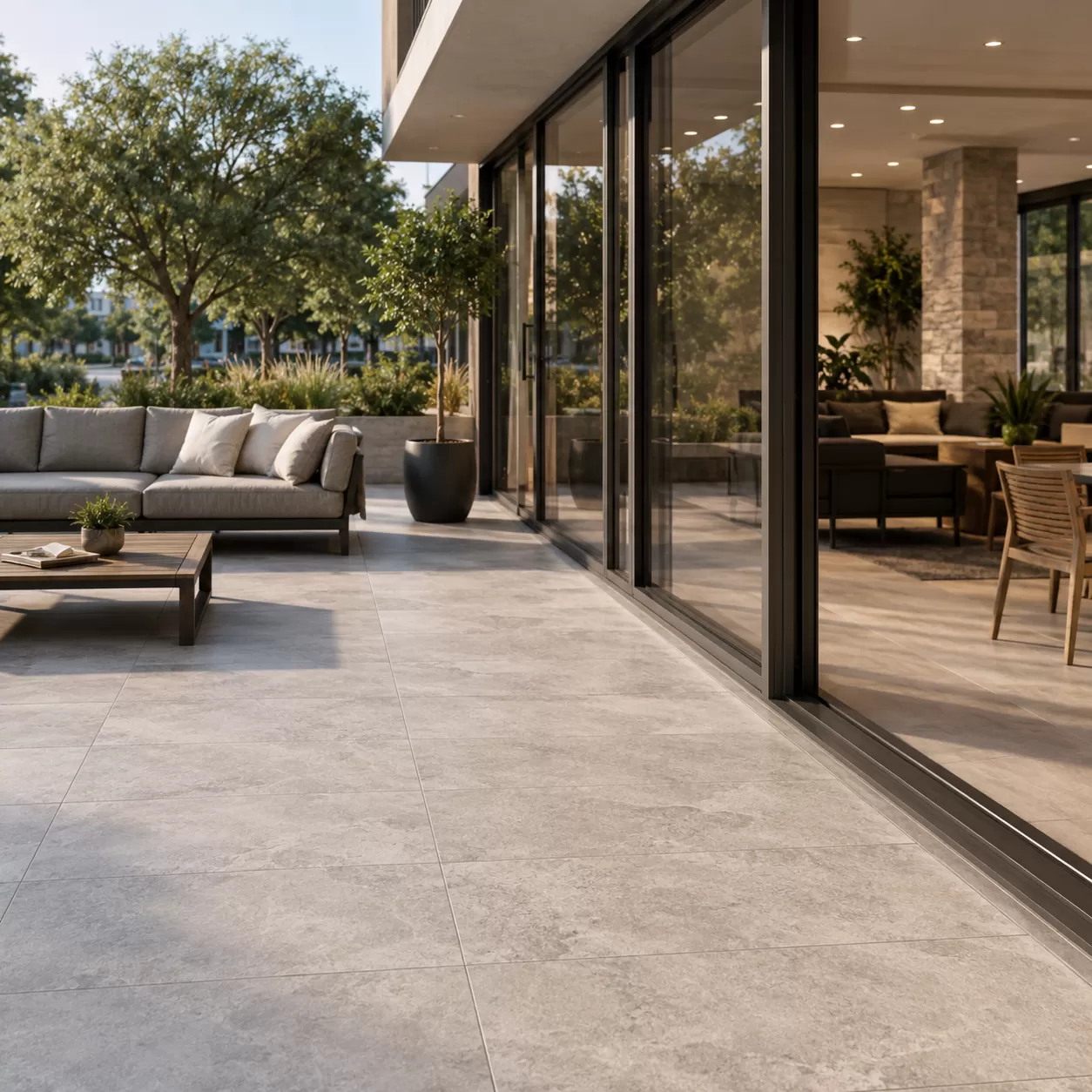
How to Read Technical Data Sheets (ISO/ASTM Standards for Porcelain)
As an experienced Outdoor Porcelain Tile supplier and manufacturer, we know that commercial specifications live and die by the data sheet. When sourcing commercial-grade outdoor porcelain tile for large-scale projects, you must look past the aesthetics and verify international testing compliance.
Key metrics to review on the technical data sheet include:
Water Absorption (ISO 10545-3 / ASTM C373): Must be ≤ 0.5%. Our tiles typically hit ≤ 0.05%, ensuring total frost resistance.
Breaking Strength (ISO 10545-4 / ASTM C648): Commercial exterior tiles require a breaking strength exceeding 10,000 N for 20mm pavers to handle heavy foot and vehicular traffic.
Slip Resistance (DIN 51130 / BS 7976-2): Look for an R11 or R12 rating, or a Pendulum Test Value (PTV) ≥ 36 to meet strict public safety and legal liability standards.
Cost Breakdown: Wholesale Material Pricing vs. Estimated Installation Labor
Budgeting for commercial projects requires balancing upfront material acquisition with long-term field labor. While premium porcelain pavers carry a higher initial material cost than standard exterior tiles or concrete, they dramatically lower installation timelines when using modern dry-lay or pedestal systems.
Cost Component: Traditional Wet Bed
Wholesale Material Cost (Per Sq. Mt.): Moderate
Estimated Installation Labor: High
Project Notes & Variables: Requires concrete slab cured base and specialized adhesive.
Cost Component: Dry Laying (Gravel/Sand)
Wholesale Material Cost (Per Sq. Mt.): Moderate
Estimated Installation Labor: Low
Project Notes & Variables: Fast installation, minimal prep, ideal for public walkways.
Cost Component: Pedestal Raised System
Wholesale Material Cost (Per Sq. Mt.): Premium (Includes Supports)
Estimated Installation Labor: Very Low
Project Notes & Variables: Ideal for rooftop terraces; allows easy utility access.
Sourcing & Logistics: Packaging, Breakage Allowance, and Lead Times
Managing logistics for bulk commercial orders requires strict planning to keep your project timeline on schedule. We streamline the procurement pipeline to ensure goods arrive intact and on time.
Packaging & Palletization: All heavy-duty porcelain pavers are packed in reinforced, IPPC-certified wooden crates with corner protectors to survive ocean freight and site handling.
Breakage Allowance: Standard industry practice recommends factoring in a 2% to 5% breakage allowance for transit, plus an additional 5% to 8% waste factor for site cuts and corners.
Lead Times: Standard stock runs ship within 7 to 10 days. Custom large-format specifications or custom coping production runs require a 4 to 6-week lead time, plus local transit.
Frequently Asked Questions About Outdoor Porcelain (B2B Perspective)
Do Outdoor Porcelain Tiles Get Too Hot in Direct Sunlight for Public Use?
Like any premium paving material, this guide acknowledges that these surfaces absorb heat when exposed to direct sunlight. However, outdoor porcelain tile distributes heat more evenly than dense natural stone or dark concrete.
To mitigate heat retention on public plazas and pool decks, we recommend specifying lighter color palettes—such as beige, light gray, or ivory. These shades feature a higher Solar Reflectance Index (SRI), ensuring the surface remains comfortable and safe for public pedestrian traffic even during peak summer months.
Are Outdoor Porcelain Pavers Slippery When Wet? (Legal Slip Liability)
No, provided you specify the correct surface finish. As an established Outdoor Porcelain Tile supplier and manufacturer, we engineer our commercial exterior tiles specifically to mitigate legal slip liability in public spaces.
R-Value Rating: Our outdoor porcelain pavers carry an R11 or R12 slip rating, featuring a textured, anti-slip surface.
Pendulum Test Value (PTV): They consistently achieve a PTV of 36+, which denotes a low slip potential under wet conditions.
Application: This makes them fully compliant with strict commercial safety codes for wet areas, public walkways, and transit hubs.
Can 20mm Porcelain Pavers Withstand Heavy Vehicular Traffic?
Yes, but performance depends entirely on the installation method.
Thickness: 20mm / 30mm
Installation Method: Dry Laid (Sand/Gravel)
Traffic Suitability: Pedestrian & Light Residential Vehicles Only
Thickness: 20mm / 30mm
Installation Method: Wet Bed (Bound Concrete Base)
Traffic Suitability: Heavy Commercial Vehicular Traffic
When permanently adhered to a reinforced concrete slab using a high-performance wet bed installation, 20mm porcelain pavers deliver exceptional compressive strength, easily withstanding the weight of delivery trucks, maintenance vehicles, and heavy daily traffic.
What is the Lifespan and Long-Term ROI of Commercial Porcelain Flooring?
Commercial-grade outdoor porcelain tile offers a lifetime exceeding 30 to 50 years without structural degradation.
Zero Water Absorption: Prevents freeze-thaw cracking, which destroys concrete.
Minimal Maintenance: Requires no sealing, stripping, or specialized chemical washes.
Lifecycle Cost ROI: While the upfront material cost may surpass basic concrete, the near-zero maintenance schedule and extreme longevity ensure the investment pays for itself within 5 to 7 years, delivering a highly favorable total cost of ownership (TCO) for B2B stakeholders.
How to Calculate Waste Factors and Overages for Large-Scale Projects?
Accurate ordering prevents costly project delays and minimizes excess freight fees. For large-scale commercial installations, apply these standard industry waste factors to your net square footage:
Standard Straight Lay: Add 5% to 7% overage for routine cuts and breaks.
Diagonal or Complex Patterns: Add 10% to 12% to account for increased perimeter cutting.
Large-Format Tiles & Custom Coping: Add 10% minimum, as mistakes on larger slabs result in higher material volume loss.
