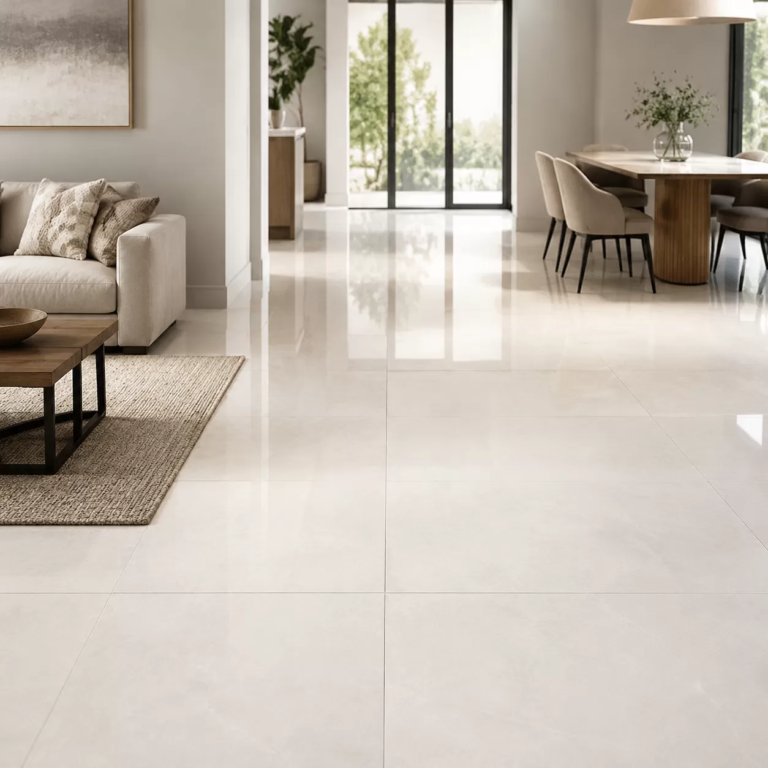
Harmony White Polished Porcelain Tile
Product Category
White porcelain tile
What is White Porcelain Tile? White porcelain tile is a premium, highly vitrified surfacing material engineered from refined kaolin clays and fired at temperatures exceeding 1,200°C. This heavy-duty manufacturing process creates an ultra-dense tile with a water absorption rate below 0.5% . Prized by architects and developers for its light-reflecting aesthetics, it serves as a high-performance, cost-effective alternative to natural white marble, offering exceptional resistance to stains, scratches, and heavy commercial foot traffic.
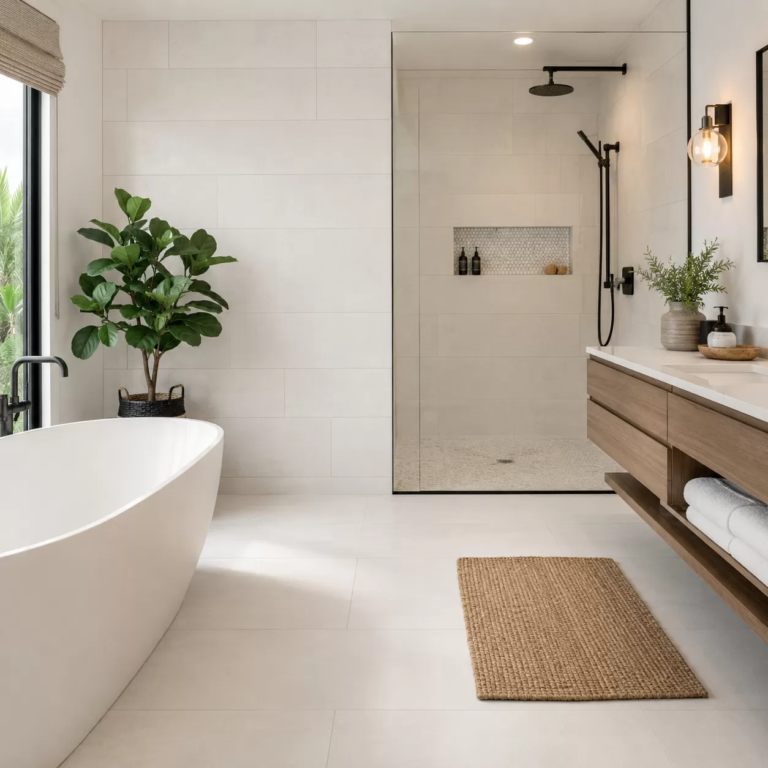
Showing 4 products
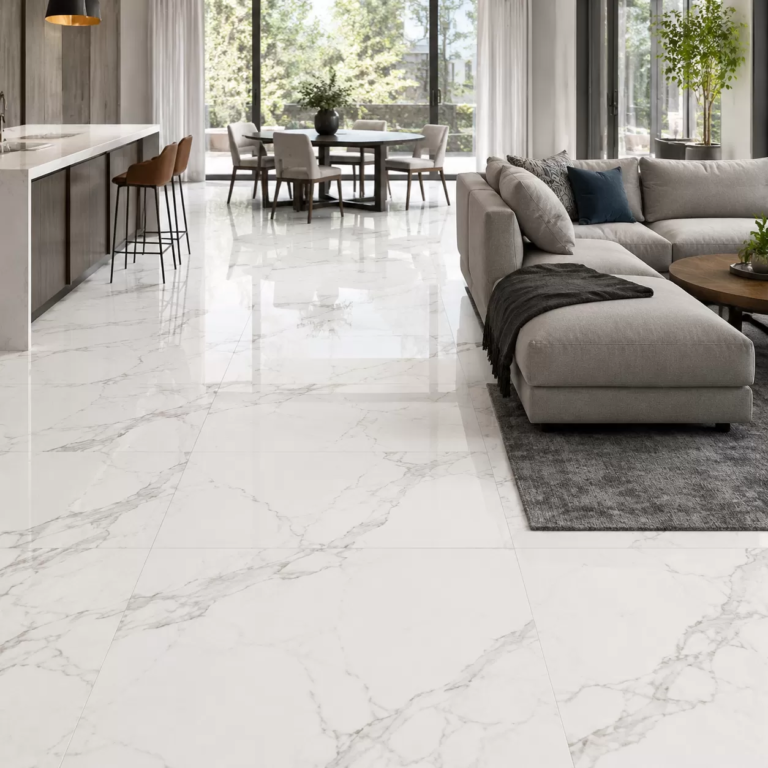
Calacatta White Polished Marble Look Porcelain Tiles
Calacatta White Polished Marble Look Porcelain Tiles
View Details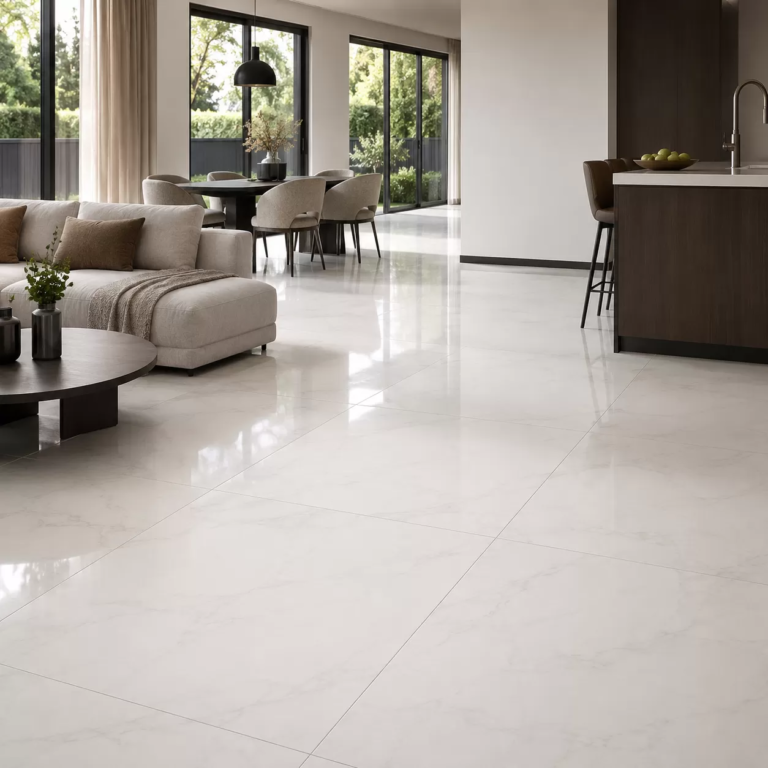
Category Guide
About White porcelain tile
White Porcelain Tile Specification Guide: Grading, Finishes & B2B Procurement
Specifying the right surfaces for a high-end project isn’t just about aesthetics—it’s about durability, ROI, and technical precision.
Whether you are designing a corporate lobby or a luxury wellness center, choosing White Porcelain Tile involves more than picking a shade. You need to navigate grading, slip resistance, and B2B procurement logistics to ensure the vision survives the reality of high-traffic wear.
In this guide, I’m stripping away the marketing fluff to give you a definitive look at architectural specifications. From understanding Whiteness Index (WI) consistency to the material science of ISO 10545-14 stain resistance, you’ll learn exactly how to source premium surfaces that outperform natural stone.
If you’re looking to master large format slabs and seamless B2B procurement, this breakdown is for you.
Let’s dive in.
Introduction: The Timeless Value of White Porcelain Tile in Commercial Architecture
Why White Porcelain Tile Remains a Staple for Modern Commercial and Premium Residential Projects
White porcelain tile stands as an architectural cornerstone, delivering unmatched versatility and a clean, expansive aesthetic to high-end developments. In commercial spaces and premium residential designs, a pristine white floor or wall amplifies natural light and serves as a neutral canvas for luxury branding. Beyond its visual impact, this material offers structural permanence. Unlike alternative surfaces that succumb to heavy foot traffic, high-grade white porcelain retains its flawless finish, making it the premier choice for architects and project managers looking to maximize long-term property value.
The Material Science: True Porcelain vs. Ceramic White Tiles
Discerning B2B buyers must understand the rigid material science that differentiates true porcelain from standard ceramic white tiles. The distinction lies in raw material selection and manufacturing intensity:
Composition: True porcelain utilizes highly refined, dense clays mixed with feldspar and quartz, whereas standard ceramic uses coarser clay bodies.
Firing Temperature: Porcelain is kiln-fired at extreme temperatures ranging from 1200°C to 1400°C. This vitrification process creates a completely fused, glass-like internal structure.
Density and Absorption: The intense pressure and heat result in an exceptionally low water absorption rate—less than 0.5% per international standards.
Technical Property: Water Absorption Rate
True White Porcelain Tile: ≤ 0.5% (Vitrified)
Standard Ceramic White Tile: > 3.0% (Porous)
Technical Property: Breaking Strength
True White Porcelain Tile: ≥ 1300 N
Standard Ceramic White Tile: Approx. 600 N – 800 N
Technical Property: Through-Body Color
True White Porcelain Tile: Consistent throughout the matrix
Standard Ceramic White Tile: Surface glaze only; red/tan body exposed if chipped
Technical Property: Application Suitability
True White Porcelain Tile: High-traffic commercial, heavy load, facades
Standard Ceramic White Tile: Light-duty residential walls only
Sustainability and Environmental Credentials (LEED V4, VOC-Free, and EPDs)
As green building mandates dictate global procurement strategies, our white porcelain tile manufacturing processes align strictly with international environmental standards. Specifying these tiles contributes directly to LEED v4 certification points across multiple categories, including sustainable materials and indoor environmental quality.
Zero VOC Emissions: Fired at extreme temperatures, porcelain is inherently inorganic and 100% VOC-free, ensuring optimal indoor air quality in hospitals, hotels, and corporate offices.
Eco-Friendly Lifecycle: Backed by verified Environmental Product Declarations (EPDs), our production utilizes recycled water loops and locally sourced raw materials to minimize carbon footprint.
Thermal Efficiency: The dense thermal mass of porcelain tiles optimizes HVAC efficiency in commercial flooring and ventilated facade installations, reducing overall building energy consumption.
Technical Advantages of White Porcelain Tile: Overcoming Common Surface Challenges
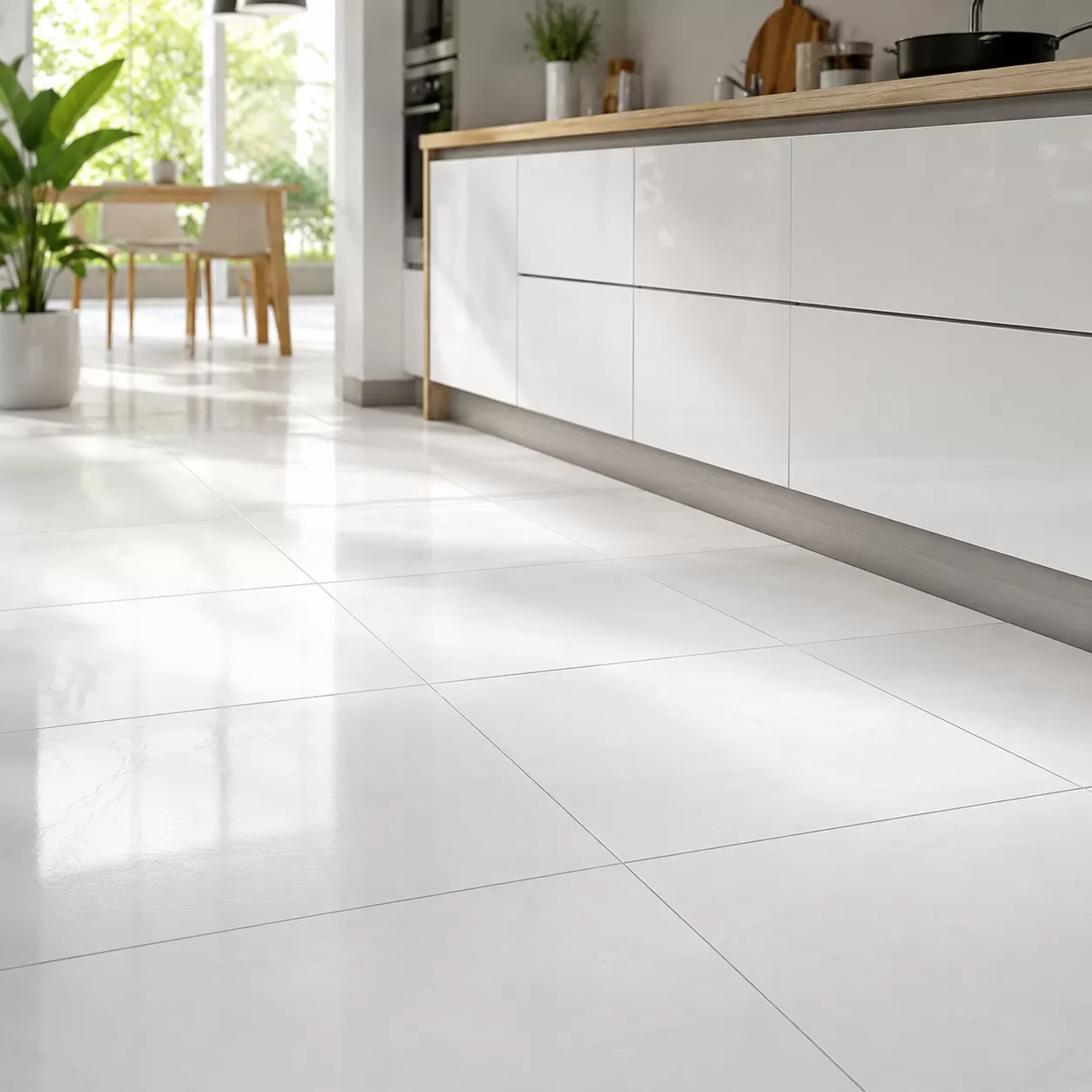
Keeping white surfaces pristine in high-traffic environments is a notorious challenge. As a manufacturer and supplier, we engineer our white porcelain tile collections to solve the inherent vulnerabilities of traditional white materials, ensuring long-term performance and easier maintenance.
Advanced Stain and Chemical Resistance (ISO 10545-14 Standard)
Unlike porous natural stone, premium white porcelain tile features a hyper-dense vitrified surface that stops contaminants from penetrating.
ISO 10545-14 Compliance: Our tiles achieve a Class 5 rating (the highest possible), making them impervious to harsh staining agents like coffee, wine, ink, and oils.
Chemical Integrity: They withstand heavy-duty commercial cleaning agents, acids, and disinfectants without etching or losing their finish.
Scratch Resistance and Hardness: MOHS and PEI Ratings for High-Traffic Areas
White flooring easily highlights scratches and scuffs if the material is too soft. We build our porcelain to endure heavy foot traffic and rolling loads without showing wear.
Metric: MOHS Hardness
Specification Level: 7 to 8
Performance Impact: Resists scratching from sand, dirt, and dropped objects better than granite.
Metric: PEI Rating
Specification Level: Class IV to Class V
Performance Impact: Certified for intense commercial traffic, from retail boutiques to airport terminals.
Color Stability: Why White Porcelain Won’t Yellow or Fade Under UV Exposure
Many white architectural surfaces, particularly resin-bound quartz, solid surfaces, and engineered plastics, oxidize and turn yellow when exposed to sunlight or UV radiation.
The Porcelain Advantage: Because white porcelain tile is fired at temperatures exceeding 1200°C, the mineral pigments are completely stable. Our tiles will never yellow, fade, or discolor, whether specified for sun-drenched atrium walls or as an outdoor porcelain tile for exterior facades.
Water Absorption and Hygiene: Antimicrobial Surface Options for Commercial Wet Areas
Moisture management is critical when selecting a bathroom or kitchen surface. High water absorption leads to mold, mildew, and structural degradation behind the tile.
Near-Zero Porosity: Our white porcelain tiles maintain a water absorption rate of under 0.5% (typically hitting less than 0.1%), completely blocking moisture infiltration.
Antimicrobial Options: For specialized healthcare, hospitality, and commercial wet areas, we offer advanced silver-ion antimicrobial surfaces that actively inhibit 99.9% of bacterial growth, creating a self-cleaning, hygienic environment.
Popular Styles, Textures, and Premium Visual Effects in White Porcelain Tile
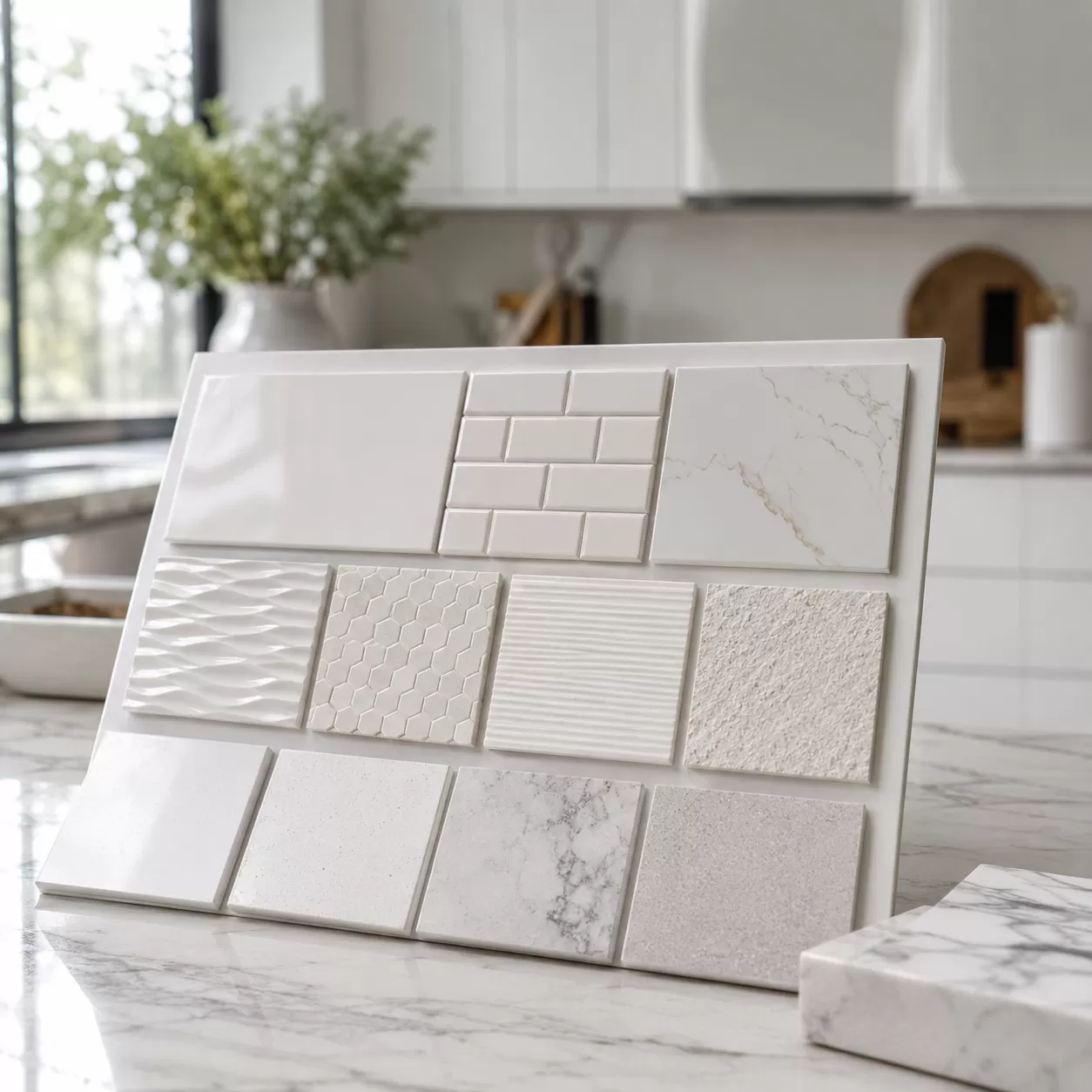
Choosing the right look involves balancing high-end aesthetics with everyday performance. As a leading manufacturer, we design our white porcelain tile collections to deliver striking visual appeal while meeting strict commercial durability standards.
The Luxury Marble Alternative: Calacatta, Statuario, and Carrara Effects
Achieving a high-end look no longer requires the high-maintenance upkeep of natural stone. Our marble-look white porcelain tiles perfectly replicate the world’s most sought-after quarries with advanced, non-repeating inkjet printing.
Calacatta: Features bold, dramatic grey and gold veining on a crisp white backdrop. Perfect for luxury hotel lobbies and high-impact reception desks.
Statuario: Offers a bright white base with distinct, structured veining that adds a refined, classical architectural feel.
Carrara: Delivers a softer, muted grey veining for subtle, timeless elegance across large-scale flooring installations.
Unlike real marble, these porcelain alternatives are completely acid-resistant, scratch-resistant, and require zero sealing.
Minimalist Textures: Matte White Stone-Look and Industrial Cement
For contemporary, understated spaces, we manufacture minimalist textures that bring depth without relying on heavy patterns.
Texture Type: Matte Stone-Look
Visual Effect: Subtle, organic graining with a soft tactile feel
Best Application: High-traffic corporate corridors, open-concept retail floors
Texture Type: Industrial Cement
Visual Effect: Raw, utilitarian look with monochromatic white-on-white tones
Best Application: Modern art galleries, minimalist commercial interiors
These flat, low-sheen options hide dust and footprints incredibly well, making them a go-to for property managers focused on low maintenance costs.
Three-Dimensional Tiles: 3D Textured and Fluted White Wall Tiles
We create 3D textured and fluted white porcelain tiles specifically for feature walls, accents, and backsplashes. These tiles manipulate light and shadow to bring flat surfaces to life.
Fluted and Ribbed Profiles: Perfect for wrapping around reception desks or creating striking restaurant accent walls.
Geometric Waves: Adds movement and a modern, sculptural element to hospitality showers and wellness spa backdrops.
Wall-Only Optimization: These tiles are engineered with lightweight, high-strength bodies for secure vertical installation.
Avant-Garde Patterns: Geometric, Hexagonal, and High-End Mosaics
When a project calls for a custom or energetic design, our geometric and mosaic collections deliver the right creative edge.
Hexagonal Formats: Ideal for breaking up large floor plans or adding a clean, playful layout to commercial restrooms.
Chevron and Herringbone: Classic geometric patterns pre-mounted on mesh sheets for fast, precise installation on walls or floors.
Premium Mosaics: High-density, intricately cut white porcelain pieces that offer excellent slip resistance for wet-area flooring due to the high frequency of grout lines.
Finishes, Formats, and Architectural Specifications

Polished, Semi-Polished (Lappato), Matte, and Satin White Finishes: When and Where to Specify
Choosing the right finish for white porcelain tile impacts both aesthetics and safety. As a direct manufacturer, we supply four primary finishes tailored for specific commercial and residential zones:
Polished: High-gloss, maximum light reflectivity. Ideal for luxury corporate lobbies, hotel feature walls, and upscale retail showrooms.
Matte: Low-sheen, slip-resistant, and excellent at hiding dirt. The standard choice for high-traffic commercial flooring, entryways, and public restrooms.
Semi-Polished (Lappato): A honed, dual-texture finish that offers a subtle shimmer with better slip resistance than full polish. Perfect for transition zones and premium corridors.
Satin: A soft, silky feel with zero glare. Excellent for high-end residential bathroom walls, kitchen backsplashes, and wellness centers.
Finish Type: Polished
Slip Resistance (R-Rating): R9
Best Application: Walls, Low-traffic Lobbies
Maintenance Level: Moderate (Prone to streaks)
Finish Type: Matte
Slip Resistance (R-Rating): R10 – R11
Best Application: Commercial Flooring, Bathrooms
Maintenance Level: Low (Easy clean)
Finish Type: Lappato
Slip Resistance (R-Rating): R9 – R10
Best Application: Corridors, Retail Spaces
Maintenance Level: Low to Moderate
Finish Type: Satin
Slip Resistance (R-Rating): R9
Best Application: Hospitality Walls, Spas
Maintenance Level: Low
The Revolution of Large Format Porcelain Slabs (1200x2400mm+) and Ultra-Thin Profiles
Large format porcelain slabs are redefining modern architecture by minimizing grout lines and creating uninterrupted visual planes. We manufacture massive 1200×2400mm and 1600×3200mm white porcelain tiles that mimic continuous natural stone slabs.
Ultra-Thin Profiles (3mm to 6mm): Lightweight yet incredibly strong. Perfect for over-tiling existing flooring, lightweight wall cladding, and cabinet refacing.
Standard Profiles (9mm to 12mm): The benchmark for high-traffic commercial flooring.
Thick Profiles (20mm): Engineered specifically for outdoor porcelain tile applications, raised flooring systems, and heavy-duty commercial countertops.
Rectified vs. Non-Rectified Edges: Achieving Seamless Micro-Grout Lines
For a truly premium, seamless look, edge treatment is critical:
Rectified Edges: These tiles go through an extra mechanical grinding process after firing to ensure perfectly straight edges and precise 90-degree corners. This allows architects to specify ultra-thin micro-grout lines (1mm to 1.5mm), resulting in a sleek, continuous monolithic white surface.
Non-Rectified Edges: Traditional cushion edges with minor natural size variances. These require wider grout joints (3mm+) and are better suited for budget-conscious projects or rustic design schemes.
Shade Variation Classification: Navigating V1 (Uniform) to V4 (Substantial) in White Batches
When ordering white porcelain tile in bulk, understanding the CTIOA shade variation rating prevents unexpected installation surprises:
V1 (Uniform Appearance): Minimal piece-to-piece variation. This is the specification required for minimalist, solid matte white installations where absolute color consistency is mandatory.
V2 (Slight Variation): Noticeable texture or pattern differences under similar tones. Common in soft satin or fabric-look white tiles.
V3 (Moderate Variation): Distinct images or colors are present. Typically found in standard white marble-look tiles to simulate natural veining.
V4 (Substantial Variation): High random color and vein distribution. Specified for avant-garde, high-end dramatic Calacatta effects where every slab looks unique.
Strategic Application Scenarios for High-End Projects
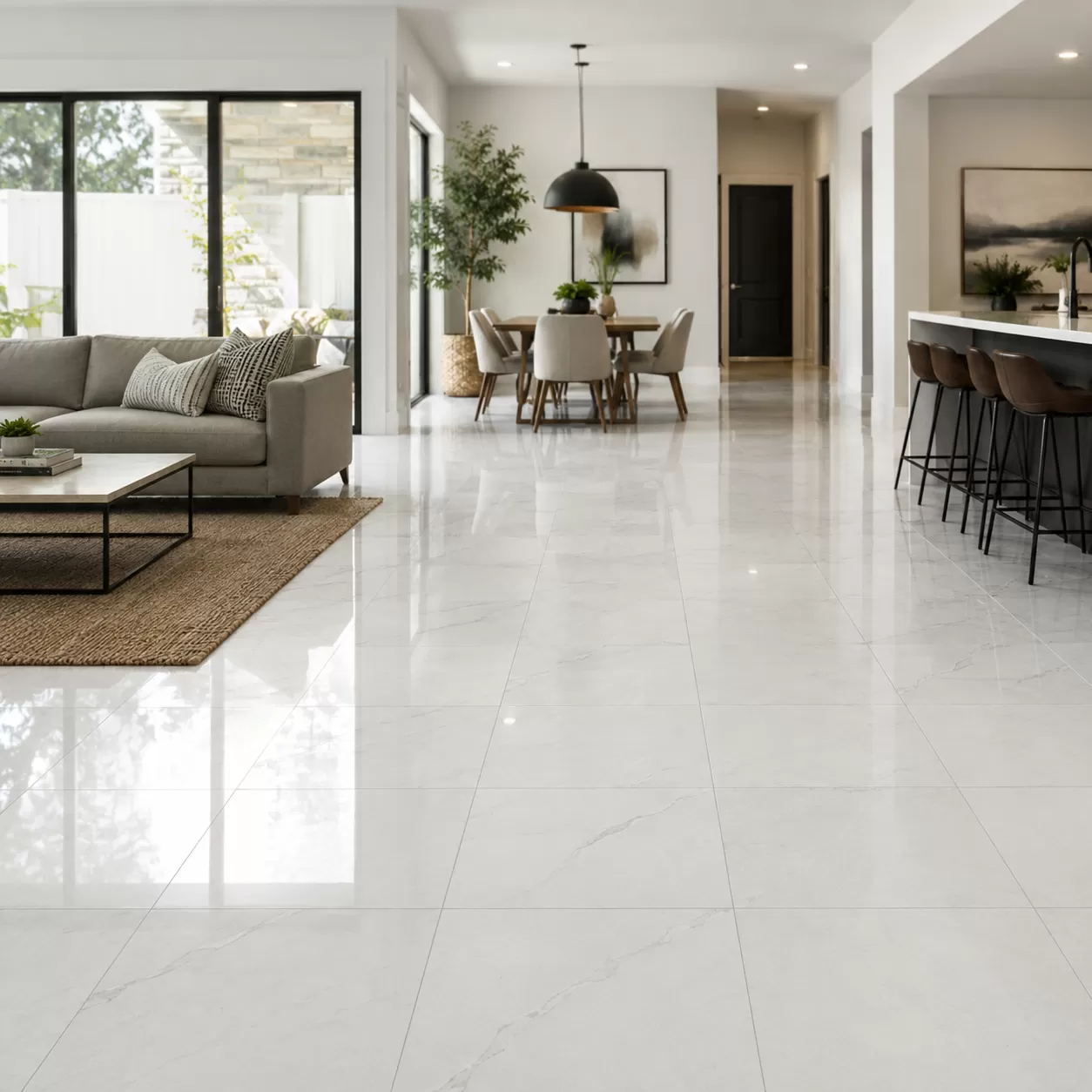
Hospitality & Wellness: Luxury Hotel Bathrooms, Showers, and Spa Wellness Centers
White porcelain tile is the gold standard for creating a pristine, high-end atmosphere in hospitality design. In spa environments and luxury hotel bathrooms, these tiles deliver a flawless, hygienic aesthetic that guests instantly associate with premium wellness.
Wet Area Safety: We recommend specifying a matte or structured finish to meet strict slip-resistance requirements in showers and pool surrounds.
Waterproof Reliability: As an experienced outdoor porcelain tile supplier and manufacturer, we engineer our tiles with near-zero water absorption, preventing mold, mildew, and moisture retention in high-humidity zones.
Steam Room Compatibility: The material handles continuous thermal shock, making it ideal for heated loungers and steam room walls.
Commercial Interiors: High-End Retail Boutiques, Corporate Lobbies, and Reception Areas
First impressions dictate brand value. In corporate lobbies and luxury retail boutiques, white porcelain flooring establishes an expansive, sophisticated backdrop that amplifies natural light and showcases merchandise.
Application Area: Grand Lobbies
Recommended Format: Large Format Slabs
Preferred Finish: Polished / Lappato
Primary Benefit: Maximizes light reflection and luxury appeal
Application Area: Retail Showrooms
Recommended Format: 800x800mm or Larger
Preferred Finish: Satin / Matte
Primary Benefit: High scratch resistance under heavy foot traffic
Application Area: Reception Backdrops
Recommended Format: 3D Textured Panels
Preferred Finish: Matte White
Primary Benefit: Creates a striking, branded architectural feature
Our white porcelain selections withstand heavy daily foot traffic from high heels and rolling luggage without showing paths of wear or losing their original luster.
Culinary Spaces: Open Kitchens, Restaurant Floors, and Heavy-Duty Backsplashes
Commercial culinary environments demand a surface that balances extreme durability with impeccable hygiene. White porcelain tile meets these rigorous demands while maintaining a beautiful, open-concept aesthetic on floors and walls.
Stain and Acid Resistance: White porcelain surfaces resist hot oils, citrus acids, tomato sauces, and harsh cleaning chemicals without etching or staining.
Thermal Protection: Perfect for heavy-duty backsplashes behind cooking lines, as the material will not crack or discolor under intense heat.
Easy Sanitation: The non-porous surface allows kitchen staff to scrub and sanitize the space quickly, meeting strict local health and food safety codes.
Façade Systems: Ventilated External Cladding and White Porcelain Architectural Envelopes
Modern architecture is increasingly moving outdoors. Utilizing white porcelain tile for external ventilated cladding systems offers an innovative, lightweight, and permanent alternative to traditional solid stone or metal panels.
UV Permanence: Unlike composite materials or natural quartz, our white porcelain will not fade, yellow, or chalk when exposed to direct sunlight and harsh weather.
Thermal Efficiency: Specifying a white architectural envelope reflects solar radiation, significantly reducing the urban heat island effect and lowering building cooling costs.
Anti-Graffiti & Low Maintenance: The dense surface prevents airborne pollutants, smog, and graffiti from bonding to the facade, allowing rain or simple pressure washing to keep the exterior pristine.
B2B Installation Specifications and Color Matching
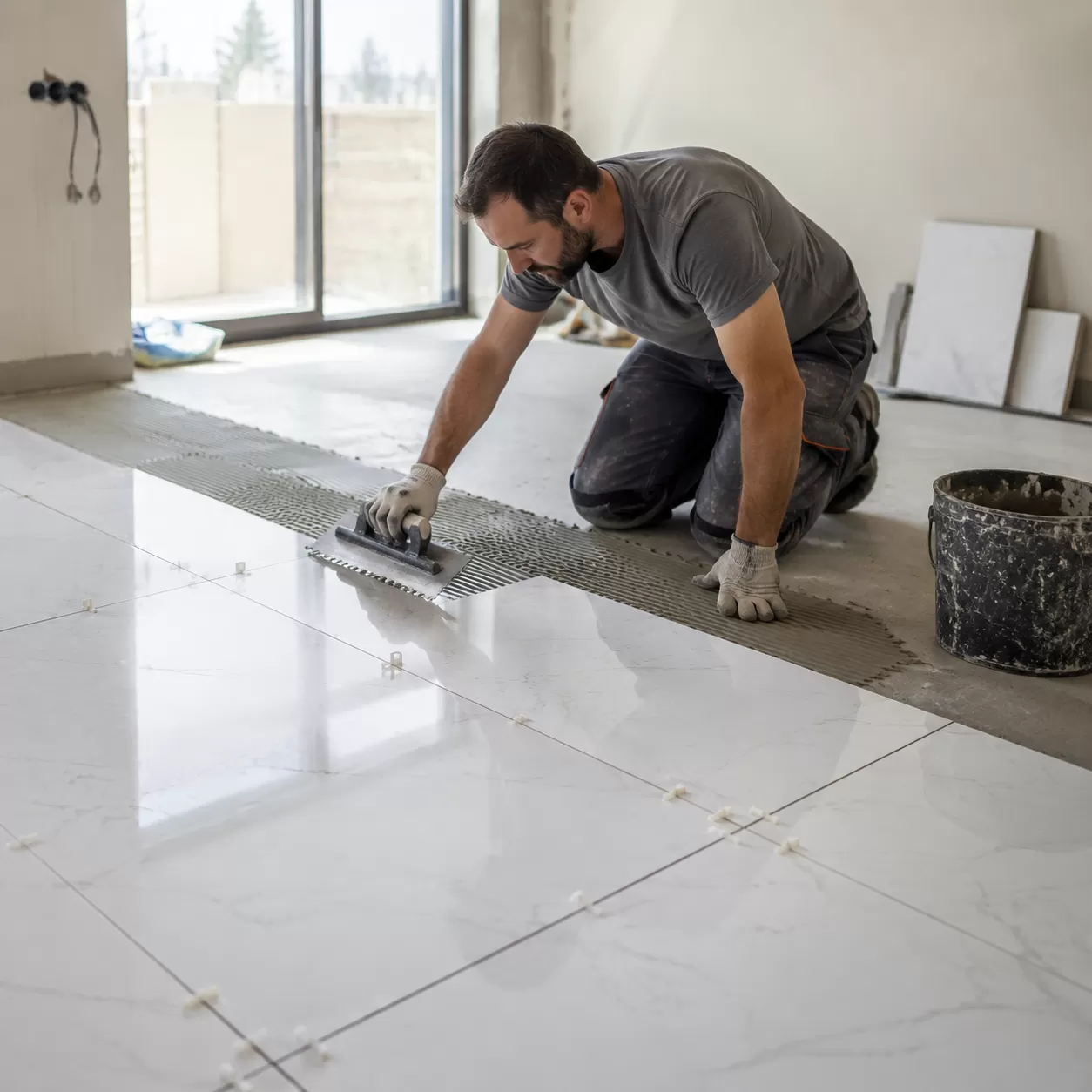
Adhesive Selection and Substrate Preparation for Large Format White Tiles
Installing large format white porcelain tile requires strict substrate preparation and the right setting materials to prevent cracking and shadowing. The substrate must be perfectly level, clean, and free of deflection. For white porcelain, always specify a premium, polymer-modified white cement adhesive. Using gray thin-set can bleed through or shadow translucent white tiles, ruining the visual aesthetic.
Substrate Flatness: Maximum variation of 3mm over 3 meters.
Adhesive Choice: High-performance, deformable white cement mortar (ISO 13007 Class C2TE S1 or S2).
Coverage: 100% mortar transfer is mandatory. Use the back-buttering method to eliminate air voids beneath large slabs.
The Crucial Role of Grout: Non-Staining Epoxy Grout, Color Matching, and Maintenance
Grout selection dictates the long-term performance and appearance of a white porcelain tile installation. For commercial projects, high-traffic floors, and wet areas, standard cementitious grout is a liability. We recommend high-performance epoxy grout to ensure stain resistance and color consistency.
Grout Type: Standard Cement Grout
Stain Resistance: Low (Porous)
Color Consistency: Poor (Prone to shading)
Best Application Areas: Low-traffic walls only
Grout Type: High-Performance Cement (CG2WA)
Stain Resistance: Medium
Color Consistency: Moderate
Best Application Areas: Standard commercial walls/floors
Grout Type: Epoxy Grout (RG)
Stain Resistance: Excellent (Waterproof)
Color Consistency: Perfect (Non-fading)
Best Application Areas: High-traffic commercial, kitchens, showers
Color Matching: Use pure white or ultra-light gray grout to create a seamless look with rectified tile edges.
Maintenance: Epoxy grout prevents dirt absorption, making the surface easy to clean with standard commercial pressure washing or scrubbers.
Movement Joints and Expansion Gaps in Large-Scale Commercial Layouts
White porcelain tile expands and contracts with temperature shifts. Without proper movement joints, large-scale commercial floors will tent, crack, or delaminate. Designers and installers must integrate expansion gaps into the shop drawings before installation begins.
Interior Spaces: Locate movement joints every 6 to 8 meters in both directions.
Exterior & High UV Areas: Locate joints every 3 to 5 meters (critical for outdoor porcelain tile applications).
Perimeter Joints: Leave a minimum 6mm gap at all walls, columns, and curbing, hidden by baseboards or filled with structural silicone sealant.
Joint Width: Match the structural movement joints, but never make them less than 6mm wide on large-scale commercial floors.
Procurement, Bulk Ordering, and Quality Assurance (B2B Buyer’s Guide)
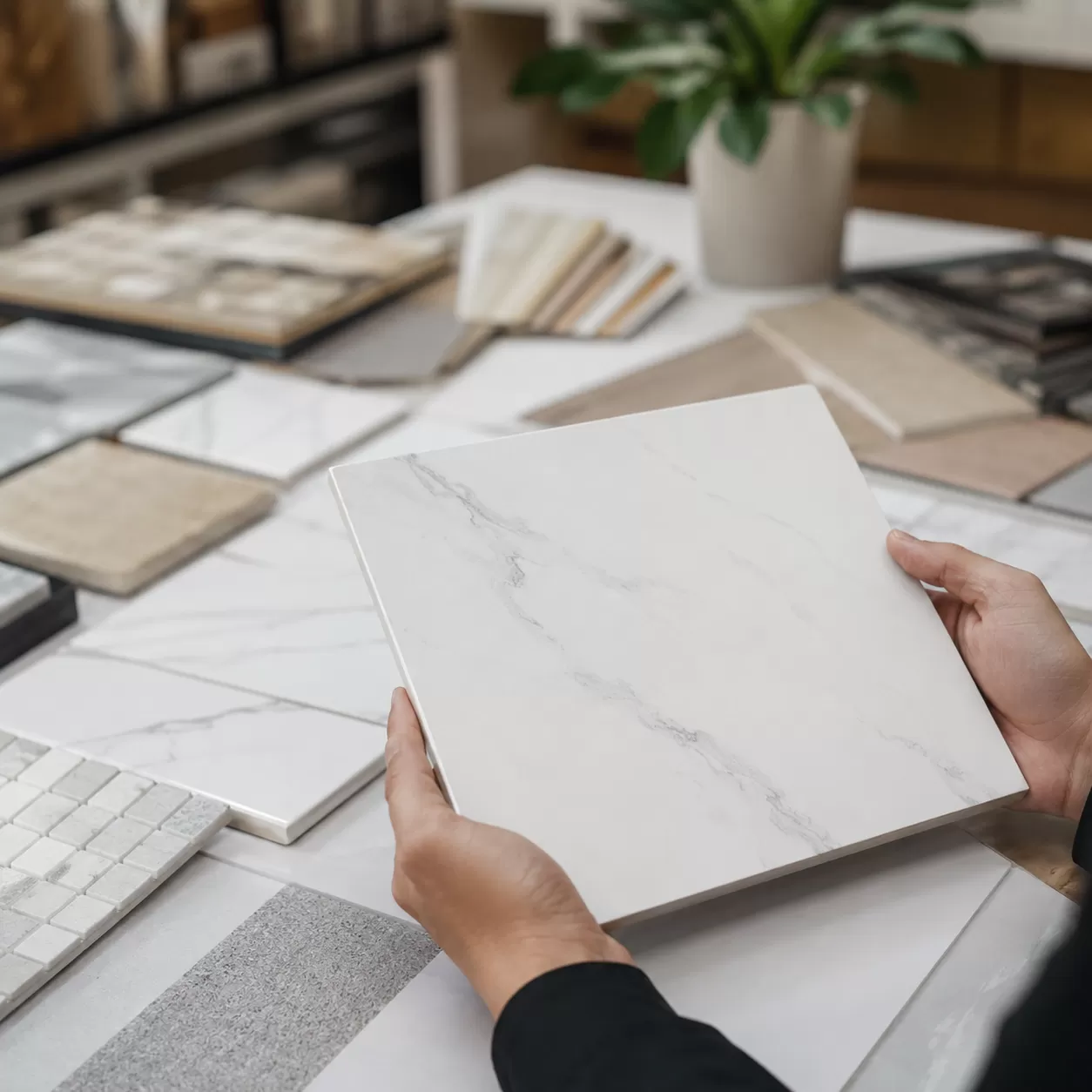
Understanding Whiteness Index (WI) and Controlling Batch-to-Batch Color Consistency (Tone/Caliber)
When sourcing white porcelain tile at scale, “white” is never just one color. We use the Whiteness Index (WI) to measure and control the exact purity and undertone of each production run. A minor shift in raw materials can alter the tone from a crisp, cool white to a warm cream.
To prevent mixed shading on your job site, we strictly manage tone and caliber through centralized batching.
Tone Control: Every pallet in a single shipment shares the exact same shade code. We flag and separate different runs in the warehouse.
Caliber Matching: High-firing causes natural shrinkage. We sort and rectify tiles to precise size tolerances so your grout lines stay perfectly aligned.
Our Guarantee: We never mix different production runs or calibers within a single B2B project order.
Cost-Benefit Analysis: Premium Marble-Look Porcelain vs. Quarried Natural Stone (ROI Analysis)
Choosing between premium marble-effect white porcelain tile and quarried natural stone comes down to long-term project ROI. While natural marble carries an initial luxury appeal, the lifetime costs tell a different story.
Cost & Performance Factors: Material Cost
Premium Marble-Look Porcelain: Budget-friendly, predictable pricing
Quarried Natural Stone (Calacatta/Carrara): High, volatile pricing based on quarry yield
Cost & Performance Factors: Installation Expense
Premium Marble-Look Porcelain: Standard thin-set methods, lower labor costs
Quarried Natural Stone (Calacatta/Carrara): High; requires specialized sealing and handling
Cost & Performance Factors: Maintenance & Sealing
Premium Marble-Look Porcelain: Zero sealing required; wiped clean easily
Quarried Natural Stone (Calacatta/Carrara): Requires annual sealing; sensitive to acids
Cost & Performance Factors: Breakage Rate
Premium Marble-Look Porcelain: Low (<2% during transit and cutting)
Quarried Natural Stone (Calacatta/Carrara): High (fragile natural veins crack easily)
Cost & Performance Factors: Long-Term ROI
Premium Marble-Look Porcelain: High; retains finish without restoration costs
Quarried Natural Stone (Calacatta/Carrara): Low to Moderate; requires periodic polishing
By specifying engineered porcelain, developers save significantly on upfront material costs and eliminate the specialized maintenance fees that plague commercial properties.
Logistics and Packaging: Minimizing Transit Breakage and Managing Project Lead Times
As an experienced Outdoor Porcelain Tile supplier and manufacturer, we know that great product quality means nothing if it arrives damaged. Large-scale flooring and walls projects rely on tight schedules, so our logistics framework eliminates transit risks.
Reinforced Crating: We pack all bulk orders, from standard formats to large slabs, in customized, fumigated wooden crates with reinforced steel banding.
Corner Protection: High-density foam inserts wrap every corner to absorb shocks during ocean freight and local trucking.
Lead Time Management: Standard production cycles run between 25 to 35 days. We coordinate directly with your freight forwarders to sync deliveries with your installation phases, avoiding on-site storage bottlenecks.
White Porcelain Tile Specification Guide: Frequently Asked Questions
Does White Porcelain Tile Stain Easily in Commercial Kitchens or High-Traffic Areas?
No. High-quality white porcelain tile features an exceptionally dense structure with a water absorption rate below 0.5%. Because it is fired at extreme temperatures, the surface is virtually non-porous.
Unlike natural marble or limestone, stubborn agents like red wine, coffee, and commercial cooking oils cannot penetrate the surface. For commercial kitchens and heavy-footwear zones, specifying an unglazed or matte white surface ensures that any surface buildup lifts off easily with standard neutral cleaners, completely satisfying ISO 10545-14 stain resistance standards.
How Do You Prevent Visible Grout Discoloration on White Tile Floors?
Grout is usually the weakest link in a white flooring system, not the tile itself. To stop cementitious grout from absorbing dirt and turning grey, we recommend two primary strategies:
Specify Epoxy Grout: Use a premium, non-staining epoxy grout instead of cement-based options. Epoxy is completely waterproof and resistant to chemicals and oils.
Match Tones Correctly: Choose a soft grey or off-white grout rather than a stark, pure white. This handles minor daily tracking much better without creating harsh contrast.
Apply Penetrating Sealers: If cement grout must be used, it must be treated with a high-grade penetrating sealer immediately after curing and reapplied annually.
Is Polished White Porcelain Too Slippery for Commercial Restroom Floors?
Yes, polished finishes are generally not recommended for wet commercial floors. While polished white porcelain tile looks stunning, it lacks the necessary slip resistance when wet.
Finish Type: Polished / Lappato
Typical DCOF Rating: < 0.42
Recommended Commercial Applications: Hotel Lobbies, Accent Walls, Retail Display Zones
Finish Type: Matte / Satin
Typical DCOF Rating: ≥ 0.42
Recommended Commercial Applications: Restrooms, Corporate Corridors, Residential Kitchens
Finish Type: Grip / Textured
Typical DCOF Rating: ≥ 0.60
Recommended Commercial Applications: Covered Walkways, Commercial Wet Areas, Spas
For high-traffic commercial restroom floors, always specify a matte or lightly textured finish with a Dynamic Coefficient of Friction (DCOF) rating of 0.42 or higher to ensure public safety and liability protection.
What is the Lifespan and Maintenance Cost ROI of White Porcelain in Commercial Spaces?
White porcelain tile offers an exceptional return on investment due to its lifecycle longevity.
Lifespan: Easily lasts 20 to 50+ years without fading, warping, or degrading under UV light.
Zero Refinishing: Unlike natural stone or wood, it never requires sealing, stripping, polishing, or sanding post-installation.
Lower Cleaning Costs: Maintenance requires only basic microfiber mopping and water, eliminating the need for expensive specialized stone cleaners or chemical treatments.
While the initial material and installation cost might sit higher than vinyl or laminate, the total cost of ownership over a 10-year period is significantly lower.
How Can Project Managers Effectively Handle Transit Claims and Breakage Allowances?
When coordinating large-scale B2B procurement, managing transit risk is built directly into our logistics framework. Project managers should implement the following protocols to safeguard their budgets:
The 5% Rule: Always include a 5% to 7% wastage and breakage allowance in the initial purchase order to account for cutting, installation scrap, and minor transit chips. For large format slabs, increase this to 10%.
Immediate Inspection: Inspect all pallets upon arrival before signing the bill of lading. Check for shifted crates or external packaging damage.
Document Everything: Take high-resolution photos of any compromised pallets still inside the container or delivery truck.
Report Fast: Submit formal transit claims with photographic evidence within 48 hours of delivery to trigger immediate batch-matched replacements.
