Corner Fireplace Solutions for Commercial & Multi-Residential Projects
A B2B Guide to Design Flexibility, Material Performance, and Scalable Installation
In today’s architectural and interior design landscape, corner fireplaces1 have evolved far beyond their traditional role as a residential heating feature.
When thoughtfully integrated with stone, engineered stone, or stone-look porcelain surfaces, they become high-impact architectural elements2 that deliver both spatial efficiency and long-term material performance.
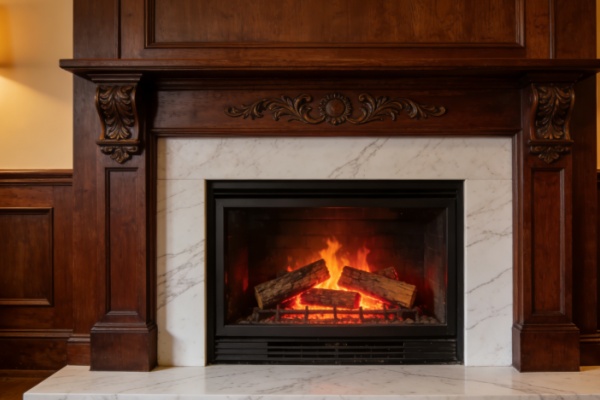 For architects, developers, contractors, and designers working on commercial, hospitality, and multi-residential projects, corner fireplaces1 represent a strategic design solution3—one that balances aesthetics, constructability, and lifecycle value.
This guide explores how corner fireplaces1 function in modern projects, with a strong focus on B2B decision criteria4: materials, installation efficiency, code compliance, and scalability.
Why Corner Fireplaces Make Sense in Modern Developments
Corner fireplaces are not a compromise—they are an optimization strategy.
Across hotels, mixed-use developments, multifamily residences, and high-end renovations, corner installations offer clear advantages:
- Efficient use of floor area in compact or irregular layouts
- Strong visual impact without consuming prime wall space
- Seamless integration into open-plan designs
- Compatibility with electric, gas, and linear fireplace systems
From a commercial standpoint, this means:
higher perceived value per square foot5, greater design flexibility, and fewer structural constraints.
Material Strategy: Moving Beyond Full-Depth Natural Stone
While full-depth natural stone remains a premium benchmark, modern B2B projects increasingly prioritize weight reduction, installation speed, and systemized solutions.
1. Natural Stone Veneer6 (High-End Benchmark)
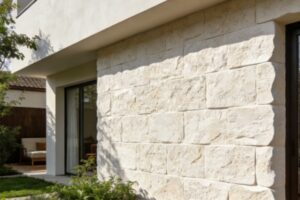
Natural stone veneer delivers unmatched authenticity and permanence.
Key Advantages
- Unique textures and natural color variation
- Timeless, premium appearance
- Excellent durability in high-traffic environments
Considerations
- Higher material and labor costs
- Skilled installation required
- Longer construction timelines
Best suited for:
Luxury residences, hotel lobbies, signature commercial spaces
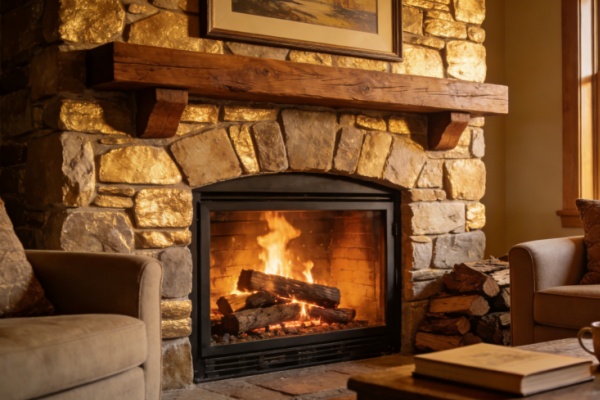
2. Lightweight Stone & Engineered Stone Systems7
Thin stone and modular stone cladding systems have become a preferred solution for many large-scale projects.
Why B2B clients choose them
- Reduced structural load
- Faster installation across multiple units
- Predictable costs and consistent quality
Ideal for:
Multifamily housing, hospitality chains, offices, and standardized developments
3. Porcelain Tile with Stone-Inspired Surfaces
In commercial and specification-driven environments, stone-look porcelain tile8 is now one of the most practical materials for corner fireplace surrounds.
Performance Benefits
- Non-combustible and fire-code friendly
- Heat, stain, and scratch resistant
- Suitable for electric and gas fireplaces
- Enables visual continuity between interior zones
Advanced surface technologies allow porcelain tiles to realistically replicate
limestone, travertine, slate, basalt, and other natural stone aesthetics, while offering superior technical performance.
Well suited for:
Hotels, retail, mixed-use developments, multifamily projects, and renovations
Application Across Project Types
Residential & Multifamily Projects
- Enhances perceived value in model units and shared spaces
- Supports repeatable layouts and fast delivery schedules
- Lightweight systems reduce structural demands
Hospitality & Commercial Spaces
- Creates a strong focal point in lobbies, lounges, and suites
- Durable surfaces withstand frequent use and cleaning
- Consistent design language across multiple locations
Renovation & Retrofit Projects
- Installs over existing substrates with minimal demolition
- Ideal for electric fireplace systems
- Reduces downtime in operational spaces
Installation Efficiency & Scalability9
For B2B projects, material selection directly impacts labor, scheduling, and profitability.
Well-designed fireplace cladding systems typically offer:
- Modular formats for repeatable layouts
- Precision edges for tight grout lines
- Compatibility with prefabricated fireplace units
- Reduced on-site cutting and material waste
These factors translate into:
lower labor costs, shorter project timelines, and improved margins.
Code Compliance, Durability & Lifecycle Value10
Stone and porcelain-based fireplace surrounds align well with modern building requirements:
- Non-combustible materials
- Long service life with minimal maintenance
- Resistance to thermal shock and surface wear
- Suitable for both residential and commercial codes
For developers and specifiers, this means lower long-term risk and stronger asset performance.
Design Versatility11: From Organic to Minimalist
Corner fireplaces can adapt to a wide range of architectural styles:
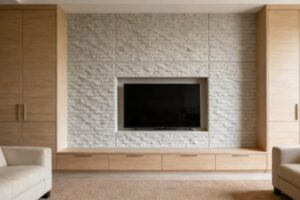
- Stacked or split-face textures for organic, hospitality-driven spaces
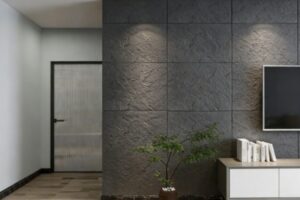
- Large-format porcelain slabs for contemporary interiors
- Neutral palettes for mass-market appeal
- Contrasting hearths and surrounds to add architectural depth
The corner placement keeps the design impactful yet controlled.
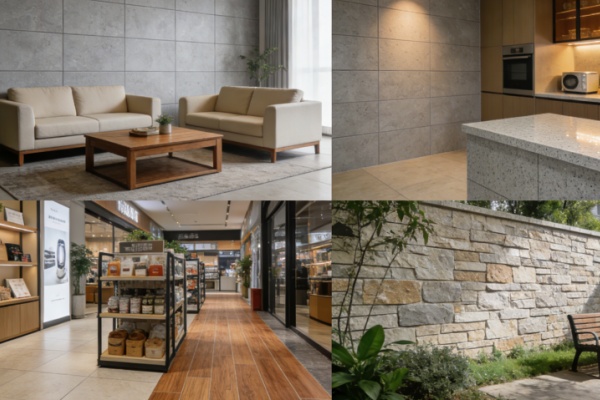
Conclusion: Corner Fireplaces as a Strategic Surface Application
Corner fireplaces are no longer decorative add-ons—they are architectural assets12.
For B2B projects, the right fireplace surface solution delivers:
- Clear spatial identity
- Reliable material performance
- Efficient, repeatable installation
- Long-term commercial value
By combining stone-inspired aesthetics with modern material engineering, corner fireplaces1 continue to play a vital role in contemporary residential and commercial environments.
For project specifications, custom formats, or large-scale applications, selecting the right surface material early in the design phase is key to achieving both visual impact and construction efficiency.
Corner fireplaces offer spatial efficiency and aesthetic appeal, making them a strategic choice for modern developments. ↩
Explore how corner fireplaces enhance design with their visual impact and efficient use of space. ↩
Learn how corner fireplaces balance aesthetics, constructability, and lifecycle value in projects. ↩
Understand the key factors like materials, installation efficiency, and code compliance for B2B projects. ↩
Discover how corner fireplaces enhance property value through design flexibility and efficient use of space. ↩
Explore the timeless appearance and durability of Natural Stone Veneer in high-end projects. ↩
Learn about the benefits of reduced structural load and faster installation with these systems. ↩
Find out how stone-look porcelain tile offers fire-code compliance and superior technical performance. ↩
Understand how modular formats and prefabricated units reduce labor costs and project timelines. ↩
Learn about the non-combustible nature and long service life of these materials. ↩
Explore the adaptability of corner fireplaces to various architectural styles and textures. ↩
Discover how corner fireplaces contribute to spatial identity and long-term commercial value. ↩