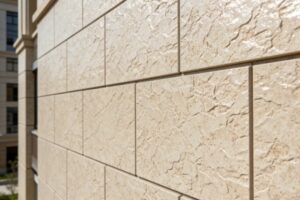
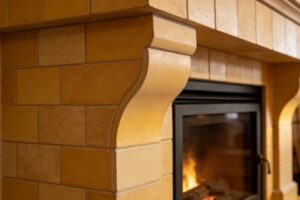
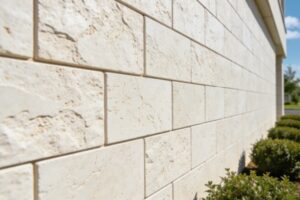
Elevate Interior Spaces with Stone Accent Walls
A Modern Approach Using Natural Stone & Flexible Stone Veneer
Interior stone accent walls1 have long been admired for their ability to transform ordinary rooms into refined, character-rich spaces. From residential interiors to commercial environments, stone introduces texture, depth, and a lasting sense of quality that few materials can match.
Today, however, interior design is evolving. Projects demand not only beauty, but also lighter materials2, faster installation, and greater flexibility, especially in renovation and commercial settings. This has led to a new generation of interior stone solutions — combining the timeless appeal of stone with modern, lightweight technology.
Why Stone Accent Walls Remain a Design Essential
Stone accent walls serve as focal points that anchor interior spaces visually and emotionally. Unlike paint or wallpaper, stone offers:
- Natural texture and organic variation3
- A sense of permanence and architectural value
- Compatibility with modern, rustic, and minimalist interiors
Whether used behind a reception desk, as a living room feature wall, or within hospitality and retail interiors, stone walls communicate quality and intention.
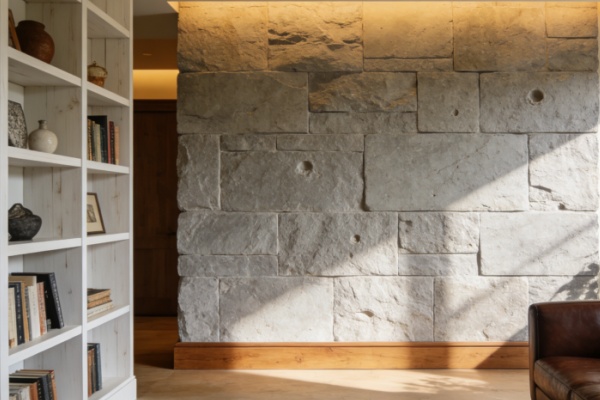
The Challenge with Traditional Stone Veneer Indoors
While natural stone veneer delivers undeniable visual impact, interior projects often face practical limitations:
- Weight restrictions4 on interior walls and partitions
- Complex installation requiring reinforced substrates
- Limited suitability for renovations, especially over existing finishes
- Difficulty adapting to curves, columns, or custom features
These constraints are especially common in apartments, offices, hotels, and retail spaces where structural modification is not an option.
Flexible Stone: Redefining Interior Stone Accent Walls
Flexible stone — sometimes referred to as soft stone veneer — offers a modern alternative designed specifically for today’s interior environments.
What Is Flexible Stone?
Flexible stone is manufactured using natural stone powder combined with advanced polymer composites. This process preserves the authentic look and mineral texture of real stone while dramatically reducing weight and thickness.
Key benefits include:
- Ultra-thin profile (approximately 1–3 mm)
- Over 70% lighter than traditional stone veneer
- Flexible enough for curved and irregular surfaces
- Easy cutting and installation using adhesive systems
The result is a stone surface that looks natural but installs like a modern interior finish.
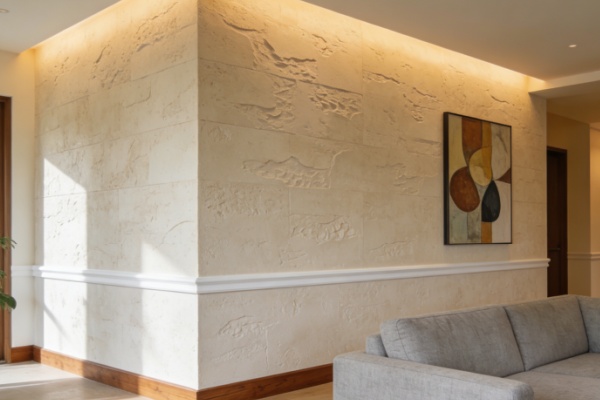
Interior Applications That Benefit from Flexible Stone
1. Feature Walls Without Structural Reinforcement5
Flexible stone allows designers to create stone accent walls1 on drywall, gypsum board, and lightweight partitions — without additional framing or reinforcement.
Ideal for:
- Living rooms and bedrooms
- Hotel guest rooms
- Office feature walls
2. Renovation Over Existing Surfaces6
One of the biggest advantages of flexible stone is its ability to install directly over existing finishes, such as:
- Painted walls
- Old tiles
- Concrete or cement boards
This minimizes demolition, reduces dust, and shortens renovation timelines — a major advantage for occupied commercial spaces.
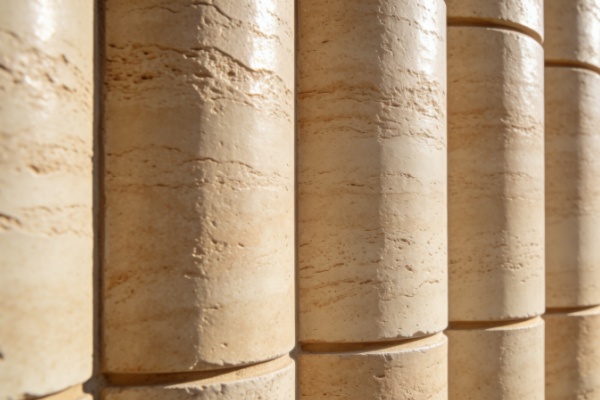
3. Curved Walls, Columns, and Architectural Details7
Traditional stone struggles with non-flat surfaces. Flexible stone excels in:
- Interior columns and pillars
- Curved walls and partitions
- Custom millwork and built-in features
This opens up creative design possibilities that were previously impractical with stone.
4. Commercial & High-Traffic Interiors8
Flexible stone retains the durability expected from stone surfaces while being easier to maintain and replace if needed.
Common commercial uses include:
- Hotel lobbies and corridors
- Retail stores and showrooms
- Restaurants and cafés
- Corporate reception areas
Natural Stone Look, Simplified Installation
Compared to traditional stone veneer, flexible stone significantly simplifies interior installation:
| Feature | Traditional Stone Veneer | Flexible Stone |
|---|---|---|
| Weight | Heavy | Ultra-light |
| Thickness | 20–40 mm | 1–3 mm |
| Substrate Requirements | Reinforced | Standard interior walls |
| Curved Surfaces | Not suitable | Fully compatible |
| Renovation Friendly | Limited | Excellent |
This makes flexible stone particularly attractive for fast-track interior projects and commercial renovations.
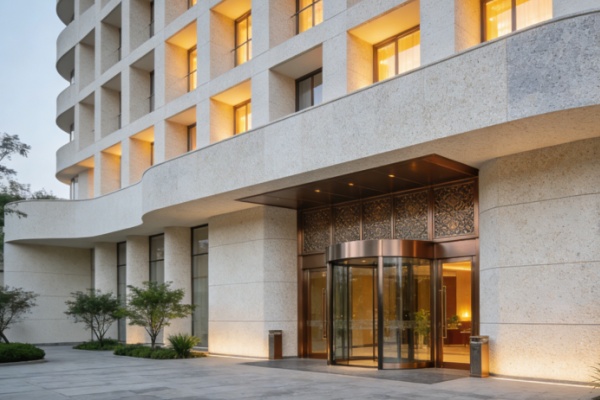
Design Versatility for Modern Interiors
Flexible stone is available in a wide range of textures and tones, from subtle linear patterns to rugged, organic stone finishes. It pairs naturally with:
- Wood and veneer panels
- Concrete and microcement
- Metal accents
- Neutral or minimalist interiors
The result is a balanced, contemporary aesthetic that enhances interior spaces without overwhelming them.
A Smarter Way to Add Long-Term Value
Stone accent walls continue to be associated with quality, durability, and premium design. By using lightweight stone solutions, projects gain:
- Authentic stone aesthetics
- Reduced installation risk
- Faster project completion
- Greater adaptability across interior environments
This makes flexible stone an ideal choice not only for designers and homeowners, but also for developers, contractors, and commercial property owners.
Conclusion
Interior stone accent walls1 remain a timeless design feature — but the way they are built is changing.
By combining the beauty of natural stone with the practicality of flexible stone technology, interior spaces can achieve high-end stone aesthetics without the limitations of traditional materials.
For modern interiors, renovations, and commercial projects, lightweight stone solutions represent the future of interior accent wall design.
Stone accent walls add texture, depth, and a sense of quality to spaces, making them a popular choice for enhancing interior design. ↩
Lighter materials facilitate faster installation and greater flexibility, especially in renovation and commercial settings. ↩
Natural texture and organic variation in stone accent walls provide a unique and timeless aesthetic that enriches interior spaces. ↩
Understanding weight restrictions is crucial for ensuring safe and effective installation of stone accent walls in various environments. ↩
Flexible stone allows for the creation of feature walls without the need for additional framing, making it ideal for lightweight partitions. ↩
Flexible stone can be installed directly over existing finishes, minimizing demolition and reducing renovation timelines. ↩
Flexible stone excels in adapting to non-flat surfaces, opening up creative design possibilities for curved walls and columns. ↩
Flexible stone offers durability and ease of maintenance, making it ideal for busy commercial spaces like hotels and retail stores. ↩