Accent Wall Solutions for Commercial & Residential Projects
From Design Concept to Specification-Ready Surface Applications
Accent walls are no longer just decorative elements reserved for residential interiors.
In today’s commercial, hospitality, and multi-unit residential projects, accent walls and feature walls1 have become strategic design tools—used to define space, guide movement, reinforce brand identity, and elevate perceived value without structural changes.
For architects, developers, and contractors, the challenge is no longer what looks good, but what performs well, installs efficiently, and scales across projects.
This guide explores high-impact accent wall solutions with a focus on material performance, installation efficiency, and long-term durability2, helping professionals move from inspiration to execution.
Why Accent Walls Matter in B2B Projects
In commercial and large-scale residential environments, accent walls serve multiple purposes:
- Visual zoning3 in open-plan spaces
- Brand storytelling in retail, hospitality, and office interiors
- Value engineering4, creating premium aesthetics without premium construction costs
- Fast renovation cycles, especially in tenant improvements and adaptive reuse projects
The right accent wall material can significantly reduce installation time, labor complexity, and ongoing maintenance—while still delivering architectural impact.
Accent Wall Material Categories: A Professional Comparison
Before selecting a surface, it’s critical to evaluate materials beyond appearance.
| Material Type | Visual Impact | Installation Speed | Weight | Maintenance | Commercial Suitability |
|---|---|---|---|---|---|
| Painted Drywall | Low–Medium | Fast | Very Light | High | Limited |
| Wood Panels | Medium–High | Medium | Medium | Medium–High | Moderate |
| Porcelain Tile | High | Slower | Heavy | Low | High |
| Natural Stone | Very High | Slow | Very Heavy | Low | High |
| Flexible Stone5 | High | Fast | Ultra-Light | Low | Very High |
This is where flexible stone surfaces begin to stand out for B2B applications.
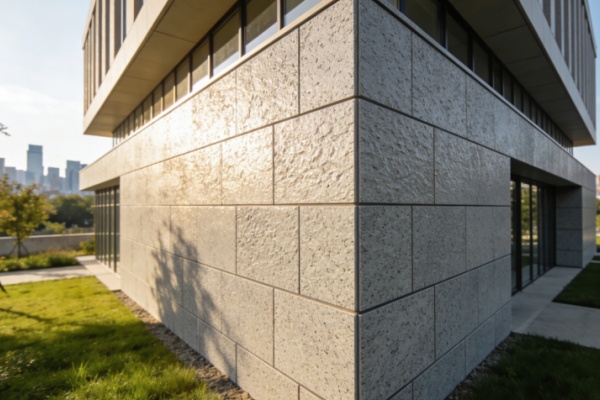
Flexible Stone5 Accent Walls: A Smart Alternative for Modern Projects
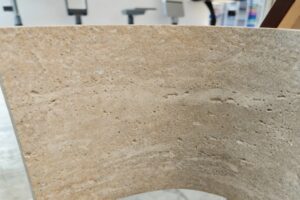
Flexible stone combines real stone texture with lightweight, bendable backing, creating a surface that delivers authentic materiality without the limitations of traditional stone.
Key Advantages for Architects & Developers
- Real stone surface6 – not a print or imitation
- Ultra-lightweight7 – ideal for retrofit and high-rise applications
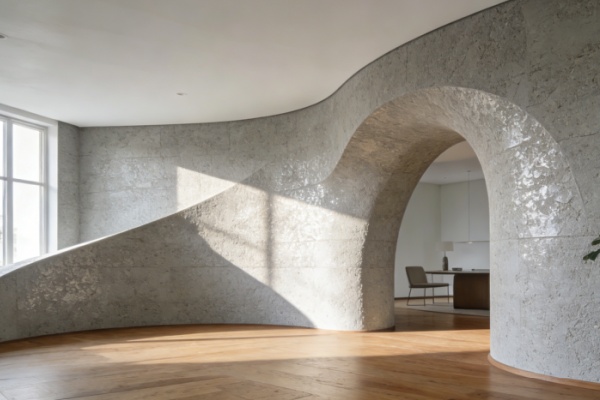
- Flexible installation – suitable for curves, columns, and irregular substrates
- Reduced labor time8 compared to thick stone or porcelain panels
- Lower structural load – critical for commercial renovations
Because flexible stone sheets can be installed over existing surfaces, they are particularly effective in:
- Hotel renovations
- Retail refresh cycles
- Office rebranding projects
- Multifamily common areas
- Tenant improvement (TI) work
High-Performance Accent Wall Applications by Space Type
Lobby & Reception Areas
First impressions matter. Flexible stone accent walls deliver natural texture and depth while allowing for fast installation during tight project timelines.
- Ideal for feature walls behind reception desks
- Compatible with integrated lighting and signage
- Creates premium perception without heavy construction
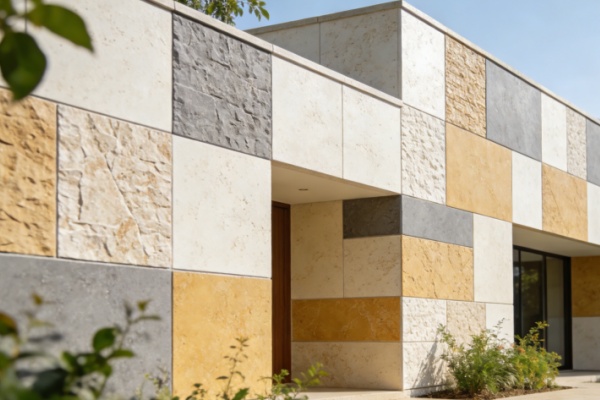
Retail & Showroom Interiors9
Accent walls guide customer flow and highlight merchandise.
- Stone-textured feature walls create contrast with shelving systems
- Lightweight panels allow frequent layout updates
- Durable surfaces withstand high-traffic environments
Hospitality: Hotels, Restaurants & Lounges10
In hospitality, materials must balance aesthetics with durability.
- Flexible stone offers warm, natural character
- Resistant to minor impacts and daily wear
- Simplifies installation on curved walls, bars, and columns
Multifamily & Mixed-Use Developments
Developers increasingly use accent walls to differentiate common spaces.
- Elevators lobbies, corridors, and amenity spaces
- Faster installation = reduced downtime
- Consistent appearance across multiple buildings or floors
Flexible Stone5 vs. Porcelain Tile for Accent Walls
Porcelain tile remains a strong choice for many commercial applications, but flexible stone fills a critical gap.
Choose porcelain tile when:
- Maximum surface hardness is required
- Wet areas demand certified slip resistance
- Large-format, seamless aesthetics are prioritized
Choose flexible stone when:
- Speed of installation matters
- Substrate limitations exist
- Weight reduction is critical
- Curved or non-standard surfaces are involved
In many projects, the most effective solution is combining both materials strategically—porcelain for floors and wet zones, flexible stone for vertical feature walls.
Installation & Specification Considerations
For professional projects, flexible stone surfaces typically offer:
- Adhesive-based installation systems
- Minimal substrate preparation
- Compatibility with drywall, cement board, plywood, and existing tile
- Reduced need for specialized stone-setting labor
This makes them especially attractive for design-build firms and contractors managing multiple sites.
Sustainable & Value-Driven Design
Using thinner stone layers means:
- Lower raw material consumption
- Reduced transportation emissions
- Less waste during installation
For projects targeting sustainability goals or green building standards, flexible stone can support environmentally responsible material strategies without sacrificing design intent.
Conclusion: Designing Smarter Accent Walls for Modern Projects
Accent walls have evolved from decorative extras into strategic architectural elements.
For today’s commercial and residential developments, success lies in selecting materials that deliver:
- Visual impact
- Installation efficiency
- Long-term durability
- Design flexibility
Flexible stone surfaces bridge the gap between traditional natural stone and modern construction demands—making them a powerful tool for architects, developers, and contractors seeking smarter, faster, and more adaptable accent wall solutions.
When design ambition meets practical execution, accent walls become more than features—they become assets.
Accent walls and feature walls are strategic design tools that define space and reinforce brand identity, making them essential in modern projects. ↩
These factors ensure that accent walls not only look good but also perform well and last long, crucial for architects and developers. ↩
Visual zoning helps organize large spaces, guiding movement and enhancing functionality without structural changes. ↩
Value engineering allows for premium aesthetics without high construction costs, optimizing budget and design. ↩
Flexible stone offers real stone texture with lightweight backing, ideal for modern projects requiring adaptability and reduced labor time. ↩
A real stone surface provides authentic materiality, enhancing the natural look and feel of the space. ↩
Ultra-lightweight materials reduce structural load, crucial for renovations and high-rise buildings. ↩
Reduced labor time means faster project completion, minimizing downtime and labor costs. ↩
Accent walls guide customer flow and highlight merchandise, enhancing the shopping experience. ↩
They balance aesthetics with durability, simplifying installation on curved surfaces and resisting daily wear. ↩