Bathroom Tile Solutions for Commercial and Hospitality Projects
Introduction
Bathroom tiles are more than a design choice—they are a critical component in commercial and hospitality projects. Selecting the right tile impacts durability, maintenance, safety, and long-term costs. From hotels and offices to hospitals and public restrooms, the wrong tile can lead to slips, water damage, and costly replacements. This guide provides a professional overview of bathroom tile materials, specifications, and applications for architects, contractors, and procurement specialists.
1. Bathroom Tile Applications in Commercial Projects
Choosing the right tile depends on its intended application. Commercial environments have higher traffic, stricter hygiene requirements, and different aesthetic expectations than residential spaces.
Shower Walls
- Water absorption1: Tiles must resist moisture to prevent mold and degradation.
- Durability: Porcelain is often preferred for high-moisture areas.
- Maintenance: Smooth finishes reduce cleaning time.
Bathroom Floors
- Slip resistance2: R-rated or DCOF-compliant tiles reduce accidents in wet areas.
- Traffic endurance3: Tiles should withstand heavy foot traffic without cracking or chipping.
- Cleaning efficiency: Large-format tiles reduce grout lines, lowering maintenance.
Commercial Restrooms & Hospitality
- High durability: Hotels, airports, and office buildings require tiles that maintain integrity under constant use.
- Aesthetic flexibility: Neutral and consistent colors ensure visual appeal across multiple rooms or locations.
- Long-term cost efficiency: Choosing tiles with extended lifespan reduces replacement frequency.
2. Ceramic vs. Porcelain Tiles4 for Professional Projects
When selecting bathroom tiles, understanding material properties is essential. The table below provides a B2B-focused comparison:
| Criteria | Ceramic Tile | Porcelain Tile |
|---|---|---|
| Water Absorption | 3–7% | ≤0.5% |
| PEI Rating5 (Wear Resistance) | III–IV | IV–V |
| Slip Resistance (DCOF / R-Rating) | Moderate | High |
| Thickness & Size Tolerance | Moderate | Precise |
| Recommended Applications | Low-traffic walls, decorative areas | High-traffic floors, showers, commercial restrooms |
| Maintenance Cost | Moderate | Low over time |
Key takeaway: For commercial bathrooms, porcelain tiles generally offer superior durability, water resistance, and slip safety, making them the preferred professional choice.
3. Essential Tile Specifications for Commercial Projects
Professional procurement decisions rely on measurable specifications. Architects and contractors should consider:
- Water absorption1 rate: Low absorption tiles prevent long-term water damage.
- Slip resistance2: Comply with local standards (R9–R12 or DCOF ≥ 0.42) to reduce liability.
- PEI rating: High wear ratings ensure durability under heavy foot traffic.
- Chemical & stain resistance6: Especially important in healthcare and food service environments.
- Fire rating7: Tiles must comply with building fire codes in certain projects.
- Size & thickness tolerances: Consistent manufacturing ensures smooth installation and minimal waste.
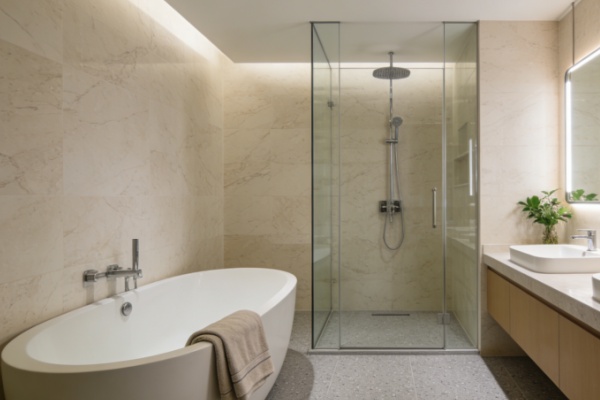
4. Design Considerations for Commercial Bathrooms
While durability and safety are critical, aesthetics remain important in hospitality and office environments:
- Tile size vs. grout lines: Larger tiles reduce grout, lowering maintenance.
- Color and pattern consistency: Crucial for multi-floor or multi-location projects.
- Light reflection and ambiance: Tiles influence perceived space and lighting in bathrooms.
- Batch matching: Ensure procurement of large projects is consistent to avoid visible color variations.
5. Compliance & Industry Standards
Professional projects must meet international standards to ensure safety and longevity:
- ANSI A137.18: American standard for ceramic tile specifications.
- ISO 130069: International standards for ceramic tiles, including dimensions and quality.
- EN 1441110: European standard for ceramic tiles, covering water absorption, mechanical strength, and chemical resistance.
- Local building codes: Always verify slip resistance, fire rating, and environmental requirements.
6. FAQs for Commercial Bathroom Tile Selection
Q: What tile is best for commercial bathrooms?
A: Porcelain tiles with high slip resistance and low water absorption are generally ideal.
Q: Are ceramic tiles suitable for hotel bathrooms?
A: Ceramic can work for decorative walls, but floors and high-moisture areas perform better with porcelain.
Q: How do I choose slip-resistant tiles?
A: Check the R-rating (R9–R12) or DCOF ≥ 0.42 for wet areas.
Q: What size tile reduces maintenance in public restrooms?
A: Large-format tiles with minimal grout lines reduce cleaning effort and improve hygiene.
Conclusion
For commercial and hospitality projects, bathroom tile selection is a strategic decision. Choosing the right material, size, and finish ensures safety, durability, and long-term cost savings. Architects, contractors, and procurement specialists should prioritize porcelain tiles for high-traffic areas, check compliance with industry standards, and plan installation with both design and maintenance in mind.
A well-planned tile solution transforms bathrooms into safe, durable, and visually appealing spaces, while avoiding costly mistakes.
Understanding water absorption helps in selecting tiles that prevent mold and degradation, crucial for maintaining hygiene and durability. ↩
Slip resistance is vital to prevent accidents in wet areas, ensuring safety in commercial and hospitality environments. ↩
Tiles with high traffic endurance withstand heavy foot traffic, reducing the need for frequent replacements and maintenance. ↩
Knowing the differences helps in choosing the right tile for specific applications, balancing cost, durability, and aesthetics. ↩
The PEI rating indicates wear resistance, essential for selecting tiles that endure heavy use in commercial settings. ↩
Tiles with high resistance to chemicals and stains are crucial in healthcare and food service environments to maintain cleanliness. ↩
Fire-rated tiles ensure compliance with building codes, enhancing safety in commercial and hospitality projects. ↩
Understanding ANSI A137.1 helps ensure tiles meet American standards for quality and safety in commercial applications. ↩
ISO 13006 ensures international compliance in tile dimensions and quality, crucial for global commercial projects. ↩
EN 14411 sets European standards for tile quality, ensuring durability and safety in commercial environments. ↩