Brick, Stone, or Modern Stone Systems?
A B2B Guide to Choosing Architectural Cladding for Contemporary Projects
When selecting exterior or interior cladding materials for commercial or residential developments, the decision is no longer limited to brick vs. traditional stone.
Today’s architects, developers, and contractors must balance design intent, structural constraints, installation efficiency, and long-term performance—often under tight budgets and compressed timelines.
This guide compares brick, conventional stone, and modern stone solutions to help B2B decision-makers choose materials that align with real-world project demands.
Understanding the Core Material Options
Brick: A Familiar, Traditional Choice
Brick remains widely used thanks to its established supply chain and proven durability.
Key characteristics:
- Uniform appearance and standardized modules
- Good thermal mass
- Familiar installation methods
Limitations in modern projects:
- Relatively heavy, with structural implications
- Poor adaptability for renovations
- Limited flexibility for contemporary architectural expression
Brick is reliable—but not always the most adaptable solution.
Traditional Stone: Authentic, but Resource-Intensive
Natural stone is still a premium choice for façades, fireplaces, and feature walls where authenticity matters.
Advantages:
- Genuine texture and visual depth
- Long lifespan
- Unique natural variation
Challenges for large-scale or fast-track projects:
- High weight requiring additional structural support
- Higher transportation and labor costs
- Longer installation timelines
- Limited suitability for lightweight structures or retrofits
These constraints often reduce feasibility in cost- and time-sensitive developments.

The Rise of Modern Stone Solutions
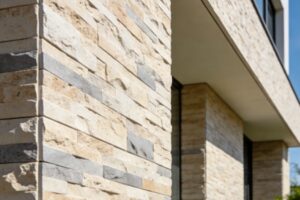
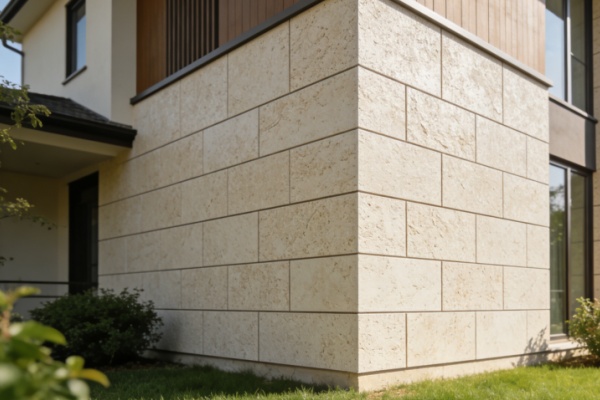
Advances in material technology have introduced modern stone systems designed to retain the visual value of stone while addressing traditional limitations.
These solutions include:
- Ultra-thin stone systems
- Lightweight composite stone panels
- Flexible stone
Why Flexible Stone Is Gaining Traction in B2B Projects
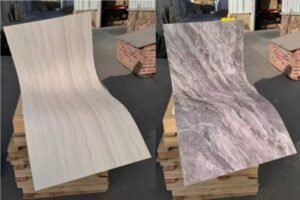
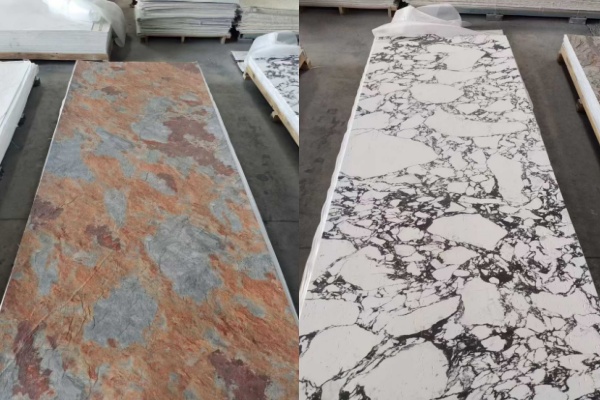
Flexible stone represents a new category of architectural surfacing—combining stone aesthetics with lightweight, adaptable performance.
Key Benefits for Commercial and Professional Applications
1. Lightweight by Design
Compared to brick and conventional stone, flexible stone significantly reduces:
- Structural load
- Need for reinforcement
- Transportation and handling costs
This makes it ideal for high-rise buildings, renovations, and modular construction.
2. Faster, More Predictable Installation
In commercial projects, time equals cost.
Flexible stone enables:
- Shorter installation cycles
- Lower labor intensity
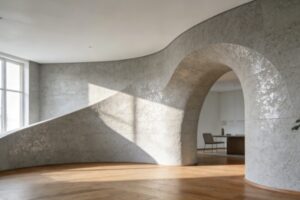
- Easy application on curved or irregular surfaces
The result: improved scheduling reliability and reduced on-site risk.
3. Design Freedom Without Sacrificing Aesthetics
Unlike rigid materials, flexible stone can be applied to:
- Curved walls
- Columns and architectural details
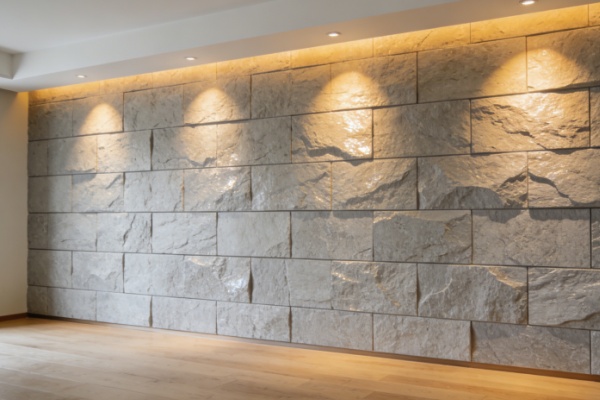
- Feature walls and even ceilings
This opens new creative possibilities while preserving a natural stone appearance.
4. Ideal for Renovation and Retrofit Projects
Flexible stone excels where:
- Existing structures cannot support heavy cladding
- Minimal demolition and disruption are required
It aligns with growing demand for sustainable renovation and low-impact construction.
Material Comparison at a Glance
| Criteria | Brick | Traditional Stone | Flexible Stone |
|---|---|---|---|
| Weight | Medium | Heavy | Ultra-light |
| Installation Speed | Moderate | Slow | Fast |
| Design Flexibility | Low | Medium | High |
| Retrofit Suitability | Low | Low | High |
| Cost Predictability | Moderate | Low | High |
| B2B Scalability | Medium | Limited | Excellent |
Recommended Applications by Project Type
Commercial Complexes & Office Buildings
- Priority: efficiency, standardization, cost control
- Recommended: modern stone systems with flexible stone elements
Hospitality & Retail
- Priority: visual impact and fast delivery
- Recommended: flexible stone for feature walls and brand-driven spaces
Renovation & Adaptive Reuse
- Priority: structural limits, reduced disruption
- Recommended: lightweight and flexible stone systems
High-End Residential Developments
- Priority: material quality and long-term value
- Recommended: hybrid use of traditional stone and flexible stone
Beyond Materials: A Smarter Selection Framework
Material selection today goes beyond appearance—it affects the entire project lifecycle:
- Structural efficiency
- Construction logistics
- Maintenance requirements
- Design adaptability
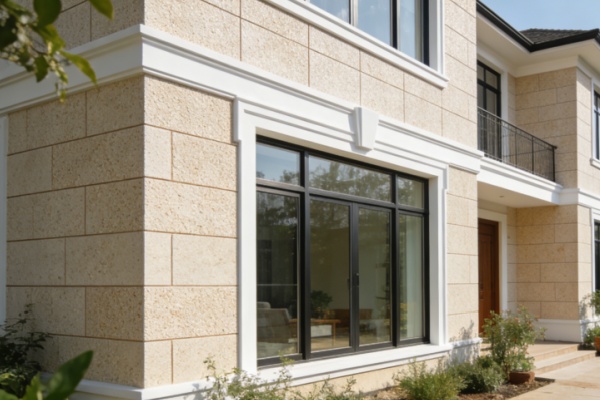
Modern stone solutions, especially flexible stone, allow professionals to meet design goals while staying aligned with real construction constraints.
Conclusion: Moving Past the “Brick vs. Stone” Debate
In contemporary architecture, asking “brick or stone?” is no longer enough.
The more relevant question is:
Which material delivers design impact, construction efficiency, and commercial viability—at the same time?
For a growing number of projects, modern stone systems provide the answer.
If you’re developing content for architects, developers, or contractors, this type of page can serve as a high-intent SEO pillar—bridging informational search demand with real B2B decision-making.