Have you ever been limited by rigid materials on a project? Traditional stone is heavy and inflexible. This makes creating modern, curved designs1 difficult and expensive.
No, you cannot bend ordinary rock. However, an innovative material called flexible stone veneer2 now makes this possible. It is a thin sheet of real stone3 bonded to a flexible backing, allowing it to bend around curves while keeping the authentic look4 and feel of stone.
I remember a project a few years ago for a boutique hotel. The architect designed a stunning, wave-like reception wall5.
We spent weeks trying to figure out how to clad it with porcelain, which involved countless cuts and a huge amount of waste. The end result was good, but the cost and time were enormous. If flexible stone had been widely available then, it would have saved us so much trouble.
This new technology is truly changing how we approach these kinds of design challenges. It opens up possibilities that were once just too impractical or expensive to consider. Now, let's look at what makes this material so special.
What makes flexible stone so light and thin?
Struggling with heavy materials that increase shipping and labor costs? Heavy tiles mean more budget spent on transport and structural support. What if your wall cladding was surprisingly lightweight?
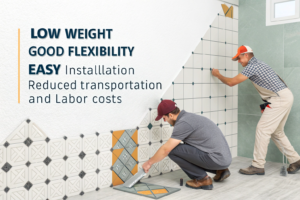
Flexible stone is incredibly thin, typically only 2-4 millimeters thick. This is achieved by slicing a very thin layer of real stone and bonding it to a fiberglass backing6. This process drastically reduces weight, making it cheaper to ship and much easier to install.
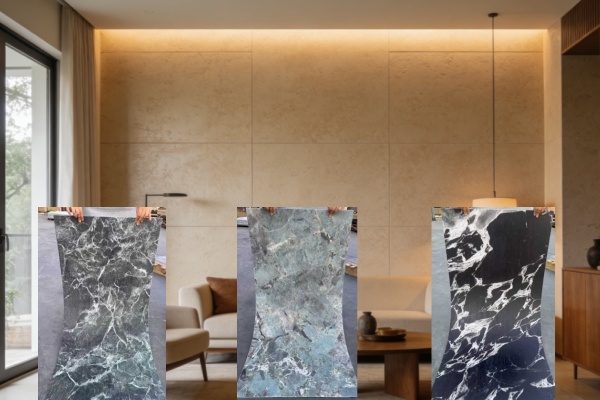
The magic of flexible stone is in its manufacturing. We don't cut a thick slab of rock. Instead, a special resin and a sheet of fiberglass backing6 are applied to a large block of natural stone, like slate or quartzite.
Once the resin cures, a very thin layer of the stone surface is peeled off, bonded permanently to the backing. It’s a brilliant way to get the real stone texture without the bulk and weight.
The Impact on Your Projects
For our clients, who are often importers and contractors, the benefits are immediate and clear. Lighter weight means you can fit more square meters into a single shipping container, which directly lowers freight costs per unit.
On the job site, one person can easily carry and position a large sheet, speeding up installation and reducing labor needs.
Weight Comparison: Flexible Stone vs. Traditional Tile
| Material | Typical Thickness | Approximate Weight (per m²) |
|---|---|---|
| Flexible Stone Veneer | 2-4 mm | 1.5 - 2.5 kg |
| Standard Porcelain Tile | 10 mm | 20 - 25 kg |
| Natural Stone Slab | 20 mm | 50 - 60 kg |
This massive weight reduction also means you don't need to engineer heavy-duty structural support for the walls, saving both time and material costs, especially in renovation projects7.
How can a stone material be flexible enough for curved walls?
Are curved walls and columns a design nightmare? Cutting rigid tiles to fit complex shapes is time-consuming and creates a lot of waste. Imagine wrapping a surface in stone as easily as wallpaper.
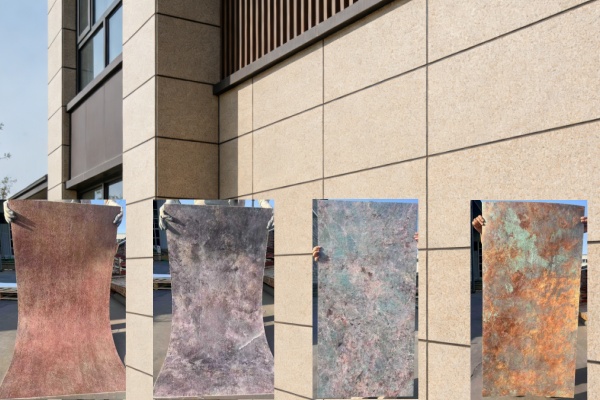
The flexibility comes from its composite structure. The thin, real stone layer is bonded to a flexible backing, usually fiberglass. This allows the entire sheet to bend around tight curves and columns without cracking, making it perfect for architectural features8 where rigid tiles won't work.
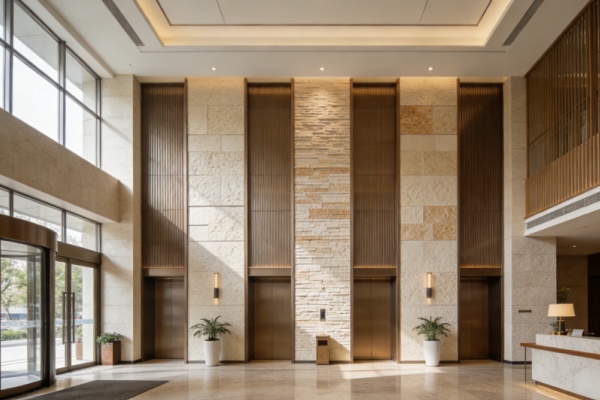
The science behind it is simple but effective. The stone itself is just a thin veneer, providing the aesthetic. The real strength and flexibility come from the backing material. Think of it like a stone skin fused to a flexible skeleton.
This combination allows the sheet to be bent, both concave and convex, to a surprising degree. We’ve seen it used to wrap around columns with a small radius, something that would be impossible with traditional porcelain or stone without extensive, costly custom cutting.
Where This Flexibility Shines
This feature is a game-changer for architects and designers. It’s not just for simple curves. You can apply it to undulating walls, rounded reception desks, and other unique architectural elements.
It gives you a seamless, natural stone finish where you would otherwise have to settle for many small tiles with distracting grout lines.
Application on Curved Surfaces: A Comparison
| Feature | Flexible Stone Veneer | Traditional Porcelain Tile |
|---|---|---|
| Seamless Look | Achieves a continuous stone surface. | Requires many grout lines, breaking the pattern. |
| Installation Time | Fast; apply large sheets quickly. | Slow; requires precise cutting for each piece. |
| Material Waste | Minimal waste. | High waste from cutting and breakage. |
| Design Freedom | Excellent for complex, organic shapes. | Limited to simple curves or faceted looks. |
For contractors, this means you can deliver on ambitious designs without the usual headaches and budget overruns.
Is flexible stone durable and easy to maintain?
Worried that a thin, flexible material won't last? Durability and maintenance are key concerns for any building material. You need a solution that looks good and performs for years.
Yes, it is very durable. Despite being thin, the stone surface is tough. Many products are also treated with a protective nano-coating. This makes them stain-resistant, water-repellent, and even self-cleaning9, as rain can wash away surface dirt, reducing long-term maintenance.
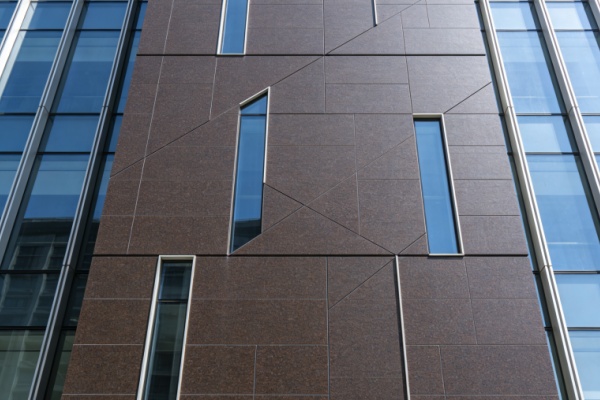
We always tell our clients that a material is only as good as its long-term performance. Flexible stone delivers here. The stone layer, while thin, is still genuine rock with natural hardness10.
The real advantage, however, often comes from the sealant applied during manufacturing. This protective layer penetrates the stone's pores, preventing liquids, oils, and dirt from seeping in and causing stains. It's a key feature that makes it suitable for both interior and exterior applications.
More Than Just a Pretty Face
This durability extends to weathering. The material is UV-resistant11, so the colors won't fade in the sun. It is also frost-resistant, making it a viable option for building facades in colder climates.
For our partners who supply materials for large commercial projects or residential developments, this low-maintenance aspect is a major selling point. It translates directly into lower operating costs for the building owner over the life of the property.
A Look at Long-Term Value
| Maintenance Task | Flexible Stone (Sealed) | Unsealed Natural Stone |
|---|---|---|
| Stain Removal | Wipes clean easily. | Difficult; stains can be permanent. |
| Water Resistance | High; water beads off the surface. | Porous; can absorb water and grow mold. |
| Outdoor Cleaning | Often self-cleaning9 with rain. | Requires regular pressure washing. |
| Resealing | Infrequent, depending on wear. | Requires frequent, regular resealing. |
This makes it a smart, forward-thinking choice for almost any wall application.
What design options are available with flexible stone?
Tired of the same old design choices? Finding unique materials to make your project stand out is a constant challenge. You need a product that offers both performance and powerful aesthetics.
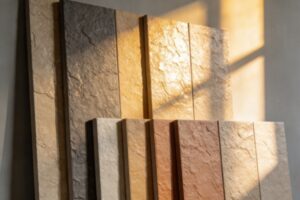
The design potential is huge. Because it uses a real stone layer, it offers the authentic look4 of materials like slate, sandstone, and quartzite.
The technology can also be used to create surfaces that mimic wood, metal, and even leather, offering endless creative possibilities.
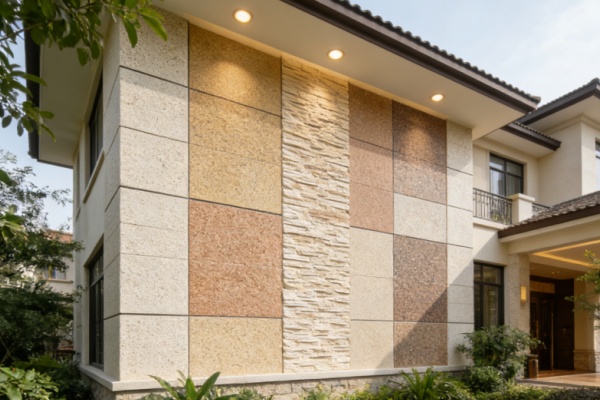
As a manufacturer who specializes in OEM/ODM solutions, this is where things get exciting for us and our clients. The core of flexible stone is its authenticity.
You are getting the unique patterns12, colors, and textures that only real stone can provide.
Each sheet is one-of-a-kind, just like a slab of natural stone. This allows for the creation of truly luxurious and organic-feeling spaces. We have helped clients develop entire collections based on specific types of stone from different regions.
Creating a Signature Look
The versatility doesn't stop with natural stone. The underlying technology of bonding a thin veneer to a backing can be adapted. We are seeing new products that use this method to create flexible wood surfaces, metallic sheets, and other textured finishes.
This opens the door for our partners—brands, importers, and developers—to create their own exclusive product lines13. Imagine offering a complete wall-cladding solution that includes matching stone, wood, and metal looks, all using the same easy-to-install, lightweight system.
A Palette for Any Project
| Texture / Look | Ideal Application |
|---|---|
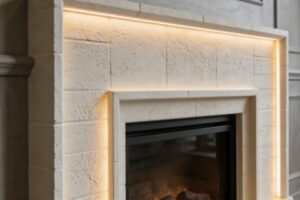
| Dark Natural Slate | Modern exteriors, feature walls, fireplace surrounds. |
| Sandy Quartzite | Spa-like bathrooms, bright living spaces, retail stores. |
| Mica-Flecked Stone | Hotel lobbies, high-end restaurants, reception desks. |
| Faux Wood Grain | Office partitions, residential accent walls, cabin interiors. |
This material gives designers a much larger toolbox to work with, helping them create spaces that are truly memorable.
Conclusion
Flexible stone is a game-changing material. It is lightweight, versatile, and durable, offering the beauty of natural stone without the traditional limitations. It's a perfect solution for modern design.
Discover how flexible materials can revolutionize the way we approach curved designs. ↩
Explore the innovative uses of flexible stone veneer in modern architecture and design. ↩
Learn about the advantages of using thin stone sheets for lightweight and flexible applications. ↩
Discover how authentic-looking materials can enhance the aesthetic appeal of spaces. ↩
Find out how flexible materials can create stunning architectural features like wave-like walls. ↩
Understand the importance of fiberglass backing in enhancing the flexibility and durability of stone. ↩
Learn how flexible stone can simplify and enhance the renovation process. ↩
Discover the architectural possibilities that flexible stone can bring to your projects. ↩
Discover the technology behind self-cleaning flexible stone and its maintenance benefits. ↩
Learn about the durability of flexible stone and its performance in various applications. ↩
Understand the significance of UV-resistance in prolonging the life of exterior materials. ↩
Learn how unique patterns can add character and charm to architectural projects. ↩
Explore the potential for creating unique product lines using flexible stone technology. ↩