You might already know that choosing the wrong flooring for a high-traffic business can cost you thousands in endless maintenance and early replacements…
But how do you find the perfect commercial grade porcelain tile, exactly?
Well, you’re in for a treat because I’ve put together a complete guide.
As a commercial project expert, I know that investing in the right flooring goes far beyond just picking a nice design. It’s about unmatched durability, strict safety ratings, and long-term cost efficiency.
In this post, you’re going to learn exactly how to select and source the best porcelain flooring for your specific space, step by step.
From decoding PEI ratings to navigating bulk orders and authentic finishes, it’s all here.
Let’s dive right in.
Understanding Commercial Grade Porcelain Tile
When outfitting demanding commercial spaces, standard flooring solutions simply cannot withstand the daily abuse of heavy foot traffic, equipment, and spills. Commercial grade porcelain tile is engineered specifically for these rigorous demands. We provide premium full body porcelain options that deliver uncompromising strength, ensuring your architectural investment remains flawless for decades.
Ceramic vs. Porcelain in High-Traffic Areas
Choosing between standard ceramic tile and commercial porcelain comes down to material density and water absorption. While ceramic tile is perfectly suitable for light residential applications, it rapidly degrades in heavy-duty environments. Porcelain is manufactured using refined clay and fired at significantly higher temperatures, resulting in a dense, incredibly hard, and moisture-resistant surface.
| Feature | Standard Ceramic Tile | Commercial Porcelain Tile |
|---|---|---|
| Density & Hardness | Moderate | Extremely High |
| Water Absorption | > 0.5% (Porous) | < 0.5% (Impervious) |
| Traffic Suitability | Light to Moderate | Heavy Commercial |
| Maintenance | Requires careful upkeep | Extremely easy to clean |
Manufacturing Standards and PEI Ratings
To guarantee long-term performance, professional flooring must strictly adhere to global manufacturing standards. The Porcelain Enamel Institute (PEI) rating is the definitive metric used to measure surface wear and abrasion resistance. When selecting tiles for commercial applications, anything below a PEI 4 is a compromised investment.
- PEI 3: Suited for moderate residential traffic. Not recommended for commercial use.
- PEI 4: Engineered for moderate to heavy traffic. Ideal for restaurants, corporate offices, and light retail.
- PEI 5: Built for heavy to extra-heavy traffic. The absolute standard for shopping malls, airports, exterior walkways, and major public buildings.
Advantages of Commercial Porcelain Flooring
Upgrading commercial spaces requires materials that actually last. We skip standard ceramic tile for heavy-duty projects and go straight for commercial grade porcelain tile because the long-term benefits speak for themselves.
Unmatched Durability and Wear Resistance
- Built for Heavy Traffic: Constant footfall and heavy rolling loads won’t wear down the surface.
- Full Body Porcelain: The color and pattern go completely through the tile. If a heavy impact causes a chip, the damage remains practically invisible.
Low Maintenance and Stain Resistance
You need practical flooring solutions that do not eat up the maintenance budget or disrupt operations.
- Non-Porous Surface: Spills, grime, and grease sit on top of the tile, making the floor incredibly easy to clean.
- Zero Sealing Required: Unlike natural stone or concrete, these tiles are ready for business from day one without expensive upkeep.
Anti-Slip Safety and R-Ratings
Liability is a real concern, so we always factor in traction. Slip-resistant textures keep your staff and customers safe in high-paced environments.
| R-Rating | Recommended Commercial Use |
|---|---|
| R9 – R10 | Lobbies, retail floors, and general dry areas |
| R11 – R12 | Commercial kitchens, bathrooms, and wet zones |
Freeze-Thaw and UV Resistance
Your investment should not crack under weather extremes or lose its appeal over time.
- Weatherproof: Near-zero water absorption prevents the tiles from expanding and cracking during brutal freeze-thaw cycles.
- Fade-Proof: Absolute UV resistance guarantees the color stays true, even under intense, direct sunlight in storefront windows or outdoor patios.
Popular Design Styles and Finishes
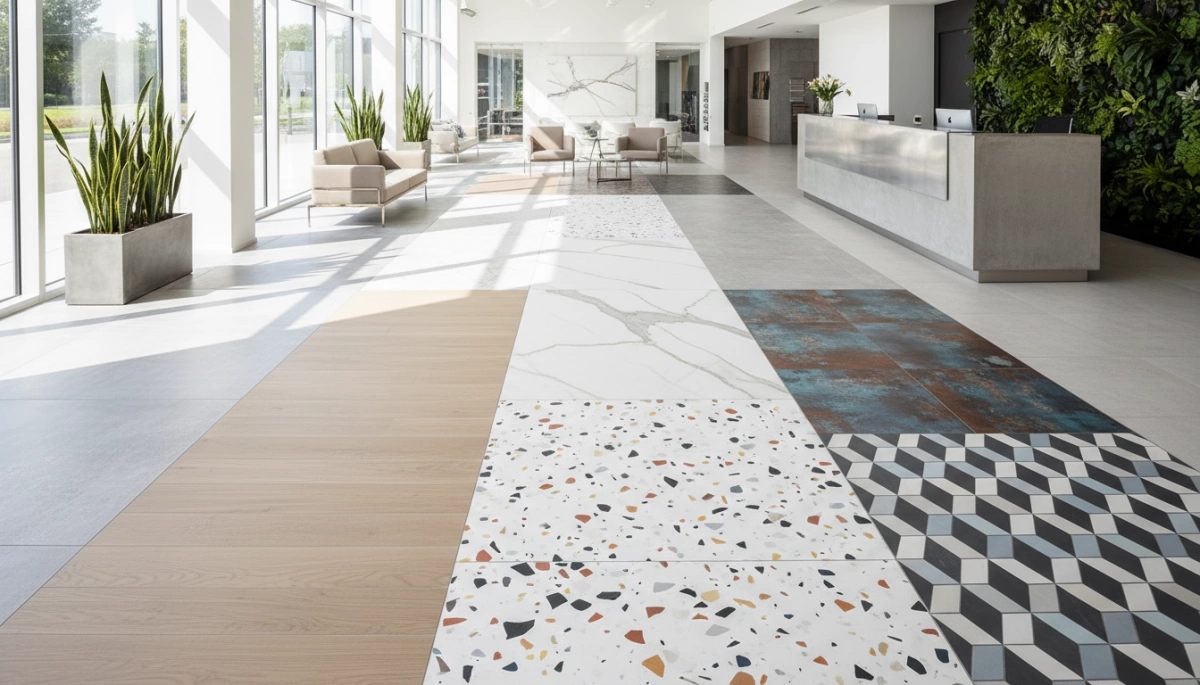
When I talk to clients about commercial grade porcelain tile, the biggest surprise is always the design versatility. You don’t have to sacrifice style for durability in your commercial spaces. Today’s manufacturing gives us incredible visual options that fit any brand identity.
Authentic Stone and Concrete Looks
Real stone or poured concrete looks amazing, but it cracks, stains, and requires constant sealing. We provide porcelain alternatives that solve these exact problems.
- Stone Look: Captures the natural veins of marble, granite, or slate. We often use full body porcelain for these, meaning the color goes all the way through, so minor chips are practically invisible.
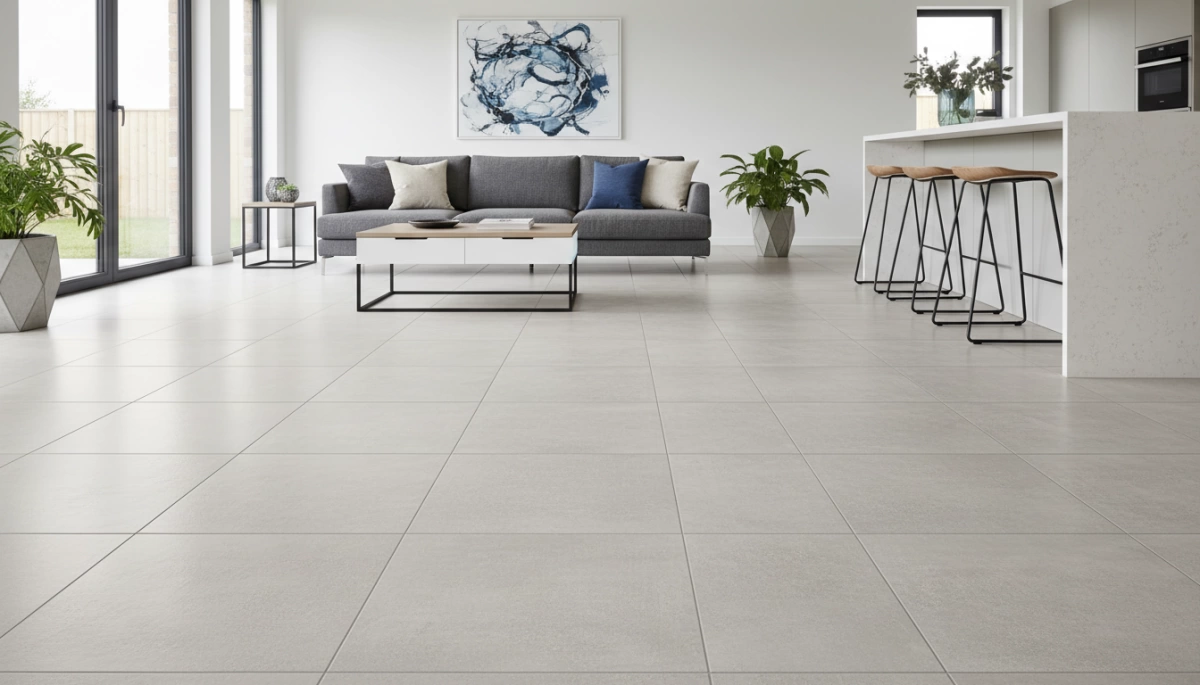
- Concrete Look: Delivers a sleek, industrial vibe perfect for modern retail spaces, lofts, or corporate hubs.
- The Benefit: You get a premium, heavy-duty aesthetic without the premium maintenance hassle.
Warmth of Wood Effect Porcelain
Wood floors bring a welcoming warmth to a room, but natural timber gets destroyed quickly in high-traffic commercial environments. Wood effect porcelain is one of our most popular flooring solutions for this exact reason.
- Highly Realistic: Modern digital printing creates convincing grain patterns, knots, and textures.
- Waterproof & Tough: Unlike natural hardwood, it won’t warp, dent from high heels, or fade under large windows.
- Zero Upkeep: It remains incredibly easy to clean—just sweep and mop at the end of the day.
Matte, Polished, and Textured Finishes
The right surface finish makes or breaks the functionality of your floor. Here is how I usually break down the options based on daily use:
| Finish Type | Best Use Case | Key Feature |
|---|---|---|
| Matte | General retail, offices, lobbies | Hides smudges, dust, and footprints well while offering a clean, modern look. |
| Polished | Luxury boutiques, hotel entries | Reflects light beautifully, creating a high-end, spacious, and brilliant feel. |
| Textured | Commercial kitchens, entryways | Highly slip-resistant, maximizing employee and customer safety in wet environments. |
Matching the right design with the correct finish ensures your commercial floor looks great and performs flawlessly under heavy daily use.
Top Application Scenarios for Commercial Spaces
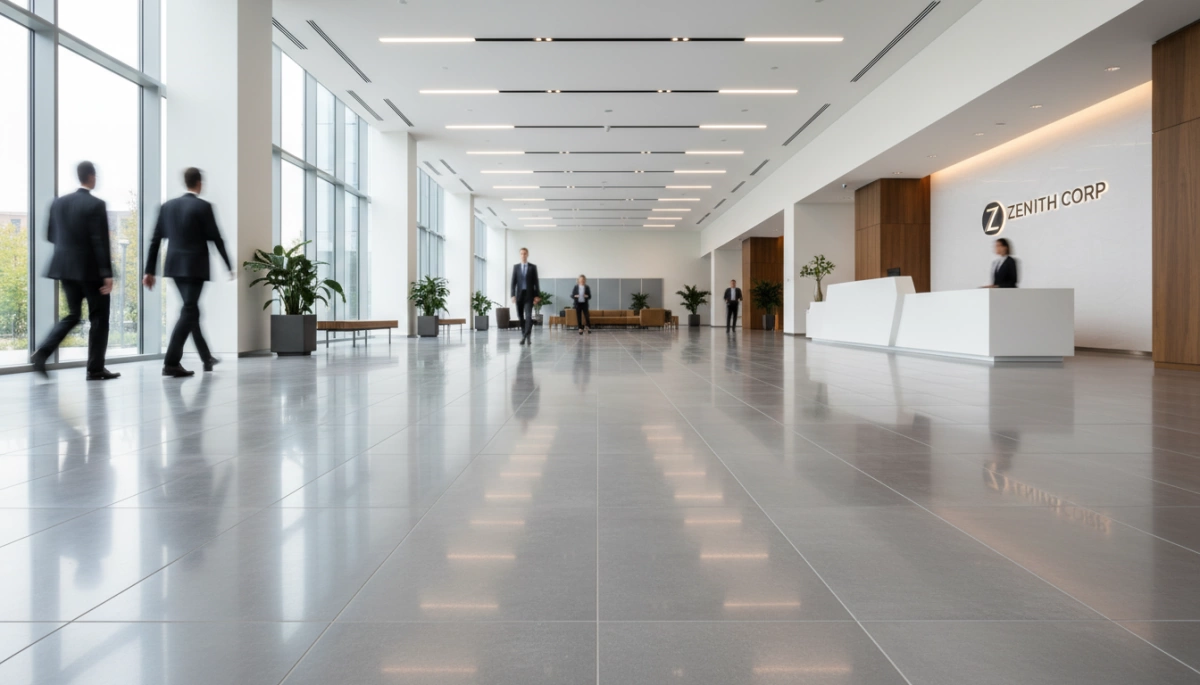
When we talk about outfitting commercial spaces, the flooring choice isn’t just about aesthetics; it’s about survival. High-traffic zones demand materials that can take a beating day in and day out without losing their appeal. This is where commercial grade porcelain tile truly shines. Over the years, I’ve seen these tiles transform functional spaces into architectural statements, proving that durability doesn’t have to come at the expense of design.
Retail Stores and Shopping Centers
In the retail world, the floor is the stage. It has to withstand thousands of footsteps, shopping carts, and the occasional dropped product, all while looking pristine to welcome customers. Commercial grade porcelain tile is the go-to here because it handles heavy foot traffic effortlessly.
- Durability: Unlike vinyl or wood, porcelain won’t dent or scratch easily under the constant friction of shoes and wheels.
- Design Flexibility: Whether a boutique needs a chic marble look or a large mall requires a neutral, modern concrete finish, porcelain delivers the aesthetic without the high maintenance of natural materials.
- Safety: Large format tiles reduce grout lines, creating a smoother surface for carts while maintaining necessary slip resistance for customer safety on rainy days.
Hotels and Hospitality Environments
First impressions in hospitality are everything. From the grand lobby to the private en-suite bathrooms, the flooring sets the tone for the guest experience. We often recommend full body porcelain for these environments because the color runs through the entire thickness of the tile. If a chip happens—though rare—it’s barely noticeable.
Hotels benefit massively from the low maintenance of porcelain. Housekeeping teams can clean these floors quickly and efficiently, ensuring rooms are turned over faster. Plus, the ability to mimic warm wood tones allows hotels to create cozy, inviting atmospheres in guest rooms without worrying about water damage or warping that real timber would suffer.
Restaurants and Commercial Kitchens
This is arguably the toughest environment for any flooring solution. Commercial kitchens are a battlefield of grease, spills, high heat, and dropped heavy pots. Here, safety and hygiene are non-negotiable.
- Hygiene: Porcelain is non-porous, meaning it doesn’t harbor bacteria or absorb distinct food odors. It is incredibly easy to clean and sanitize, meeting strict health code requirements.
- Slip Resistance: For the back-of-house, we prioritize tiles with high R-ratings (slip resistance) to prevent accidents in wet or oily conditions.
- Stain Resistance: Acidic spills like wine, lemon juice, or tomato sauce wipe right off without staining, keeping the front-of-house dining area looking professional throughout the service.
Corporate Offices and Public Buildings
Corporate offices and public institutions like libraries or government buildings need flooring that commands respect and endures for decades. These spaces often see steady, consistent traffic and require a professional, polished look.
Commercial porcelain tiles offer a sophisticated solution that bridges the gap between utility and style. In open-plan offices, they help in maintaining indoor air quality because they don’t trap dust or allergens like carpet does. Furthermore, for public buildings with high ceilings and vast atriums, large-format porcelain slabs create a seamless, monumental look that feels permanent and grounded. It is a smart investment that reduces long-term renovation costs.
Selection Tips for Commercial Grade Tiles
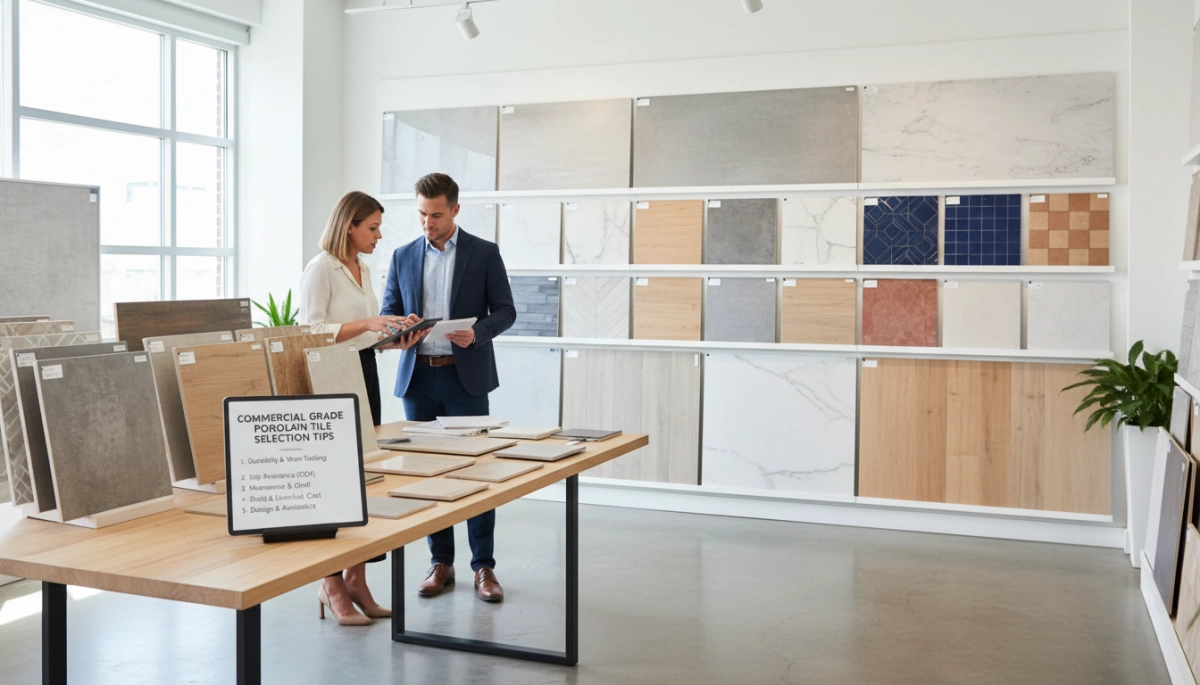
Choosing the right flooring for a business isn’t just about picking what looks good; it’s about finding a balance between performance and design. When I advise clients on commercial grade porcelain tile, I focus on specific technical requirements that ensure the floor lasts for decades, not just years.
Evaluating Traffic Levels and Use Cases
The first thing we look at is foot traffic. Not every commercial space is created equal. A boutique hotel lobby sees a very different kind of wear than a busy airport terminal or a shopping mall corridor.
- Light Commercial: Areas like private offices or hotel bathrooms. Here, standard durability works fine.
- Heavy Commercial: Main entryways, retail aisles, and restaurants. These need tiles with a high PEI rating (usually IV or V) to withstand constant friction and potential impacts.
- Specialized Zones: Commercial kitchens or wet areas require specific slip-resistant properties. I always recommend checking the dynamic coefficient of friction (DCOF) to ensure safety compliance.
Understanding the specific “use case” prevents overspending on industrial-grade specs where they aren’t needed, or worse, installing a residential tile that cracks under a pallet jack.
Choosing the Right Tile Size and Thickness
Size matters for both aesthetics and longevity. While large-format tiles are trendy because they create a seamless, expansive look with fewer grout lines, they require a perfectly level substrate. If the subfloor isn’t flat, those large tiles are prone to cracking.
- Standard Thickness (8-10mm): Suitable for most retail and office environments.
- Extra Thick (20mm+): Essential for outdoor pavers or industrial areas where heavy machinery or vehicles might pass through.
- Format Considerations: Smaller tiles offer more grout lines, which naturally increases slip resistance—a smart choice for wet areas like locker rooms or kitchens.
Matching Brand Aesthetics and Colors
Your floor is the canvas for your brand. Commercial grade porcelain tile now comes in such a wide array of digital prints that you don’t have to sacrifice style for durability.
- Neutral Tones: Grays, beiges, and concrete looks are forgiving. They hide dirt well in high-traffic zones, reducing the frequency of deep cleaning during the day.
- Brand Alignment: If your brand is organic and warm, wood-look porcelain offers that cozy vibe without the maintenance of real timber. For tech companies or modern showrooms, polished concrete or sleek monochromatic full body porcelain creates a sharp, professional edge.
The goal is to select a color and finish that complements the brand identity while being practical enough to mask the inevitable dust and footprints of a busy workday.
Bulk Purchasing Considerations
When outfitting massive commercial spaces, getting your materials at scale is the smartest move you can make. I always tell my clients that planning ahead is the secret to a successful and on-budget project.
Bulk Order Cost Efficiency
Buying commercial grade porcelain tile in bulk directly protects your bottom line. Volume orders drastically cut down the price per square foot. If you want the heavy-duty performance of full body porcelain without blowing the budget, ordering your materials all at once is the way to do it. It also guarantees that every single tile comes from the exact same manufacturing batch, avoiding any awkward color mismatches across your floor plan.
| Purchasing Strategy | Cost Impact | Design Consistency |
|---|---|---|
| Phased/Small Orders | Higher overall cost | Risk of slight color and texture variations |
| Bulk Purchasing | Maximum volume discounts | Uniform finish guaranteed |
Eco-Friendly Flooring Solutions
Global projects today demand responsible, green building practices. Fortunately, commercial grade porcelain tile is one of the most sustainable flooring solutions you can choose. It is crafted from natural clays and often incorporates high levels of recycled materials. Because these tiles are incredibly durable and easy to clean without relying on harsh industrial chemicals, they easily outlast standard ceramic tile or synthetic alternatives.
- Zero Harmful VOCs: Completely safe for indoor air quality in enclosed commercial spaces.
- Sustainable Production: Made from natural earth elements rather than plastics.
- Waste Reduction: A lifespan measured in decades means far fewer floor replacements and significantly less landfill waste over the life of your building.
Frequently Asked Questions
Can commercial porcelain tiles be used outdoors?
Yes, absolutely. When outfitting commercial spaces with outdoor patios, walkways, or open-air dining areas, commercial grade porcelain tile is one of the most reliable flooring solutions available. Unlike standard ceramic tile, porcelain is fired at much higher temperatures, making it incredibly dense and practically waterproof (with a water absorption rate of less than 0.5%). This prevents it from cracking during freeze-thaw cycles in colder climates.
When planning an outdoor installation, keep these factors in mind:
- Weatherproof: Our tiles are highly resistant to UV rays, fading, and severe weather changes.
- Safety first: We always recommend choosing a slip-resistant finish to keep foot traffic safe in wet conditions.
- Built tough: Opting for a full body porcelain tile ensures that even if heavy impact causes a slight chip, the color remains consistent beneath the surface.
How do you maintain commercial tile floors?
One of the biggest advantages of this material is that it is exceptionally easy to clean. You do not need expensive chemical treatments, waxes, or intense labor to keep it looking brand new, which significantly lowers your long-term maintenance costs.
Here is our recommended maintenance routine for high-traffic areas:
- Daily upkeep: Sweep, dust mop, or vacuum to remove loose dirt, grit, and debris that could act as an abrasive.
- Routine washing: Mop the floor using warm water and a mild, neutral-pH floor cleaner.
- Spill management: Wipe up liquid spills promptly to prevent slip hazards, though the dense tile surface itself is highly stain-resistant.
- What to avoid: Skip the abrasive scrubbers, steel wool, or harsh acidic cleaners. While the porcelain can handle a lot, these harsh materials can eventually degrade your grout lines.