Flexible Stone: A Lightweight Alternative for Modern Architectural Design
Rethinking Natural Stone in Contemporary Architecture
Natural stone has long been valued for its authenticity, durability, and visual depth. However, as architectural design evolves toward complex geometries, vertical applications, and efficiency-driven construction, the limitations of traditional stone materials are becoming increasingly apparent.
Heavy weight, rigid formats, complex installation, and high material waste often restrict where and how natural stone can be used. As a result, architects, designers, and contractors are turning to flexible stone as a modern solution that preserves the appearance of real stone while removing many of its practical constraints.
What Is Flexible Stone?
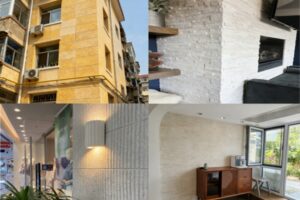
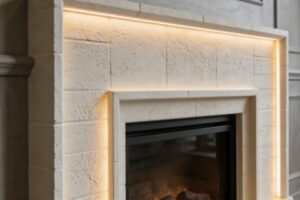
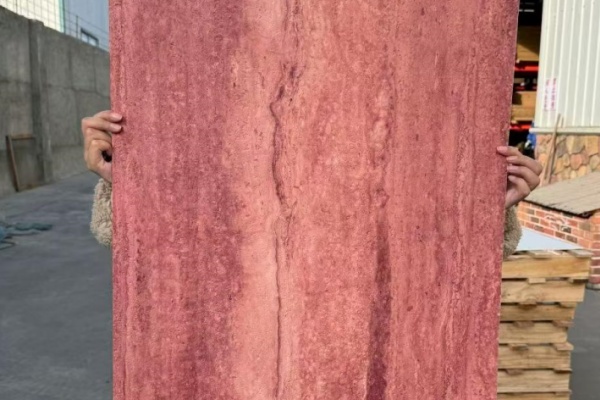
Flexible stone is a thin, lightweight stone veneer1 made from real natural stone such as slate, marble, sandstone, or quartzite. Through advanced fabrication processes, a natural stone surface layer is bonded to a flexible backing, creating stone sheets that can bend and conform to non-flat or curved surfaces.
Unlike traditional stone slabs or thick veneers, flexible stone is designed to be:
- Significantly lighter in weight
- Easier to transport and install
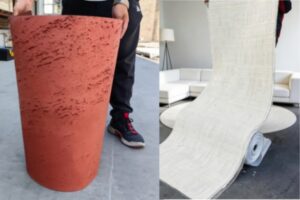
- Adaptable to curved and complex surfaces
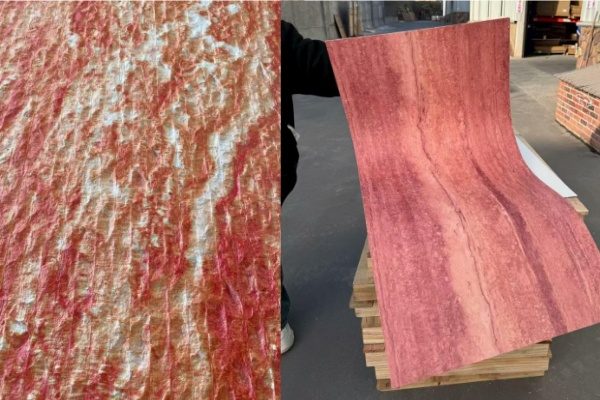
Despite its flexibility, the visible surface remains genuine stone, retaining natural texture, color variation, and mineral depth.
Why Traditional Stone Struggles in Complex Applications
While solid stone performs well in conventional uses, it presents clear challenges in modern architectural scenarios:
- Excessive weight increases structural load and limits use on high-rise façades or interior partitions
- Rigid material formats make curved walls, columns, and free-form designs difficult or impossible
- Labor-intensive installation extends project timelines and raises costs
- High material waste results from cutting and shaping thick stone
Flexible stone addresses these challenges by rethinking how natural stone is processed and applied.
Key Advantages of Flexible Stone
Lightweight Construction
Flexible stone weighs a fraction of traditional stone veneer, reducing structural demands and enabling use in applications where conventional stone is impractical.
Design Flexibility
The material can conform to curved walls, cylindrical columns, and irregular forms, supporting contemporary architectural concepts without compromising material authenticity.
Efficient Installation
Flexible stone sheets are generally easier to cut, handle, and install, helping reduce labor time and overall project cost.
Real Stone Appearance
Unlike printed or artificial finishes, flexible stone uses real stone surfaces, ensuring each panel features unique natural variation.
Reduced Material Waste
Thinner stone layers improve raw material efficiency and reduce waste during fabrication and installation.
Common Applications of Flexible Stone
Flexible stone is increasingly specified across a wide range of architectural and interior design applications, including:
- Curved walls and feature surfaces
- Columns and cylindrical structures
- Interior accent walls
- Elevator lobbies and corridors
- Retail and hospitality interiors
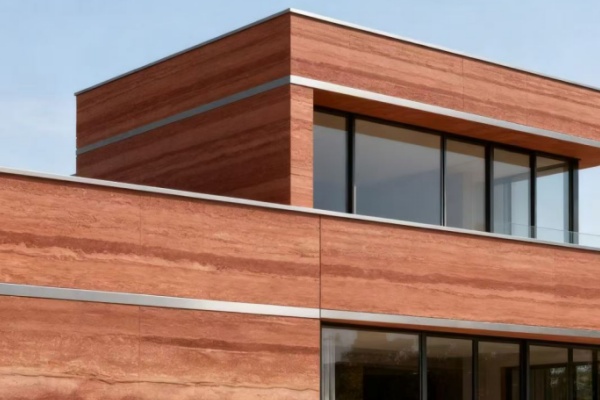
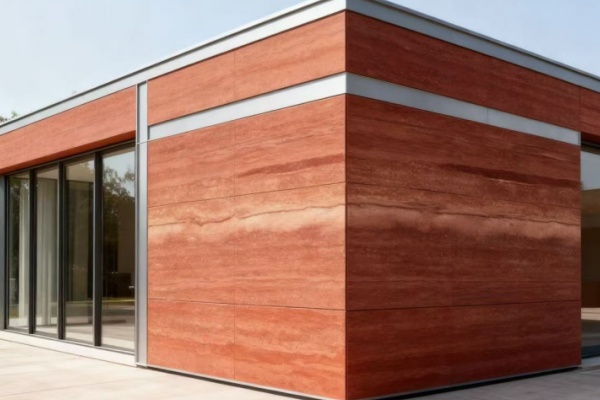
- Lightweight façade systems (subject to local building codes)
It is especially suitable for renovation projects2 where structural limitations prevent the use of heavy stone materials.
Flexible Stone vs Traditional Stone Veneer
| Aspect | Flexible Stone | Traditional Stone Veneer |
|---|---|---|
| Weight | Very lightweight | Heavy |
| Flexibility | Can bend and curve | Rigid |
| Installation | Faster and simpler | Labor-intensive |
| Design freedom | High | Limited |
| Material waste | Low | High |
Traditional stone remains appropriate for certain load-bearing or exterior applications. However, flexible stone offers clear advantages where weight reduction, adaptability, and installation efficiency are critical.
Design and Specification Considerations
Before specifying flexible stone, project teams should evaluate:
- Substrate compatibility
- Adhesive and installation systems
- Indoor versus outdoor application requirements
- Fire safety and building code compliance
- Environmental exposure and long-term maintenance
When properly specified and installed, flexible stone can perform reliably across a variety of architectural environments.
A Smarter Way to Use Natural Stone
Flexible stone represents a shift in how natural materials are applied in architecture. By separating the visual value of stone from the physical limitations of traditional slabs, it allows designers to achieve authentic stone finishes in locations previously considered impractical.
For projects that require real materials, lightweight construction, and greater design freedom, flexible stone offers a practical and forward-looking solution.
Learn about the advantages of lightweight stone veneer, including ease of installation and reduced structural demands, making it ideal for modern designs. ↩
Find out why flexible stone is particularly suitable for renovation projects, offering a lightweight and adaptable solution for existing structures. ↩