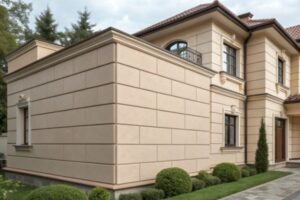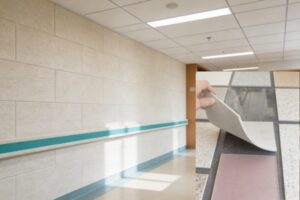
What is Flexible Stone Veneer for Exteriors?
Flexible stone veneer represents a revolutionary leap in architectural cladding, bridging the gap between the timeless beauty of natural geology and modern engineering requirements. It transforms heavy, cumbersome rock into an adaptable skin that can wrap around buildings, offering the authentic look of stone without the structural weight.
The Composition of Thin Real Stone
At its core, flexible stone veneer is not a synthetic imitation; it is genuine stone. The manufacturing process involves peeling a micro-thin layer—often just 1.5mm to 3mm thick—directly from a massive slab of metamorphic rock, such as slate, mica, or quartzite.
This ultra-thin stone sheet is then permanently bonded to a backing system, typically composed of fiberglass and polyester resin or a specialized fabric. This composite structure serves two critical functions:
- Structural Integrity: It holds the thin layer of mineral grains together, preventing cracking and crumbling.
- Flexibility: It allows the stone to bend and curve, enabling installation on rounded columns, arched entryways, and uneven surfaces where traditional masonry would fail.
Why It’s Ideal for Exterior Facades
For exterior applications, this material solves the primary logistical challenges associated with traditional masonry. Standard stone cladding requires heavy foundations, mechanical fixings, and significant labor to manage the weight load. In contrast, flexible stone veneer is incredibly lightweight, often weighing less than 2 kilograms per square meter.
This characteristic makes it perfect for:
- Renovations: It can be applied directly over existing substrates like concrete, stucco, or brick without requiring structural reinforcement.
- High-Rise Cladding: The reduced weight load lowers the stress on the building’s frame.
- Thermal Expansion: The flexible backing accommodates the natural expansion and contraction caused by fluctuating outdoor temperatures, reducing the risk of fractures that plague rigid stone tiles.
By combining the durability of metamorphic rock with a flexible backing, architects and builders gain a versatile tool for creating stunning, weather-resistant exteriors that stand the test of time.
Key Benefits of Flexible Stone Exterior Panels
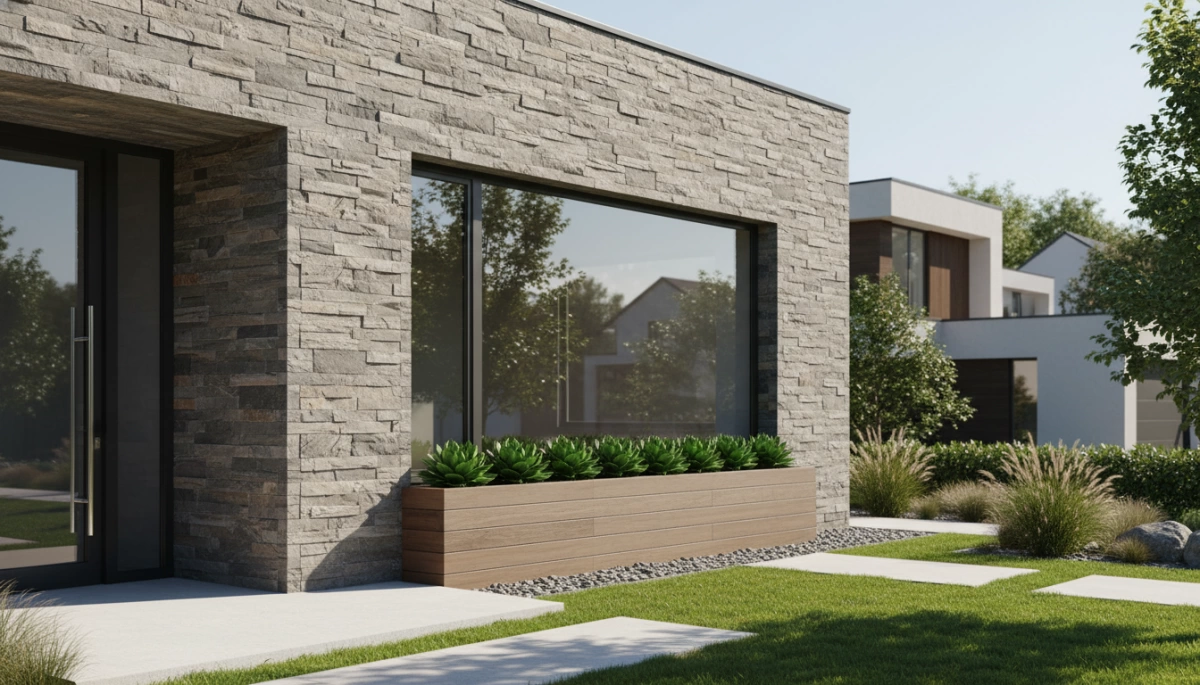
When we talk about upgrading a building’s facade, flexible stone veneer exterior solutions are changing the game. I’ve seen firsthand how these panels solve the biggest headaches in construction—weight, cost, and longevity—without sacrificing that premium look we all want.
Lightweight and Cost-Effective
The most immediate advantage I notice with these panels is the weight difference. Traditional stone cladding requires heavy structural reinforcement, which drives up engineering costs. Flexible stone sheets are incredibly light, often weighing as little as 1.5 to 2.5 kg per square meter.
This reduction in weight directly impacts your budget:
- Lower Shipping Costs: We can ship significantly more square footage per pallet compared to heavy stone.
- Faster Installation: Contractors can handle sheets easily without heavy machinery, slashing labor hours.
- Minimal Waste: The material is easy to cut, meaning you use more of what you buy.
High Durability and Weather Resistance
Don’t let the “flexible” part fool you; this material is tough. Once installed, these panels are engineered to withstand harsh exterior environments. Whether it’s the freezing winters of Northern Europe or the scorching sun of the Middle East, the material holds up.
The secret lies in the flexible backing reinforced with fiberglass or resin. This structure makes the veneer resistant to cracking, impact, and thermal expansion. It acts as a durable skin for the building, offering excellent resistance against:
- UV Radiation: Prevents fading over time.
- Moisture: When properly sealed, it is waterproof.
- Temperature Fluctuations: It expands and contracts without snapping.
Visual Appeal of Natural Stone
At the end of the day, aesthetics matter. We aren’t printing a picture of stone onto plastic here; this is ultra-thin stone sheet technology. The top layer is genuine, quarried stone. This means every single sheet has unique veining, texture, and color variations that you simply cannot replicate with synthetic faux stone.
| Feature | Flexible Stone Veneer | Faux/Synthetic Stone |
|---|---|---|
| Surface Texture | Real, tactile stone grain | Often repetitive, plastic feel |
| Aging | Ages naturally like rock | Can look “plasticky” over time |
Using flexible stone veneer exterior panels gives you the prestige of a natural stone facade—complete with the rich textures of slate or mica—but with the versatility of a modern, lightweight cladding system.
Popular Types of Natural Stone Veneers
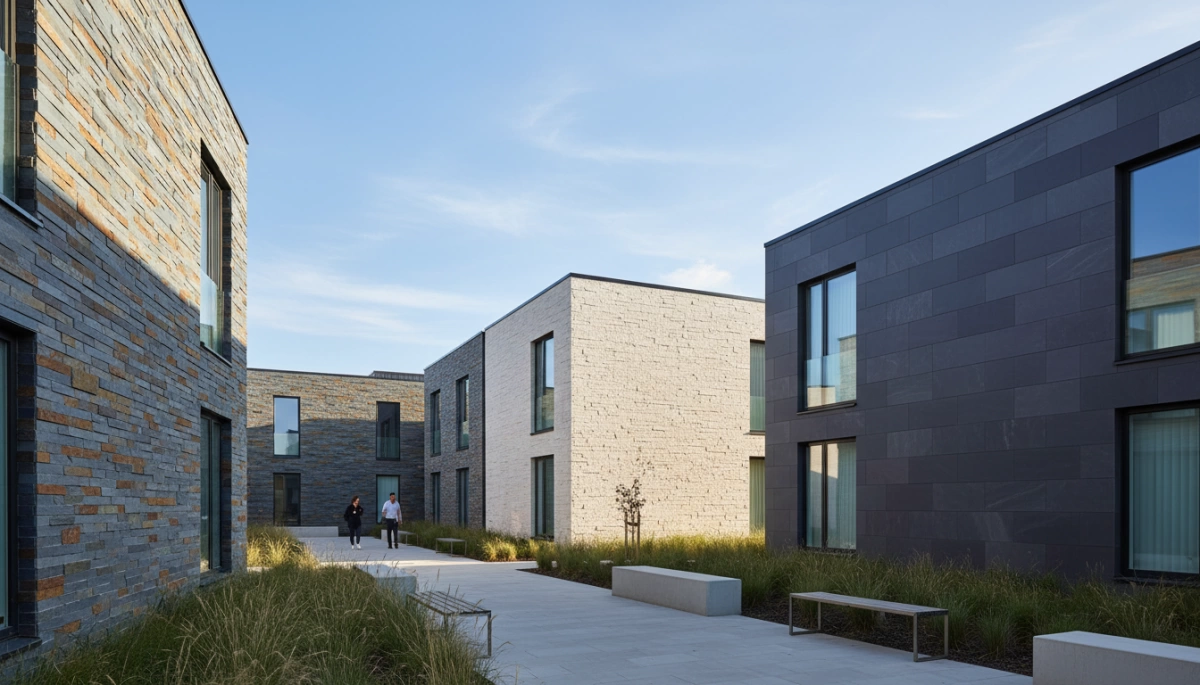
When you choose a flexible stone veneer exterior, you are never limited to just one aesthetic. We source real natural minerals to create an authentic ultra-thin stone sheet, ensuring you get the exact look and feel of traditional masonry without the heavy lifting.
Classic Slate and Mica
Slate and mica deliver a rugged, earthy vibe. These materials are incredibly popular for outdoor use because their natural layers resist harsh weather beautifully. Thanks to the reinforced flexible backing, this lightweight stone cladding easily wraps around columns and corners, giving you a classic stone finish without the structural headache.
Textured Limestone and Sandstone
If you want a warmer, more inviting aesthetic, limestone and sandstone are your best bets. The natural granular texture adds incredible depth to outdoor walls. Because these panels are so thin and light, they are remarkably easy to install, making them a top choice for quick, high-impact exterior upgrades.
Elegant Marble Options
Marble brings high-end luxury to any project. We process real marble into ultra-thin sheets, allowing you to feature premium, distinctive veining right on your building’s facade. It provides a sophisticated, expensive finish that is heavily engineered for versatile interior and exterior use.
Quick Material Comparison:
| Stone Type | Visual Appeal | Best Used For |
|---|---|---|
| Slate & Mica | Dark, rugged, natural clefts | Modern facades, curved retaining walls, pillars |
| Limestone & Sandstone | Warm, granular, earthy tones | Patios, inviting entryways, residential siding |
| Marble | Elegant, smooth, distinct veining | High-end commercial storefronts, luxury homes |
Top Application Scenarios for Exterior Spaces
When we talk about upgrading the look of a property, flexible stone veneer exterior solutions offer versatility that traditional masonry simply cannot match. Because these sheets are so lightweight and adaptable, they open up design possibilities that were previously too expensive or structurally impossible. Here is where I see this material making the biggest impact.
Residential House Facades
Transforming the curb appeal of a home is the most common use for our flexible stone products. Homeowners often want the prestige of a stone house without the massive foundation work required to support heavy rocks.
- Full Wraps: You can cover an entire home exterior in ultra-thin stone sheets to create a seamless, high-end look. Whether it is a modern bungalow or a traditional two-story, the material bonds directly to most standard substrates.
- Accent Areas: Many designs use stone strategically. Applying flexible veneer to the lower third of a wall (wainscoting), around the entryway, or on dormers adds significant visual weight and texture without the actual weight.
- Renovations: For older homes with tired siding or stucco, this is a game-changer. You can often apply the veneer directly over existing surfaces, provided they are sound, saving huge amounts of demolition time and money.
Commercial Building Cladding
In the commercial sector, speed and durability are everything. Business owners and architects love lightweight stone cladding because it allows for rapid deployment with minimal disruption to operations.
- Retail Storefronts: First impressions matter. A slate or sandstone finish on a shop front signals quality and permanence. The flexibility of the sheets means they can easily wrap around curved pillars or signage structures that are common in retail design.
- Office Complexes: Large expanses of wall can be covered quickly. Unlike heavy stone, which requires mechanical fixings and steel lintels, flexible stone is adhered chemically. This reduces the load on the building’s structure, which is a massive advantage for high-rise retrofits or lightweight steel frame constructions.
- Hospitality: Hotels and restaurants use these veneers to create inviting, luxurious exteriors that withstand high traffic and weather exposure.
Outdoor Feature Walls and Columns
Sometimes, you don’t need to cover the whole building to make a statement. Flexible stone veneer exterior panels are perfect for smaller, focused architectural elements that define outdoor living spaces.
- Garden Walls and Fences: A plain concrete retaining wall can be turned into a stunning landscape feature. The flexible backing allows the stone to conform to slight irregularities in the wall surface.
- Columns and Pillars: Wrapping a round or square column with traditional stone is a nightmare of cutting and corner pieces. With flexible veneer, you can simply wrap the sheet around the column. It is incredibly easy to install and creates a continuous, natural flow of stone grain.
- Outdoor Kitchens: Because the material is real stone, it pairs perfectly with stainless steel grills and outdoor cabinetry, providing a durable, heat-resistant finish that ties the patio area together.
Step-by-Step Installation Guide for Exteriors
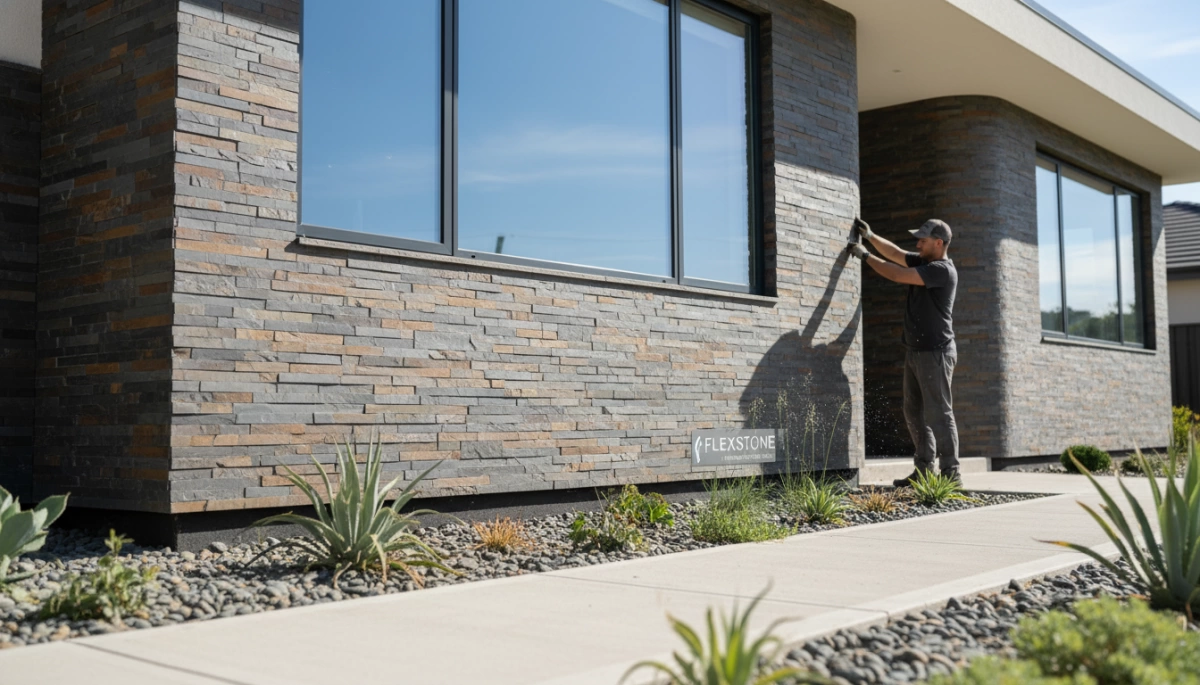
Installing flexible stone veneer exterior panels is significantly faster than working with traditional masonry, but precision is still key. Because these sheets are so thin and lightweight, the process feels more like applying a heavy-duty wallpaper or laminate than laying bricks. Here is how we handle the installation to ensure a lasting finish.
Choosing the Right Exterior Substrate
The foundation of a good installation is what lies beneath. Flexible stone veneer is incredibly versatile, but it needs a stable surface. For exterior projects, we typically bond these sheets to:
- Concrete or Masonry: Clean, unpainted brick or block walls are excellent.
- Cement Board: This is the gold standard for new construction or renovations where the original surface isn’t suitable.
- Exterior Grade Plywood: While possible, it must be properly waterproofed first.
- Insulation Systems (ETICS): You can often apply these directly over rigid insulation boards, provided the system is rated for the weight (which is minimal).
Avoid installing directly over peeling paint, crumbling stucco, or damp surfaces. If the substrate isn’t solid, the stone sheet won’t stay put.
Surface Preparation and Cutting
Before any adhesive touches the wall, the surface must be clean, dry, and free of dust or grease. A quick power wash (allowed to dry fully) or a stiff wire brush scrub usually does the trick.
Cutting the panels is where the “easy to install” factor really shines. You don’t need a wet saw or heavy machinery.
- Tools: A standard pair of tin snips or heavy-duty industrial scissors works perfectly for most cuts. For straight lines, a table saw with a carbide blade or a simple utility knife (score and snap method) is effective.
- Technique: Always measure twice. Because the material has a flexible backing, you can easily cut around electrical outlets, corners, or curved architectural details without the risk of the stone shattering.
Applying Weatherproof Adhesive
For exterior applications, standard tile mortar isn’t always the best choice. We recommend using a high-quality polymer-based adhesive or a specialized hybrid sealant designed for outdoor stone cladding.
- Trowel Method: Apply the adhesive to the back of the ultra-thin stone sheet using a notched trowel. This ensures 100% coverage, which is critical to prevent water from getting behind the sheet.
- Press and Roll: Press the sheet firmly onto the wall. Use a hard rubber roller to smooth it out, starting from the center and working toward the edges. This pushes out air pockets and ensures a tight bond.
Proper Sealing for Outdoor Longevity
Once the adhesive has cured, sealing is non-negotiable for exterior projects. While the stone itself is durable, sealing protects it from UV fading, rain, and freeze-thaw cycles.
- Penetrating Sealers: These soak into the pores of the stone, providing invisible protection against moisture without changing the look.
- Topical Sealers: If you want a “wet look” or a glossier finish, use a topical sealer.
Apply the sealer with a brush, roller, or sprayer. This step locks out moisture and ensures your flexible stone veneer exterior remains vibrant and weather-resistant for years to come.
Flexible Stone vs. Traditional Heavy Stone
When comparing flexible stone veneer exterior options against traditional heavy masonry, the differences aren’t just cosmetic—they fundamentally change how a project is managed. While traditional stone has been the gold standard for centuries, the sheer weight and rigidity often make it impractical for modern renovations or quick builds. Flexible stone bridges that gap, offering the same aesthetic without the logistical headaches.
Ease of Installation and DIY Potential
The biggest game-changer here is the installation process. Traditional stone requires a skilled mason, heavy machinery for lifting, and structural reinforcement to handle the load. If you mess up a mortar joint with heavy stone, it’s a major fix.
With flexible stone veneer, the game is different. Because these are ultra-thin stone sheets with a flexible backing, they can be cut with tin snips or a standard angle grinder. You don’t need a wet saw. The lightweight nature means a single person can carry multiple sheets up a ladder without breaking their back. This makes it genuinely feasible for a skilled DIY enthusiast or a general contractor, rather than requiring a specialized stone crew. It adheres directly to most standard substrates, skipping the need for metal lath and scratch coats in many scenarios.
Installation Comparison:
| Feature | Flexible Stone Veneer | Traditional Heavy Stone |
|---|---|---|
| Handling | One-person lift; lightweight | Heavy; often requires machinery |
| Cutting | Tin snips or shears | Wet saw or heavy grinder |
| Substrate | Direct adhesion to concrete/wood | Requires lath, scratch coat, anchors |
| Corners | Can be bent around curves | Requires custom corner pieces |
| Skill Level | DIY-friendly / General Contractor | Professional Mason required |
Affordability and Overall Cost Comparison
Cost isn’t just about the price tag on the material; it’s about the “installed cost.” While high-quality flexible stone veneer exterior panels might have a material price comparable to some mid-range traditional stones, the savings pile up elsewhere.
First, shipping costs drop dramatically. We can fit hundreds of square meters of flexible veneer on a single pallet, whereas traditional stone requires multiple heavy-duty shipments. Second, labor is the biggest savings factor. Since installation is faster and requires fewer specialized tradespeople, labor costs can be cut by 40-50%. Finally, there are no hidden structural costs. You don’t need to reinforce your foundation or wall framing to support the weight of these panels, making the overall project budget much easier to control.
Cost Breakdown:
- Material: Competitive with natural stone, often cheaper than premium cuts.
- Labor: Significantly lower due to speed and ease of install.
- Transport: Drastically reduced shipping fees due to low weight.
- Maintenance: Minimal ongoing costs compared to repointing mortar joints.