Flexible Stone Veneer: Redefining How Natural Stone Is Used in Architecture
The Shift Toward Thinner, Lighter Stone Materials
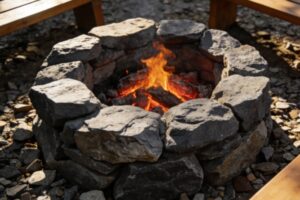
Natural stone has always represented authenticity, permanence, and material value in architecture. However, modern construction methods and contemporary design language are increasingly incompatible with the physical limitations of traditional stone slabs.
As projects demand lighter structures, faster installation, and more complex geometries, the industry has begun to rethink not the appearance of stone—but how stone itself is fabricated and applied. This shift has led to the growing adoption of flexible stone veneer, a material that preserves the essence of natural stone while fundamentally changing how it can be used.
What Is Flexible Stone Veneer?
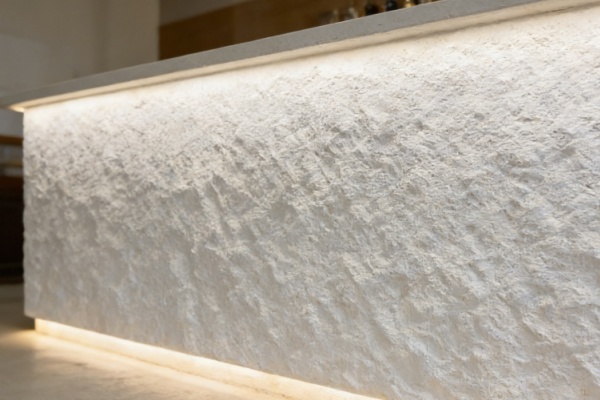
Flexible stone veneer is a real stone surface material produced by separating an ultra-thin layer of natural stone from a larger stone block and bonding it to a lightweight, flexible carrier.
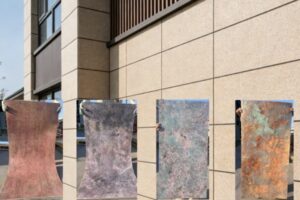
The visible surface is 100% natural stone, including slate, limestone, sandstone, marble, or quartzite. Each sheet retains the original stone’s mineral structure, texture, and variation, meaning no two pieces are exactly alike.
Unlike conventional stone veneers, flexible stone is typically only a few millimeters thick and can adapt to curved or non-planar surfaces—something traditional stone cannot achieve without extensive processing.
How Flexible Stone Is Different from Traditional Stone Veneer
Traditional stone veneer relies on mass and rigidity. Flexible stone veneer relies on material efficiency and engineering.
Key distinctions include:
- A dramatically reduced weight compared to solid stone or thick veneers
- The ability to bend or wrap around curved surfaces within defined radii
- Easier handling, cutting, and installation
- Lower material waste during production and on-site application
These differences allow natural stone to be specified in applications that were previously impractical or cost-prohibitive.
Why Architects and Designers Are Turning to Flexible Stone
Authentic Materiality Without Structural Penalty
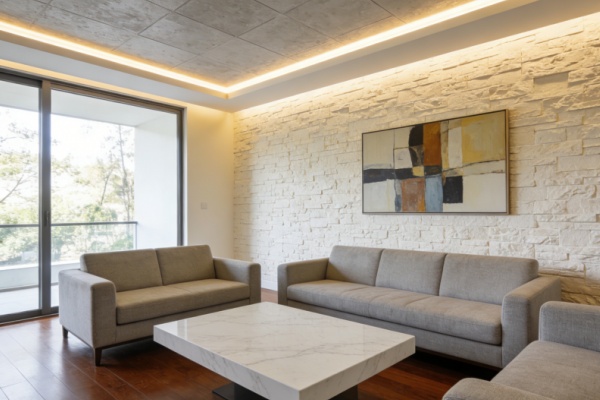
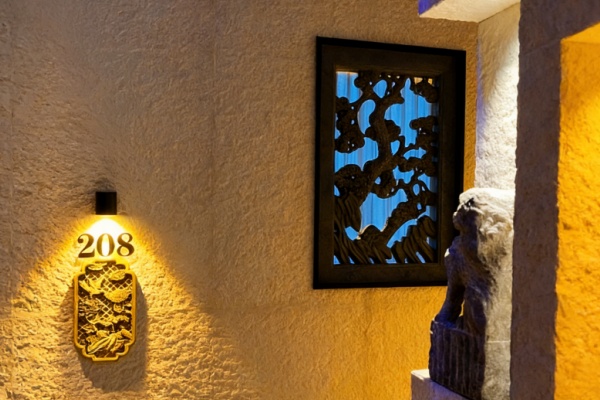
Flexible stone veneer delivers the visual depth and tactile quality of real stone without adding significant load to walls or structures. This makes it suitable for lightweight partitions, renovations, and projects with strict structural limits.
Greater Design Freedom
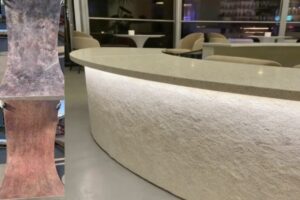
Curved walls, columns, custom features, and organic forms can be finished with real stone rather than simulated alternatives. Flexible stone supports contemporary architectural expression without forcing compromises on material authenticity.
Efficiency in Construction
Reduced weight and simplified installation methods can shorten construction timelines and lower labor costs, particularly in interior and retrofit projects.
Material Sustainability
By producing many thin stone sheets from a single stone block, flexible stone veneer improves raw material utilization and reduces waste compared to traditional quarrying and cutting practices.
Typical Applications of Flexible Stone Veneer
Flexible stone veneer is commonly specified for:
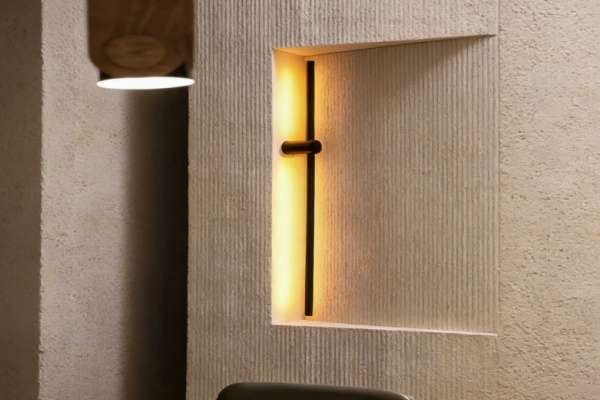
- Curved interior walls and feature surfaces
- Columns and cylindrical structures
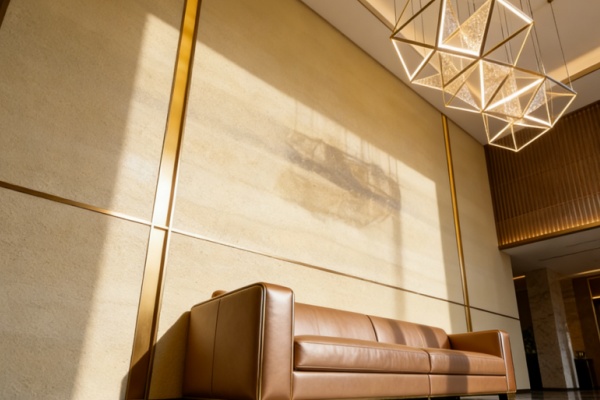
- Lobby and reception areas
- Retail, hospitality, and office interiors
- Elevator interiors and circulation spaces
- Renovation projects with limited load capacity
Depending on system design and local regulations, it may also be used in selected exterior or semi-exterior applications.
Flexible Stone Veneer vs Conventional Stone Materials
| Criteria | Flexible Stone Veneer | Traditional Stone Veneer |
|---|---|---|
| Material thickness | Ultra-thin | Thick |
| Weight | Very low | High |
| Flexibility | Limited bending possible | Rigid |
| Installation speed | Faster | Slower |
| Design adaptability | High | Limited |
| Material efficiency | High | Lower |
Flexible stone is not intended to replace traditional stone in every scenario. Instead, it expands the range of applications where natural stone can be realistically specified.
Important Design and Specification Considerations
To achieve optimal performance, project teams should evaluate:
- Substrate preparation and surface flatness
- Appropriate adhesives or mounting systems
- Minimum bending radius for curved applications
- Indoor versus outdoor environmental exposure
- Fire performance and building code requirements
Understanding these parameters early in the design phase ensures that flexible stone veneer is used where it performs best.
When Flexible Stone Veneer Is the Right Choice—and When It Is Not
Flexible stone veneer excels in applications where weight, adaptability, and installation efficiency are critical. However, for load-bearing elements, heavy-impact zones, or applications requiring substantial thickness, traditional stone solutions may still be more appropriate.
Making the right material choice depends not on trends, but on performance requirements and project context.
A New Chapter for Natural Stone in Architecture
Flexible stone veneer represents a fundamental evolution in how natural stone is used—not by replacing stone, but by reengineering it for modern construction.
By separating visual value from unnecessary mass, flexible stone enables architects and designers to apply authentic stone surfaces with greater freedom, efficiency, and responsibility.
For projects that demand real materials without traditional constraints, flexible stone veneer offers a forward-looking solution rooted in natural authenticity.