Are you struggling to decide between Flexible Stone vs. Traditional Ceramic Tiles for your next facade upgrade?
Choosing the right cladding makes a massive difference in your project’s structural safety, installation timeline, and long-term budget.
You might already know that ceramic has been the industry standard for decades. But is it still the smartest option for modern buildings?
Well, you’re in for a treat. I’ve put together a complete, head-to-head breakdown showing you exactly Why Choose MCM for Exterior Wall Renovation.
In this post, you’re going to learn the real differences in weight, flexibility, and labor costs—going way beyond the basics to help you future-proof your exteriors.
So if you want to build faster, safer, and smarter, this guide is for you.
Let’s dive right in.
Understanding the Basics: MCM Flexible Stone vs. Ceramic Tiles
The landscape of exterior wall decoration is rapidly evolving. For decades, builders and architects relied heavily on rigid, heavy materials. Today, modern architecture demands innovation, efficiency, and safety. As an industry leader, we recognize that choosing the right facade material dictates the long-term success of any renovation project. The debate between Modified Clay Material (MCM) and traditional ceramics is at the forefront of this structural shift.
What is Modified Clay Material (MCM) Flexible Stone?
MCM Flexible Stone is a breakthrough lightweight material engineered for the future of building facades. By combining natural inorganic soils with advanced high-polymer technology under a low-heat curing process, we produce an eco-friendly cladding solution that literally bends without breaking.
Core Characteristics of MCM:
- Ultra-Thin Profile: A fraction of the thickness of traditional stone, drastically reducing structural load.
- High Flexibility: Seamlessly wraps around columns, arches, and complex geometries, unlocking unprecedented design freedom.
- Authentic Textures: Accurately replicates the organic look and feel of natural stone, timber, and architectural concrete.
- Eco-Conscious: Features a low-carbon manufacturing footprint perfectly suited for modern commercial construction.
The Traditional Standard: Ceramic Tiles Explained
Ceramic tiles have long served as the default standard for exterior wall cladding. Manufactured by firing clay and silica at extremely high temperatures, they offer a rigid, glazed, and hardened surface that has protected buildings for generations. While reliable, the traditional nature of ceramics presents distinct physical limitations in modern applications.
Key Traits of Traditional Ceramics:
- Rigid Structure: Zero flexibility, making them strictly suitable for perfectly flat surfaces.
- Substantial Weight: Demands robust structural support, stronger adhesives, and highly intensive labor.
- Brittle Nature: Inherently prone to cracking, chipping, or detaching under foundation shifts and heavy impact.
| Material Feature | MCM Flexible Stone | Traditional Ceramic Tile |
|---|---|---|
| Physical Form | Pliable and bendable | Rigid and stiff |
| Weight Load | Extremely lightweight | Heavy and dense |
| Surface Application | Flat, angled, and curved | Flat surfaces only |
| Impact Resistance | Shock-absorbent | Brittle |
Understanding these foundational differences is the first critical step in specifying the exact material required to ensure the longevity and aesthetic success of your exterior renovation.
Head-to-Head Comparison: Flexible Stone vs. Traditional Tiles
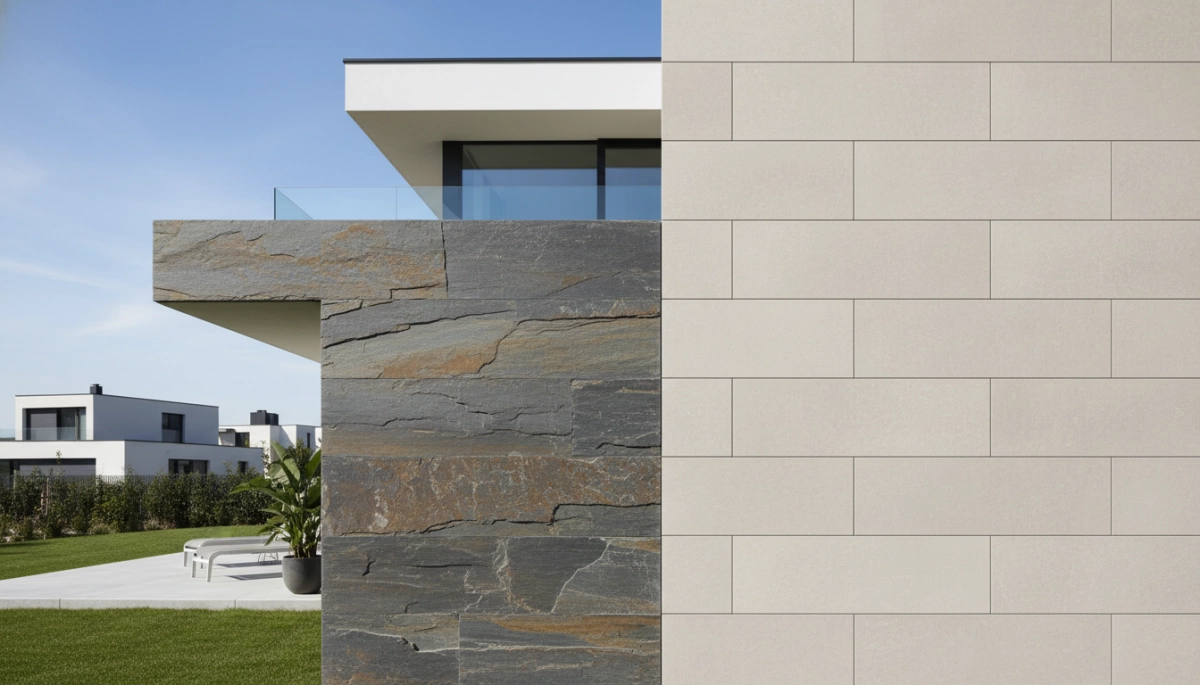
When we look at Flexible Stone vs. Traditional Ceramic Tiles, the performance gap becomes obvious very quickly. If you are planning an exterior wall cladding project, understanding how these materials behave in the real world is essential. Let’s break down exactly how our MCM products compare to the old standard.
Weight and Structural Load Differences
The most immediate difference is the weight. Traditional ceramics are incredibly heavy, adding massive dead load to your building’s framework. This often forces you to invest in extra structural reinforcement, which eats up budgets in commercial construction.
On the other hand, MCM flexible stone is an ultra-lightweight material.
- Reduces structural stress: It cuts the weight burden on exterior walls down to a fraction of ceramic.
- Safer for high-rises: Less weight means a lower risk of materials falling from height.
- Easier handling: Workers can transport and install it much faster.
Flexibility vs. Rigidity in Architecture
Standard ceramics are rigid and brittle. If a building naturally settles or shifts over time, rigid tiles have no give—they crack, splinter, or pop right off the wall.
MCM flexible stone gives us total design freedom. Because it naturally bends, it moves and settles with the building structure. Whether you are wrapping thick columns, contouring around arches, or designing unique exterior wall decoration, flexible stone shapes to your vision without snapping.
Weather Resistance and Long-Term Durability
Both materials handle the elements, but they age very differently under stress. Rigid tiles struggle heavily with freeze-thaw cycles. Moisture inevitably gets behind the rigid grout lines, freezes, expands, and physically pushes the ceramic tiles off the facade.
Our MCM flexible stone takes a different approach:
- Breathable structure: Prevents trapped moisture from building up behind the cladding.
- Thermal flexibility: Expands and contracts safely with extreme temperature swings.
- UV and elemental resistance: Stands up to intense sun and heavy rain without fading or delaminating.
Quick Performance Breakdown
| Feature | MCM Flexible Stone | Traditional Ceramic Tiles |
|---|---|---|
| Weight | Ultra-lightweight, easy to lift | Heavy, difficult to transport |
| Flexibility | High (bends around corners) | Zero (rigid, cracks under pressure) |
| Structural Load | Minimal impact on building | High impact, may need reinforcement |
| Design Freedom | Wraps curved surfaces seamlessly | Needs heavy cutting, leaves sharp joints |
| Weathering | Absorbs structural shifts & freeze-thaw | Grout and backing fail under freeze-thaw |
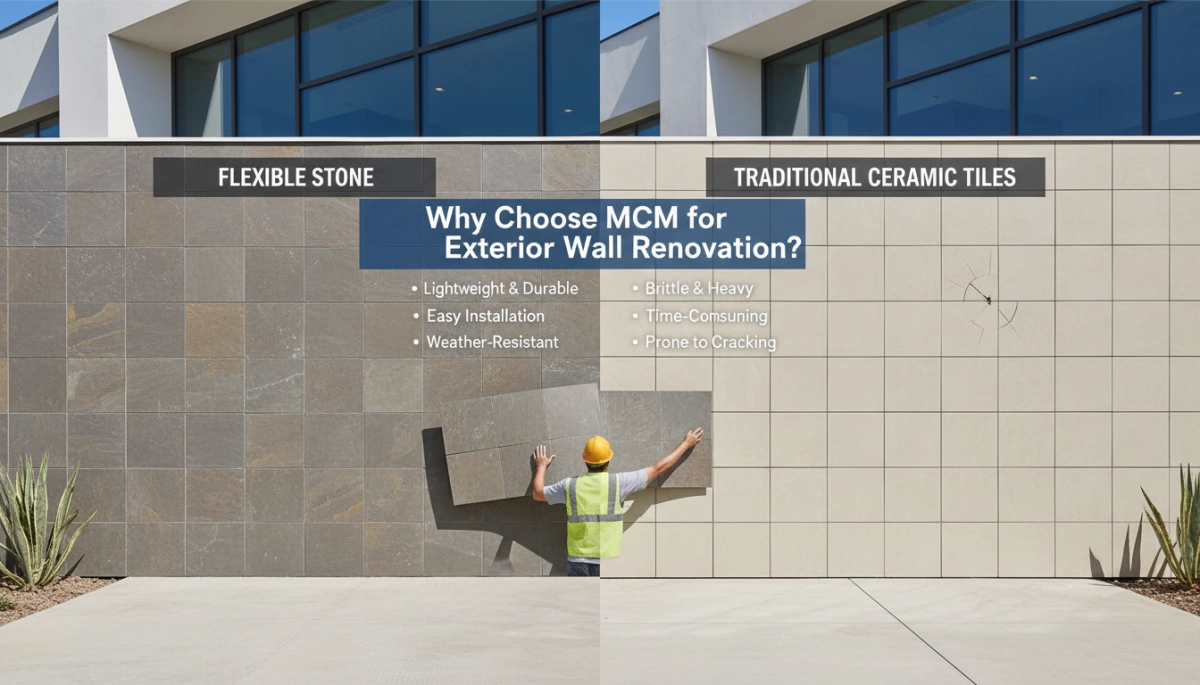
Flexible Stone vs. Traditional Ceramic Tiles: Why Choose MCM for Exterior Wall Renovation?
When planning a facade upgrade, the materials you choose dictate the building’s safety, longevity, and visual appeal. Here is exactly why our MCM flexible stone outperforms traditional rigid materials across the board.
Ultra-Lightweight Design for Maximum Safety
Heavy building facades pose significant safety risks over time. Our MCM flexible stone is a breakthrough lightweight material that weighs a fraction of traditional ceramic tiles.
- Less structural strain: Minimizes the dead load placed on building foundations.
- High-rise safety: Drastically reduces the severe risk of heavy tiles detaching and falling, making it the superior choice for high-rise commercial construction.
Seamless Application on Curved Surfaces and Arches
Rigid ceramics require complex, labor-intensive cutting to fit anything other than a perfectly flat wall. MCM gives you absolute design freedom for your exterior wall cladding.
- Bendable: It easily wraps around cylindrical columns, complex arches, and sharp corners without breaking.
- Flawless finish: Creates a smooth, continuous aesthetic that elevates any modern exterior wall decoration.
Thermal Stability in Extreme Temperatures
Traditional ceramic tiles frequently fail due to freeze-thaw cycles—water seeps in, freezes, expands, and pops the tile right off the wall.
- Flexible adaptation: Our MCM products adapt to rapid temperature shifts without cracking or warping.
- Global climate proof: Maintains structural integrity whether facing blistering summer heat or sub-zero winter freezes.
Fire-Rated Protection and Waterproofing
Protecting your real estate investment means building with resilience in mind.
- Class A Fireproof: Manufactured from non-combustible earth materials to halt fire spread.
- Moisture defense: The material naturally repels water, actively preventing the dampness, mold, and structural rot that often plague traditional tile mortar beds.
Performance Breakdown
| Feature | MCM Flexible Stone | Traditional Ceramic Tiles |
|---|---|---|
| Weight | Ultra-lightweight material | Heavy, high structural load |
| Flexibility | High design freedom, bends easily | Rigid, prone to snapping on curves |
| Weathering | Excellent thermal stability | Vulnerable to freeze-thaw popping |
| Safety | Fall prevention, Class A fireproof | Fall hazard at heights, requires heavy mortar |
Installation Process and Time Requirements
When weighing Flexible Stone vs. Traditional Ceramic Tiles: Why Choose MCM for Exterior Wall Renovation?, the installation phase is where you immediately see the difference. We see projects transformed entirely by how these materials are handled on-site.
MCM Installation: Fast Cutting and Direct Bonding
We produce MCM flexible stone to be a high-performance lightweight material that skips the traditional construction headaches. The application is highly efficient:
- Simple Cutting: No power tools required. You can cut and shape it directly on-site using a standard utility knife.
- Direct Bonding: We use a simple adhesive application to bond the stone directly to the substrate.
- Zero Debris: The process is entirely dust-free, making it perfect for rapid exterior wall cladding updates.
This level of simplicity gives architects and installers complete design freedom without slowing down the job.
Ceramic Tile Installation: Labor-Intensive Methods
On the other hand, traditional ceramic tiles require a heavy, rigid approach. The workflow is undeniably labor-intensive:
- Wet Saws Needed: Cutting rigid ceramics requires specialized diamond blades and wet saws.
- Heavy Mortar Beds: Installers must mix, apply, and level thick layers of cement.
- Slow Curing: Walls require extended drying times before bearing weight.
For everyday exterior wall decoration, these traditional methods quickly eat into your labor budget and delay scaffolding removal.
Comparing Overall Project Timelines
In large-scale commercial construction, time is your most expensive asset. Here is exactly how the two materials stack up on the clock:
| Installation Phase | MCM Flexible Stone | Traditional Ceramic Tiles |
|---|---|---|
| Preparation | Minimal wall prep required | Needs structural reinforcement |
| Cutting Speed | Instant (Utility knife) | Slow (Wet saw and water) |
| Application | Fast direct bonding | Slow mortar leveling and spacing |
| Curing Time | Rapid drying | 24-48 hours for mortar setup |
| Total Project Time | Up to 3x faster | Traditional, lengthy pacing |
By cutting out the heavy machinery and curing times, we consistently see exterior renovations finishing weeks ahead of schedule.
Flexible Stone vs. Traditional Ceramic Tiles: Why Choose MCM for Exterior Wall Renovation? A Cost Analysis
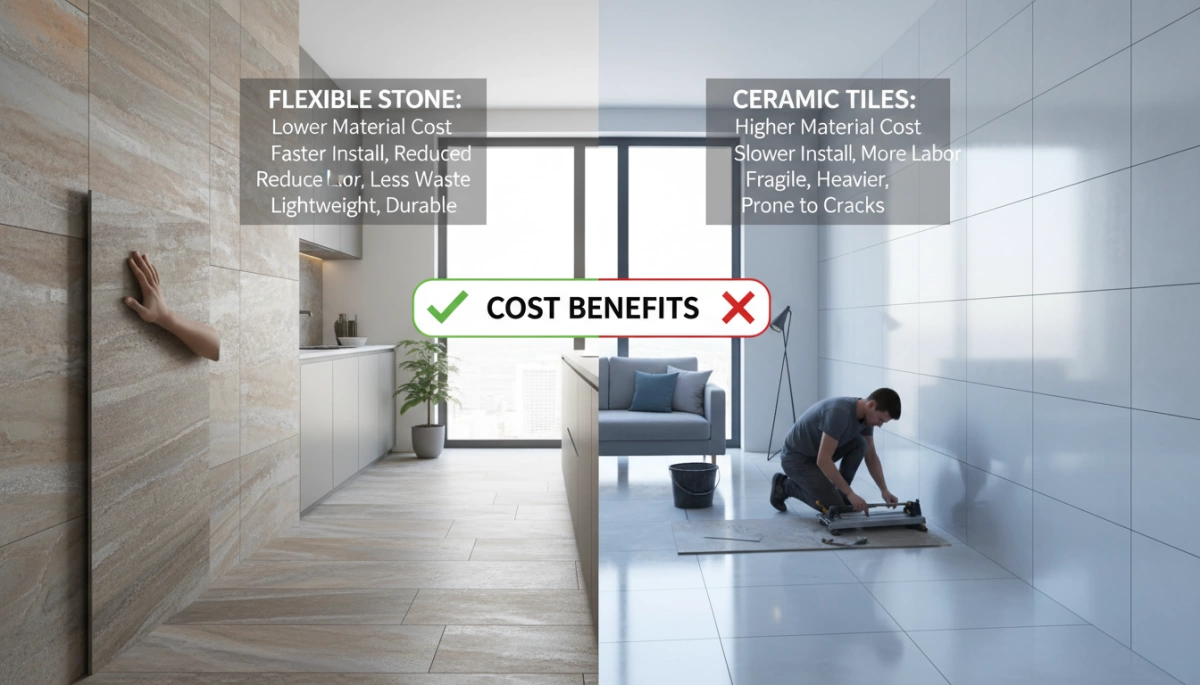
When budgeting for exterior wall cladding, the sticker price of the material is only half the story. As a supplier who has guided countless global projects, I always advise looking at the total installed cost. Let’s break down the real numbers to see where the actual value lies.
Initial Material Costs vs. Application Expenses
You might find that basic ceramic tiles have a lower initial price tag per square meter. However, the real cost hides in the application. Traditional tiles require thick cement, heavy-duty structural reinforcement, and specialized cutting tools.
MCM flexible stone requires minimal prep work. Because it is a true lightweight material, MCM drastically cuts down on shipping, handling, and structural support expenses, frequently making the total upfront cost much lower for any exterior wall decoration project.
Labor Savings in Exterior Renovations
Time is money, especially in large-scale commercial construction.
- MCM Flexible Stone: Goes up incredibly fast. It cuts easily with a standard utility knife and bonds directly to most existing wall substrates. You need fewer workers on-site and zero heavy lifting machinery.
- Ceramic Tiles: Requires a highly skilled masonry crew, messy wet mortar application, and significant curing time, driving labor costs through the roof.
Maintenance Requirements and Lifespan
A building’s facade needs to survive the elements without bleeding your budget dry. Traditional ceramic is completely rigid; as buildings naturally settle over time, ceramic cracks and mortar joints fail.
MCM provides unmatched design freedom and structural resilience. Its inherent flexibility absorbs minor building movements. It actively resists cracking, fading, and water penetration, keeping your long-term maintenance budgets near zero.
The Bottom Line Comparison
| Cost Factor | MCM Flexible Stone | Traditional Ceramic Tiles |
|---|---|---|
| Shipping & Handling | Low (Ultra-lightweight) | High (Heavy freight) |
| Structural Prep | Minimal | Extensive (Requires strong load-bearing walls) |
| Labor & Install Time | Fast & Cost-effective | Slow & Expensive |
| Maintenance Needs | Low (Resists cracking) | High (Grout repairs, tile replacement) |
| Total Lifetime Value | Excellent | Moderate |
Sustainability and Environmental Benefits of MCM
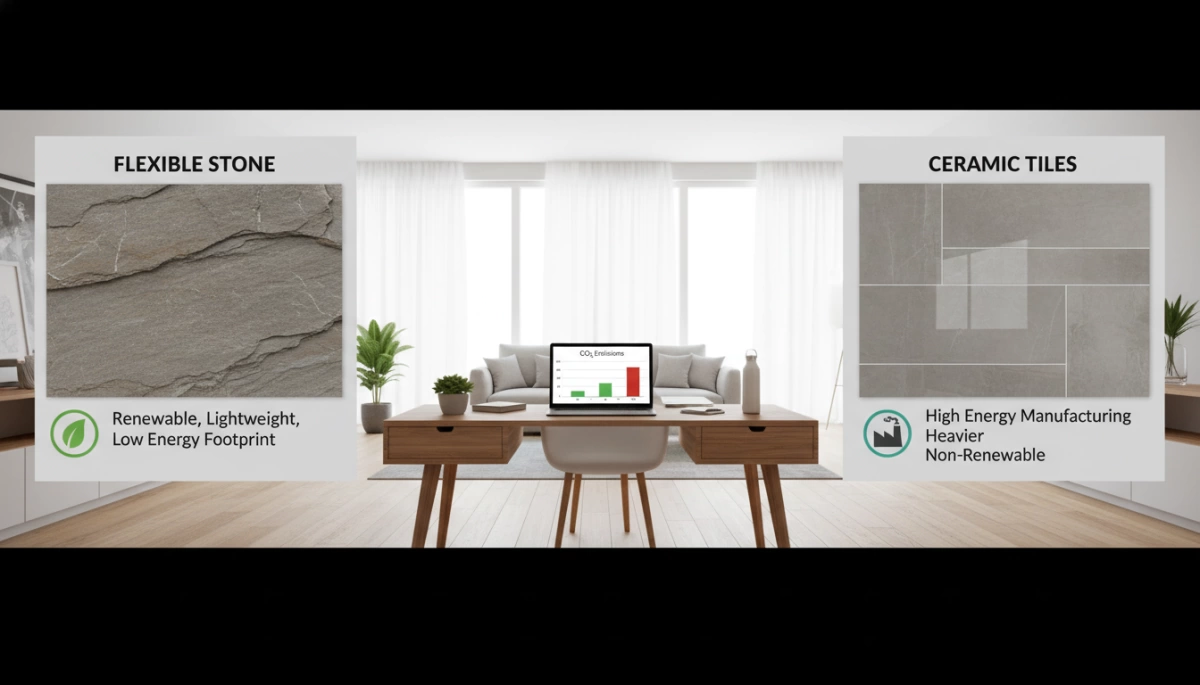
When we approach exterior wall decoration and commercial construction today, environmental impact is a top priority. Choosing MCM (Modified Clay Material) over traditional ceramic tiles isn’t just about design freedom; it’s a fundamentally greener choice for modern building projects.
Eco-Friendly Manufacturing and Low VOCs
The production process for our MCM flexible stone is completely different from traditional tiles. Instead of firing materials in massive, energy-heavy kilns, we use an unbaked manufacturing process utilizing natural soil and clay. This drastically cuts down energy consumption from the start. Furthermore, MCM is made from natural inorganic materials, ensuring minimal to zero Volatile Organic Compounds (VOCs) and protecting both workers and the environment.
Environmental Impact Comparison:
| Feature | Traditional Ceramic Tiles | MCM Flexible Stone |
|---|---|---|
| Production Method | High-heat firing (1200°C+) | Low-heat molding |
| Energy Consumption | High | Significantly lower |
| VOC Emissions | Low to Moderate | Ultra-low to Zero |
| Material Waste | Prone to breakage | High yield, recyclable |
Reducing the Carbon Footprint of Building Facades
Using MCM as your exterior wall cladding directly shrinks the carbon footprint of your renovation project. Because flexible stone is a highly lightweight material, the environmental cost of transportation plummets. We can ship significantly more square footage per truckload compared to heavy ceramics, burning a fraction of the fuel in the process.
Here is exactly how MCM cuts carbon emissions across the board:
- Fuel Efficiency: Lower shipping weight directly equals fewer emissions during global and local transit.
- Less Structural Reinforcement: You do not need to manufacture or install heavy steel or concrete reinforcements, saving raw materials.
- Minimal Machinery: The application process requires fewer heavy-duty lifts and power tools, reducing on-site electricity and gas usage.
- End-of-Life: MCM materials break down safely and are easily recyclable, keeping massive amounts of construction waste out of landfills.
Making the Decision for Your Exterior Project
Choosing the right exterior wall cladding comes down to your building’s specific structural needs and aesthetic goals. We always evaluate the site layout, budget, and timeline before making a final call.
Scenarios Where Traditional Ceramic Still Works
We don’t dismiss traditional tiles entirely. They still perform well in a few specific scenarios:
- Ground-Level Projects: Perfect for first-floor builds where structural weight isn’t a safety hazard.
- Heavy-Wear Zones: Areas demanding extreme, brute-force scratch resistance.
- Small, Flat Surfaces: Simple exterior wall decoration where installation time and material flexibility aren’t major concerns.
Why Flexible Stone is the Future of Facade Renovation
When it comes to modern upgrades, especially in commercial construction, MCM is the undisputed leader. The industry is actively moving away from heavy, rigid materials, and we rely on this shift for better building practices.
Why We Choose MCM Flexible Stone:
- Total Design Freedom: It easily wraps around columns, curved walls, and complex architectural features without cracking.
- Zero Fall Hazard: As a premium lightweight material, it completely eliminates the danger of heavy tiles dropping from aging high-rise buildings.
- Unmatched Efficiency: Direct bonding installs faster with less mess, significantly cutting down project timelines and labor costs.
| Project Requirement | Traditional Ceramic Tiles | MCM Flexible Stone |
|---|---|---|
| High-Rise Safety | Low (Heavy fall risk) | High (Ultra-lightweight) |
| Curved Surfaces | Poor (Rigid, requires cutting) | Excellent (Bendable) |
| Installation Speed | Slow (Labor-intensive) | Fast (Direct bonding) |