You might already know that installing the wrong tile in a wet zone is an expensive mistake…
But do you know exactly how is porcelain tile rated for water absorption?
Well, you’re in for a treat because I’ve put together a complete guide breaking down exactly how tile porosity is tested, measured, and classified.
Understanding these manufacturer ratings is the ultimate secret to ensuring true frost resistance, stain protection, and long-term mechanical strength.
In this post, you’re going to learn exactly how to choose the right porcelain tile for your space, step by step—from indoor showers to exposed outdoor terraces.
So if you’re looking to build a space that lasts and want to separate the common myths from the facts, this guide is for you.
Let’s dive right in.
Understanding Porcelain Tile Water Absorption
Water absorption is the definitive metric that separates true porcelain from standard ceramic. It is not merely a technical specification; it is the primary indicator of a tile’s density, durability, and suitability for specific environments. Understanding this rating is crucial for selecting materials that will withstand moisture, frost, and heavy traffic over time.
What is Tile Porosity?
Porosity refers to the ratio of voids (air pockets) within the tile body to its total solid mass. These microscopic holes determine how much liquid the material can soak up. In the context of flooring, porosity is directly linked to density.
- High Porosity: The tile has many internal voids, making it lighter but more prone to absorbing water. This is typical of wall tiles or non-vitreous ceramics.
- Low Porosity: The tile is extremely dense with almost no internal voids. This structure repels water and is the hallmark of high-quality porcelain.
When a tile has high porosity, water can penetrate the surface, potentially leading to staining, cracking during freeze-thaw cycles, or structural weakening. Conversely, low porosity ensures that moisture remains on the surface, making the tile essentially waterproof and far more hygienic.
How is Water Absorption Tested and Measured?
The industry standard for measuring water absorption is rigorous and standardized, typically following ASTM C373 or ISO 10545-3 protocols. The testing process involves boiling the tile to force water into its pores and measuring the weight difference.
The Testing Process:
- Dry Weight: The tile is oven-dried to remove all existing moisture and weighed precisely.
- Saturation: The tile is boiled in water for several hours and then soaked for 24 hours to ensure maximum saturation.
- Wet Weight: The tile is weighed again while saturated.
- Calculation: The percentage increase in weight represents the water absorption rate.
Absorption Classifications:
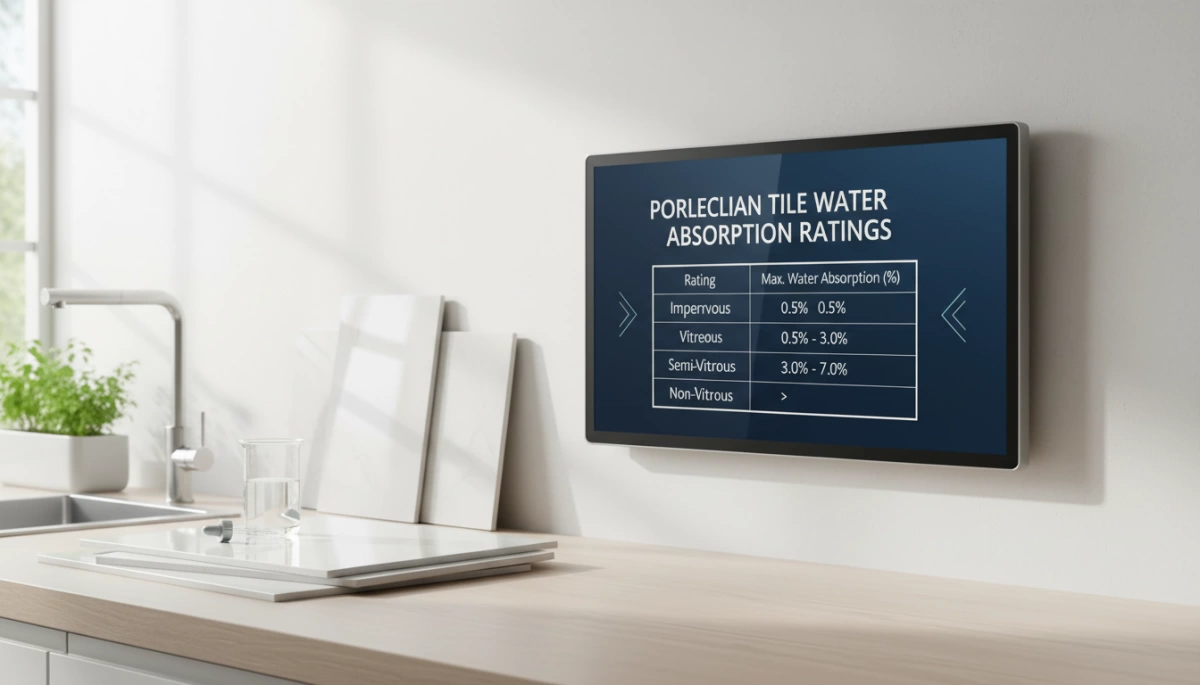
| Classification | Absorption Rate | Typical Usage |
|---|---|---|
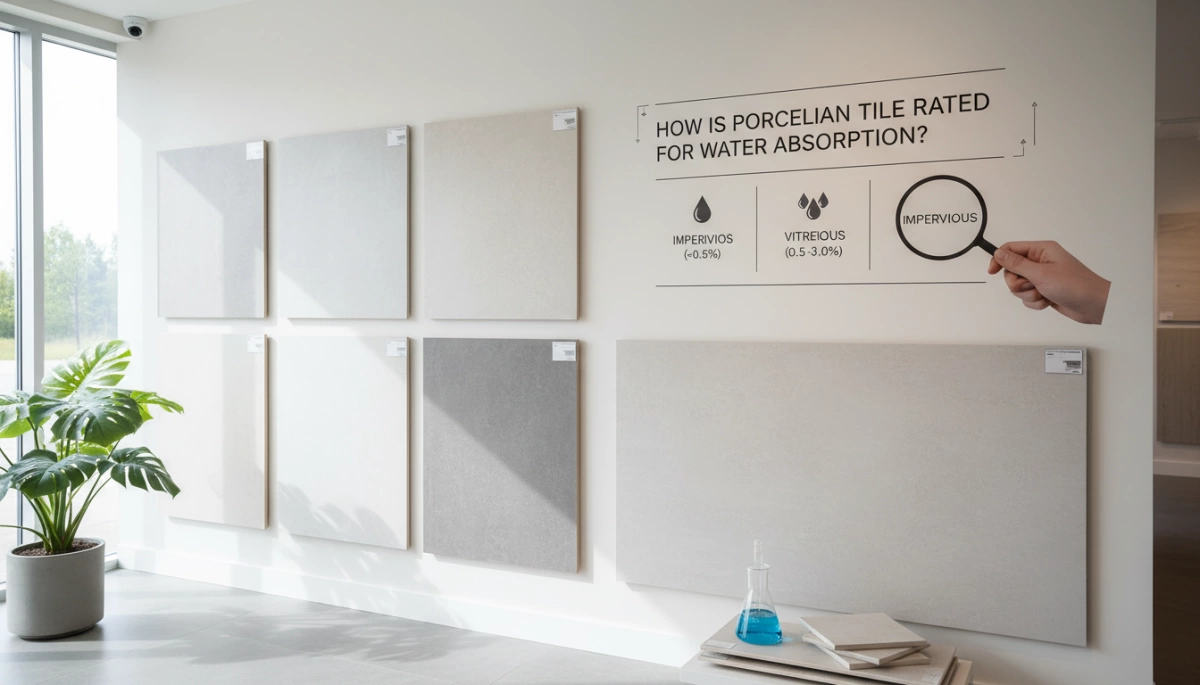
| Impervious (Porcelain) | ≤ 0.5% | Heavy traffic, outdoor, wet areas |
| Vitreous | 0.5% – 3.0% | Indoor floors, moderate traffic |
| Semi-Vitreous | 3.0% – 7.0% | Indoor areas, dry locations |
| Non-Vitreous | > 7.0% | Indoor walls only |
For a tile to be legally classified as porcelain, it must demonstrate a water absorption rate of 0.5% or less.
The Technical Composition Behind Porcelain’s Density
The superior density of porcelain is achieved through a specific manufacturing formula and firing process. Unlike standard ceramic, which may use coarser clays, porcelain is composed of finer particle materials.
- Kaolin Clay: A pure, white clay that allows for a smoother, denser structure.
- Feldspar: Acts as a flux during firing, melting to fill the microscopic voids between clay particles.
- Quartz/Sand: Adds structural hardness and strength.
These raw materials are pressed under immense pressure (often exceeding 500 kg/cm²) to compact the particles tightly. The tiles are then fired at extremely high temperatures, typically between 1200°C and 1400°C. This process, known as vitrification, turns the mixture into a glass-like, non-porous solid. The result is a material where the ingredients have fused completely, leaving virtually no room for water to enter.
How Porcelain Tiles are Classified by Absorption Rates
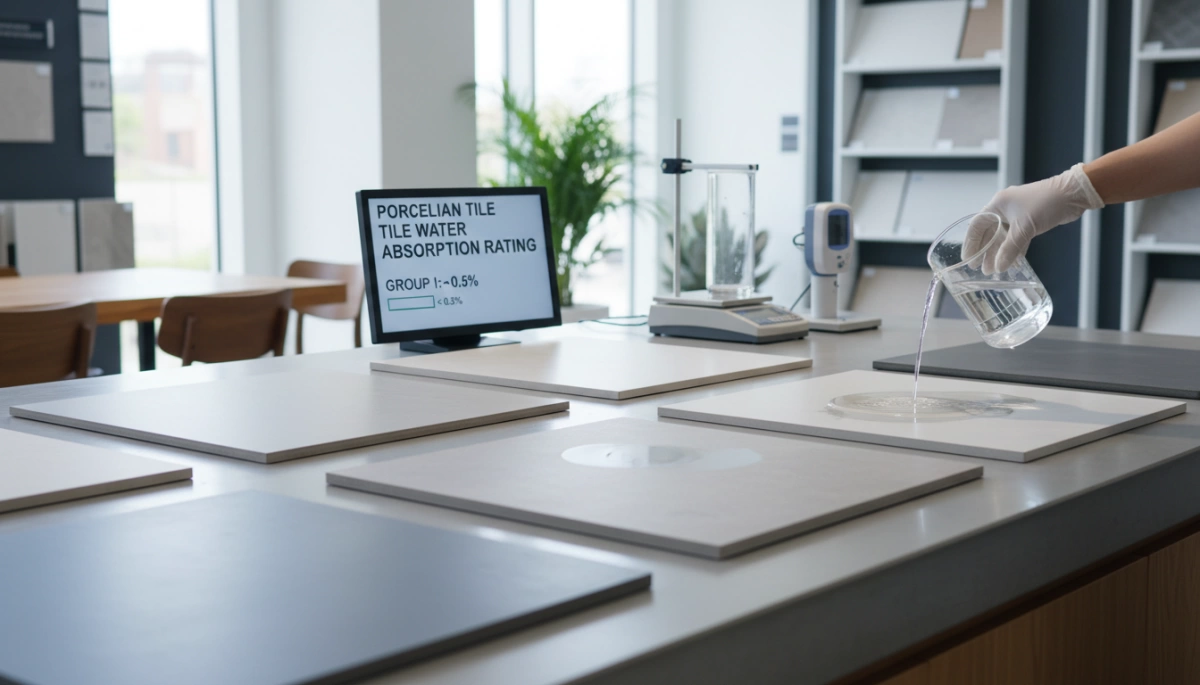
If you are wondering how is porcelain tile rated for water absorption, it all comes down to strict industry testing that measures exactly how much moisture a tile holds. When we categorize tiles in our inventory, the water absorption rate is the ultimate deciding factor. It tells us how porous a tile is and where it can safely be installed, such as on bathroom floors or heavy-traffic commercial spaces.
What Counts as a “Low” Absorption Rating?
For a tile to legally earn the “porcelain” title, it must have an incredibly low moisture absorption rating. Specifically, the tile must absorb 0.5% or less of its weight in water. This near-zero porosity is what transforms a simple clay product into highly reliable waterproof flooring.
Here is the standard classification table we use to break down absorption categories:
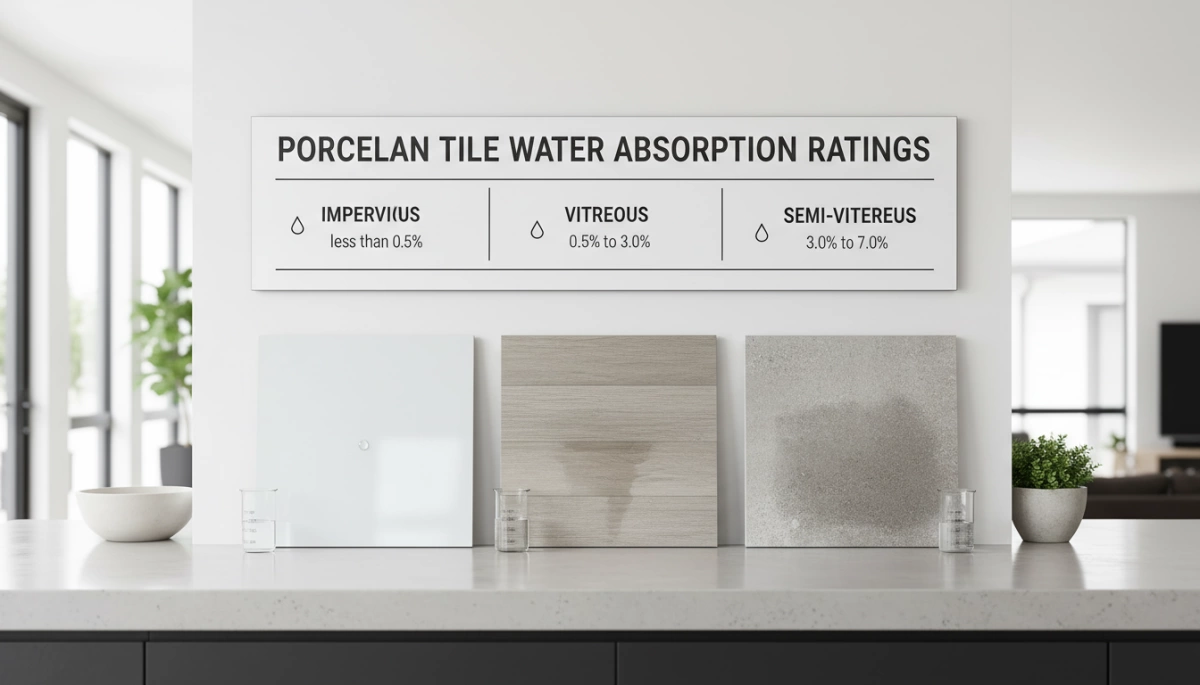
| Tile Classification | Water Absorption Rate | Typical Tile Type |
|---|---|---|
| Impervious | 0.5% or less | True Porcelain |
| Vitreous | 0.5% to 3% | High-density Ceramic |
| Semi-vitreous | 3% to 7% | Standard Ceramic |
| Non-vitreous | More than 7% | Indoor Wall Tiles |
Reading Manufacturer Specifications and Ratings
When I evaluate a new line of tiles, I never just guess its density by looking at it. You have to read the manufacturer specifications closely to understand its true capabilities.
- Look for Certification: Check the packaging for official certification marks (like the PTCA in the US) which guarantee the tile meets the strict 0.5% standard.
- Check the Spec Sheet: Always review the product’s technical data sheet to find the exact percentage of water absorption.
- Verify Additional Safety Features: While checking the moisture data, always cross-reference the slip resistance rating to ensure the tile is safe for wet environments.
True Porcelain vs. Non-Porcelain Tiles
The dividing line between true porcelain and standard non-porcelain tiles is entirely based on their density and manufacturing process.
- True Porcelain: These tiles are fired at significantly higher temperatures. The result is a dense, impervious body with a negligible water absorption rate. They are built for extreme durability and heavy moisture exposure.
- Non-Porcelain (Standard Ceramic): These tiles are baked at lower temperatures, leaving them softer and more porous. Because they absorb more water, they are strictly better suited for dry indoor areas rather than outdoor applications or heavy-duty wet zones.
Why Low Water Absorption Matters for Your Tiles
When we talk about porcelain tile performance, water absorption isn’t just a technical spec—it is the defining factor that determines where and how long your flooring will last. A low absorption rate directly translates to better resilience against the elements and daily wear.
Frost Resistance for Outdoor Environments
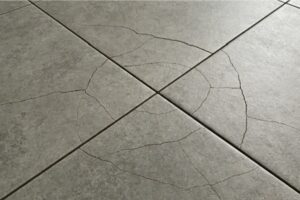
If you are installing tiles outdoors, especially in regions that experience freezing temperatures, water absorption is the single most critical metric. When water seeps into a porous tile and freezes, it expands. This expansion creates internal pressure that can cause the tile to crack, flake, or even shatter completely—a phenomenon known as freeze-thaw damage.
Because porcelain has an incredibly low water absorption rate (less than 0.5%), it is virtually impervious to this cycle. The material is so dense that moisture simply cannot penetrate deep enough to cause structural failure when the temperature drops. This makes porcelain the gold standard for balconies, patios, and external walkways where frost resistance is non-negotiable.
Stain Resistance, Hygiene, and Easy Cleaning
Low porosity does more than just keep water out; it keeps contaminants out too. In high-traffic areas like kitchens or dining rooms, spills are inevitable. If you spill red wine, coffee, or oil on a porous material like natural stone or standard ceramic, the liquid can seep into the microscopic pores, leaving a permanent stain.
With porcelain, the surface is sealed tight by the firing process itself. Liquids bead up on the surface rather than soaking in. This has two major benefits:
- Stain Proofing: You have a much larger window of time to wipe up spills before they leave a mark.
- Hygiene: Bacteria, mold, and mildew need moisture and porous surfaces to thrive. Porcelain denies them a foothold, making it exceptionally easy to sanitize and maintain.
Overall Durability and Mechanical Strength
There is a direct correlation between density and strength. The manufacturing process that achieves low water absorption—compressing raw materials under immense pressure and firing them at extreme temperatures—also results in a tile that is incredibly hard.
Tiles with low absorption rates are denser and, consequently, have higher mechanical strength. They are less likely to chip or crack under heavy loads or impact. This structural integrity ensures that the installation remains stable over decades, not just years, providing a solid return on investment for any project.
Common Myths vs. Facts About Porcelain Tile Water Absorption
When I discuss flooring options with customers, I run into a lot of confusion about what moisture ratings actually mean. Let’s clear up the biggest misunderstandings regarding how porcelain tile is rated for water absorption.
Do Tiles with High Absorption Always Stain?
Not necessarily. It is a common myth that a high water absorption rate automatically means your floor is a stain magnet. Here are the facts:
- The Glaze Factor: Many standard ceramic tiles have a high absorption rate in their clay body but are topped with a protective, liquid-glass glaze. This top layer completely seals the surface against spills.
- Unglazed Risks: If an unglazed tile has high porosity, it will soak up liquids like a sponge and stain easily unless you apply heavy-duty sealants regularly.
- Porcelain’s Edge: Because of its dense composition, porcelain acts like waterproof flooring all the way through. It naturally resists stains from top to bottom, with or without a glaze.
Can High Absorption Tiles Be Used in Wet Areas?
Yes and no. It depends entirely on exactly where and how they are installed.
- Wall vs. Floor: You can safely use glazed, higher-absorption tiles on bathroom walls. However, they should never be used for shower pans or heavily soaked bathroom floors.
- Hidden Moisture Damage: If the grout ever cracks, water will seep behind the glaze and into the tile’s porous body. This trapped moisture leads to swelling, mold, and tiles popping right off the substrate.
- The Safety Element: When outfitting wet areas, I always prioritize a very low moisture absorption rating paired with proper slip resistance. This is the only way to ensure the space stays safe, hygienic, and structurally sound for the long haul.
Where Water Absorption Ratings Become Critical
When we talk about tile performance, water absorption isn’t just a number on a spec sheet—it’s the deciding factor between a renovation that lasts decades and one that fails in a few years. While you can get away with higher porosity in a dry living room, there are specific zones where I never compromise on using low-absorption porcelain.
Bathrooms, Showers, and Indoor Wet Zones
For any area constantly exposed to water, like bathroom floors and shower walls, the absorption rate is non-negotiable. In these spaces, tiles are subjected to daily soaking, steam, and humidity. If you install a tile with high porosity here, it will act like a sponge, soaking up moisture that eventually seeps through to the substrate.
This trapped moisture leads to mold growth behind the tile, weakening the adhesive bond and causing tiles to lift or crack. For wet zones, I always recommend true porcelain with a water absorption rate of less than 0.5%. This ensures the tile itself is virtually waterproof, forcing water to drain away rather than soak in. It also makes maintenance easier since the tile won’t absorb soap scum or hard water minerals.
Balconies, Terraces, and Exposed Outdoor Areas
Outdoor installations are where the physics of water absorption really matter. On balconies and terraces, tiles face the full force of the weather—rain, snow, and drastic temperature changes.
The biggest threat here is the freeze-thaw cycle. If a tile absorbs water and the temperature drops below freezing, that water expands as it turns to ice. This internal pressure can shatter a standard ceramic tile from the inside out. Because porcelain is so dense and has such a low moisture absorption rating, it is impervious to this effect. For any exterior horizontal surface, low absorption is the primary defense against frost damage and structural failure.
External Facades and Wall Cladding
Using tiles for vertical cladding on building exteriors is a growing trend, but the stakes are high. Gravity is constantly working against the installation, so the material needs to be stable.
High absorption tiles on a facade can become heavy when wet, adding unnecessary load to the mechanical fixings or adhesive. Furthermore, absorbed moisture can carry salts and pollutants into the tile body, leading to efflorescence—those unsightly white, powdery stains that ruin the look of a building. Low-absorption porcelain prevents these contaminants from penetrating the surface, keeping the facade looking clean and ensuring the structural integrity of the cladding system remains intact over time.
How to Choose the Right Porcelain Tile for Your Space
Choosing the right tile goes beyond just picking a color you like. When I advise clients on selecting porcelain for their projects, I always emphasize that water absorption is just one piece of the puzzle. To get a floor that lasts, you have to look at the whole picture, especially how moisture interacts with safety and installation.
Matching Slip Resistance with Absorption
It is a common mistake to assume that a tile with a low water absorption rate is automatically safe for wet areas. While low absorption means the tile won’t soak up water, it doesn’t mean the surface won’t be slippery. In fact, highly dense porcelain can be incredibly slick when wet if it doesn’t have the right texture.
For areas like bathroom floors or pool decks, you need to balance low porosity with high friction. I always recommend checking the R-rating (Ramp Test) or DCOF (Dynamic Coefficient of Friction) alongside the absorption specs.
- Indoor Dry Areas: Focus on aesthetics; standard matte or polished finishes work fine.
- Indoor Wet Zones (Showers): Look for impervious porcelain (low absorption) combined with a textured finish (R10 or R11 rating).
- Outdoor Areas: You need maximum frost resistance (low absorption) and maximum grip (R11+ or structured finish) to prevent accidents in rain or snow.
Selecting Proper Adhesives for Low Porosity Tiles
This is where many DIY installations fail. Because true porcelain has such a low moisture absorption rating (less than 0.5%), it cannot rely on mechanical grip alone. Traditional mortar works by seeping into the pores of a material to grab hold. Since porcelain has almost no pores, standard cement mortar often won’t bond correctly, leading to loose or “drummy” tiles later on.
To fix this, you must use polymer-modified thin-set mortars specifically designed for porcelain. These adhesives use chemical bonding agents to stick to the dense surface of the tile.
| Tile Type | Recommended Adhesive | Why? |
|---|---|---|
| High Absorption Ceramic | Standard Cement Mortar | The mortar penetrates the porous clay body for a mechanical grip. |
| Low Absorption Porcelain | Polymer-Modified Thin-Set | Chemical additives are required to bond with the dense, non-porous surface. |
| Large Format Porcelain | Deformable/Flexible Adhesive (S1/S2) | Handles the stress and slight movement of heavy, dense slabs without cracking. |
Ensuring Long-Term Structural Reliability
When we talk about waterproof flooring, we aren’t just protecting the room from leaks; we are protecting the tile itself. If you choose a tile with the wrong absorption rating for an outdoor patio in a freezing climate, the water that gets inside will freeze, expand, and crack the tile from the inside out.
Long-term reliability comes from matching the tile’s technical body to the environment. For structural reliability, always verify that the porcelain is certified as “frost resistant” by the manufacturer. This certification is a direct result of that ultra-low water absorption test. By ensuring your tile is dense enough to repel moisture, you are essentially waterproofing the structural integrity of your floor for decades.