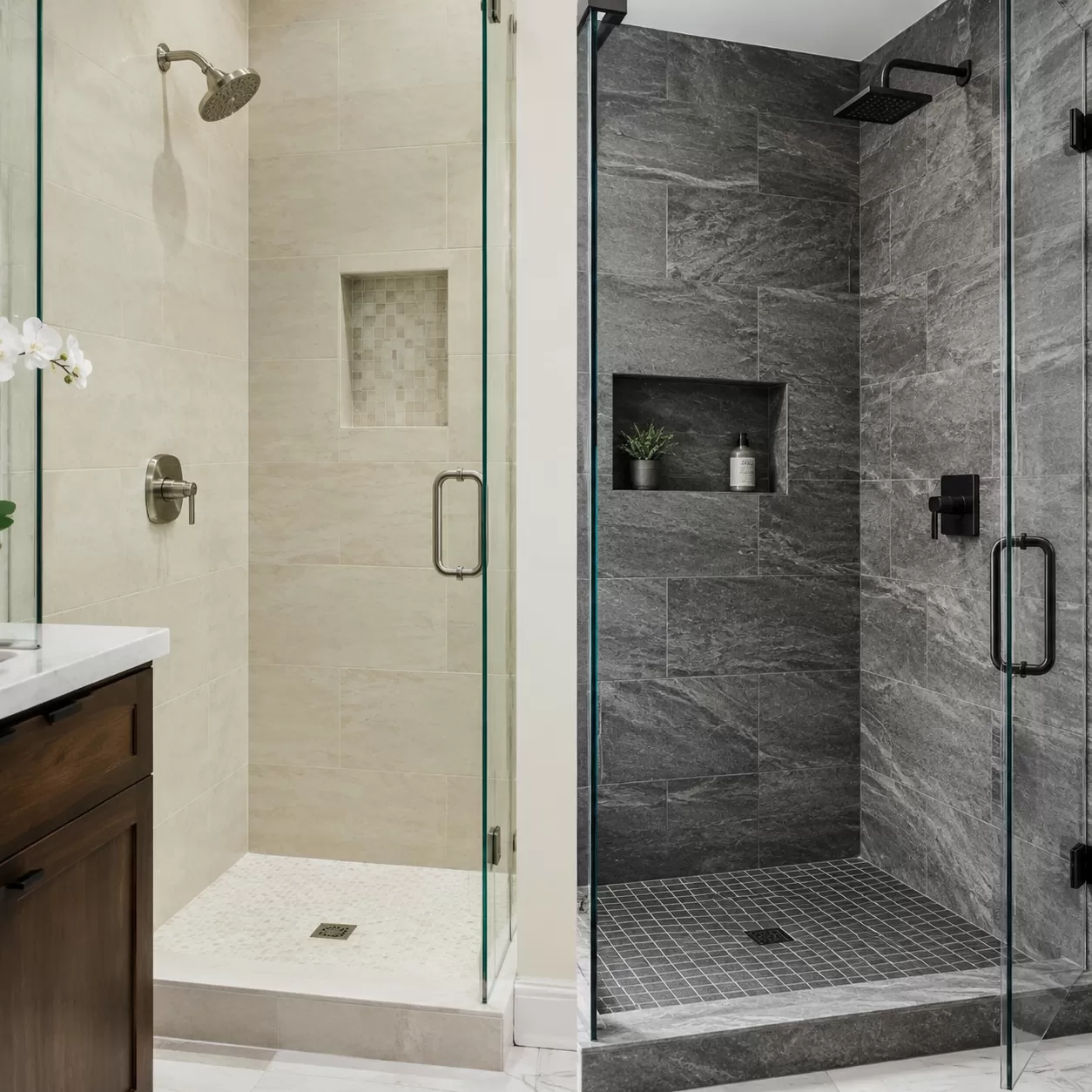
Understanding the Difference Between Porcelain and Ceramic Tile
While many homeowners and contractors use the terms interchangeably, ceramic and porcelain are distinct products with different performance characteristics. Both belong to the broader ceramic family, but their clay composition and firing temperatures create a major division in density and durability.
What is Ceramic Tile?
Ceramic tile is crafted from a mixture of red, brown, or white natural clay, water, and minerals. This mixture is shaped and kiln-fired at lower temperatures than porcelain, typically around 1,800°F to 2,000°F. The result is a lightweight, durable material with a glazed surface that protects the porous body underneath. It is highly versatile and remains a staple for interior wall installations.
What is Porcelain Tile?
Porcelain tile is a specialized subset of ceramic. As an experienced porcelain tile manufacture and supplier, we utilize a highly refined, dense white clay mixed with feldspar and quartz. This composition is fired at extreme temperatures up to 2,400°F and subjected to immense pressure. This vitrification process creates an incredibly dense, impervious tile engineered for heavy traffic and moisture-heavy environments like bathroom floors and shower surrounds.
How to Tell the Difference Between the Two Materials
Telling these two materials apart requires looking at the unglazed body and checking official certifications.
| Feature | Ceramic Tile | Porcelain Tile |
|---|---|---|
| Clay Composition | Coarser red, brown, or white clay | Refined white porcelain clay with feldspar |
| Firing Temperature | Lower (1,800°F – 2,000°F) | Higher (2,200°F – 2,400°F) |
| Body Color (Cross-Section) | Often tan, red, or terracotta beneath the glaze | Uniform color through the entire tile body |
| Water Absorption Rate | Greater than 0.5% | Equal to or less than 0.5% (Impervious) |
| Chip Resistance | Lower; the clay color shows if chipped | Higher; minor chips are less visible |
| PTCA Certification | Lacks the certified porcelain seal | Stamped with the Porcelain Tile Certification Agency seal |
Water Resistance and Absorption in Shower Environments
When deciding is porcelain or ceramic tile better for showers, water resistance is the ultimate deciding factor. Showers are the highest-moisture zones in any home, meaning the way a tile handles constant exposure to water determines its lifespan and performance.
The Significance of Tile Density and Porosity
The fundamental difference between these two materials comes down to density. Porcelain is fired at much higher temperatures than ceramic, using more refined clay. This intense manufacturing process creates a highly dense, compact tile with extremely low porosity.
A tile’s water absorption rate dictates how much moisture it sucks in. High porosity means more water enters the tile, which eventually weakens the bond, degrades the thinset, and leads to mold growth behind your shower walls.
Why Porcelain Outperforms Ceramic in Wet Areas
Porcelain is the undisputed champion for wet environments like shower surrounds and bathroom floors. To be officially classified as porcelain, a tile must meet a strict international standard: a water absorption rate of 0.5% or less.
- Impermeability: It shrugs off water, vapor, and shampoo residue effortlessly.
- Stain and Mold Resistance: Because moisture cannot penetrate the surface, mold and mildew have nowhere to hide.
- Structural Integrity: Porcelain won’t swell, warp, or crack under constant saturation.
As a dedicated tile manufacturer and supplier, we always recommend porcelain for high-use residential and commercial shower pans because it offers the ultimate peace of mind against leaks.
Is Ceramic Water Absorption a Deal-Breaker for Showers?
No, ceramic is not a deal-breaker, but it requires careful placement. Ceramic tiles are more porous, typically absorbing anywhere from 3% to 7% water.
While it is perfectly fine for shower walls—where water runs off quickly—ceramic is less ideal for shower floors where water pools. If you use ceramic in a shower, proper waterproofing membranes underneath and high-quality sealed grout are absolute non-negotiables to prevent moisture issues.
Pros and Cons of Ceramic Tile for Showers
Choosing the right material for your shower surrounds and walls comes down to balancing performance with your budget. Ceramic tile remains a staple in bathroom design, but it helps to know exactly what you are getting.
Advantages: Cost, Versatility, and Easy Cutting
Ceramic tile is a massive favorite for budget-friendly bathroom renovations, and for good reason. As a leading supplier in the surface industry, we see firsthand why DIYers and contractors alike gravitate toward this material for specific zones in the bathroom.
- Highly Budget-Friendly: Ceramic is significantly more affordable upfront than porcelain, making it ideal for large shower surrounds.
- Easy to Cut and Install: Because it is softer than porcelain, you can easily cut it with a standard manual snap cutter. This reduces installation time and minimizes wasted, broken tiles.
- Endless Design Versatility: Ceramic glazes offer incredibly rich colors, unique textures, and trendy patterns that can elevate any bathroom aesthetic.
Disadvantages: Lower Durability and Higher Porosity
While ceramic has serious perks for walls, it does have limitations when exposed to constant moisture and heavy foot traffic on bathroom floors.
- Higher Water Absorption Rate: Ceramic is more porous than porcelain. If the glaze chips, water can seep into the clay body, which can cause issues in high-moisture shower zones over time.
- Lower Chip Resistance: The softer composition means it can crack or chip more easily if you drop heavy shampoo bottles or tools on it.
- Limited Placement: Due to its durability profile, we generally recommend ceramic for shower walls rather than high-traffic shower floors.
Pros and Cons of Porcelain Tile for Showers
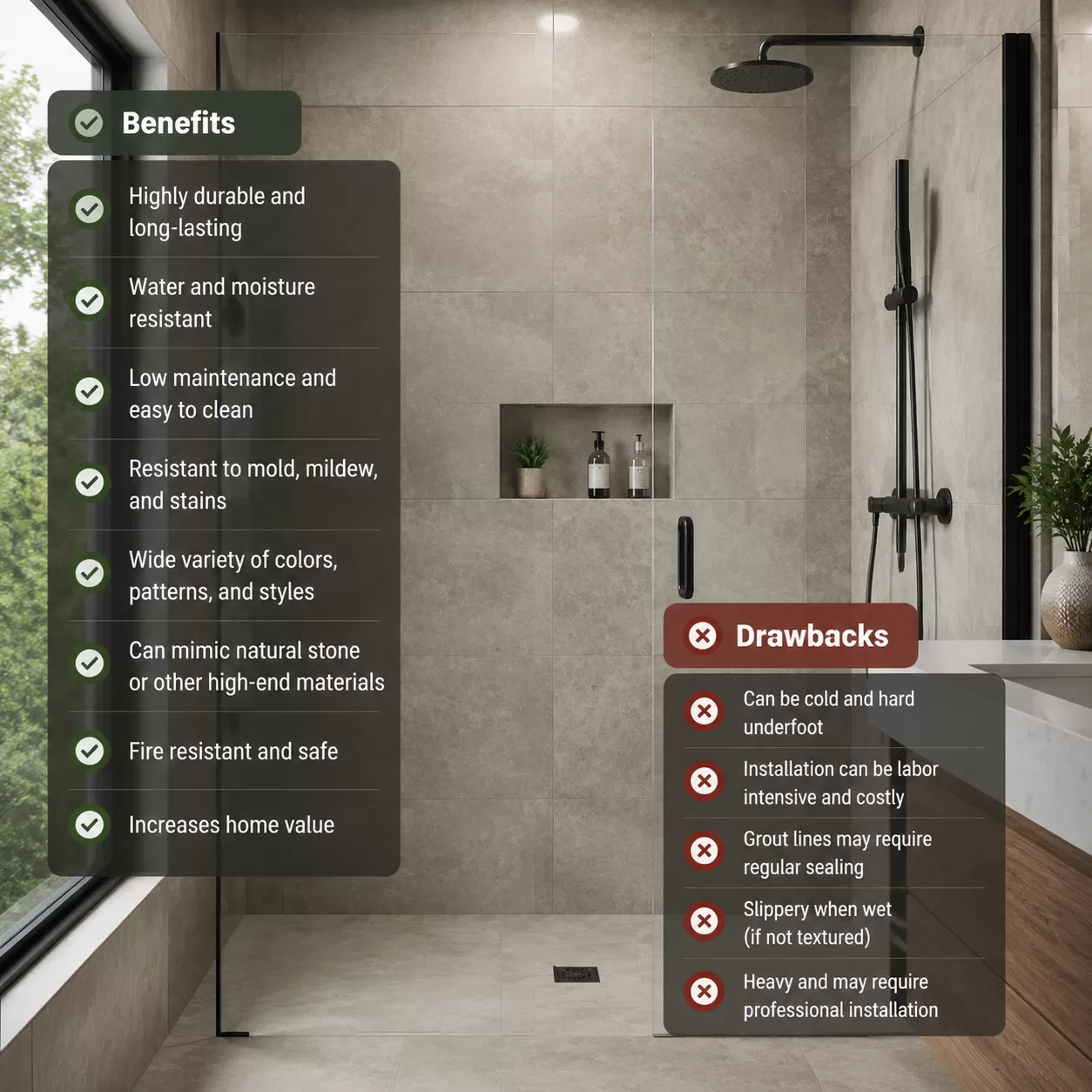
Choosing the right material for your bathroom renovation comes down to performance. If you are looking for the ultimate protection against water and daily wear, porcelain is the gold standard. As a specialist in the industry, we see firsthand how this material holds up over decades compared to softer alternatives.
Advantages: Superior Strength, Longevity, and Moisture Resistance
Porcelain tile is the top tier choice for shower surrounds and high-moisture zones. Its unique manufacturing process yields massive benefits for your home:
- Near-Zero Water Absorption Rate: Porcelain is fired at extreme temperatures, making it dense and practically waterproof. It naturally repels moisture, preventing under-surface water damage.
- Exceptional Chip Resistance: Because the color of porcelain runs all the way through the tile (through-body), minor scratches or chips are nearly invisible.
- Maximum Longevity: It easily withstands heavy daily use, harsh cleaning chemicals, and constant moisture without wearing down or fading over time.
Disadvantages: Higher Cost and Difficult Installation
While it offers unmatched performance, there are a few trade-offs to keep in mind before upgrading your bathroom floors and walls:
| Disadvantage | What It Means for Your Project |
|---|---|
| Higher Initial Cost | Porcelain carries a premium price tag compared to standard ceramic options. |
| Difficult Installation | Because the material is incredibly dense and hard, it is difficult to cut without a diamond-blade wet saw. |
| Heavy Weight | It requires a sturdy, well-prepared structural foundation, especially when utilized on upper-level shower walls. |
Porcelain vs. Ceramic for Shower Walls
When we look at shower walls, the choice between porcelain vs. ceramic often comes down to weight and ease of installation. While both materials look great, they behave differently when you’re defying gravity on a vertical surface.
Weight, Thickness, and Structural Considerations
Ceramic tiles are generally lighter and thinner than porcelain. This is a massive plus for shower walls because it puts less stress on the substrate and the adhesive.
| Feature | Ceramic Walls | Porcelain Walls |
|---|---|---|
| Weight | Lightweight; easier to set | Heavy; requires high-bond mortar |
| Thickness | Usually 6mm – 10mm | Usually 8mm – 12mm+ |
| Cutting | Simple snap-and-pop | Requires diamond blades |
Design Versatility and Aesthetic Options
I find that ceramic often wins on sheer variety. Because it is easier to manufacture, you’ll find a massive range of vibrant colors, intricate patterns, and 3D textures that are harder to produce in dense porcelain.
- Glossy Finishes: Highly popular for walls to reflect light and make small showers feel bigger.
- Decorative Accents: Most listellos and mosaic borders are ceramic-based for easier customization.
- Tile Size: From classic subway tiles to large-format slabs, both offer endless design versatility.
Why Ceramic is Often Preferred for Wall Applications
In my experience, ceramic tile is the go-to for shower walls for three main reasons:
- Easier Install: It is significantly easier to cut around shower heads, valves, and niches.
- Cost-Effective: Since walls don’t deal with foot traffic or heavy loads, you don’t always need the “overkill” durability of porcelain.
- Better Adhesion: The higher porosity on the back of the tile allows the thin-set to grab hold more effectively, reducing the risk of tiles slipping during the curing process.
While porcelain is the king of floors, ceramic tile is often the smarter, more practical choice for a beautiful shower surround.
Porcelain vs. Ceramic for Shower Floors
Choosing the right material for underfoot requires balancing safety and durability. When evaluating whether porcelain or ceramic tile is better for showers, the floor is where the physical differences between these two materials matter most.
Slip Resistance: Matte vs. Polished Finishes
Safety is the top priority for any shower floor. Polished tiles look luxurious, but they become incredibly slick when wet.
- Matte Finishes: Both porcelain and ceramic offer matte options. A matte texture provides the necessary friction to prevent slips.
- Polished Finishes: Beautiful on walls, but a hazard on bathroom floors.
- The Verdict: Always choose a matte or textured finish for the shower floor, regardless of the material.
The Importance of Mosaic Tiles for Maximum Traction
To maximize safety, small-format tiles are the industry standard for shower basins.
- More Grout Lines: Mosaic tiles create a dense grid of grout lines.
- Traction: This grid acts like tread on a tire, significantly increasing slip resistance underfoot.
- Flexibility: Mosaics easily conform to the slope of the shower pan leading to the drain.
Because porcelain is highly durable, we frequently recommend porcelain mosaics for long-term wear in high-moisture zones.
Load-Bearing Strength and Durability Underfoot
The shower floor endures constant water exposure, the weight of the user, and the shifting of the subfloor.
| Feature | Ceramic Tile | Porcelain Tile |
|---|---|---|
| Density | Lower | Higher |
| Chip Resistance | Moderate (Red/white clay may show if chipped) | High (Color is often through-body) |
| Load Capacity | Best for light traffic | Exceptional for daily use |
Porcelain’s dense composition gives it superior load-bearing strength. It withstands heavy daily use without cracking, making it the premier choice for long-lasting shower surrounds and floors.
Installation and Maintenance Requirements
Tools and Precision Required for Cutting and Laying
Installing shower tile requires the right gear, and the choice between materials changes the toolkit. Ceramic is soft and forgiving. You can snap it easily with a standard manual tile cutter.
Porcelain is incredibly dense. To cut it without cracking, you need specialized tools like a diamond-blade wet saw.
| Tile Type | Cutting Tool Needed | Difficulty Level | Risk of Chipping |
|---|---|---|---|
| Ceramic | Manual snap cutter, tile nippers | Easy to Moderate | Low |
| Porcelain | Diamond-blade wet saw, angle grinder | High | High (if using wrong blade) |
Waterproof Foundations and Grout Considerations
A beautiful shower means nothing if water seeps behind the walls. Before a single piece of porcelain or ceramic tile goes up, the substrate must be 100% waterproofed using cement backer boards and a liquid or sheet waterproofing membrane.
When it comes to grout, bathroom floors and shower surrounds benefit most from epoxy grout. While standard cement grout is cheaper, epoxy grout is completely waterproof, resists stains, and prevents mold growth in wet environments.
Do Porcelain or Ceramic Tiles Need Sealing in the Shower?
The short answer is no, but the grout always does.
- The Tiles: Glazed ceramic and porcelain tiles never need sealing. The protective glaze acts as a permanent barrier against water. However, if you install unpolished porcelain, it has microscopic pores that require a penetrating sealer before use.
- The Grout: If you use standard cement grout instead of epoxy, it must be sealed upon installation and resealed every 6 to 12 months to prevent water absorption and mold.
Daily Care and Deep Cleaning Best Practices
Keeping a shower clean shouldn’t be a full-time job. Both materials are relatively low-maintenance, but your cleaning habits determine their lifespan.
- Daily Routine: Squeegee the tile walls after the final shower of the day to eliminate standing water and soap scum.
- Weekly Cleaning: Use a pH-neutral cleaner or a simple mix of warm water and dish soap.
- What to Avoid: Never use harsh acids, bleach, or abrasive scrubbing pads. These will erode cement grout and scratch the glazed surface of your tile, ruining its chip resistance.
Verdict: Is Porcelain or Ceramic Tile Better for Your Shower?
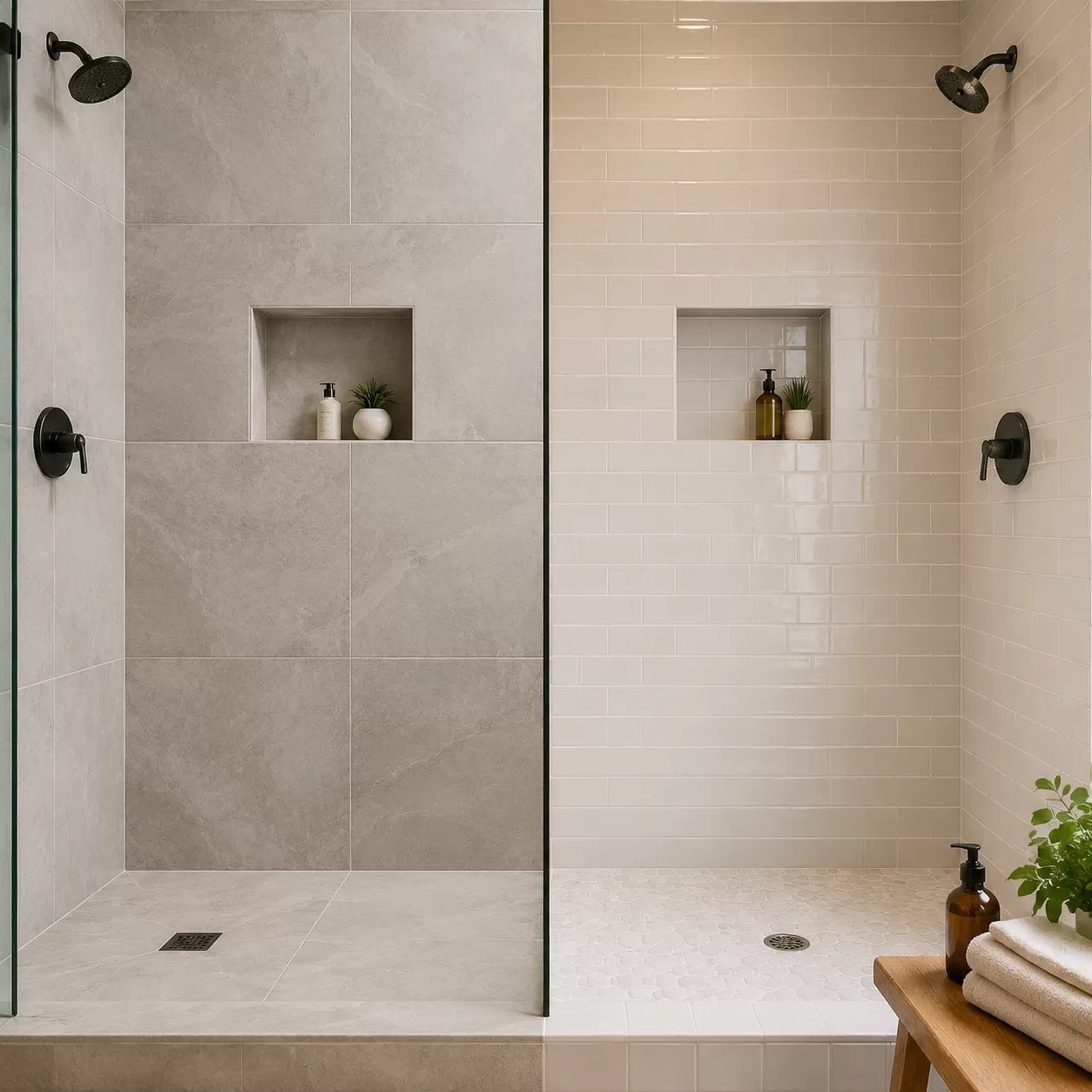
Choosing between these two comes down to balancing your long-term goals with your current budget. While both look great, they serve different masters in a high-moisture environment like a shower.
When to Choose Ceramic Tile
Ceramic is the go-to for budget-friendly renovations and DIY enthusiasts. I recommend ceramic if:
- You are focusing on shower walls where foot traffic and heavy impact aren’t factors.
- You are working with a tight budget but want a wide array of colors and patterns.
- You plan to do the installation yourself; ceramic is much easier to cut with standard tools.
When to Choose Porcelain Tile
Porcelain is the gold standard for durability and water resistance. You should opt for porcelain if:
- You are tiling a shower floor where maximum strength and low water absorption rates are non-negotiable.
- You want a “life-long” shower that resists chipping and wear.
- You are looking for high-end aesthetics, such as realistic stone or wood looks.
Making the Right Choice Based on Budget and Style
To help you decide, here is a quick breakdown of how these materials stack up for a typical shower project:
| Feature | Ceramic Tile | Porcelain Tile |
|---|---|---|
| Best Use | Shower Walls / Backsplashes | Shower Floors / High-Traffic Areas |
| Water Resistance | Moderate | Superior (Under 0.5%) |
| Price Point | Low to Mid-Range | Mid-Range to Premium |
| Installation | Easy / DIY Friendly | Difficult / Professional Required |
| Longevity | 10–20 Years | 50+ Years |
As a leading porcelain tile manufacture and supplier, I always suggest looking at the “Total Cost of Ownership.” While ceramic saves you money today, porcelain’s chip resistance and moisture protection usually make it the smarter investment for a worry-free bathroom. If you can swing the slightly higher upfront cost, porcelain is the superior choice for any wet area.
Frequently Asked Questions
Is porcelain tile slippery in showers?
It depends entirely on the finish. Polished porcelain is extremely slippery when wet and should never be used underfoot. However, matte, textured, or unglazed porcelain tiles offer excellent slip resistance. For the best traction on bathroom floors and shower pans, we always recommend textured mosaic tiles. The high frequency of grout lines naturally creates a safer, non-slip surface.
Is porcelain tile significantly more expensive than ceramic?
Generally, yes. Porcelain costs more upfront because it requires higher-quality clay and a more intensive firing process. As a leading porcelain tile manufacture and supplier, we ensure our products offer a longer lifespan and superior chip resistance, making porcelain the more cost-effective choice over time. Ceramic is cheaper to buy and install, but it may need replacement sooner.
Can I use ceramic tile on shower floors?
We advise against using standard ceramic tile for shower floors. Ceramic has a higher water absorption rate than porcelain, meaning it absorbs moisture more easily. Over time, constant standing water can break down the tile and the subfloor. Stick to ceramic for shower surrounds and walls, and choose a dense porcelain or mosaic for the shower floor.
What is the easiest tile to keep clean in a shower?
Large-format porcelain tile with a matte or satin finish is the absolute easiest to maintain. Porcelain resists stains, soap scum, and moisture penetration better than almost any other material. Choosing larger tiles means fewer grout lines, which drastically cuts down on the areas where mold and mildew like to grow.
