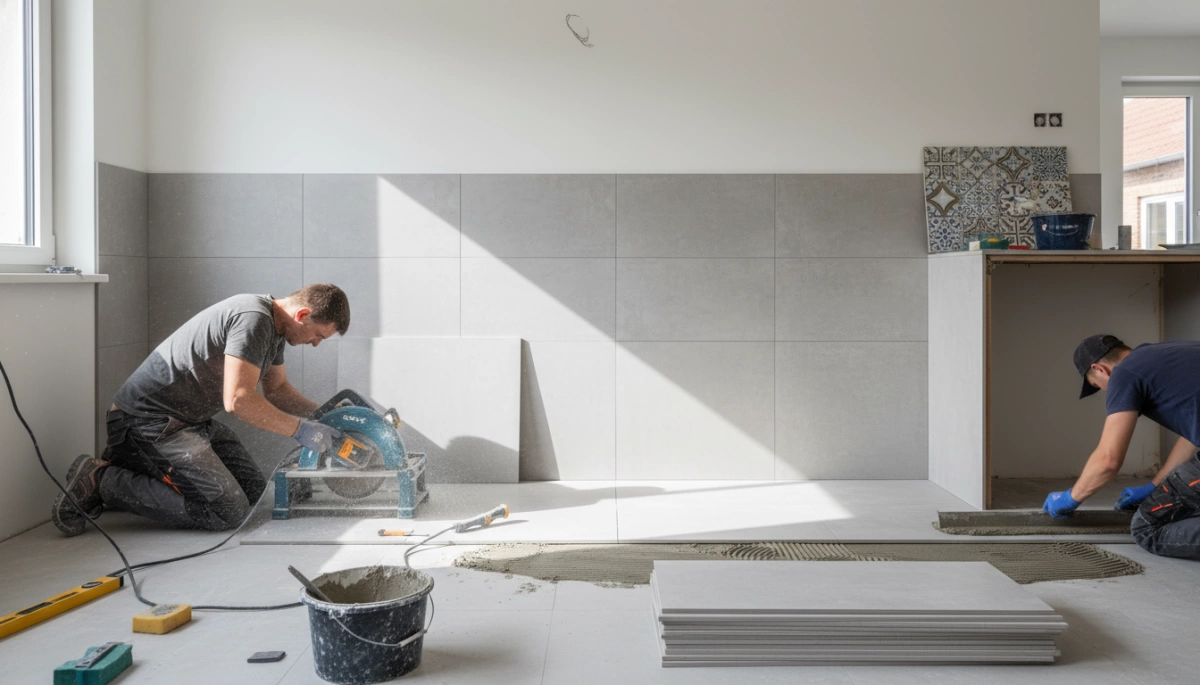
Ceramic vs. Porcelain Tile: Understanding the Basics
When investing in a home improvement project, selecting the right flooring material dictates both the lifespan of your floor and the labor required to lay it. Homeowners frequently ask, is porcelain tile harder to install than ceramic? The answer lies directly in their composition and manufacturing processes.
What is Ceramic Tile?
Ceramic tile is a classic, widely used surface material crafted from a mixture of natural red, brown, or white clay, sand, and water.
- Composition: Made from coarser, less refined clay.
- Firing Process: Baked in a kiln at relatively lower temperatures.
- Key Trait: The softer composition makes cutting tiles straightforward, making it a highly accessible choice for a DIY installation.
What is Porcelain Tile?
Porcelain is technically a specialized sub-category of ceramic, but it is engineered to be significantly tougher and more resilient.
- Composition: Manufactured using highly refined, finely ground clay mixed with minerals like feldspar.
- Firing Process: Fired at substantially higher temperatures and greater pressures.
- Key Trait: The result is a glass-like, heavy-duty material that is virtually waterproof and built for maximum longevity.
How Manufacturing Differences Affect Density
The core difference between these two materials comes down to density, which directly impacts tile thickness, weight, and how they behave under tools. Because porcelain is fired at extreme heat using fine clays, it becomes incredibly dense and less porous. Ceramic, fired at lower temperatures, retains a softer, more porous internal structure.
Density Comparison Matrix
| Feature | Ceramic Tile | Porcelain Tile |
|---|---|---|
| Material Base | Coarse natural clay | Fine kaolin clay + feldspar |
| Heat Exposure | Lower temperatures | Extreme high temperatures |
| Structural Density | Moderate | Exceptionally high |
| Water Absorption | > 0.5% (More porous) | < 0.5% (Impervious) |
| Workability | Easy to score and snap | Requires specialized diamond blades |
Is Porcelain Tile Harder to Install Than Ceramic?
If you are planning a home improvement project, I get this question all the time: is porcelain tile harder to install than ceramic? The straightforward answer is yes. Because porcelain is manufactured at much higher temperatures, it is incredibly dense. That density delivers excellent durability, but it also brings a distinct set of installation challenges that you need to be ready for.
Cutting Difficulty and Tool Requirements
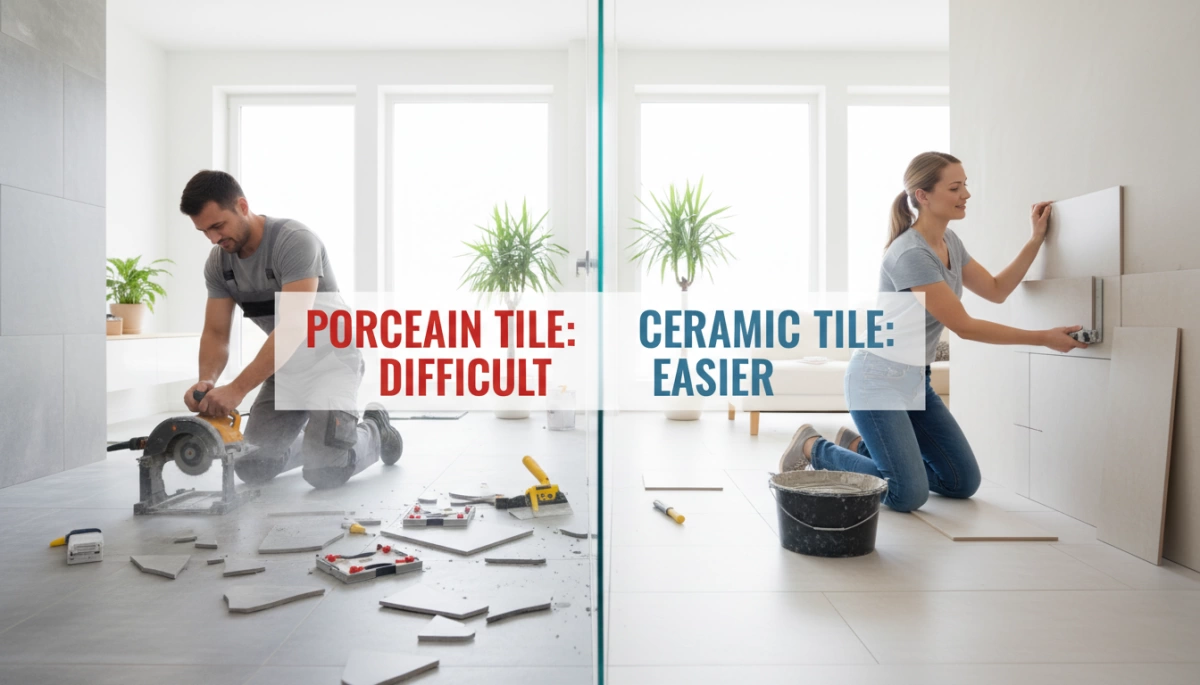
When it comes to cutting tiles, the difference between these two materials is night and day. Ceramic is relatively soft, meaning you can easily score it and break it cleanly. Porcelain puts up a fight.
- Ceramic: Easy to score and snap. Standard manual cutters work perfectly.
- Porcelain: Demands a motorized wet saw equipped with a high-quality diamond blade to prevent shattering. Drilling holes for pipes or fixtures also requires specialized diamond drill bits and a lot of patience.
Weight and Handling Differences
Tile thickness and material composition make porcelain much denser, resulting in notably heavy tiles. This extra weight slows down the job and changes how you must apply the adhesive.
| Feature | Ceramic Tile | Porcelain Tile |
|---|---|---|
| Weight | Lighter and manageable for one person | Extremely heavy, causing rapid fatigue |
| Wall Application | Grabs quickly and stays in place | Prone to sliding down; requires highly modified, sag-resistant thin-set |
| Handling | Forgiving, easy to adjust on the fly | Requires extra muscle and precise initial placement |
DIY vs. Professional Installation Considerations
For a standard DIY installation, I always point beginners toward ceramic. It is forgiving, lightweight, and saves you money on specialized tools. Porcelain, on the other hand, is unforgiving. If you miscalculate a cut or fail to back-butter the heavy tiles correctly, your floor will quickly become an expensive mess. Unless you have solid prior tiling experience and access to professional-grade wet saws, bringing in a professional for porcelain installation is the most reliable way to protect your investment.
Pros and Cons of Ceramic Tile
When tackling a home improvement project, knowing the exact strengths and weaknesses of your materials is crucial. In my experience supplying and working with these materials, ceramic is a fantastic, versatile option, but it has specific boundaries.
Advantages: Easy Installation and Budget-Friendly
Ceramic is the go-to choice if you want to keep costs down and make the labor highly manageable.
- Perfect for DIY Installation: The softer clay base makes cutting tiles incredibly straightforward. You rarely need an expensive wet saw; a standard manual snap cutter usually provides clean, accurate breaks.
- Highly Cost-Effective: The manufacturing process is less intensive, making the material itself significantly cheaper to buy.
- Easy Handling: You do not have to wrestle with dense, heavy tiles, which speeds up the job and reduces physical fatigue.
Disadvantages: Lower Water Resistance and Durability
The trade-off for a lower price tag and an easier workday is the material’s overall hardiness over time.
- Moisture Sensitivity: Ceramic has a higher water absorption rate. It is strictly for indoor use and is not the best choice for areas with constant, heavy moisture.
- Prone to Chipping: While standard tile thickness is perfectly fine for daily residential living, the softer glaze and body mean that dropping a heavy object is more likely to cause cracks or deep chips.
- Lower Traffic Tolerance: When customers ask me, “Is porcelain tile harder to install than ceramic?” I always point out the trade-off. Ceramic is undoubtedly easier and faster to install, but it sacrifices the extreme density required to survive heavy commercial foot traffic or decades of rough use.
Pros and Cons of Porcelain Tile
When planning home improvement upgrades, I always advise looking at both sides of the coin. Porcelain is a premium material, but it comes with distinct trade-offs, especially if you find yourself asking, “is porcelain tile harder to install than ceramic?” Let’s break down exactly what to expect.
Advantages: Unmatched Durability and Longevity
Porcelain is engineered to take a beating. Because it is manufactured under extreme heat and pressure, the final product is incredibly dense. Here is why I trust it for demanding spaces:
- Scratch and Stain Resistance: The hard surface handles pets, dropped items, and heavy foot traffic without showing wear.
- Lifetime Investment: While you pay more upfront, the longevity means you likely won’t have to replace these floors in your lifetime.
Disadvantages: High Initial Cost and Installation Challenges
The exact features that make porcelain so durable also create its biggest hurdles. If you are considering a DIY installation, you need to be prepared for the physical and technical demands.
- Difficult to Cut: Cutting tiles this hard requires serious equipment. You will need a professional-grade wet saw with a continuous rim diamond blade—standard scoring cutters often fail.
- Physical Demands: Because of the density and tile thickness, you are dealing with heavy tiles. Moving, lifting, and setting them is physically exhausting and requires a high-quality thinset mortar to keep them from sagging.
- Higher Budget Required: Both the raw materials and the specialized tools cost more. If you hire a professional, expect higher labor fees to account for the extra time and effort.
Cost Considerations for Materials and Labor
When I plan a home improvement budget, I always look at both the sticker price of the materials and the local labor rates required to put them in. The type of clay you choose drastically changes both numbers.
Ceramic Tile Installation Costs
Ceramic is the clear budget-friendly choice right out of the gate.
- Materials: Standard ceramic is significantly cheaper to buy per square foot.
- Labor Rates: Contractors charge lower rates because the material is much easier to handle and cut.
- Labor Savings: Because it is softer and lighter, ceramic is incredibly forgiving for DIY installation. If you install it yourself, your labor cost drops to zero.
Porcelain Tile Installation Costs
Is porcelain tile harder to install than ceramic? Yes, and your final project bill will directly reflect that reality.
- Materials: You pay a premium price for the dense, highly refined clay.
- Labor Rates: Expect noticeably higher installation quotes. Installers charge more because they are constantly maneuvering heavy tiles and dealing with increased tile thickness.
- Time and Tools: Cutting tiles made of solid porcelain requires expensive diamond wet saws and takes significantly more time, driving up hourly contractor fees.
Analyzing Long-Term Value and ROI
I tell clients to look past the initial receipt and consider the total lifecycle of the floor.
| Investment Factor | Ceramic Tile | Porcelain Tile |
|---|---|---|
| Upfront Cost | Low | High |
| Installation | Cheap / DIY-friendly | Expensive / Pro required |
| Durability | Moderate | Exceptional |
| Best ROI Location | Guest baths, standard walls | Mudrooms, main floors, showers |
Ceramic easily wins on immediate savings. However, porcelain provides unmatched long-term ROI over decades if you need a bulletproof surface that handles daily, heavy wear without cracking or needing replacement.
Best Application Scenarios for Each Tile Type
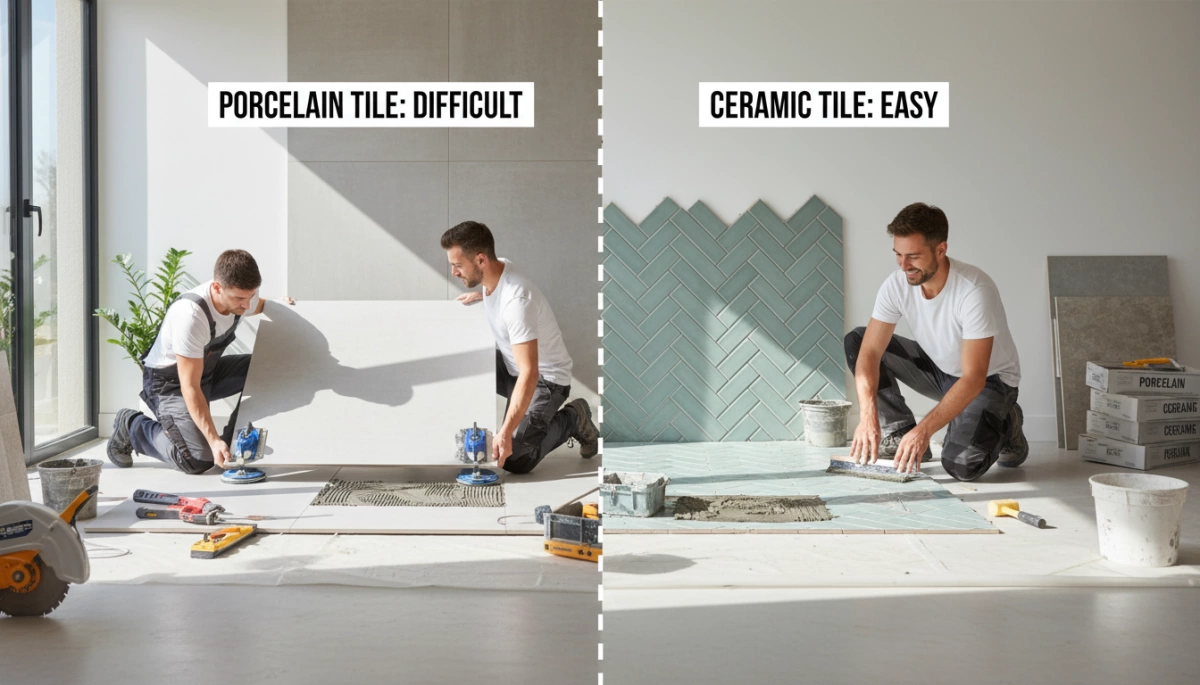
Knowing exactly where to place these materials makes all the difference in your project’s success. People frequently ask me, is porcelain tile harder to install than ceramic? The short answer is yes, but the specific room dictates whether that extra effort is strictly necessary. Matching the right material to the right environment ensures longevity and saves you from unnecessary labor.
Here is a quick breakdown of where each material thrives before we dive into the details:
| Application Area | Top Recommendation | Primary Reason |
|---|---|---|
| Shower Floors | Porcelain | Superior water resistance |
| Main Hallways | Porcelain | Maximum scratch and impact durability |
| Kitchen Backsplashes | Ceramic | Easier cutting and lighter weight |
| Accent Walls | Ceramic | Faster installation, limitless design options |
Ideal Choices for Bathrooms and Wet Areas
When tackling wet zones, water resistance is your primary concern. I always mandate porcelain for shower pans, bathroom floors, and steam rooms. Its ultra-low absorption rate means it shrugs off standing moisture that would eventually penetrate softer materials.
However, ceramic still holds strong value in the bathroom.
- Guest Bathrooms: Perfect for floors that don’t see daily puddles.
- Shower Walls: Excellent choice since gravity pulls water away quickly.
- DIY Projects: If you are managing a DIY installation for a small powder room, ceramic is significantly easier to score and snap.
Best Options for High-Traffic Flooring
Foot traffic is relentless in kitchens, entryways, and main living corridors. For these demanding spaces, porcelain is the absolute winner. Because it is fired at incredibly high temperatures, the tile thickness and structural density provide unmatched wear resistance. It handles dropped pots, muddy boots, and pet claws without chipping or cracking.
Ceramic works perfectly well for lighter-traffic floors, such as inside closets or guest bedrooms. But if you are upgrading a busy household corridor, investing the time into laying durable porcelain pays off over the decades.
Top Picks for Walls and Backsplashes
Wall applications are where ceramic truly shines and dominates the market. Because walls do not bear weight or endure foot traffic, paying for ultra-dense flooring materials is overkill.
- Weight Advantage: Avoiding heavy tiles on vertical surfaces makes the job infinitely smoother. Ceramic is lighter and bonds quickly to the wall without sagging.
- Intricate Cuts: Cutting tiles to fit around electrical outlets, light switches, and plumbing fixtures is a breeze with ceramic.
- Speed: For a standard weekend home improvement project like a kitchen backsplash, ceramic speeds up your timeline significantly.
Frequently Asked Questions
Do I need a special wet saw for porcelain tile?
When cutting tiles, porcelain’s extreme density requires the right tools. I always recommend using a high-quality wet saw equipped with a diamond blade.
- Why it matters: A standard manual score-and-snap cutter often chips or shatters porcelain due to the material’s hardness and tile thickness.
- The solution: Renting or buying a wet saw makes the job much cleaner, ensures precise cuts, and prevents wasted material.
Is porcelain tile too heavy for walls?
Not at all, but it absolutely requires proper preparation. Because these are inherently heavy tiles, gravity is your biggest challenge during wall applications.
- Adhesive choice: You must use a premium, non-sag thin-set mortar specifically rated for heavy or large-format materials. Standard adhesives will fail.
- Physical support: I advise using ledger boards or heavy-duty spacers to keep the tiles securely in place while the mortar fully cures.
Which material should a beginner choose for a DIY project?
For your first DIY installation, I strongly suggest starting with ceramic. People frequently ask me, is porcelain tile harder to install than ceramic? The answer is definitely yes.
- Beginner-friendly: Ceramic is softer, significantly lighter, and much more forgiving when you make a mistake.
- Less tool-intensive: You can typically get by with basic, inexpensive hand tools instead of renting heavy machinery.
- Perfect for learning: It serves as the ideal starting point for a successful home improvement project before you decide to tackle tougher, denser materials.
