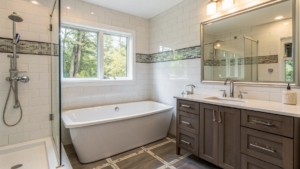
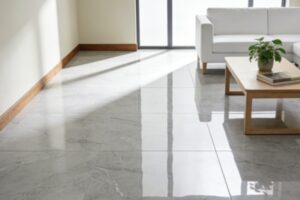
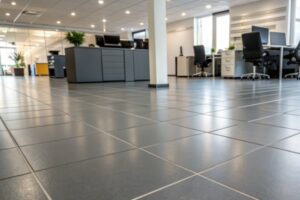
Worried about your flooring handling heat from stoves or underfloor systems? The wrong choice can lead to warping and damage. Porcelain tile1 is the durable, heat-resistant solution2 you need.
Yes, porcelain tile is highly heat-resistant. Made by firing clay and minerals at over 1200°C, it won't warp, melt, or discolor from everyday heat sources like underfloor heating3 or kitchen stovetops. Its dense structure makes it exceptionally durable and safe for high-temperature areas4.
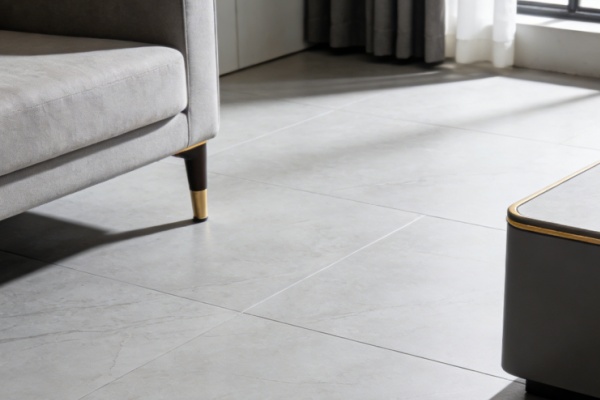
So, we know porcelain is tough against heat. But this simple fact has huge implications, especially when you're choosing flooring for a specific project. As a manufacturer, I've seen firsthand how understanding the why behind this resistance helps our clients make smarter decisions. Let's dig into the details that truly matter for your project.
Why Is Porcelain Tile Superior for Underfloor Heating Systems?
Installing underfloor heating3 but unsure which flooring is best? A poor choice means slow heating, high energy bills, and potential floor damage. Porcelain tile1 works perfectly with these systems.
Porcelain tile1 is superior for underfloor heating3 because of its excellent thermal conductivity5. It transfers heat from the system to your room much faster and more efficiently than materials like wood. Plus, its inherent heat resistance prevents it from warping, cracking, or drying out over time.
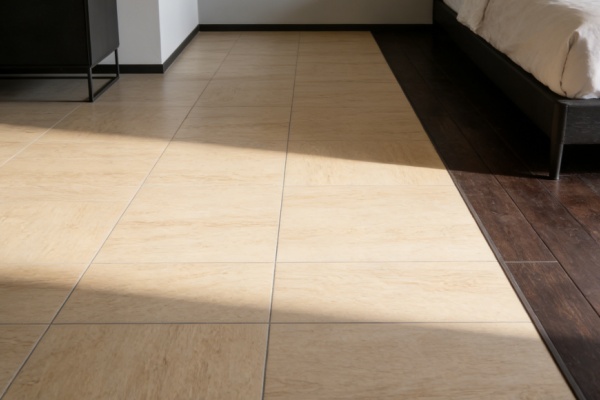
When we work with clients on projects that include underfloor heating3, the conversation always turns to thermal conductivity5. It’s a simple concept: how well does a material transfer heat? Porcelain tile1 is a star performer here. Wood flooring, a common alternative, acts more like an insulator. This means your heating system has to work much harder and longer just to warm up the room, wasting energy. Porcelain, on the other hand, lets that warmth pass through quickly.
Material Thermal Conductivity Comparison
| Material | Typical Thermal Conductivity (W/m·K) | Performance with Underfloor Heating |
|---|---|---|
| Porcelain Tile | ~1.9 | Excellent. Fast heat transfer, high efficiency. |
| Wood Flooring | ~0.2 | Poor. Acts as an insulator, slow to heat up. |
| Wood with Underlay | ~0.03 | Very Poor. Significantly reduces heating efficiency. |
Over the years, I've seen wood floors installed over heating systems that end up cupping or gapping. Porcelain is fired at extreme temperatures, so it’s completely stable. It won’t change shape, no matter how many heating cycles it goes through. This stability ensures your floor remains perfectly flat and beautiful for decades, making it the most reliable choice for heated floors.
How Much Heat Can Porcelain Tile Actually Handle?
Planning a kitchen or commercial space with high-heat areas? You need a surface that won't scorch, crack, or melt when things get hot. Porcelain's firing process makes it incredibly heat-proof.
A quality porcelain tile can withstand temperatures well over 1000°C (2200°F). This is far beyond any temperature it would encounter in a home or commercial building, including direct contact from a hot pan or the area around a commercial oven. Its stability is locked in during manufacturing.
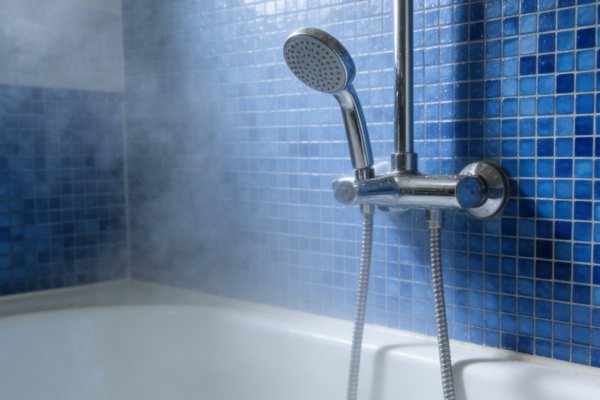
The secret to porcelain's heat resistance lies in how we make it. We take a mix of natural, inorganic materials like clay and quartz and fire them in a kiln at temperatures exceeding 1200°C. This process, called vitrification%%%FOOTNOTE_REF6%%%, creates an incredibly dense and stable tile. Essentially, the tile has already endured far more heat than it will ever face in your project. Think about a busy [commercial kitchen](https://www.webstaurantstore.com/article/1005/types-of-restaurant-kitchen-flooring.html?srsltid=AfmBOoqhOJX3J9nRKhjzczLXIa3XLrBlk-ItdmQsQVUtQEub36qqnKj)7 or the wall behind a fireplace. You need a material that is completely non-combustible and won't be damaged by constant temperature changes.
Key Factors in Heat Resistance
- Raw Materials: We use inorganic minerals that are naturally stable at high temperatures.
- Firing Process: Vitrification at 1200°C+ locks in the tile's structure, making it inert.
- Resulting Density: The dense, non-porous body prevents heat from causing structural changes.
This is why you can place a hot pot directly on a porcelain countertop without a trivet, or use it confidently around a stove. The material simply doesn't react to that level of heat. For our clients, this means peace of mind in any application.
Does Tile Quality Affect Its Heat Resistance?
Assuming all porcelain tiles offer the same heat performance? Low-quality tiles can have hidden flaws that lead to cracking under thermal stress. Choosing a well-made, high-density tile8 ensures long-term safety.
Yes, quality is crucial. While all porcelain is heat-resistant, high-quality tiles offer better thermal stability9. Tiles with low water absorption10 and high density, like full-body porcelain11, handle temperature fluctuations better. Poorly made tiles with internal flaws or higher porosity can be more prone to cracking.
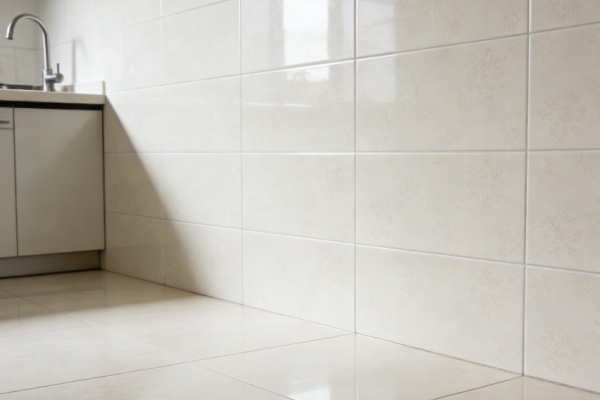
It's not just about the peak temperature a tile can handle; it's about thermal stability9. This means how well the tile endures repeated changes from hot to cold without failing. This is where the quality of manufacturing really shows. As a supplier, we focus on producing high-density, low-porosity tiles. Why? Because a dense tile body has very little room for water to get in. This is critical. If a tile absorbs water and then freezes, or heats up quickly, that trapped moisture can cause stress and lead to cracks.
Quality Indicators for Thermal Stability
| Tile Type | Water Absorption | Density | Thermal Stability | Recommended Use |
|---|---|---|---|---|
| Full-Body Porcelain | < 0.5% | Very High | Excellent | Underfloor heating, exteriors |
| Glazed Porcelain | < 0.5% | High | Very Good | General interior/exterior |
| Lower-Quality Ceramic | > 3% | Lower | Fair | Not for high-stress areas |
A poorly fired tile might look fine, but it can contain micro-cracks or have higher porosity. For large-scale projects, ensuring your supplier has strict quality control12 is non-negotiable. It's the difference between a floor that lasts decades and one that fails prematurely.
Conclusion
Porcelain tile1 is extremely heat-resistant, making it a superior choice for underfloor heating3 and high-temperature areas4. Its durability and efficiency come from its dense, professionally manufactured structure.
Explore the advantages of porcelain tile, including its durability and heat resistance, making it ideal for various flooring needs. ↩
Learn about the properties that contribute to heat resistance in flooring materials, ensuring longevity and safety. ↩
Discover the best flooring options for underfloor heating to maximize efficiency and comfort in your home. ↩
Find out which flooring materials can withstand high temperatures without damage, ensuring safety and durability. ↩
Understand the importance of thermal conductivity in flooring materials, especially for underfloor heating systems. ↩
Delve into the vitrification process that enhances porcelain tile's strength and heat resistance. ↩
Find out which flooring materials are ideal for commercial kitchens, focusing on heat resistance and durability. ↩
Explore the advantages of high-density tiles, including their resistance to cracking and thermal stability. ↩
Understand the key factors that influence thermal stability in flooring, ensuring long-lasting performance. ↩
Learn how low water absorption contributes to the durability and thermal stability of porcelain tiles. ↩
Discover the benefits of full-body porcelain tiles, known for their durability and low porosity. ↩
Learn about the significance of quality control in tile manufacturing to ensure long-lasting and reliable products. ↩