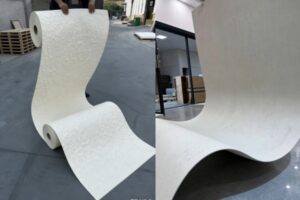
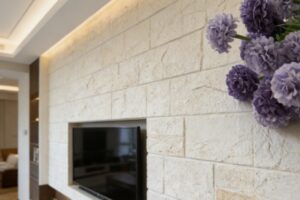
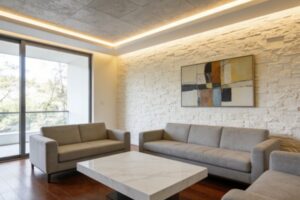
You think of stone as heavy, rigid, and hard to work with. This limits your design ideas for curved surfaces. But what if a natural stone was as flexible as plastic?
Yes, a bendable type of natural rock exists, and it's called ultra-thin stone veneer1. We make it by peeling a very thin layer of real stone2, like slate or sandstone, and bonding it to a flexible fiberglass and resin backing. This process makes it flexible and lightweight.
This sounds almost like science fiction, I know. When I first saw a sheet of real stone bend in my hands, I couldn't believe it either. It completely changes how you think about construction and design materials. Let's break down how this amazing material is even possible and what it can do for your projects.
How is ultra-thin stone made to be flexible?
It's hard to believe that real, solid rock can bend without breaking. You might think it's just a fake print on plastic. But the secret is in a high-tech process.
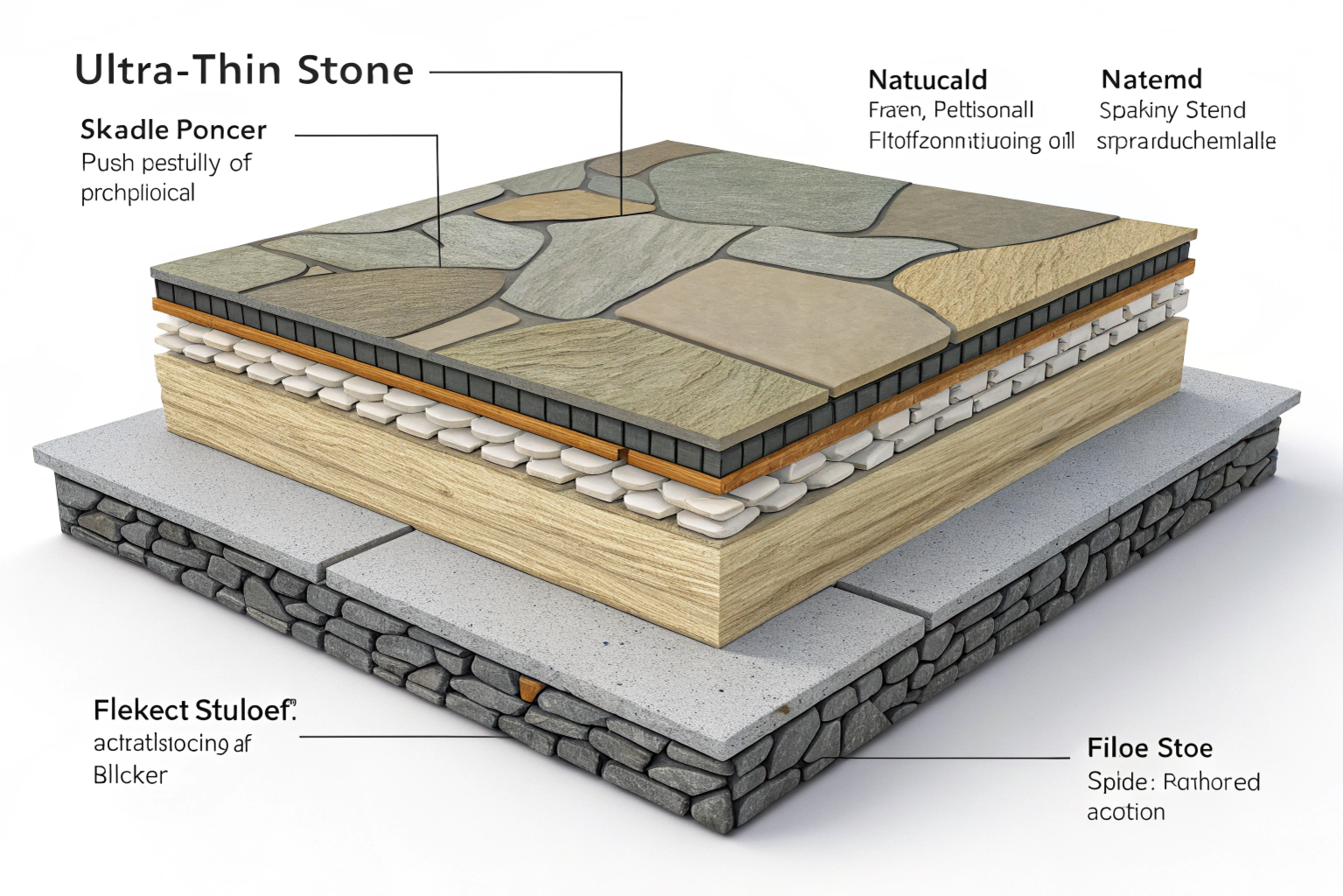
Ultra-thin stone is flexible because it is a paper-thin layer of real stone fused to a flexible backing. We use nanotechnology to carefully peel a layer from a block of slate, sandstone, or marble. This thin stone is then bonded with fiberglass and polyester resin3, giving it strength and bendability.
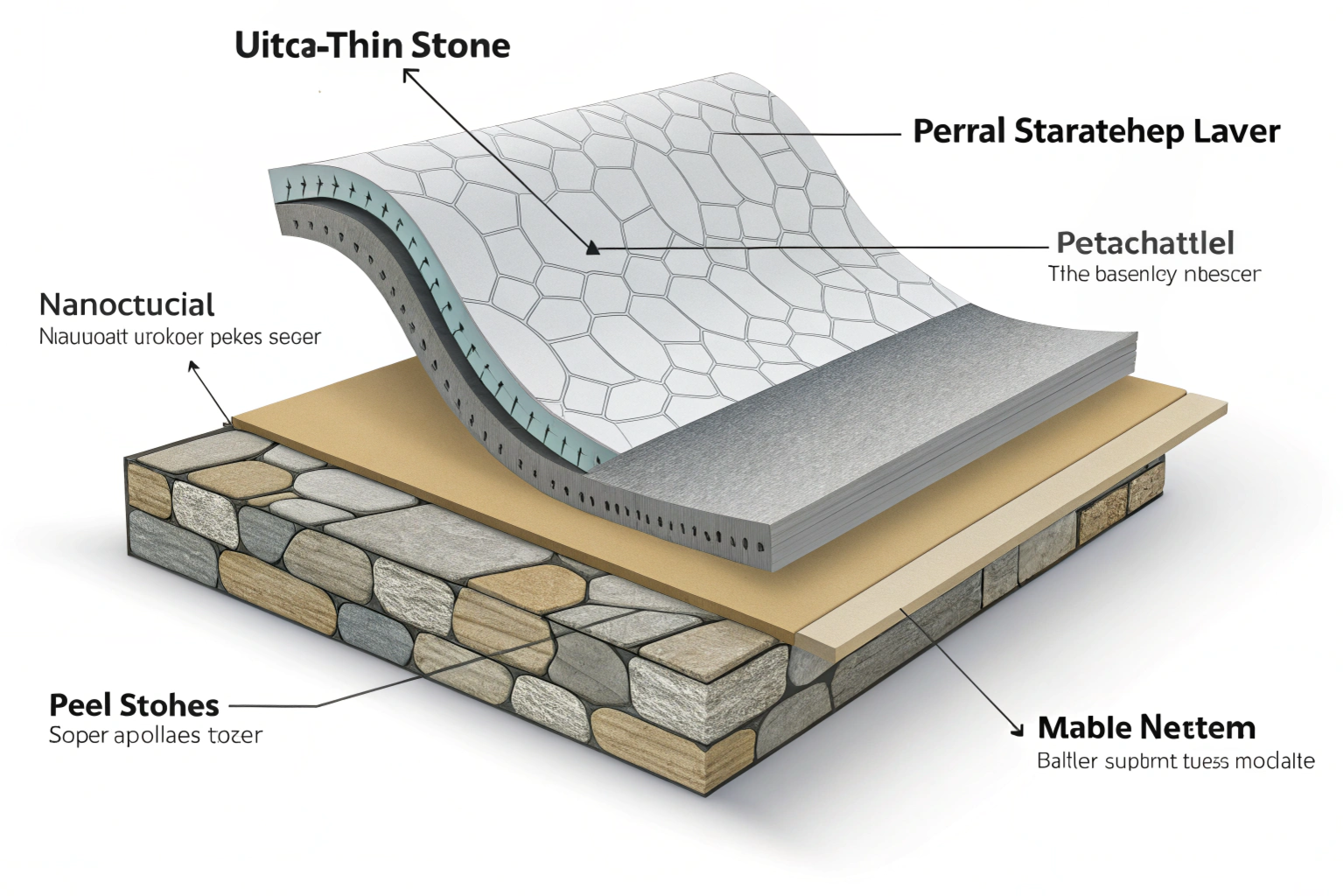
The process is fascinating to watch in our factory. We start with large, high-quality blocks of natural stone. We specifically look for stones with beautiful, natural layers, like slate and certain sandstones. Then, a special adhesive sheet is applied to the surface. Using advanced nanotechnology, we carefully peel this sheet back, and it lifts a micro-thin layer of the actual stone with it. This layer preserves every natural crack, grain, and texture of the original block. It's like capturing a stone’s fingerprint. The magic happens when we bond this thin stone face to a backing of fiberglass and polyester resin3. This backing is what provides the flexibility and strength, allowing the stone to bend around curves without cracking. It supports the stone layer, so you get the beauty of real stone with the versatility of a modern composite material.
| Feature | Traditional Stone Slab | Ultra-Thin Stone Veneer |
|---|---|---|
| Thickness | Typically 2-3 cm (20-30 mm) | 1-2 mm |
| Weight | Very Heavy (approx. 50-80 kg/m²) | Very Light (approx. 1.5 kg/m²) |
| Flexibility | None, completely rigid | High, can bend to fit curves |
| Installation | Requires specialized labor and equipment | Can be cut with shears and installed with adhesive |
What are the main types of bendable stone?
You know that bendable stone exists. But you might not know which type is right for your project. Let's look at the three main options and what makes each one unique.
The main types of bendable stone are based on the original rock: ultra-thin slate4, ultra-thin sandstone5, and ultra-thin marble6. Each one keeps the look and feel of its parent stone. Slate is smooth, sandstone is grainy and textured, and marble has elegant, flowing patterns.
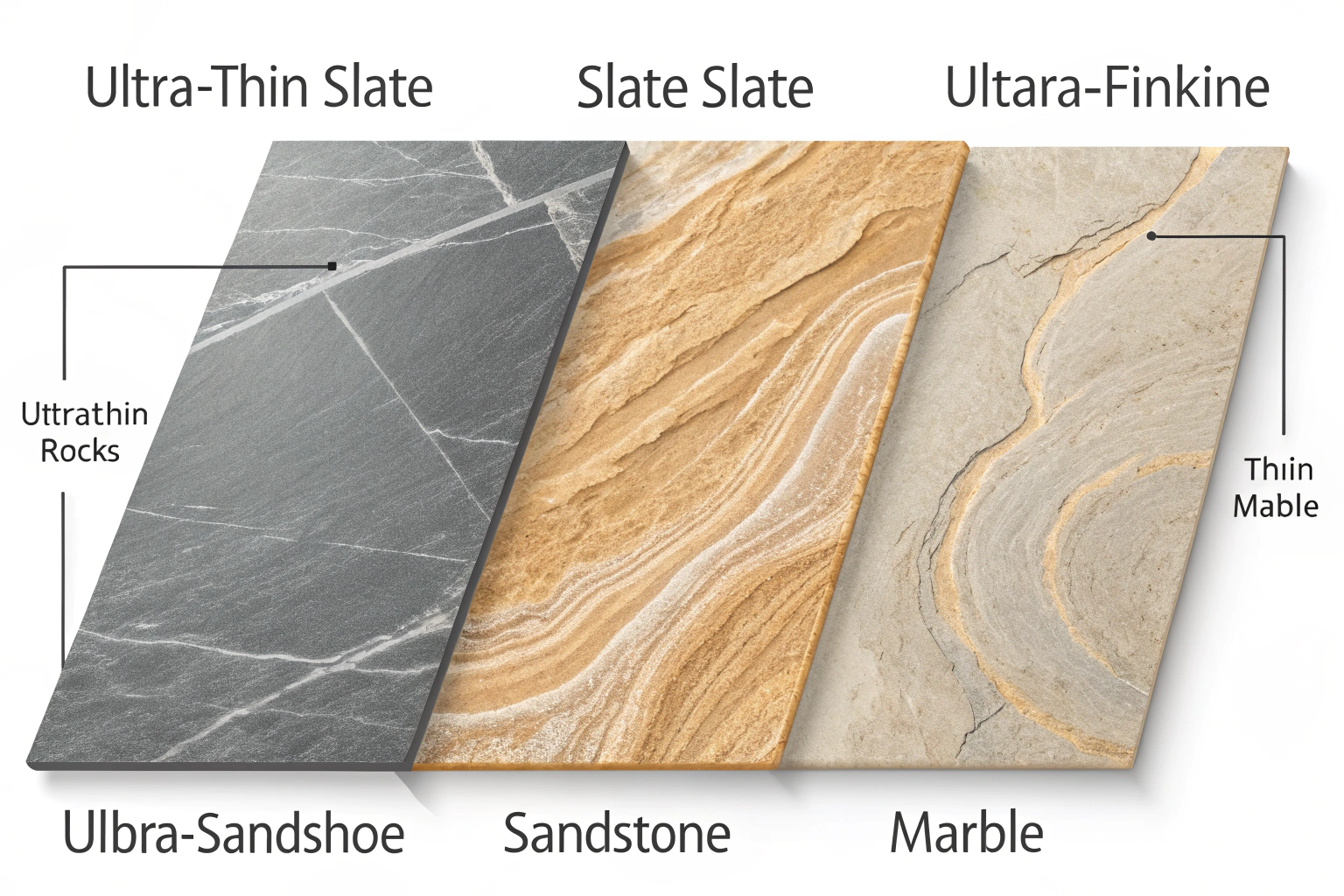
As an OEM supplier, we work with these materials every day to create custom product lines for our clients. Each has distinct properties that make it suitable for different applications.
1. Ultra-Thin Slate Veneer
Slate is my personal favorite for modern designs. It has a very pure and consistent color, with a subtle, layered texture. It is harder and less porous than sandstone, making it very durable. We often recommend it to clients looking for a sleek, sophisticated finish for commercial spaces like office interiors or hotel feature walls.
2. Ultra-Thin Sandstone Veneer
Sandstone gives you a wonderful, earthy feel. Its surface is more granular and often has wavy patterns that look like desert sand. This texture is amazing, but it's also more porous and can absorb stains if not sealed properly. We always advise our wholesale partners that their product instructions should recommend sealing sandstone veneers, especially for kitchens or high-traffic areas.
3. Ultra-Thin Marble Veneer
This is the most luxurious option. Thanks to new technology, we can now peel layers from marble blocks, which don't have natural layers like slate. This gives you the incredible, rich veining and fine texture of real marble in a flexible sheet. It’s perfect for creating high-end looks without the extreme weight and cost of solid marble slabs.
| Stone Type | Key Characteristic | Best For | Maintenance Level |
|---|---|---|---|
| Slate | Smooth, uniform color, high hardness | Modern interiors, commercial spaces | Low |
| Sandstone | Grainy, wavy texture, rustic feel | Feature walls, natural-themed designs | Medium (sealing required) |
| Marble | Rich veining, fine texture, elegant look | Luxury residential, high-end hotels | Low to Medium |
Where can you use flexible stone in a project?
You have this amazing new material. But you're stuck thinking about traditional flat walls and floors. Flexible stone opens up a whole new world of design possibilities you haven't considered.
You can use flexible stone almost anywhere. It is perfect for curved walls, round columns7, custom furniture8, and even ceilings because it is so lightweight. I've seen clients use it for everything from residential shower surrounds to entire commercial building facades. Its flexibility makes it a game-changer for renovations.
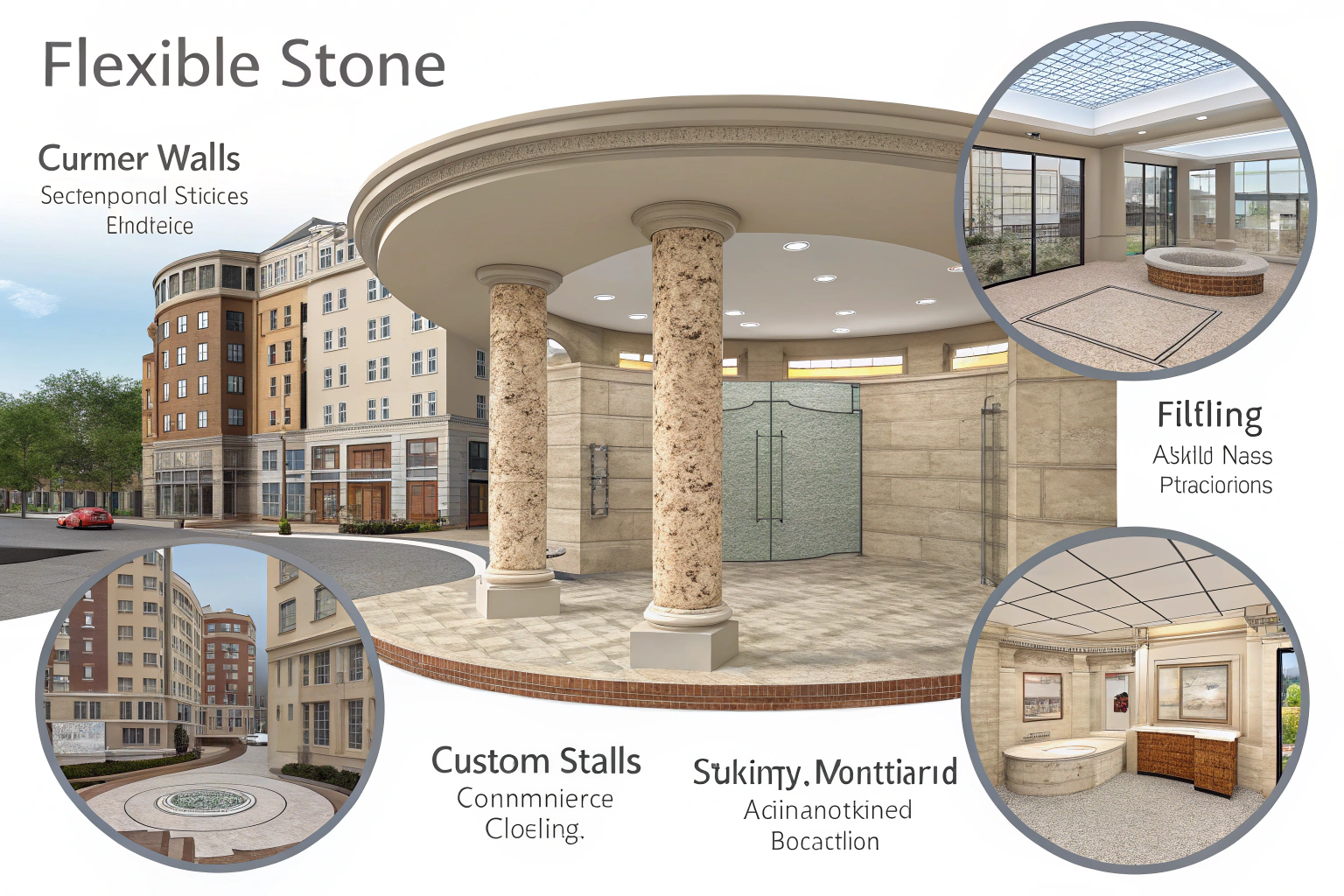 The possibilities are truly endless, which is what makes my job as a manufacturer so exciting. For our Interior Flexible Stone clients, we often develop products for curved feature walls in living rooms or unique backsplashes that wrap seamlessly around kitchen corners. Because it’s so thin and light, it’s also great for cabinet fronts or furniture cladding. I once worked with a client who used our custom wood-grain flexible stone to cover a series of large, ugly concrete pillars in an office lobby. The transformation was incredible. For our Exterior Cladding Panel partners, the material’s weather resistance and UV stability are key. It can be applied to curved building facades, creating stunning architectural features that would be impossible with traditional stone. For renovation projects, our Special-Scenario Flexible Stone is a lifesaver. You can apply it directly over old, dated tiles without the mess and cost of demolition. This is a huge selling point for contractors and renovators.
What are the real advantages over traditional stone?
Traditional stone is beautiful and timeless. But it is also extremely heavy, expensive to ship, and very difficult to install. Flexible stone solves all these problems without sacrificing natural beauty.
The main advantages are its light weight, flexibility, and easy installation9. At about a third of the weight of traditional tile, it dramatically cuts shipping and labor costs. It won’t crack from building movement, and you can install it over existing surfaces with basic tools.
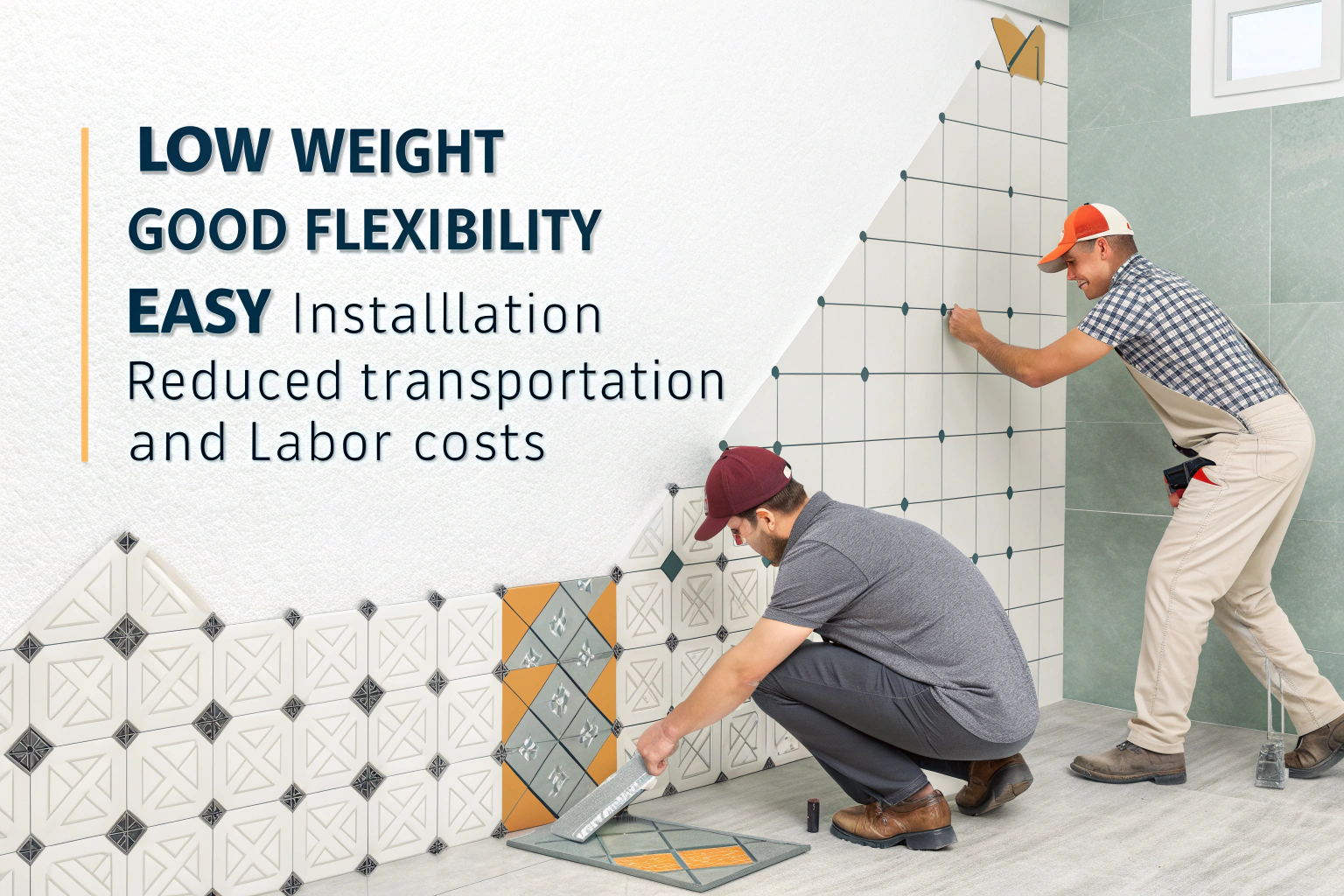
From a B2B perspective, these advantages translate directly into cost savings and efficiency for our clients. I talk to importers and distributors every day, and their biggest challenges with stone are logistics and labor. A container of flexible stone veneer weighs significantly less than a container of solid stone tiles, which means lower shipping costs. This is a huge benefit for our international partners. For contractors, the installation is a game-changer. They don't need specialized stonemasons or heavy lifting equipment. A worker can carry several sheets at once and cut them to size with tin snips or a heavy-duty utility knife. This saves a massive amount of time and money on site. Finally, its durability is a key factor. The fiberglass backing makes it impact-resistant and prevents the stone from cracking during transport or if a building settles. For our OEM/ODM clients, this means fewer product defects and happier end customers. It’s a high-performance material that solves real-world problems.
Conclusion
Ultra-thin stone veneer is a revolutionary material that combines the natural beauty of real stone with modern flexibility and performance, opening up new possibilities for designers, builders, and manufacturers worldwide.
Discover how ultra-thin stone veneer can transform your design projects with its flexibility and natural beauty. ↩
Understand the intricate process of creating ultra-thin stone veneers by peeling thin layers from natural stone. ↩
Find out how these materials contribute to the strength and flexibility of stone veneers. ↩
Discover the unique properties of ultra-thin slate and its applications in modern design. ↩
Explore the uses and benefits of ultra-thin sandstone in various construction projects. ↩
Learn about the luxurious appeal and practical benefits of using ultra-thin marble in design. ↩
Find out how flexible stone can enhance the aesthetics of round columns in architecture. ↩
Discover the innovative use of flexible stone in creating unique and stylish custom furniture. ↩
Find out how flexible stone simplifies the installation process, saving time and labor costs. ↩