Introduction to Porcelain Tile for Kitchen Floors
Kitchen porcelain tile flooring is the premier choice for homeowners seeking a blend of high-end aesthetics and industrial-grade performance. Engineered from refined clay and fired at intense temperatures, these tiles provide a permanent flooring solution that withstands the daily rigors of a busy culinary space.
What Makes Porcelain Ideal for Kitchens?
Porcelain is specifically designed to handle the unique environment of a kitchen, where spills, heat, and heavy foot traffic are constant. Its technical properties ensure long-term value and structural integrity.
- Extreme Density: The high-pressure manufacturing process results in a tile that is harder and more durable than standard ceramic.
- Moisture Resistance: With a water absorption rate of less than 0.5%, it is virtually impervious to liquid damage and staining.
- Wear Resistance: Ideal for high-traffic zones, maintaining its finish even after years of heavy use.
- Thermal Stability: Porcelain handles temperature fluctuations effortlessly, making it compatible with underfloor heating systems.
Porcelain vs. Ceramic: Understanding the Difference
While both belong to the ceramic family, porcelain is a specialized, higher-performance version. The primary differences lie in the density of the materials and the temperature at which they are fired.
| Feature | Porcelain Tile | Ceramic Tile |
|---|---|---|
| Material Composition | Refined clay, sand, and feldspar | Natural red or white clay |
| Firing Temperature | Extremely high (1,200°C – 1,400°C) | High (1,000°C – 1,200°C) |
| Water Absorption | < 0.5% (Impermeable) | > 0.5% (More porous) |
| Durability | Superior; suitable for commercial use | Moderate; best for light traffic |
| Body Color | Through-body color (often consistent) | Surface glaze only |
Choosing kitchen porcelain tile flooring ensures a surface that is not only visually stunning but also technically superior to traditional ceramic options, providing a lifetime of reliable service.
Pros and Cons of Kitchen Porcelain Tile Flooring
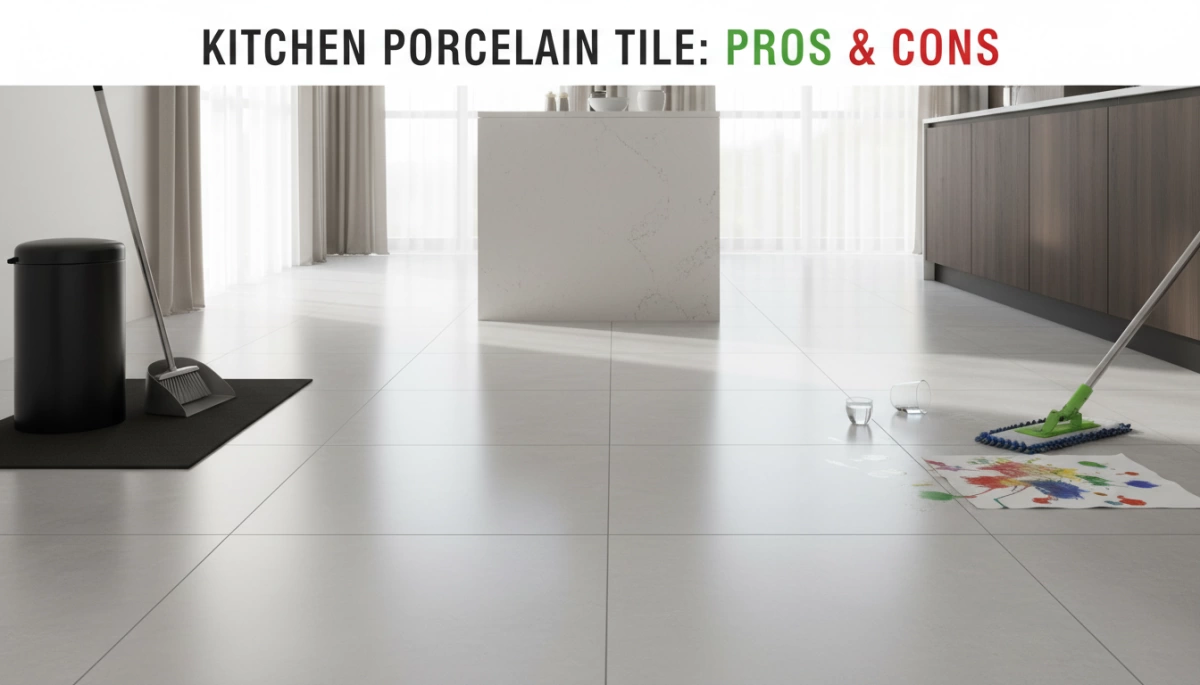
Choosing the right material for your home is a big decision. Kitchen porcelain tile flooring stands out because it is engineered to handle the chaos of a busy house while looking high-end. Here is a breakdown of what we see as the biggest advantages and the few hurdles you might face.
Key Benefits: Durability, Moisture, and Heat Resistance
Porcelain is incredibly dense, which makes it much tougher than standard ceramic. It is built to withstand the heavy foot traffic of commercial spaces, so it handles a busy family kitchen with ease.
- Extreme Durability: It resists scratches from pets, dropped pots, and heavy furniture.
- Moisture Proof: Because it is nearly non-porous, it won’t soak up spills or stains, making it ideal for wet zones.
- Heat Resistant: Unlike vinyl or laminate, porcelain won’t melt or warp if you set a hot pan down or install it near a range.
Low Maintenance and Easy Cleaning
We recommend porcelain to anyone who wants a “set it and forget it” floor. It doesn’t require the constant polishing or sealing that natural stone does.
- Simple Upkeep: A quick sweep and a damp mop are usually all you need.
- Stain Resistance: Spilled wine or oil won’t penetrate the surface if wiped up promptly.
- Hygienic: The dense surface doesn’t harbor bacteria or allergens.
Potential Drawbacks: Weight and Installation Complexity
While the benefits are massive, there are a few things to keep in mind before you start your project.
- Heavy Material: Porcelain is very heavy. You need to ensure your subfloor is strong enough to support the weight without flexing.
- Hard to Cut: Because of its durability, it is very hard. You’ll need a wet saw with a diamond blade to get clean edges.
- Professional Help: Due to the weight and the precision required for thin grout lines, we usually suggest professional installation over a DIY approach.
| Feature | Porcelain Tile Performance |
|---|---|
| Traffic Level | Excellent for high-traffic areas |
| Water Resistance | Superior (nearly 0% absorption) |
| Lifespan | Decades with proper care |
| Installation | Difficult / Requires specialized tools |
| Cost | Mid-to-high range |
Kitchen porcelain tile flooring is a long-term investment. It offers a non-slip surface and a level of toughness that most other materials simply can’t match, especially in the heart of the home.
Popular Styles and Design Options
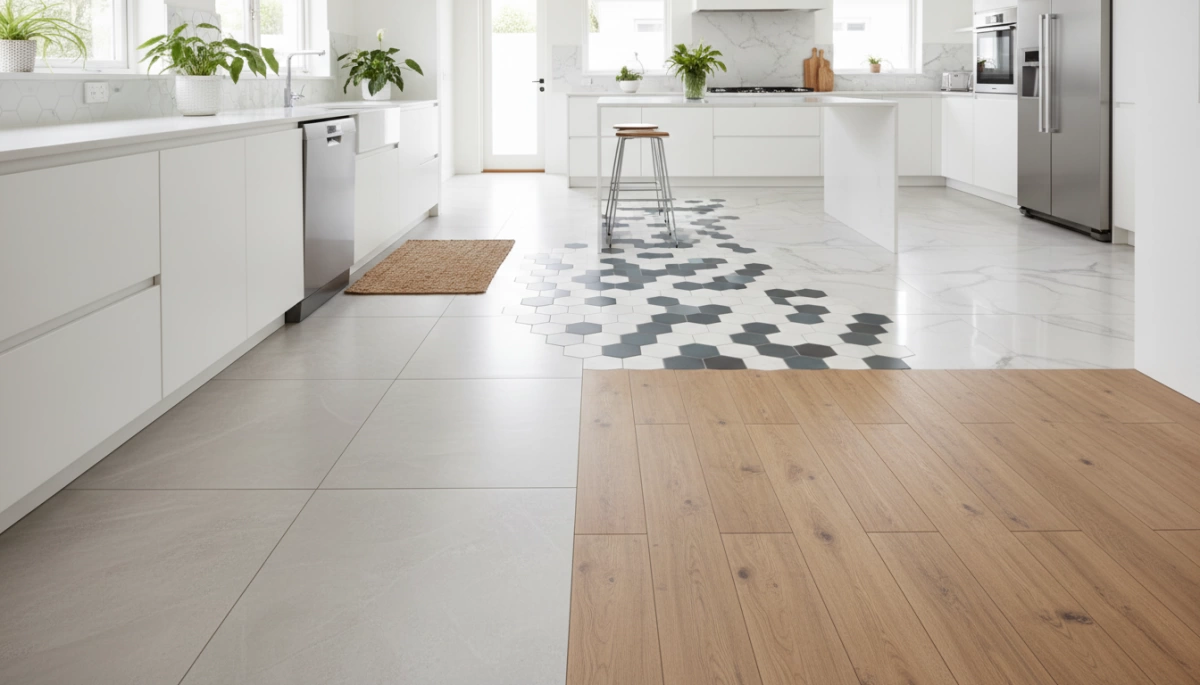
We offer a wide variety of kitchen porcelain tile flooring styles that match any interior vision. Modern printing technology allows us to replicate natural materials so closely that it is often hard to tell the difference, providing the look you want with the durability required for high-traffic areas.
Wood-Look and Stone-Look Porcelain
Our collection features high-definition designs that mimic the natural world. You can achieve the cozy warmth of hardwood or the upscale feel of natural stone without the high maintenance.
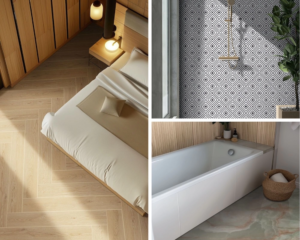
- Wood-Look: Captures the grain and texture of oak, walnut, or reclaimed timber. It is perfect for kitchens because it handles spills that would ruin real wood.
- Stone-Look: Provides the elegant appearance of marble, slate, or travertine. These tiles offer a sophisticated finish that stands up to heavy foot traffic and dropped pans.
Exploring Shapes, Sizes, and Large Format Slabs
The size of your tile completely changes the feel of the room. While standard rectangles are classic, we see a huge shift toward larger formats and unique geometries.
| Tile Format | Common Sizes | Best For |
|---|---|---|
| Standard Plank | 6″ x 24″, 8″ x 48″ | Creating a seamless wood-floor appearance. |
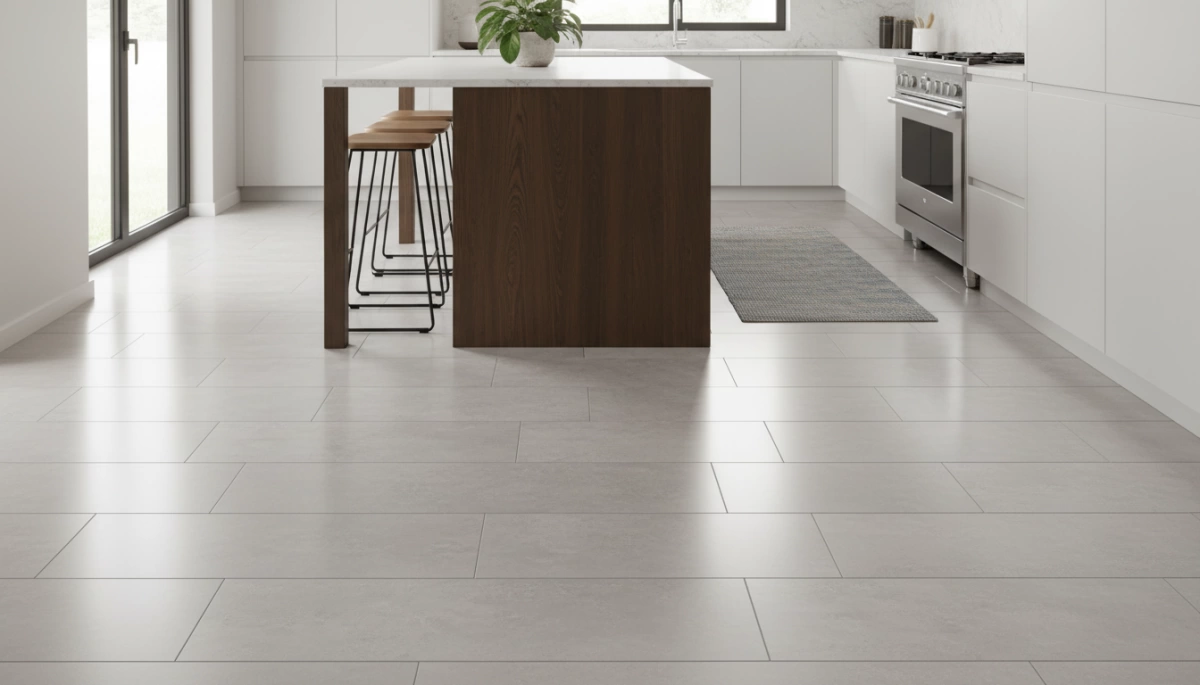
| Large Format | 24″ x 48″, 36″ x 36″ | Minimizing grout lines for a modern, spacious look. |
| Geometric | Hexagons, Chevron | Adding a custom, designer touch to the floor. |
Large format slabs are particularly popular in modern commercial spaces and residential kitchens alike because they create a nearly seamless surface that is incredibly easy to wipe down.
Understanding Finishes: Matte, Polished, and Textured
Choosing the right finish is about balancing style with safety. The finish determines how the light hits your floor and how much grip you have underfoot.
- Matte Finish: This is our top recommendation for most kitchens. It is naturally non-slip, hides water spots well, and offers a contemporary, understated look.
- Polished Finish: These tiles are buffed to a high shine. They reflect light beautifully, making small kitchens feel larger and more luxurious, though they can be slippery when wet.
- Textured Finish: Designed with extra “tooth” or grip. This is the safest option for busy households with kids or pets, providing maximum slip resistance.
Whether you are matching your floors to your kitchen countertops or creating a bold contrast, our porcelain options provide the versatility to handle any design challenge.
How to Choose the Best Porcelain Tile for Your Kitchen
Selecting the right kitchen porcelain tile flooring involves balancing aesthetics with technical performance. I recommend focusing on how the tile handles daily stress, from heavy foot traffic to spills. Choosing a tile that fits your specific lifestyle ensures the floor remains a long-term asset rather than a maintenance burden.
PEI Ratings and High-Traffic Durability
The PEI (Porcelain Enamel Institute) rating tells you exactly how much wear a tile can handle. For a residential kitchen, I suggest nothing lower than a PEI 3, though a PEI 4 is better for busy households.
| PEI Rating | Recommended Use | Durability Level |
|---|---|---|
| PEI 3 | All residential areas | Moderate traffic |
| PEI 4 | High-traffic homes & commercial spaces | High durability |
| PEI 5 | Heavy commercial use | Maximum wear resistance |
Selecting the Right Color and Grout
Color choice impacts both the room’s size perception and how often you’ll need to clean.
- Light Colors: Make small kitchens feel airy but show hair and debris easily.
- Dark Colors: Hide dirt well but can show water spots or dried flour.
- Grout Selection: I always advise using a high-quality, stain-resistant grout. Matching the grout color to the tile creates a seamless look, while a contrasting grout highlights the tile pattern. For a non-slip and low-maintenance finish, darker grout in the kitchen is a pro move.
Rectified vs. Non-Rectified Tile Edges
The way a tile edge is finished determines the “cleanliness” of your floor lines.
- Rectified Tiles: These are mechanically cut to a precise size. Because the edges are perfectly straight, I can install them with incredibly thin grout lines (1/16 inch), creating a sleek, modern appearance similar to high-end kitchen countertops.
- Non-Rectified Tiles: These have natural, slightly rounded edges from the firing process. They require wider grout lines, which offers a more traditional or rustic feel and is often more forgiving if your subfloor isn’t perfectly level.
Installation and Maintenance Guide
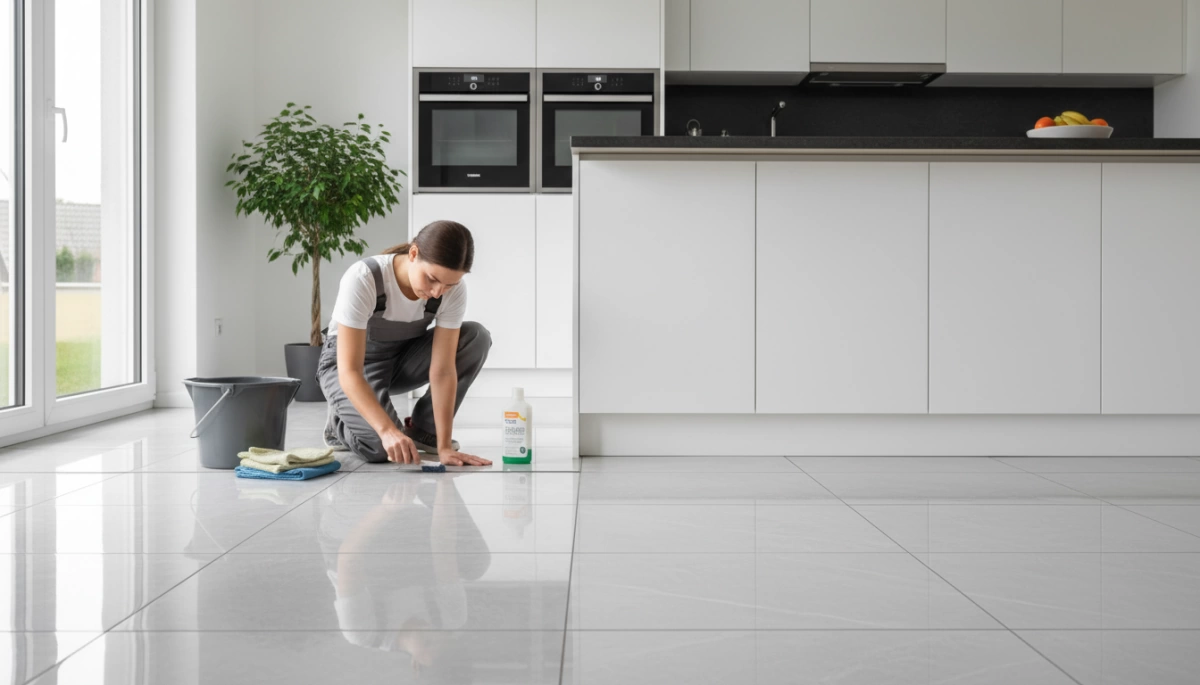
Getting your kitchen porcelain tile flooring installed correctly is just as important as picking the right style. While these tiles are incredibly tough, the longevity of your floor depends on a solid foundation and a consistent care routine.
Can You Install Porcelain Over Existing Flooring?
You can technically install porcelain over existing tile or vinyl, but I only recommend it if the current floor is perfectly level, solid, and well-bonded to the subfloor. If there is any flex or “bounce,” your new porcelain will eventually crack.
- Height Issues: Adding a new layer of tile can make the floor too high for appliances like dishwashers to slide out.
- Bonding: The surface must be scuffed or treated so the thin-set mortar can grip properly.
- Best Practice: For maximum durability, stripping back to the concrete or a sturdy backer board is always the safest bet.
Do Kitchen Porcelain Tiles Need Sealing?
Because porcelain is fired at extreme temperatures, it is naturally dense and resistant to moisture. Most glazed porcelain tiles never need sealing. However, there are two exceptions:
- Polished Porcelain: The polishing process can open up tiny pores that might catch stains. A penetrating sealer is a smart move here.
- Grout Lines: This is the most vulnerable part of your floor. Even if the tile is waterproof, the grout is porous. I always seal the grout lines to prevent grease and spills from soaking in.
Daily Cleaning and Grout Care Tips
Maintaining kitchen porcelain tile flooring is much easier than caring for natural stone or wood. It handles the spills and messes of a busy kitchen without much fuss.
- Sweep Daily: Remove dirt and grit that can act like sandpaper on the finish.
- Mop with Neutral Cleaners: Use warm water and a mild detergent. Avoid oil-based soaps or wax, as they leave a sticky film that attracts more dirt.
- Deep Clean Grout: Use a stiff brush and a dedicated grout cleaner once or twice a year to keep the lines looking bright.
- Tough Stains: For stubborn spots, a mixture of baking soda and water usually does the trick without damaging the surface.
Frequently Asked Questions
How long will a porcelain tile floor last?
When we talk about kitchen porcelain tile flooring, we are talking about a lifetime investment. Because these tiles are fired at extreme temperatures, they are incredibly dense and hard. If installed correctly, a porcelain floor can easily last 50 years or more. The same durability that makes them a top choice for high-traffic commercial spaces ensures they can handle the daily wear and tear of a busy home kitchen without wearing down.
Is porcelain flooring safe and slip-resistant?
Safety is a priority in any kitchen where spills are common. While highly polished tiles can be slick, many porcelain options are specifically designed to be non-slip.
- Matte Finishes: Offer natural traction.
- Textured Surfaces: Provide the best grip for wet areas.
- COF Ratings: Always check the “Coefficient of Friction” to ensure the tile meets safety standards for interior floors.
Are porcelain kitchen tiles eco-friendly?
Porcelain is a sustainable choice for several reasons:
- Natural Materials: Made from abundant raw materials like clay, feldspar, and sand.
- Longevity: Its long lifespan means you won’t be replacing it and sending waste to landfills every few years.
- Air Quality: It is chemically inert and does not emit VOCs (Volatile Organic Compounds), keeping your kitchen air clean.
- Recyclability: Many manufacturers now incorporate recycled content into the tile body.