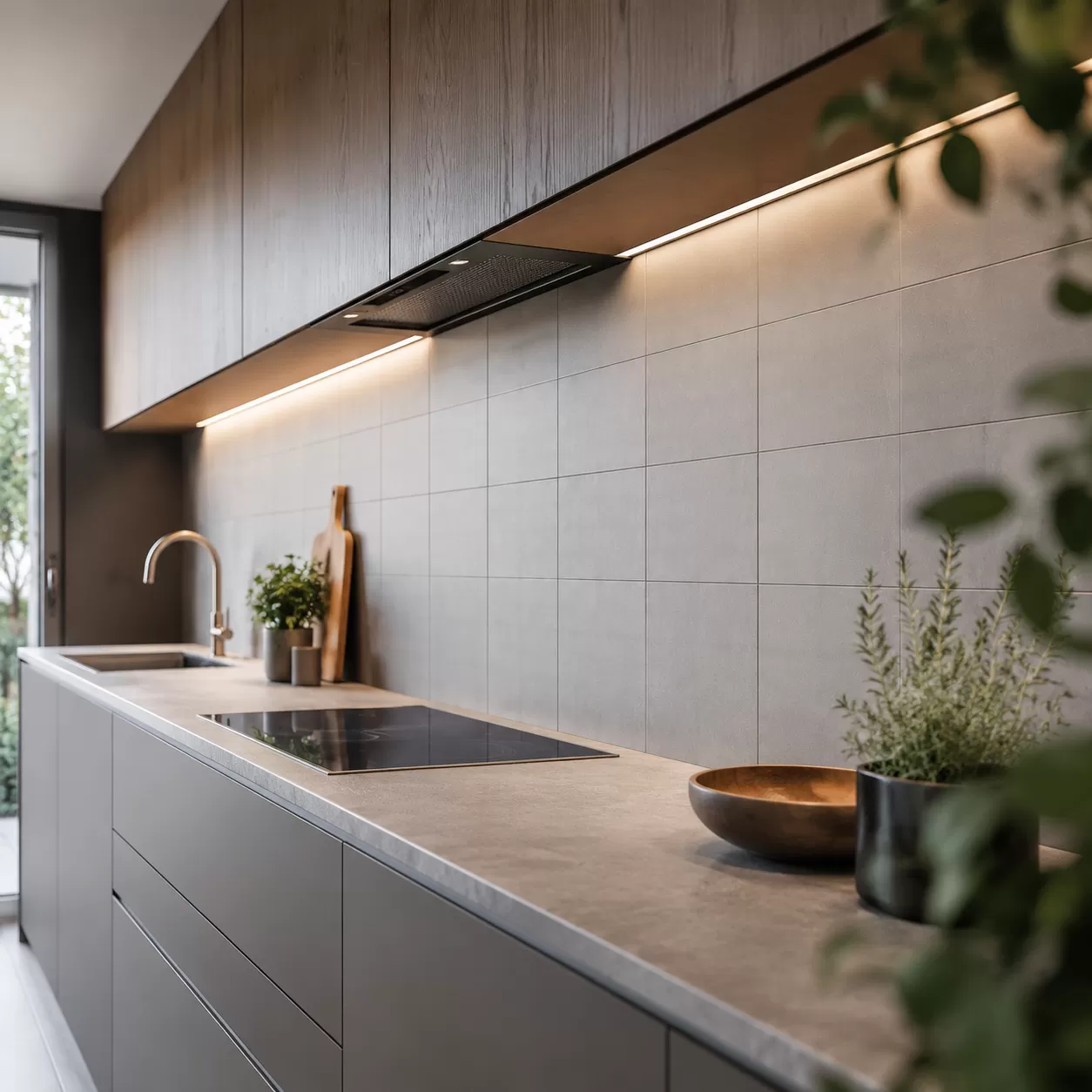
Are you torn between the modern kitchen aesthetics you see in design magazines and the terrifying thought of scrubbing stubborn oil off a flat surface? Choosing the right kitchen backsplash tiles is a high-stakes decision where “style” and “practicality” often collide.
Some designers call it the ultimate expression of “Quiet Luxury.”
Others worry it’s a magnet for stains and grime.
But as a porcelain tile manufacturer, I’ve seen how the right non-porous porcelain can completely flip the script for your renovation.
In this guide, I’m going to break down the reality of grease resistance, light reflection, and whether matte tiles are truly a smart investment for your home in 2026.
Let’s dive right in.
The Great Backsplash Debate: Why Matte is Taking Over
For years, the “clinical” look dominated—think high-gloss white subway tiles that looked more like a laboratory than a home. But the tide has shifted. I’ve noticed a massive surge in homeowners and designers opting for matte tiles to create a more grounded, organic atmosphere. The kitchen backsplash is no longer just a functional splash guard; it is the architectural soul of the room.
The Shift in Modern Design: From Shiny to Organic
Modern aesthetics in 2026 have moved away from blinding glares. People want textured wall surfaces that feel “real.”
- Grounded Textures: Matte finishes provide a tactile quality that gloss simply can’t match.
- Sophisticated Atmosphere: It softens the room, making the kitchen feel like a living space rather than a workstation.
- Light Diffusion: Instead of bouncing harsh LEDs back at you, matte surfaces absorb and diffuse light for a “soft-focus” look.
Defining the Look: Matte vs. Honed vs. Satin
Understanding the nuances between finishes is the first step to a successful renovation. While they all lack the “mirror” effect of a high-gloss tile, they behave differently under kitchen lights.
| Finish Type | Light Reflection | Texture Feeling | Best Use Case |
|---|---|---|---|
| Matte | Zero to Low | Natural, slightly granular | Modern, Industrial, or “Scandi” styles |
| Honed | Very Low | Velvety, ultra-smooth | Natural stone looks (Marble/Limestone) |
| Satin | Soft Glow | Silk-like, smooth | Transitional kitchens needing a touch of warmth |
The YASIQI Perspective: High-Performance Porcelain
As a porcelain tile manufacturer and supplier, we’ve seen the primary concern: Is matte hard to clean? In the past, the answer might have been yes. However, our high-performance porcelain has changed the game.
We’ve engineered a non-porous porcelain surface that provides the deep, muted aesthetic of a matte finish without the traditional “grip” that traps grease. By refining the surface at a molecular level, we ensure our tiles offer superior grease resistance while maintaining that sought-after architectural depth. When choosing between glossy vs matte, modern porcelain technology makes “style vs. substance” a thing of the past.
The Aesthetic Payoff: Why Designers Say “Yes”
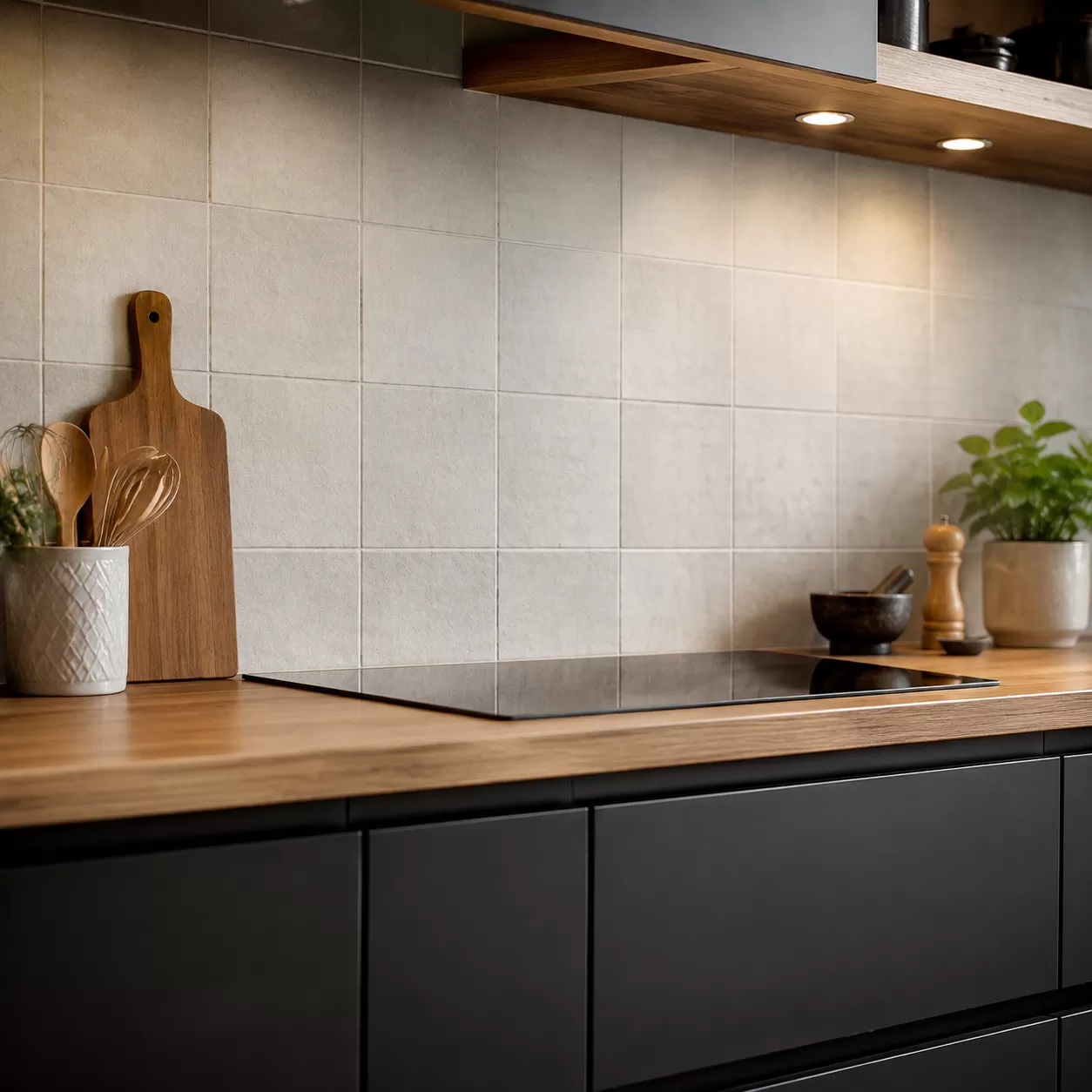
When people ask me, “Is it worth it to use matte tiles in a kitchen wall?” I always point to the visual atmosphere. Designers are moving away from the “refrigerator-look” of high-gloss and toward surfaces that feel more grounded and intentional. Matte finishes offer a premium, velvety look that defines modern kitchen aesthetics without trying too hard.
Sophisticated Depth and Light Diffusion
Unlike glossy surfaces that act like mirrors, matte tiles excel at light reflection and diffusion. Instead of bouncing harsh glares from under-cabinet LEDs or bright windows, a matte surface absorbs light.
- The Soft-Focus Effect: It creates a gentle, atmospheric glow.
- Visual Texture: This absorption adds a sense of “weight” and luxury to the wall that flat, shiny surfaces lack.
Imperfection Camouflage
Kitchens are high-traffic zones, and I know nothing ruins a look faster than greasy fingerprints or dried water spots. This is where matte finishes truly win.
- Smudge-Proof Tile: Matte surfaces are the ultimate secret to hiding daily smudges.
- Low Maintenance Look: While glossy tiles scream about every tiny splash, matte tiles keep your kitchen looking “clean” even when you haven’t had time for a deep wipe-down.
True Color Integrity
If you’ve ever chosen a deep charcoal or a soft terracotta only for it to look white-washed under bright lights, you’ve experienced glare interference.
- No Glare: Without the reflective “film” of a gloss coat, you see the true pigment of the tile.
- Richness: Whether it’s a neutral beige or a bold forest green, matte allows the color to remain consistent from every angle, regardless of your kitchen’s lighting setup.
| Feature | Matte Finish Benefit |
|---|---|
| Glare | Minimal; diffuses light for a “soft” look |
| Fingerprints | Highly resistant; hides oil and smudges |
| Color | High integrity; displays true, deep pigments |
| Vibe | Organic, modern, and sophisticated |
Practicality: Are Matte Tiles in a Kitchen Wall Hard to Clean?
There is a common misconception that choosing a matte finish means signing up for a cleaning nightmare. In reality, the practicality of matte tiles in a kitchen wall depends entirely on the quality of the material. While some cheap options might have a “toothy” texture that grabs onto lint, our high-performance porcelain is engineered differently.
Debunking the “Rough” Texture Trap
Many homeowners confuse “matte” with “rough.” Modern smudge-proof tiles are actually quite smooth to the touch—they simply lack the glass-like glaze that reflects light.
- The Feel: Think of a smooth stone or a soft-touch surface rather than sandpaper.
- The Benefit: Because it isn’t “grabby,” a simple damp cloth is usually enough to move dust and debris off the surface.
Grease Resistance and Low-Porosity Porcelain
The biggest enemy of a kitchen backsplash is oil. We manufacture our YASIQI porcelain tiles with extremely low porosity. This is the “secret sauce” for grease resistance.
- Non-Porous Surface: Unlike natural stone or low-grade ceramics, our porcelain doesn’t have microscopic holes for grease to “sink” into.
- Surface Barrier: Spatters from the stove sit right on top of the tile, allowing you to wipe them away before they ever become a stain.
The Maintenance Reality: Glossy vs. Matte
The “work” involved in tile maintenance is often misunderstood. It’s a trade-off between frequency and intensity:
| Feature | Glossy Tiles | Matte Porcelain Tiles |
|---|---|---|
| Daily Upkeep | High (Shows every fingerprint and water spot) | Very Low (Hides smudges and streaks) |
| Cleaning Style | Frequent buffing to keep the shine | Deep wipe-downs at longer intervals |
| Visibility of Mess | Immediate (Splashes are highly visible) | Disguised (Natural texture masks imperfections) |
| Preferred Tool | Microfiber and glass cleaner | Mild degreaser and warm water |
In a busy kitchen, we find that matte tiles are actually the more forgiving choice. You don’t have to chase every fingerprint with a cloth to keep the room looking “perfect.” A solid wipe-down once a week is usually all it takes to maintain that high-end, modern kitchen aesthetic.
Matte vs. Glossy: Is It Worth It to Use Matte Tiles in a Kitchen Wall?
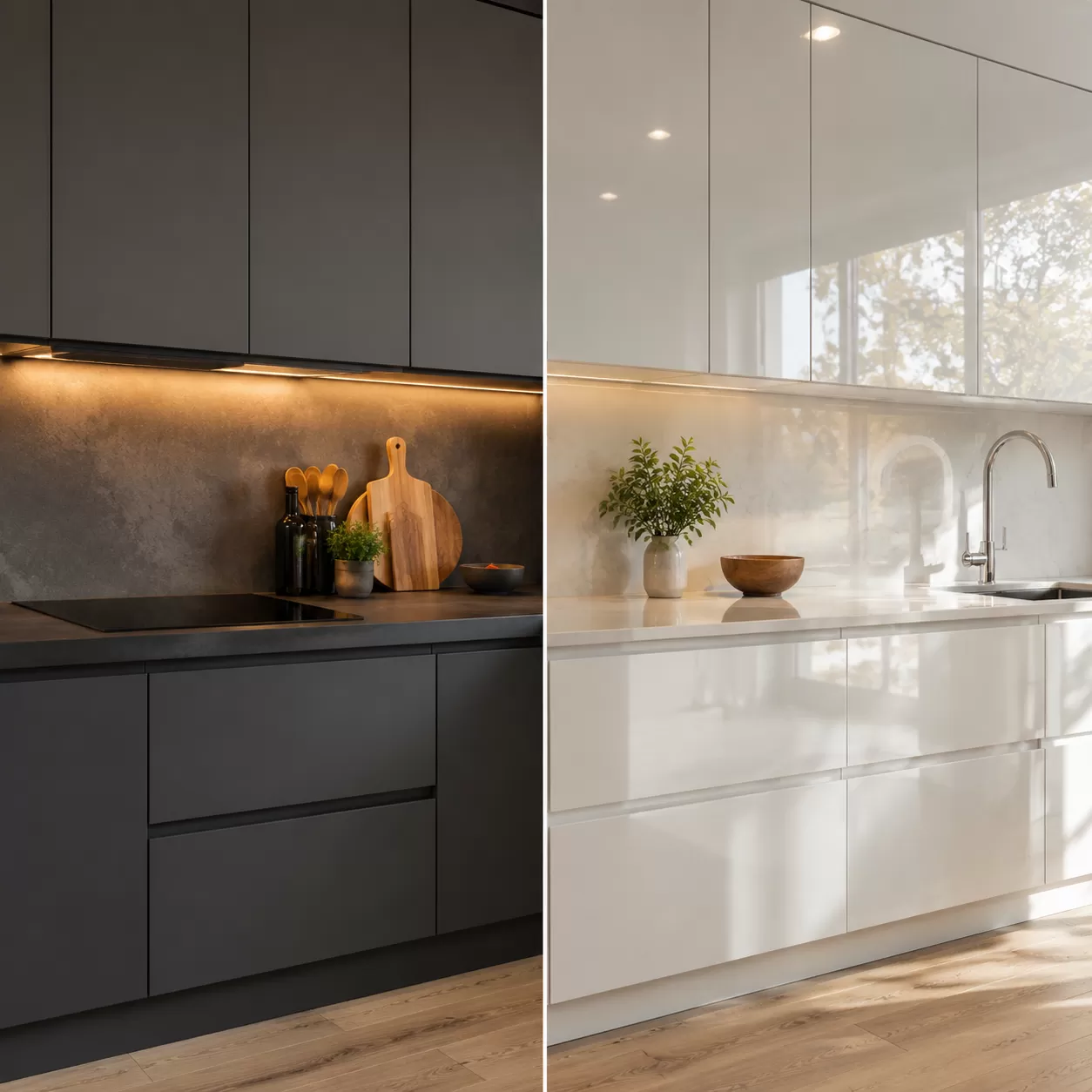
When choosing between finishes, the decision usually comes down to how your kitchen handles light and daily wear. While glossy tiles have been the “default” for years, matte surfaces offer a grounded, high-end feel that changes the room’s dynamic.
Lighting: Diffusion vs. Reflection
The way a tile reacts to light is the biggest factor in your kitchen’s atmosphere.
- Natural Light: If your kitchen has large windows, glossy tiles can create a blinding glare at certain times of the day. Matte tiles diffuse light, creating a consistent color tone without the “hot spots.”
- Under-Cabinet LEDs: Glossy tiles often reflect the individual LED “dots” from your light strips, which can look messy. Matte finishes soften this light, providing a clean, even glow across the backsplash.
Space Perception and Surface Wear
There is a common myth that matte tiles make a small kitchen feel cramped. In reality, while glossy tiles provide a “mirror” effect that adds perceived depth, matte tiles provide a solid, architectural boundary that feels intentional and cozy.
Regarding surface wear, matte porcelain is the clear winner for long-term durability. Over a 10-year lifespan, micro-scratches from cleaning or accidental bumps are nearly invisible on a matte surface, whereas they show up clearly on a high-gloss finish.
Side-by-Side Comparison
| Feature | Matte Finish | Glossy Finish |
|---|---|---|
| Light Reflection | Soft, diffused (No glare) | High reflection (Mirror-like) |
| Fingerprints/Smudges | Excellent at hiding them | Shows every mark |
| Scratches (10yr Wear) | Nearly invisible | Highly visible in direct light |
| Small Kitchen Feel | Grounded and cozy | Bright and airy |
| Maintenance | Low frequency, deep wipe | High frequency, constant buffing |
As a porcelain tile manufacturer, I always tell clients: if you want a kitchen that looks “perfect” with minimal effort, matte is the way to go. It handles the chaos of a busy home while maintaining its sophisticated aesthetic and surface integrity for a decade or more.
Strategic Design: Where Matte Kitchen Backsplash Works Best
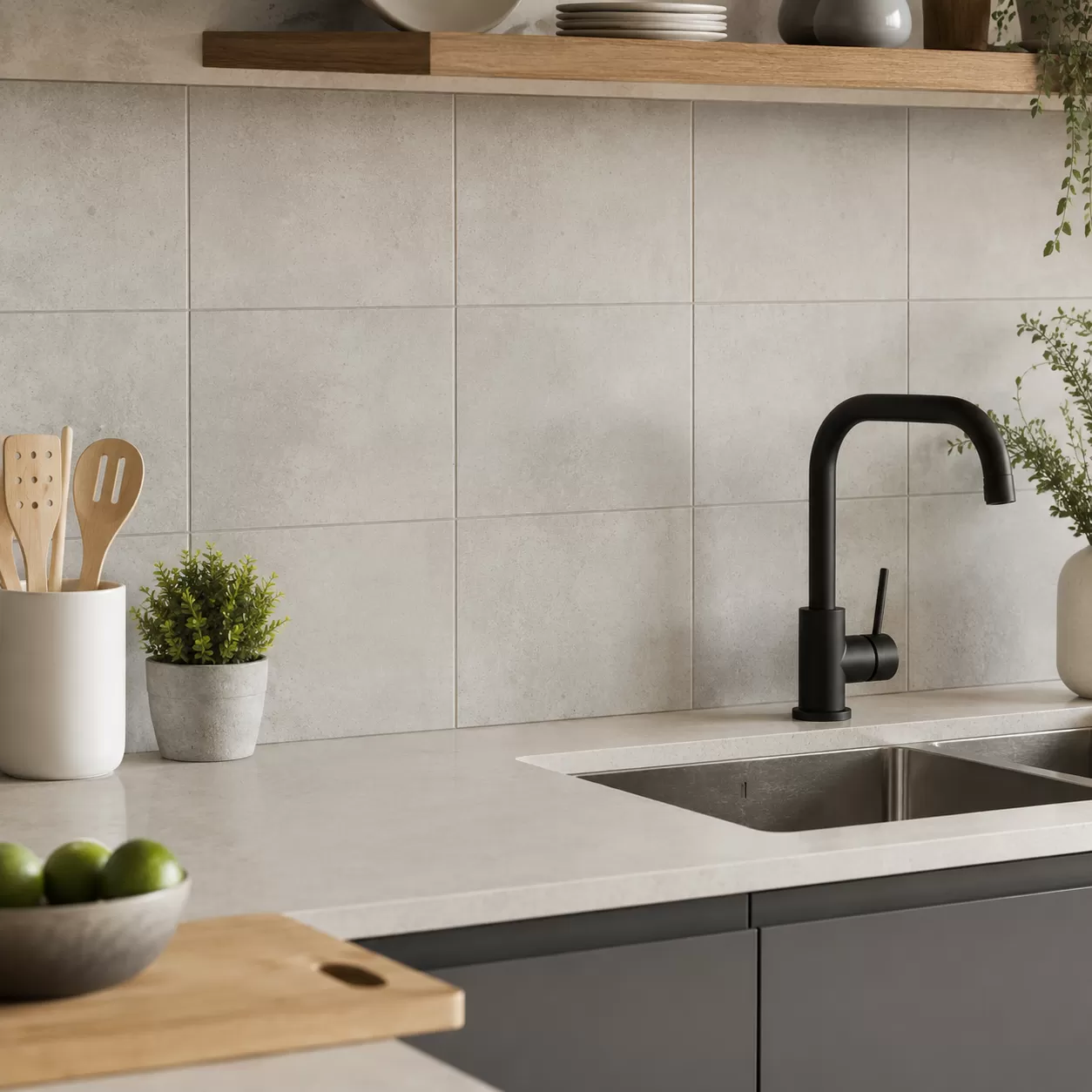
Choosing the right setting is key when deciding: Is it worth it to use matte tiles in a kitchen wall? As a porcelain tile manufacturer and supplier, we’ve seen that matte finishes perform best when they are used to ground a room’s design, providing a tactile, high-end feel that glossy surfaces can’t replicate.
The Industrial Loft
For a raw, architectural vibe, we recommend pairing matte charcoal or concrete-look tiles with metallic accents. These finishes excel at managing light reflection, ensuring that under-cabinet LEDs or large windows don’t create distracting glares on your kitchen backsplash.
The “Scandi” Kitchen
If you want a warm, minimalist home, soft-touch white or beige matte tiles are the way to go. These textured wall surfaces create a soft, organic atmosphere that feels “lived-in” rather than clinical. The lack of shine helps the true pigment of the tile stand out, giving the walls a richer, more solid appearance.
The Mixed-Media Approach
The glossy vs matte debate doesn’t have to be one-sided. Some of our most successful projects use contrast to create visual interest:
- Matte Walls + High-Gloss Countertops: The matte surface acts as a neutral backdrop that makes polished stone or quartz pop.
- Matte Tiles + Stainless Steel: The flat finish of the porcelain offsets the reflective nature of modern appliances.
- Durability: In these high-activity zones, matte tiles are superior at hiding surface wear, keeping the kitchen looking “new” for years without constant buffing.
Pro Tips: Is It Worth It to Use Matte Tiles in a Kitchen Wall?
Getting the best out of a matte installation requires a different approach than glossy finishes. Because these surfaces absorb light, every detail—from the grout line maintenance to the cleaning products you choose—impacts the final look.
Matching Grout for a Seamless Look
Matte tiles don’t have a glare to hide the edges, so your grout choice is what defines the “flow” of the wall.
- Color Matching: Always choose a grout color that is a half-shade lighter or exactly the same as the tile. This minimizes visible “seams” and creates a solid, architectural surface.
- Minimalist Joints: Use the thinnest spacers possible. In a modern kitchen aesthetic, you want the textured wall surfaces to take center stage, not the grid pattern.
The No-Wax Daily Cleaning Routine
The biggest mistake people make with a satin finish is trying to make it shine.
- Avoid Wax and Oil: Never use wax-based cleaners or “all-purpose” polishes. They leave a sticky residue that traps dust and makes the tile look cloudy.
- Neutral Cleaners: Use pH-neutral cleaning agents or a simple mix of warm water and mild detergent. This preserves the smudge-proof nature of the porcelain.
- Grease Removal: For heavy cooking splatters, a microfiber cloth and a degreaser are enough. Our non-porous porcelain prevents oils from soaking in, so you don’t need to scrub hard.
Sealing and Long-Term Protection
One of the best parts of using high-quality large-format wall tiles is the low maintenance involved.
- Zero Sealing Needed: Modern matte porcelain is fired at extreme temperatures, making it naturally dense. You do not need to seal the tile surface itself.
- Focus on Grout: While the tile is bulletproof, the grout can be vulnerable. Use a high-quality grout sealer to ensure the entire backsplash remains grease resistant and easy to wipe down for years.
| Feature | Best Practice for Matte Installation |
|---|---|
| Grout Color | Match the tile to hide transitions |
| Cleaning Agent | pH-neutral or specialized porcelain cleaner |
| Tool | Soft microfiber cloth (avoid abrasive pads) |
| Sealing | Only seal the grout, not the porcelain surface |
FAQ: Is it worth it to use matte tiles in a kitchen wall?
Deciding on the right finish is the most important part of your renovation. As a porcelain tile manufacturer, I get these questions daily from homeowners and designers looking for the perfect balance of style and durability. Here is the quick breakdown of what you need to know.
Do matte tiles stain more easily than gloss?
Not if you choose high-quality non-porous porcelain. While matte surfaces have more “tooth” than a high-gloss finish, our tiles are engineered with a dense surface that prevents liquids and pigments from penetrating. They are exceptionally smudge-proof and won’t show the water spots that usually plague shiny backsplashes.
Can I use matte tiles in a small kitchen?
Yes, and they often look better than gloss. While glossy tiles reflect light, matte tiles provide light diffusion, which adds a sense of “soft-focus” depth to the walls. Using large-format wall tiles with matching grout can actually make a small kitchen feel more expansive and grounded rather than cluttered with reflections.
What is the best way to clean grease off a matte backsplash?
Because matte tiles have superior grease resistance, daily maintenance is simple.
- The Go-To: Use warm water and a mild dish soap or a dedicated pH-neutral degreaser.
- The Technique: Use a soft microfiber cloth.
- The “Don’t”: Avoid wax-based cleaners or “shining” agents, as these can leave a filmy residue on the textured wall surfaces.
Are matte tiles more expensive to install?
The installation cost for a kitchen backsplash is generally the same regardless of the finish. The price per square foot is comparable to high-gloss options, but the long-term value is higher. You save on the hidden costs of surface wear and tear, as matte finishes do not show micro-scratches or chips as easily as reflective surfaces over a 10-year lifespan.
| Feature | Matte Porcelain | High-Gloss Tile |
|---|---|---|
| Fingerprint Visibility | Extremely Low | Very High |
| Grout Line Maintenance | Standard | High (shows every gap) |
| Modern Kitchen Aesthetics | Organic & Warm | Clinical & Bright |
| Light Reflection | Diffused / Soft | Direct / Sharp |
Choosing matte tiles for your kitchen wall is a move toward a more “lived-in” luxury. It’s a practical, high-performance choice for interior design trends 2026 that prioritizes texture and authentic materials over artificial shine.
