Natural Stone Fire Pits: A Professional Guide for Contractors, Designers, and Commercial Projects
In professional outdoor construction, a fire pit is never just a decorative feature. It is a permanent, heat-producing structure that must integrate seamlessly with stone materials, fuel systems, site conditions, and long-term usage demands. For contractors, landscape designers, architects, and commercial project teams, the selection and application of natural stone in fire pit construction is an engineering and specification decision1, one that directly affects durability, safety, installation cost, and client satisfaction.
This guide is written specifically for professionals working on residential, hospitality, and commercial outdoor living projects. Rather than focusing on inspiration or surface-level design ideas, it addresses how natural stone fire pits perform in real-world installations, how materials should be specified, and where costly mistakes most often occur.
Why Natural Stone Remains the Preferred Material in Professional Fire Pit Construction
Natural stone continues to be the material of choice for high-quality fire pit projects because it delivers long-term performance advantages2 that manufactured alternatives often cannot match.
From a lifecycle perspective, natural stone performs exceptionally well under repeated heat exposure, weather cycles, and frequent use. Unlike concrete products or composites that rely on surface coatings or pigments, stone does not degrade visually or structurally at the same rate. When properly specified and installed, natural stone fire pits age gracefully rather than showing signs of material failure.
In professional and commercial environments, material perception also plays a critical role. Natural stone is widely associated with permanence, craftsmanship, and quality, making fire pits easier to position as long-term assets rather than replaceable outdoor features.
Understanding Fire Pit Construction: What Stone Does — and Does Not — Do
One of the most common misconceptions in fire pit design is assuming that natural stone functions as a structural or fire-resistant core material.
In professional construction, natural stone is almost always used as a decorative veneer3 applied over a non-combustible structural system. That system typically consists of fire-rated masonry, steel framing, fire brick, and an engineered burner pan or firebox.
It is essential to understand the division of roles:
- The structural core manages heat, flame containment, fuel delivery, and safety.
- The stone veneer provides durability, aesthetics, and integration with surrounding hardscape.
Ignoring this distinction — such as placing stone too close to burners without proper clearance — often results in cracking, spalling, or long-term performance issues.
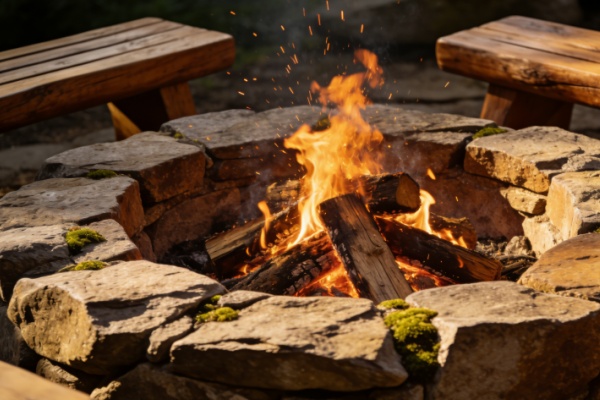
Best Natural Stone Options for Professional Fire Pit Projects
Professional stone selection is not about choosing the most visually appealing material. It is about matching stone characteristics to project goals, budget constraints, and installation methods.
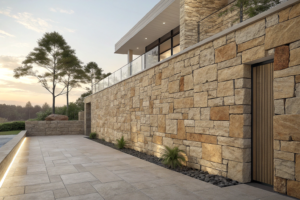
Ledgestone Veneer4 for High-Impact Visual Features
Ledgestone remains a popular choice for fire pits that serve as visual focal points. Its irregular shapes and stacked appearance create depth and texture, making it well suited for resort-style spaces, hospitality environments, and high-end residential projects.
From a professional standpoint, ledgestone offers:
- Strong visual impact
- Efficient installation relative to custom masonry
- Good heat tolerance when proper setbacks are maintained
Attention must be paid to joint consistency, adhesive selection, and allowances for thermal movement.
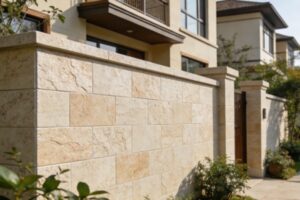
Honed and Cut Stone5 for Architectural and Modern Designs
Honed or precision-cut stone is frequently specified in architect-led projects where clean lines and dimensional accuracy are critical. These materials integrate well into modern outdoor spaces and projects requiring visual consistency across multiple stone elements.
Professionals should account for:
- Higher material and labor costs
- Increased heat reflection compared to textured stone
- Precise expansion joint and edge detailing requirements
When executed correctly, honed stone fire pits deliver a refined, high-end aesthetic suitable for luxury residential and commercial settings.
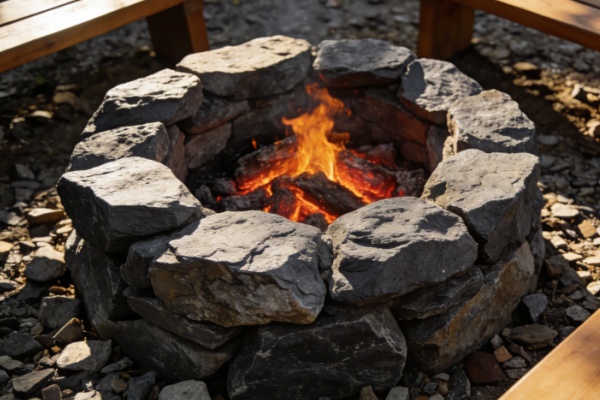
Loose Stone Veneer6 for Custom and Artistic Builds
Loose stone veneer provides maximum design flexibility and is typically reserved for fully custom fire pit installations. This approach allows for organic forms, irregular geometry, and one-of-a-kind results.
However, loose stone construction involves:
- Significantly higher labor costs
- Longer installation timelines
- Greater reliance on skilled masonry craftsmanship
This method is best suited for premium projects where customization outweighs efficiency concerns.
Travertine in Fire Pit Applications7: When and When Not to Use It
Travertine is widely used in outdoor environments due to its natural texture and warm color palette. In fire pit applications, it can perform well under the right conditions.
Travertine is most appropriate when:
- The fire pit is gas-powered
- Flame height is controlled and predictable
- Adequate clearance from direct heat is maintained
For high-use commercial projects or wood-burning fire pits, professionals should carefully evaluate whether travertine’s porosity aligns with long-term durability expectations.
Fuel Type Matters: Stone Considerations for Gas vs. Wood Fire Pits
Fuel selection has a direct impact on stone performance and detailing requirements.
Gas fire pits offer cleaner combustion, predictable flame behavior, and minimal soot or residue on stone surfaces. These characteristics make gas systems ideal for projects prioritizing low maintenance and long-term material appearance.
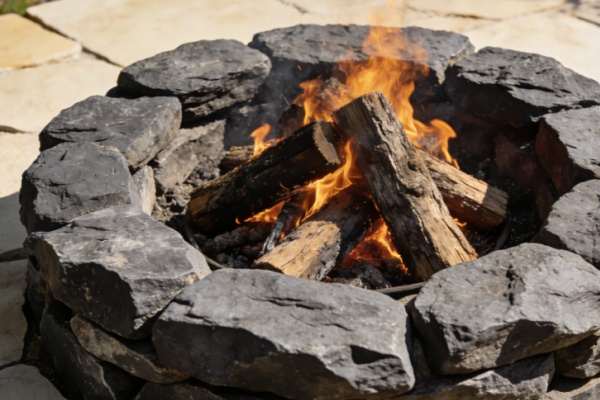
Wood-burning fire pits8, while visually appealing, introduce higher thermal stress, ash accumulation, and variable flame patterns. In these installations, stone must be set back further from the heat source, and clients should be informed of increased maintenance requirements.
Installation, Labor, and Cost Variables Professionals Must Consider
In real-world projects, material cost is often only a portion of the total fire pit budget. Labor, installation complexity, and coordination with other trades frequently have a greater impact on overall cost.
Key variables include:
- Veneer panels versus loose stone installation time
- Base preparation and drainage requirements
- Gas line routing, permitting, and inspections
- Coordination with electrical, lighting, and landscape systems
Addressing these factors early reduces project risk and helps avoid costly mid-construction changes.
Common Specification and Installation Mistakes in Stone Fire Pit Projects
Most fire pit failures are not caused by stone selection, but by specification and installation errors. Common issues include:
- Insufficient clearance between stone and flame zones
- Use of non-fire-rated mortars or adhesives
- Inadequate drainage beneath the fire pit structure
- Failure to accommodate thermal expansion and contraction9
Resolving these issues during the design and planning phase significantly improves long-term performance and reliability.
Residential vs. Commercial Fire Pit Applications10
Commercial fire pits are subjected to significantly higher usage demands than residential installations. They must withstand:
- Extended operating hours
- Higher foot traffic
- Increased liability and code requirements
- More frequent maintenance cycles
Stone selection and construction methods should reflect these realities, particularly in hospitality and multi-unit residential environments.
Fire Pits vs. Outdoor Fireplaces11: A Project-Level Decision
From a professional perspective, choosing between a fire pit and an outdoor fireplace is primarily a question of space planning and user interaction.
Fire pits encourage communal gathering and flexible seating arrangements, while fireplaces provide directional heat and a more structured spatial experience. Understanding site constraints and client goals ensures the selected feature enhances the overall project.
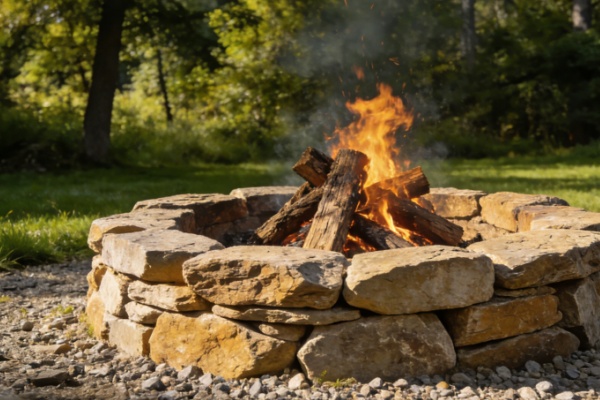
Conclusion
Natural stone fire pits remain one of the most impactful features in professional outdoor construction — but only when treated as engineered systems rather than decorative elements. For contractors, designers, and commercial project teams, success depends on a clear understanding of material performance, heat management, and long-term use conditions.
When stone selection, construction methods, and fuel systems are properly aligned, a natural stone fire pit becomes a durable, high-value asset that elevates outdoor spaces for years to come.
Understanding the engineering and specification decisions is crucial for ensuring durability, safety, and client satisfaction in fire pit projects. ↩
Exploring the long-term performance advantages of natural stone helps in making informed choices for durable and visually appealing fire pits. ↩
Learning about decorative veneer applications can enhance the aesthetic integration of fire pits with surrounding landscapes. ↩
Discovering the benefits of Ledgestone Veneer can guide professionals in creating visually striking fire pit designs. ↩
Understanding the advantages of Honed and Cut Stone can help achieve clean lines and dimensional accuracy in modern fire pit projects. ↩
Exploring Loose Stone Veneer options can provide maximum design flexibility for unique and artistic fire pit installations. ↩
Evaluating Travertine's suitability ensures its effective use in fire pits, especially regarding durability and aesthetic appeal. ↩
Recognizing the challenges of wood-burning fire pits helps in planning for higher thermal stress and maintenance requirements. ↩
Addressing thermal expansion and contraction is vital for preventing structural issues and ensuring long-term durability. ↩
Understanding the differences between residential and commercial applications ensures appropriate design and material choices. ↩
Exploring the differences helps in making informed decisions based on space planning and user interaction. ↩