Natural Stone Veneer for Fireplaces: A Professional Guide for Architects, Builders, and Commercial Projects
When specifying materials for fireplace surrounds and feature walls, professionals face a familiar challenge: balancing aesthetics, performance, installation constraints, and long-term value. Natural stone veneer1 has long been considered a premium solution for fireplaces—but it is no longer the only viable option.
For architects, builders, and commercial project owners, the conversation has evolved from “Is it real stone?” to “Is it the right material for this project?”
This guide takes a professional, material-first approach to fireplace cladding, examining natural stone veneer alongside modern alternatives such as flexible stone, with a focus on real-world construction, renovation, and commercial use cases.
What Is Natural Stone Veneer?
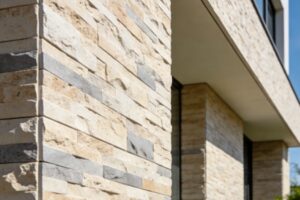
Natural stone veneer1 is made from real quarried stone that is cut into thinner sections—typically between 15–40 mm—to reduce weight while preserving the stone’s authentic texture, color variation, and durability.
Unlike manufactured stone products made from concrete or composites, natural stone veneer offers:
- Genuine mineral composition
- Irregular textures and non-repeating patterns
- Long-term durability under heat exposure
For decades, it has been the standard for high-end residential fireplaces, hospitality spaces, and landmark commercial interiors.
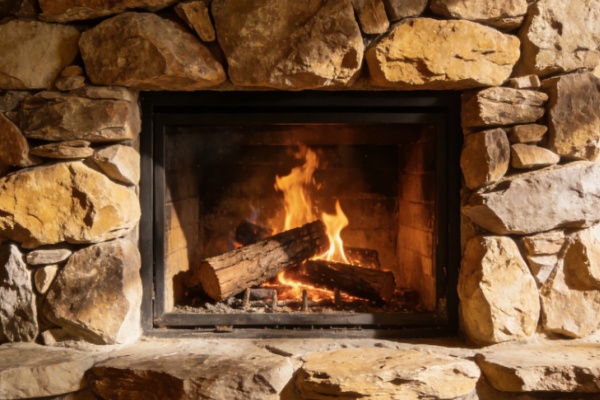
Why Natural Stone Veneer Became the Default Fireplace Material
From a design perspective, natural stone veneer delivers qualities that are difficult to replicate:
Authentic Visual Depth2
Each stone piece is inherently unique, providing natural variation that elevates fireplaces from decorative elements to architectural focal points.
Heat Resistance3
Real stone performs exceptionally well in high-temperature environments, making it suitable for wood-burning, gas, and outdoor fireplaces.
Perceived Value4
In both residential and commercial real estate, stone fireplaces signal permanence, craftsmanship, and material integrity—qualities that enhance asset value.
However, in professional practice, material performance extends beyond appearance alone.
The Practical Limitations of Traditional Stone Veneer in Modern Projects
While natural stone veneer remains visually compelling, it introduces challenges that are increasingly relevant in today’s construction and renovation environments.
Structural Load5
Even thin stone veneer adds significant weight. In renovations, upper floors, and lightweight steel framing systems, load limitations often require additional reinforcement—adding cost and complexity.
Installation Time and Labor6
Stone veneer installation is labor-intensive, requiring skilled masons, extended timelines, and controlled site conditions. This can be a constraint in fast-track commercial projects.
Design Flexibility
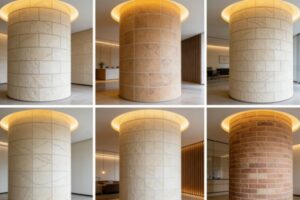
Curved fireplaces, wrapped columns, prefabricated units, and modular interiors are difficult—or impossible—to clad with rigid stone veneer without custom fabrication.
Renovation Constraints7
In retrofit projects, existing substrates, firebox clearances, and structural limitations may prevent the use of traditional stone altogether.
These realities have led many professionals to reassess how stone aesthetics are achieved—not whether stone is desirable.
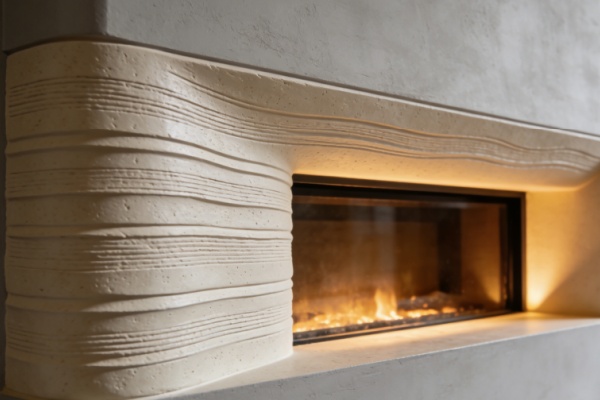
Flexible Stone: A Modern Fireplace Cladding Solution
Flexible stone is a natural stone surface layer—typically slate or quartzite—reinforced with a lightweight backing that allows it to bend, wrap, and conform to complex surfaces.
Rather than replacing stone, flexible stone expands where stone can be used.
Key Advantages for B2B Projects
1. Ultra-Lightweight Construction
Flexible stone weighs a fraction of traditional veneer, making it suitable for:
- Renovations without structural reinforcement
- High-rise interiors
- Prefabricated fireplace systems
2. Heat-Safe for Fireplace Applications
When properly specified, flexible stone performs reliably around fireplace surrounds, accent walls, and feature installations where radiant heat is present.
3. Design Freedom
Its flexibility allows seamless application on:
- Curved and cylindrical fireplaces
- Floating or suspended hearth designs
- Integrated millwork and metal systems
4. Faster Installation
Large-format sheets reduce installation time, labor cost, and on-site disruption—critical for hospitality, retail, and commercial fit-outs.
5. Authentic Stone Surface
Unlike printed or molded alternatives, flexible stone retains the natural cleft texture and mineral variation of real stone.
Comparing Fireplace Cladding Options
| Criteria | Natural Stone Veneer | Manufactured Stone | Flexible Stone |
|---|---|---|---|
| Authentic Stone Surface | ✔️ | ❌ | ✔️ |
| Weight | Heavy | Medium | Ultra-light |
| Heat Resistance3 | Excellent | Moderate | High (project-dependent) |
| Curved Applications | ❌ | ❌ | ✔️ |
| Installation Speed | Slow | Medium | Fast |
| Renovation-Friendly | Limited | Moderate | Excellent |
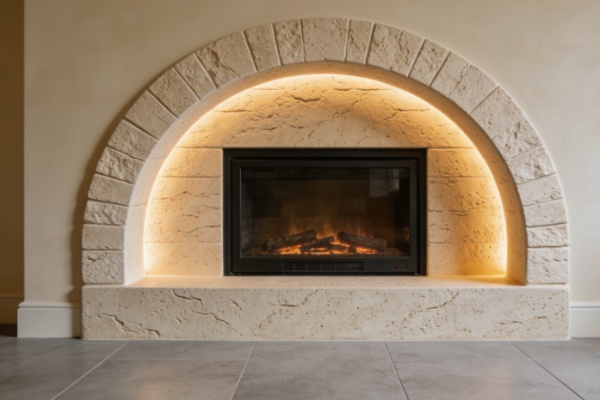
Where Each Material Makes Sense
Specify Natural Stone Veneer When:
- Structural capacity is not a concern
- Long timelines and skilled labor are available
- The fireplace is a primary architectural centerpiece
Consider Flexible Stone When:
- Weight or substrate limitations exist
- Curved, custom, or prefabricated fireplaces are used
- Speed, scalability, and repeatability matter
- Commercial or multi-unit consistency is required
In many professional projects, the best solution is not choosing one material—but knowing where each performs best.
Fireplace Design Trends8 Driving Material Innovation
Modern fireplace design increasingly prioritizes:
- Full-height feature walls
- Seamless transitions into adjacent surfaces
- Minimal joints and clean detailing
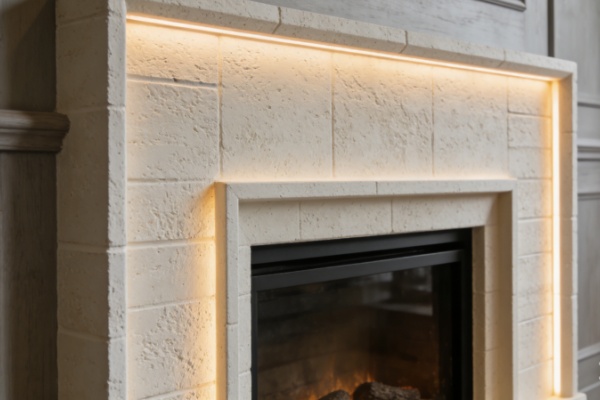
- Integration with lighting, metal, and wood
Flexible stone aligns naturally with these trends, offering stone aesthetics without forcing traditional construction methods onto modern design concepts.
Final Thoughts: Rethinking “Stone” in Fireplace Design
For years, the fireplace stone conversation centered on authenticity versus imitation. Today, the more relevant question is performance versus limitation.
Natural stone veneer1 remains a powerful material—but flexible stone has emerged as a professional-grade solution that meets contemporary architectural, commercial, and construction demands.
For B2B decision-makers, the future of fireplace cladding is not about choosing less stone—but about using stone more intelligently.
Explore the unique qualities of natural stone veneer, including its authentic texture and durability, making it a premium choice for fireplaces. ↩
Learn how the unique characteristics of natural stone veneer enhance the visual appeal of fireplaces, turning them into architectural focal points. ↩
Understand the significance of heat resistance in fireplace materials and how natural stone veneer excels in high-temperature environments. ↩
Find out how using natural stone veneer in fireplaces can increase the perceived value of residential and commercial properties. ↩
Explore the challenges of using stone veneer in renovations, including the need for additional reinforcement due to its weight. ↩
Learn about the labor-intensive process of installing stone veneer and its impact on project timelines and costs. ↩
Understand the limitations of using traditional stone veneer in retrofit projects and how flexible stone can overcome these challenges. ↩
Stay updated on the latest fireplace design trends that prioritize seamless transitions and minimal joints, aligning with flexible stone's capabilities. ↩