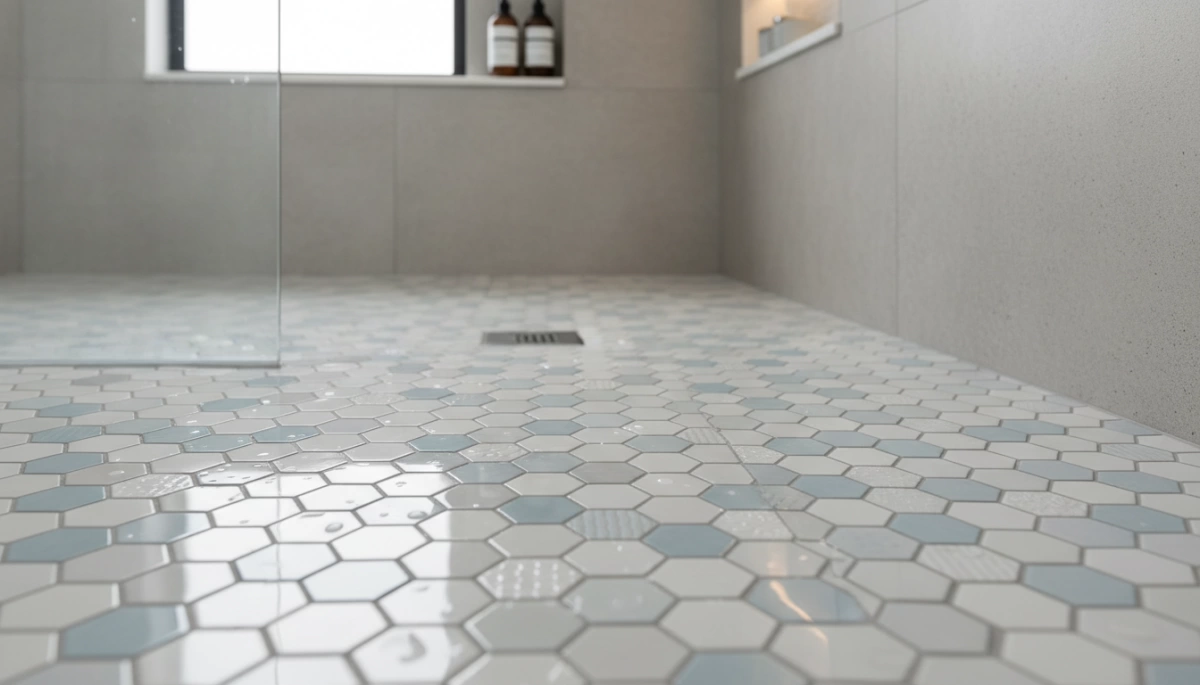
Why Porcelain Mosaic Tile is the Best Choice for Shower Floors
Selecting the right material for a shower pan is critical to the longevity of any bathroom remodel. As a manufacturer, we engineer our porcelain mosaic tiles to meet the highest technical standards, ensuring they outperform traditional materials in the most demanding wet environments.
Low Water Absorption: The Key to Waterproofing
The most critical factor for any wet room flooring is its ability to repel moisture. Porcelain is fired at much higher temperatures than standard ceramic, resulting in a vitrified, glass-like body.
- The <0.5% Standard: To be certified as porcelain, a tile must have a water absorption rate of 0.5% or less.
- Structural Integrity: This near-impermeability prevents water from penetrating the tile body, which is the primary cause of mold growth, tile swelling, and subfloor rot.
- Stain Resistance: Because the surface is so dense, oils, soaps, and minerals cannot easily penetrate the tile, keeping your shower floor looking new for years.
Unmatched Density and Durability
Shower floors endure constant foot traffic and exposure to harsh chemical cleaners. Our porcelain mosaics are built to withstand these stressors without compromising their aesthetic.
- High Density: The high-pressure pressing process makes porcelain significantly harder and denser than ceramic.
- Impact Resistance: It is less likely to crack if heavy objects (like shampoo bottles or shower heads) are dropped.
- Chemical Stability: Porcelain is naturally resistant to the acidic or alkaline nature of modern cleaning agents, ensuring the finish does not etch or dull over time.
Porcelain vs. Ceramic: Why Porcelain Wins
While ceramic tiles are suitable for walls, they often fail when used as shower pan tile due to their porous nature.
| Feature | Porcelain Mosaic Tile | Standard Ceramic Tile |
|---|---|---|
| Water Absorption | <0.5% (Impervious) | >3.0% (Absorbent) |
| Body Density | Very High | Moderate |
| Wear Rating | High (Suitable for floors) | Low to Moderate |
| Moisture Performance | Superior for standing water | Prone to moisture retention |
For a professional-grade installation, porcelain is the only material that provides the necessary durability and hardness required for a long-lasting, leak-proof shower floor.
Slip Resistance: Why Porcelain Mosaic Tile is the Safest Shower Floor Choice
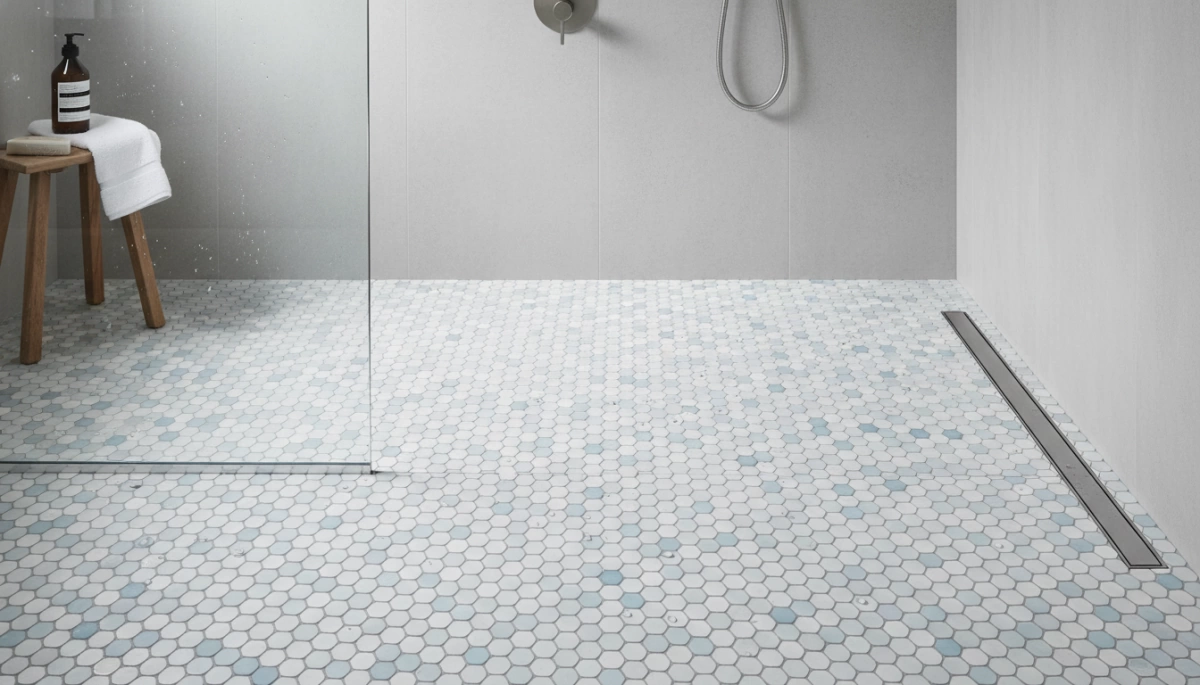
Safety is the most critical factor when choosing materials for a wet room. A porcelain mosaic tile for shower floor applications provides a level of traction that larger tiles simply cannot match. We focus on engineering surfaces that balance aesthetics with high-performance slip resistance to prevent accidents in the bathroom.
The Power of Grout Lines for Natural Grip
The secret to a non-slip shower floor isn’t just the tile surface; it’s the frequency of the joints. Because mosaic tiles are small-format, they require significantly more grout lines per square foot.
- Increased Friction: These recessed lines act like treads on a tire, providing a natural “bite” for your feet.
- Drainage: More grout lines help channel water toward the drain faster, reducing the risk of hydroplaning.
- Contour: Small tiles easily follow the slope of the shower pan, ensuring no standing water pools.
Understanding DCOF: Why 0.42 Matters
In the industry, we measure safety using the Dynamic Coefficient of Friction (DCOF). For any area that stays wet, like a shower floor, a DCOF rating of 0.42 or higher is the standard requirement.
- Standard Compliance: Our porcelain mosaics meet or exceed the 0.42 threshold, ensuring they are safe for level interior spaces expected to be walked upon when wet.
- Anti-Slip Texture: We apply specific glazes and textures that increase friction without making the tile feel rough or uncomfortable on bare feet.
Matte Finishes vs. Polished Surfaces
While polished tiles look stunning on walls, they become incredibly slick when soapy water is introduced. For bathroom flooring, we always recommend a matte finish porcelain.
- Matte Finish: Offers a micro-textured surface that maintains grip even when submerged.
- Polished/Glossy: These should be avoided for shower floors as they lack the necessary anti-slip texture.
- Durability: Matte surfaces also hide water spots and soap scum better than high-gloss options, keeping your shower looking cleaner for longer.
By combining a high DCOF rating with the inherent grip of dense grout patterns, our porcelain mosaics provide the ultimate peace of mind for any residential or commercial shower project.
Design Versatility with Porcelain Mosaic Tile for Shower Floor
When I design a bathroom, I look for materials that balance aesthetics with pure functionality. Porcelain mosaic tile for shower floor applications offers unmatched creative freedom because the small format easily handles the slopes required for proper drainage while providing a high-end finish.
Classic Shapes for Every Style
Traditional shapes remain the backbone of bathroom design. These options provide a clean, organized look that works in almost any setting:
- Penny Rounds: Perfect for a soft, organic feel or a classic retro vibe.
- Hexagon Mosaics: A versatile choice that fits both modern industrial and traditional farmhouse aesthetics.
- Square Mosaics: The go-to standard for a clean, grid-like precision that emphasizes symmetry.
Modern Trends and Custom Layouts
For projects that need to stand out, I recommend contemporary patterns that transform a standard shower pan into a design focal point:
- Herringbone & Chevron: These layouts add a sense of movement and luxury to wet room flooring.
- Linear & Stacked Patterns: Ideal for creating a minimalist, architectural look that feels very current.
- Custom Gradients: Using varying shades of the same color to create a visual “flow” from the walls down to the drain.
Achieving a Seamless Bathroom Aesthetic
One of the biggest advantages of our porcelain mosaics is the ability to create a cohesive environment. By matching floor mosaics with wall tiles or using a complementary color palette, you can make a small bathroom feel significantly larger.
- Monochromatic Schemes: Use the same color in different shapes (e.g., large format on walls, mosaics on floors) for subtle texture.
- Contrasting Grout: Pair light tiles with dark grout to make the geometric patterns pop.
- Curbless Transitions: Carry the mosaic from the shower floor out into the main bathroom area for a modern, barrier-free entry.
Our collection focuses on high-performance porcelain that doesn’t force you to choose between a beautiful layout and a safe, durable surface. Whether you are aiming for a vintage penny round look or a sharp, modern linear pattern, these mosaics provide the flexibility needed for professional-grade results.
Technical Specifications for Porcelain Mosaic Tile for Shower Floor
When sourcing the right porcelain mosaic tile for shower floor projects, looking beyond the color and pattern is vital. The technical “stats” of a tile determine if it will survive the constant moisture and foot traffic of a busy bathroom. I always tell my clients to focus on three specific areas: durability ratings, the mounting system, and the density of the material.
The PEI Rating: Measuring Wear
The Porcelain Enamel Institute (PEI) rating tells us how much abuse the tile surface can take. For a residential shower, you don’t need industrial-grade thickness, but you do need resilience.
- PEI 3: Perfect for residential bathroom floors.
- PEI 4: Recommended for high-traffic master baths or light commercial use.
- PEI 5: Overkill for a home, but great for heavy-duty public locker rooms.
Mesh-Backed vs. Paper-Faced Sheets
How the tiles are held together determines the ease of installation and the quality of the final bond.
- Mesh-Backed: This is the standard for most bathroom remodel projects. The tiles are pre-mounted on a fiberglass mesh. It makes the sheets easy to cut and align, ensuring consistent grout lines.
- Paper-Faced: The paper is on the “show” side of the tile. This is often used in high-moisture environments like steam showers because it allows for 100% contact between the tile back and the thin-set mortar.
Why Frost Resistance Matters Indoors
It might seem strange to look for frost resistance for an indoor shower, but this rating is a shortcut to finding the highest quality porcelain. A frost-resistant tile is a high-density tile. It means the water absorption rate is so low that even if the temperature dropped, there is no moisture inside the tile to expand and cause cracks. For a wet room flooring setup, this density is your best defense against long-term water damage.
The Buyer’s Checklist
| Feature | Requirement | Benefit |
|---|---|---|
| PEI Rating | Class 3 or 4 | Prevents surface scratches and fading over time. |
| Mounting | Mesh-mounted sheets | Faster installation and perfectly straight lines. |
| Water Absorption | < 0.5% (Impervious) | Prevents the tile from holding onto water or odors. |
| Frost Resistance | Certified | Indicates a dense, premium-grade porcelain body. |
| DCOF Rating | 0.42 or higher | Essential for a slip-resistant shower pan. |
Choosing a porcelain mosaic tile for shower floor use based on these specs ensures the installation remains structurally sound and visually perfect for decades. Never settle for “wall-only” mosaics for a floor application; always verify that the density and wear ratings meet these professional standards.
Installation Essentials for a Leak-Proof Shower
Getting a porcelain mosaic tile for shower floor project right starts long before the first tile is laid. If the foundation isn’t solid, even the best tiles won’t save the bathroom from leaks or mold. I focus on a “system-first” approach to ensure the wet room flooring stays bone-dry underneath for decades.
Substrate Preparation and Waterproofing
The “shower pan” is the most critical area of any bathroom remodel. I always emphasize two non-negotiable steps:
- Proper Pitch: The floor must slope toward the drain at a rate of 1/4 inch per foot. Without this, water pools, leading to standing water and eventual grout failure.
- Waterproofing Membranes: Before laying your porcelain mosaic tile for shower floor, apply a high-quality sheet membrane or liquid-applied barrier. This ensures that any moisture passing through the grout lines never reaches the wooden or concrete subfloor.
Choosing the Right Thin-set
Because porcelain has an incredibly low water absorption rate, standard mortars often fail to “grab” the tile. You need an adhesive that creates a mechanical bond:
- Modified Thin-set: Use a polymer-modified mortar. The additives provide the flexibility needed to handle temperature changes in the shower.
- High-Bond Mortars: These are essential for mesh-mounted sheets to ensure every small chip stays locked in place without shifting during the curing process.
Grouting for Longevity: Epoxy vs. Cementitious
The grout choice defines your long-term maintenance schedule. Since mosaics have more grout lines than large-format tiles, the material matters:
- Epoxy Grout: This is my top recommendation. It is 100% waterproof, stain-resistant, and does not require sealing. It’s the perfect partner for hexagon mosaic or penny round tiles in high-use stalls.
- Cementitious Grout: While more affordable and easier to apply, it is porous. If you choose this, you must use a high-quality sealer and reapply it annually to prevent moisture from seeping into the thin-set mortar bed.
Maintenance Tips for Your Porcelain Mosaic Tile Shower Floor
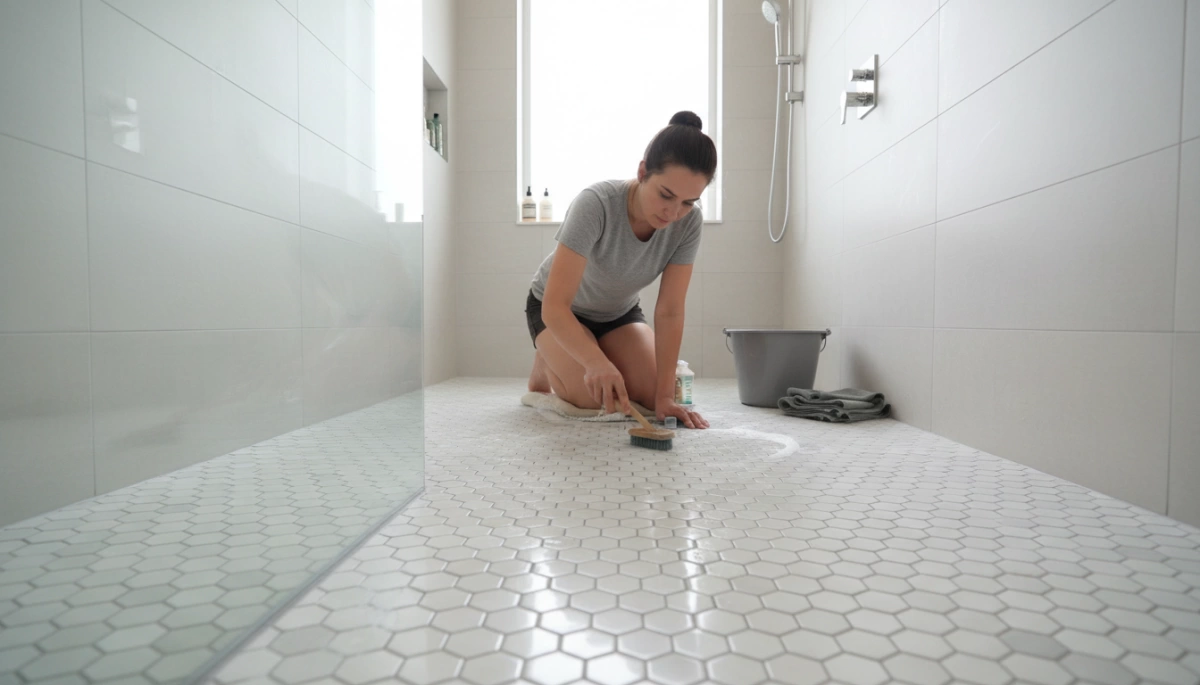
Keeping your porcelain mosaic tile for shower floor in top shape doesn’t require hours of scrubbing. Because porcelain is dense and non-porous, the tile itself is incredibly easy to maintain, but the grout lines need a bit of attention to stay clean and bright.
Simple Daily Habits
I always recommend a quick rinse with warm water after every shower. This is the most effective way to prevent soap scum buildup and mineral deposits from hardening on the surface. If you have a squeegee handy, a quick pass over the floor helps ensure the bathroom flooring dries quickly, preventing mold in the corners.
Choosing Safe Cleaning Agents
When it’s time for a deeper clean, avoid the “nuclear” options. Harsh acidic cleaners or heavy bleach can eat away at your grout over time, leading to leaks or loose tiles.
- Use pH-neutral cleaners: These are safe for both the porcelain and the grout.
- Mild dish soap: A simple mixture of warm water and soap is often all you need.
- Soft brushes: Use a nylon brush for the grout lines; avoid steel wool or abrasive pads that can dull a matte finish porcelain.
Long-Term Care and Grout Sealing
While the porcelain tiles themselves are waterproof, the grout is often the weakest link in a wet room flooring setup.
- Check for wear: Once a year, perform a “water test” on your grout. If water soaks in rather than beading up, it’s time to reseal.
- Resealing schedule: Depending on use, resealing grout lines every 12 to 18 months keeps the installation watertight and stain-resistant.
- Epoxy Grout: If your floor was installed with epoxy grout, you can skip the sealer entirely, as it is naturally non-porous and chemical-resistant.
Why YASIQI is Your Trusted Partner for Porcelain Mosaics
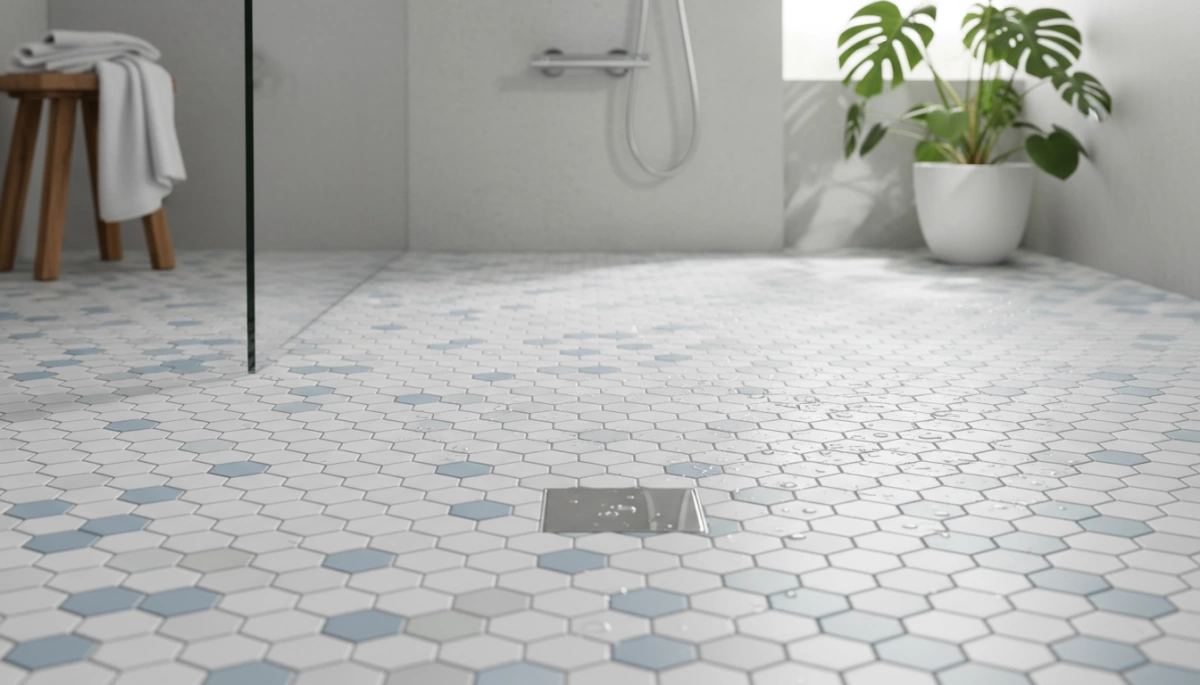
Choosing the right porcelain mosaic tile for shower floor applications requires a balance of technical precision and aesthetic appeal. At YASIQI, we specialize in manufacturing high-performance mosaics that meet the rigorous demands of international bathroom flooring standards. We don’t just supply tile; we provide engineered solutions that prioritize safety, durability, and style.
High-Performance Slip-Resistant Engineering
Safety is our primary focus. We engineer our mosaics with a high coefficient of friction and superior anti-slip textures to ensure stability in wet environments. By combining specialized matte finishes with the natural grip provided by frequent grout lines, our tiles exceed standard safety requirements for residential and commercial shower pans.
Global Design Standards and Variety
Our product catalog is designed to cater to a diverse global market. We stay ahead of design trends to offer a wide array of styles, including:
- Classic Shapes: Timeless penny rounds and hexagon mosaics.
- Modern Geometrics: Linear, herringbone, and custom gradient patterns.
- Versatile Finishes: Specialized matte finish porcelain that looks premium while providing essential traction.
Direct-from-Manufacturer Quality Assurance
As a direct manufacturer, we maintain total control over the production cycle. This ensures that every sheet of porcelain mosaic tile for shower floor use meets our strict internal benchmarks:
- Low Water Absorption: A rate of <0.5%, making our tiles virtually impervious to moisture.
- Precision Mounting: Our mesh-mounted sheets are aligned perfectly for easy installation and consistent spacing.
- Sustainable Production: We utilize eco-friendly manufacturing processes and sustainable raw materials to minimize our environmental impact.
- Rigorous Testing: Every batch undergoes durability and DCOF rating verification to ensure long-term performance in high-moisture zones.
By eliminating the middleman, we provide high-end quality at a competitive price point, backed by the reliability of a partner who understands the technical nuances of wet room flooring.
Common Questions About Porcelain Mosaic Tile for Shower Floors
Are porcelain mosaic tiles hard to clean because of the grout?
Many homeowners worry that more grout lines mean more scrubbing, but it’s actually quite manageable. Because our porcelain mosaic tile for shower floor use is non-porous, the tile itself won’t absorb stains. To keep the grout looking new, I recommend using an epoxy grout during installation. It’s waterproof and stain-resistant, making your weekly cleaning as simple as a quick wipe with a neutral cleaner.
Can I use glass mosaics instead of porcelain for the floor?
While glass looks beautiful, I always suggest porcelain for high-traffic wet room flooring. Porcelain is much denser and offers a superior slip-resistant rating (DCOF). Glass can be slippery when wet and is more prone to scratching or cracking under the pressure of daily use. For a safe, long-lasting bathroom remodel, a matte finish porcelain is the most reliable choice.
How do I calculate the amount of tile needed for a walk-in shower?
Calculating your order is straightforward, but accuracy is key to avoiding project delays.
- Measure the Area: Multiply the length by the width of your shower floor to get the total square footage.
- Account for Waste: Always add a 10% to 15% waste factor. This covers the intricate cuts around the drain and corners.
- Check the Sheets: Since these are mesh-mounted sheets, ensure your total square footage matches the coverage provided per box.
Is a specific thin-set required for these tiles?
Yes, for a successful installation, use a high-quality, polymer-modified thin-set mortar. This ensures a strong bond between the porcelain mosaic tile and the substrate waterproofing membrane. Because porcelain is so dense, it needs a mortar specifically designed for low-absorption materials to prevent tiles from popping or shifting over time.
