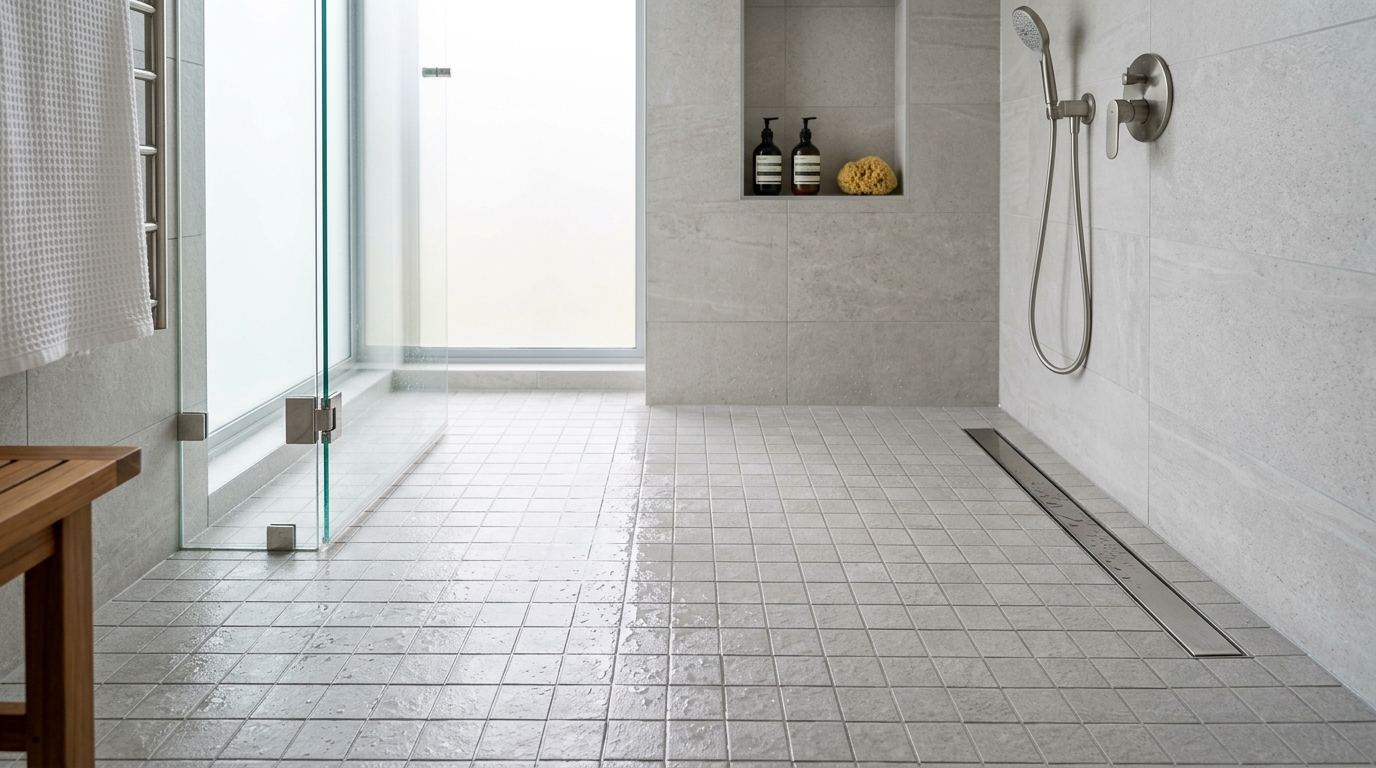
Why Choose Porcelain for Non-Slip Shower Floor Tiles?
Superior Durability and Water Resistance
As a leading porcelain tile manufacture and supplier, we produce tiles fired at extreme temperatures to achieve maximum density. This process creates a nearly impervious surface, essential for water-resistant bathroom environments.
- Low Porosity: Absorption rates of less than 0.5% prevent internal moisture damage.
- High Strength: Resists heavy impact and wear better than standard bathroom flooring options.
- Stain Proof: The dense structure prevents dyes and oils from penetrating the surface.
Enhanced Safety with High Slip Resistance
The primary concern in any wet area is traction. Our anti-slip porcelain solutions utilize advanced glazing and texturing technology to provide a secure grip underfoot, even when submerged in soapy water.
| Feature | Porcelain Non-Slip Tile | Standard Ceramic Tile |
|---|---|---|
| Grip Level | Slip-resistant (R10/R11) | Generally lower |
| Density | High (Heavy Duty) | Moderate |
| Usage | Wet Rooms & Showers | General Indoor Areas |
Easy Maintenance and Long-Term Value
Choosing porcelain shower floor tiles non slip ensures a hygienic environment with minimal effort. Unlike natural stone, porcelain does not require periodic sealing to maintain its integrity or safety features.
- Mold Resistance: Naturally inhibits the growth of bacteria and fungi.
- Chemical Resistance: Safely withstands standard household cleaners without degrading the anti-slip finish.
- Aesthetic Longevity: Colors and textures remain vibrant and effective for decades, offering the best return on investment for global property owners.
Understanding Non-Slip Ratings for Bathroom Safety
Choosing the right porcelain shower floor tiles non slip isn’t just about the look; it’s about the science of friction. When we manufacture our collections, we prioritize safety standards that ensure your bathroom flooring remains stable even when soapy and wet.
What is DCOF and Why Does It Matter?
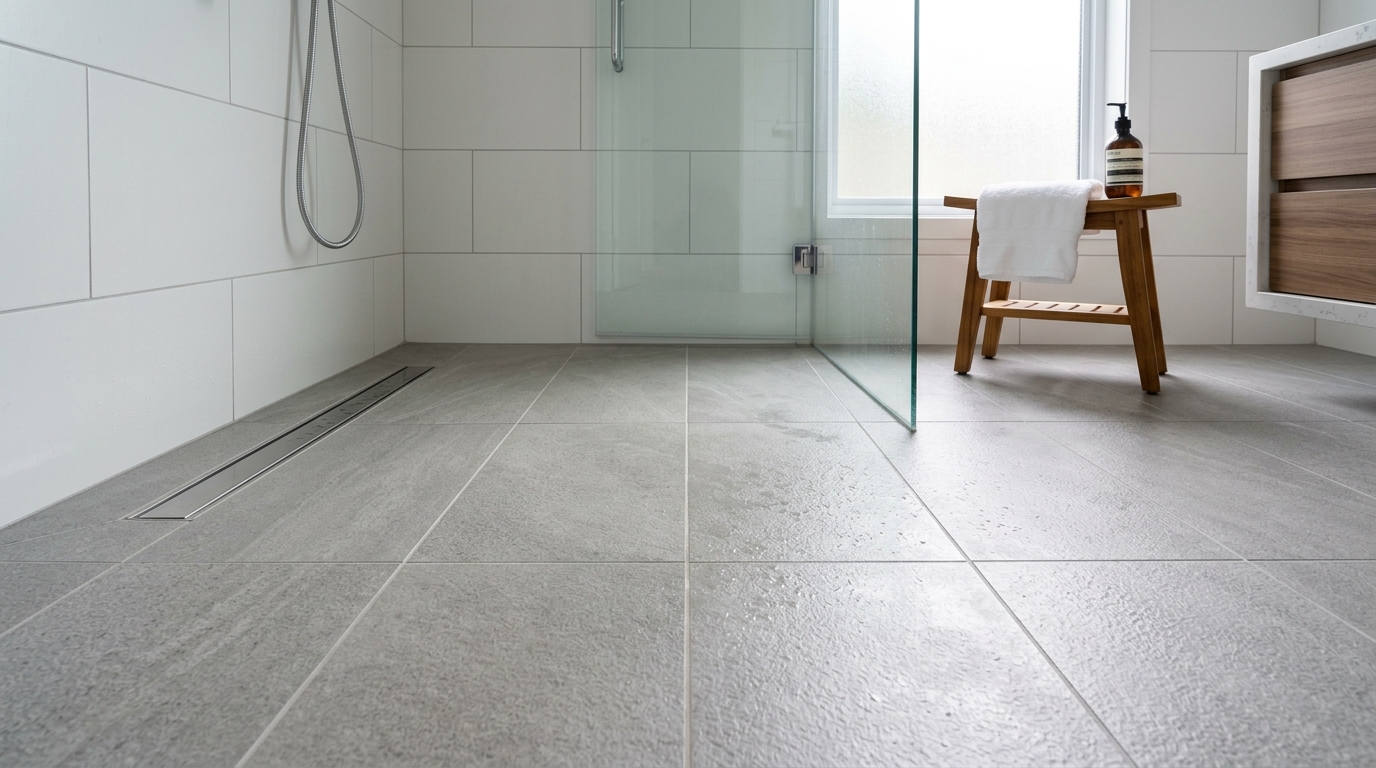
In the tile industry, we use DCOF (Dynamic Coefficient of Friction) to measure how much grip a tile provides. For a shower floor to be considered safe, it needs a DCOF rating of 0.42 or higher.
- Higher Rating = Better Grip: A higher number means more traction for bare feet.
- Safety Standard: We recommend nothing less than 0.42 for any area prone to standing water.
- Reliability: This rating gives you peace of mind that the anti-slip properties are lab-tested and verified.
Matte vs. Polished Finishes for Wet Areas
The finish of your tile directly impacts its performance in a wet environment. While polished tiles look stunning in a hallway, they can become ice-rinks in a shower.
| Finish Type | Slip Resistance | Best Use Case |
|---|---|---|
| Matte | High | Shower floors and wet rooms |
| Textured | Excellent | Commercial or high-traffic bathrooms |
| Polished | Low | Walls or dry vanity areas |
We always advise our clients to stick with matte or honed finishes for the floor. These surfaces offer a natural resistance that keeps you upright without sacrificing a modern, clean aesthetic.
The Role of Texture in Preventing Slips
Texture is your best friend in a wet room. A slightly “toothy” or granular surface creates the necessary friction between your foot and the tile. As a supplier, we focus on creating slip-resistant textures that feel comfortable to walk on but provide a firm “bite” when water is present.
- Micro-texturesMicro-textures: Provide invisible grip on larger tiles.
- Tactile Surfaces: Feel more organic and mimic natural stone.
- Structural Integrity: Porcelain is dense and hard-wearing, meaning the texture won’t wear down or become smooth over years of heavy use.
Popular Styles and Shapes for Non-Slip Shower Floors
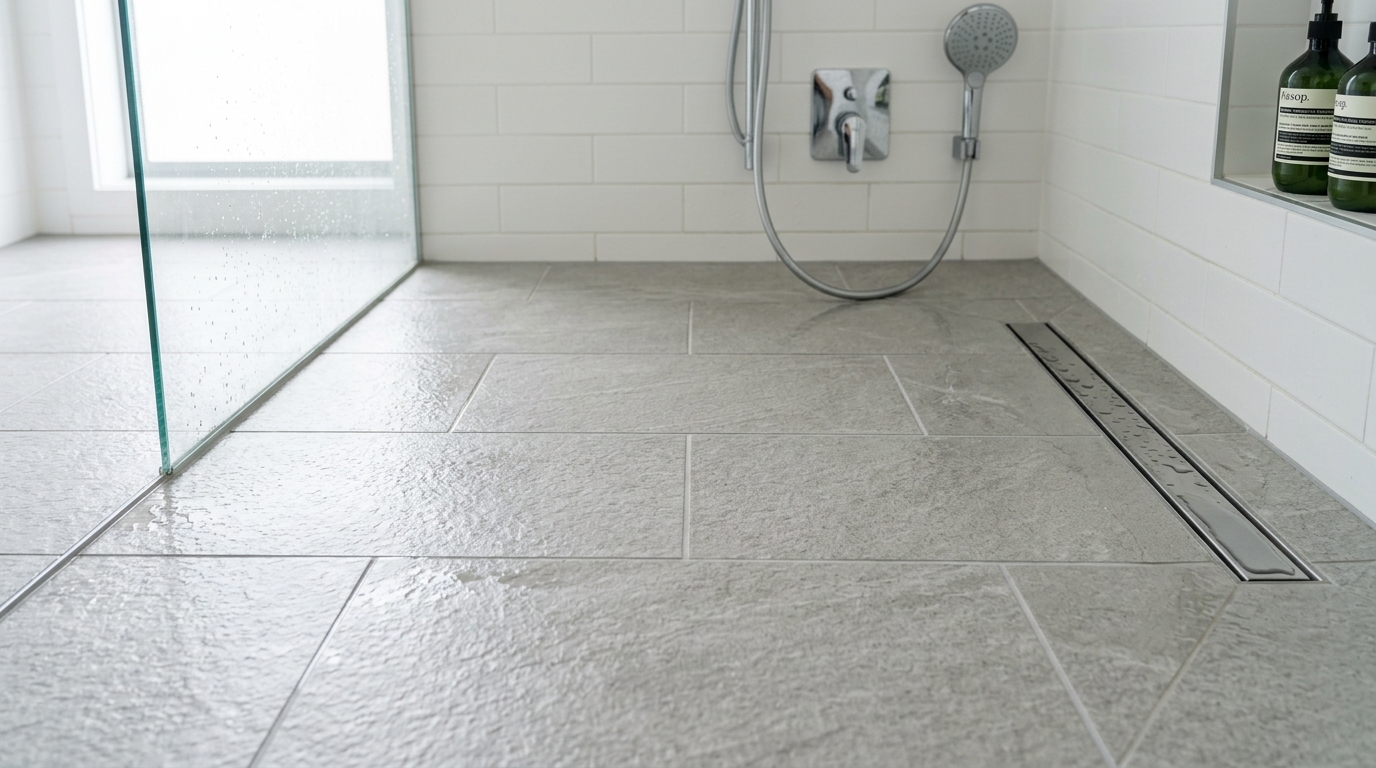
Choosing the right look for your porcelain shower floor tiles non slip doesn’t mean you have to settle for boring options. As a porcelain tile manufacture and supplier, I prioritize designs that bridge the gap between high-end style and essential slip-resistant performance.
Mosaic Tiles for Better Grip and Drainage
Mosaics are a top recommendation for bathroom flooring because of their structure. The small size of the individual pieces means you have more grout lines per square foot, which naturally increases traction.
- Natural Traction: More grout lines act as “treads” for your feet.
- Perfect Slopes: Easier to install on floors that pitch toward a central drain.
- Design Flexibility: Available in squares, rounds (penny tiles), and herringbone patterns.
Modern Hexagon Porcelain Tile Designs
Hexagons are the current favorite for modern renovations. They offer a unique geometric aesthetic while providing significantly more edges than standard square tiles, which helps break up water tension.
- Increased Stability: The multi-directional grout lines offer a multi-angle grip.
- Seamless Flow: Great for creating a “wet room” look where the floor continues from the shower to the rest of the room.
- Durable Build: High-density porcelain that is inherently water-resistant and tough.
Large Format Matte Porcelain with Advanced Technology
Many people think they have to avoid large tiles in the shower, but that is no longer the case. We use advanced glazing technology to create large-format matte surfaces that feel smooth to the touch but provide an anti-slip grip when wet.
| Feature | Benefit for Shower Floors |
|---|---|
| Micro-Texture | Provides a high friction coefficient without feeling rough. |
| Minimal Grout | Easier to clean and creates a sleek, minimalist look. |
| Rectified Edges | Allows for tight joints, making the floor look like a single solid slab. |
Using these larger slabs provides a premium feel while the specialized matte finish ensures the surface remains safe for all users.
Top Color Trends and Finishes for Porcelain Shower Floor Tiles Non Slip<
Choosing the right look for your shower is about more than just style; it’s about creating a safe, cohesive environment. As a porcelain tile manufacturer and supplier, we’ve seen a shift toward finishes that mimic natural elements while prioritizing high-performance slip-resistant properties. The goal is to achieve a high-end look without sacrificing the water-resistant security needed in a wet zone.
Natural Stone and Slate Look Porcelain
The “organic” trend is dominating the global market. Homeowners want the rugged, earthy feel of real stone but without the porous nature and high maintenance. Our slate-look porcelain shower floor tiles non slip options provide a textured surface that naturally increases friction.
- Earth Tones: Deep tans, rusted browns, and forest greens.
- Texture: Cleft surfaces that mimic split stone.
- Benefit: These tiles hide water spots and soap scum exceptionally well, making them perfect for busy family bathrooms.
Minimalist Neutrals: White, Grey, and Charcoal
Minimalism remains a staple in modern bathroom flooring. Neutral colors provide a “spa-like” atmosphere that feels clean and expansive.
| Color | Vibe | Best For |
|---|---|---|
| Cool White | Clean & Airy | Small shower stalls with low light. |
| Soft Grey | Modern & Industrial | Hiding dust and maintaining a neutral palette. |
| Deep Charcoal | Bold & Moody | Large walk-in showers with high-contrast hardware. |
Using a matte finish in these neutral tones is the most effective way to ensure an anti-slip surface that feels smooth underfoot but provides enough “bite” to prevent accidents.
On-Trend Decorative Patterns and Textures
We are seeing a massive surge in demand for tactile surfaces. Texture is no longer just a safety feature; it is a design statement. From fabric-inspired “linen” looks to raised geometric patterns, these tiles offer built-in traction.
- Linear Textures: Subtle grooves that help channel water toward the drain.
- Encaustic Styles: Decorative patterns with a matte, slightly grainy finish.
—– 3D Effects: Modern porcelain tech allows for “micro-textures” that are invisible to the eye but highly effective for grip.
By focusing on these trending finishes, you can ensure your project is both visually stunning and functionally superior. Whether you prefer the raw look of slate or the crisp lines of a charcoal matte, our porcelain shower floor tiles non slip collections are designed to meet the highest safety standards while elevating the overall aesthetic of your space.
How to Choose the Best Non-Slip Tile for Your Space
Selecting the right porcelain shower floor tiles (non-slip) is about finding that sweet spot where high-end design meets real-world safety. We focus on providing options that look great while ensuring the floor remains stable underfoot, even when covered in soap and water.
Balancing Aesthetics with Safety Requirements
You don’t have to choose between a beautiful bathroom and a safe one. We offer slip-resistant porcelain that mimics the look of luxury marble, natural wood, or industrial concrete. The key is choosing a surface that provides enough friction without feeling rough or uncomfortable. We recommend matte or “honed” finishes that maintain a high-end look while providing the necessary anti-slip properties for daily use.
Considering Tile Size and Grout Lines for Traction
The physical layout of your bathroom flooring significantly impacts safety.
- Grout is Your Friend: Smaller tiles mean more grout lines. These lines act like “treads” for your feet, providing extra mechanical grip.
- Mosaic Advantage: Using 2×2 or 1×1 mosaic tiles is a classic choice because the high density of grout lines creates a naturally slip-resistant surface.
- Large Format Needs: If you prefer a modern, seamless look with large tiles, ensure the porcelain has a specific textured finish to make up for the lack of grout lines.
Comparing Porcelain vs. Ceramic for Shower Floors
While both materials are common, we always steer our clients toward porcelain for the shower environment. It is denser, tougher, and handles moisture much better than standard ceramic.
| Feature | Porcelain Tile | Ceramic Tile |
|---|---|---|
| Water Absorption | Less than 0.5% (Best for wet areas) | Higher (More porous) |
| Durability | High density; resists chips and cracks | Lower density; prone to wear |
| Slip Resistance | Wide range of specialized textures | Often limited to standard glazes |
| Maintenance | Extremely easy to clean | Can be prone to staining if unglazed |
By choosing a high-quality porcelain, you’re investing in a floor that stays safe, looks modern, and stands up to the humidity of a busy shower.
Installation and Maintenance for Porcelain Shower Floors
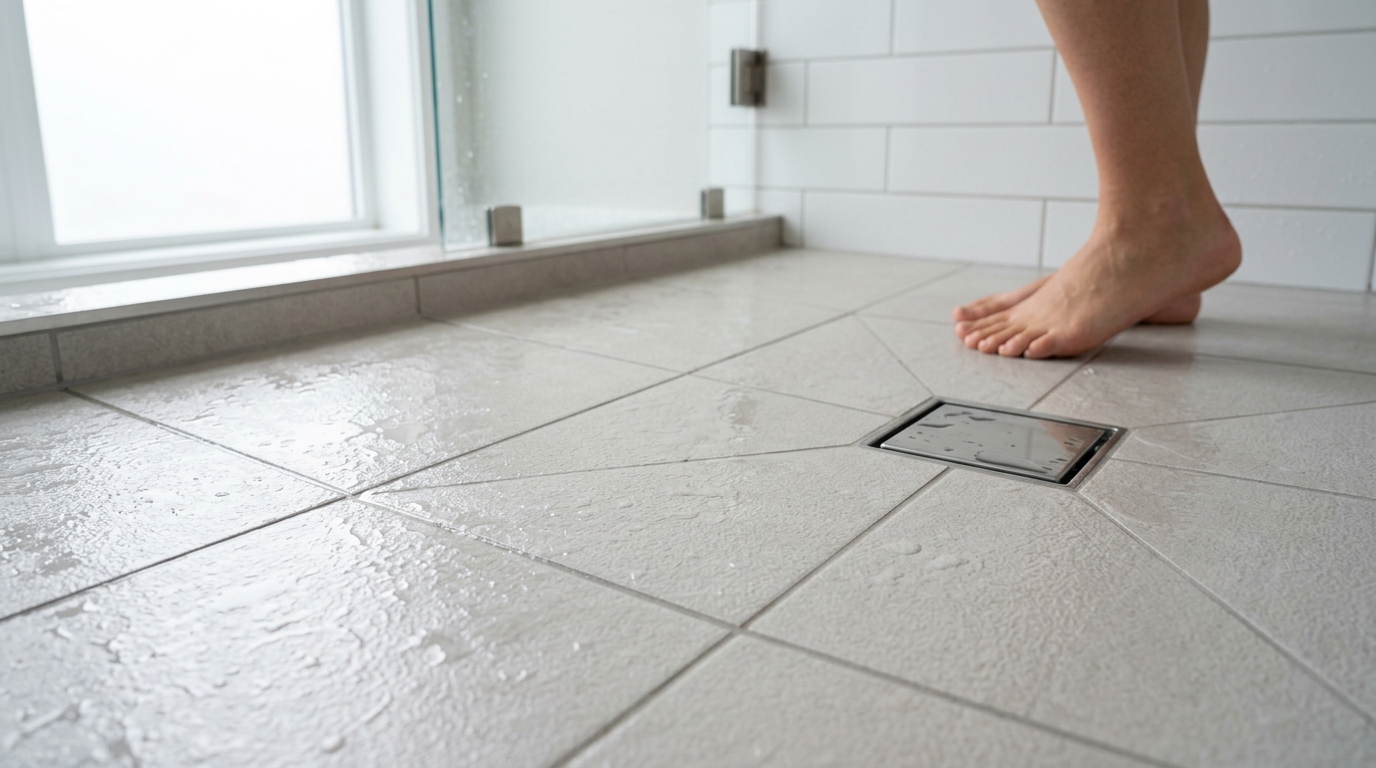
As a porcelain tile manufacture and supplier, I’ve seen how the right installation makes or breaks the performance of porcelain shower floor tiles non slip. Choosing the tile is only half the battle; how you put it in and look after it determines the long-term safety of your bathroom.
Proper Grouting Techniques to Enhance Safety
Grout is your secret weapon for extra traction. While the tile itself provides the grip, the grout lines act as a “tread” for your feet. To get the most out of your bathroom flooring, keep these tips in mind:
- Go Small: Using smaller tiles increases the density of grout lines, which significantly boosts anti-slip performance.
- Flush Grouting: Avoid over-filling joints. You want a slight recess so the edges of the tiles provide a physical “stop” for your foot.
- Quality Materials: Use high-performance, water-resistant epoxy or polymer-modified grouts that won’t erode or harbor mold.
Best Cleaning Practices for Textured Surfaces
Textured, slip-resistant tiles are great for safety, but they can trap soap scum and mineral deposits more easily than smooth surfaces. To keep them looking fresh and functioning correctly, follow this simple routine:
| Action | Frequency | Why It Matters |
|---|---|---|
| Rinse | After every shower | Removes soap residue before it hardens. |
| Soft Scrub | Weekly | A soft-bristle brush gets into the tile texture better than a mop. |
| Neutral Cleaner | Monthly | Avoid wax or oil-based cleaners that create a slick film. |
Maintaining Slip Resistance Over Time
Even the best porcelain shower floor tiles non slip can lose their effectiveness if they are covered in a layer of grime. The slip resistance is built into the tile’s surface during our manufacturing process, so it won’t “wear off,” but it can be masked.
Keep the surface clean of body oils and hard water scale to ensure the microscopic texture remains exposed. If the floor starts to feel “slimy” when wet, it’s a sign of biofilm buildup, not a failure of the tile. A quick deep clean with a non-acidic degreaser will restore that original factory grip instantly.
Frequently Asked Questions About Shower Floor Tiles
Choosing the right porcelain shower floor tiles non-slip options involves more than just picking a color. We get a lot of questions about how to balance style with safety. Here are the answers to the most common concerns we hear from our global clients.
What is the Best Non-Slip Rating for a Shower Floor?
When we manufacture tiles for wet environments, we look for a DCOF (Dynamic CoefficientDCOF (Dynamic Coefficient of Friction) rating of 0.42 or higher. This is the standard for flooring that provides enough traction when wet.
- 0.42+ DCOF: The “gold standard” for level interior spaces expected to be wet.
- R10 or R11: Common European ratings that indicate excellent slip-resistant properties for residential and commercial showers.
Can Glossy Tiles Be Used in Wet Areas?
I strongly advise against using large glossy tiles on shower floors. While they look sleek on walls, high-gloss surfaces lose almost all traction when mixed with soap and water. If you love the polished look, only use it for the floor if the tiles are small mosaics, as the frequent grout lines will provide the necessary grip to keep you safe. Otherwise, stick to matte or textured anti-slip finishes for the floor.
How Do I Properly Clean Textured Porcelain Tiles?
Because non-slip surfaces have more “tooth” or texture to prevent falls, they can trap soap scum more easily than smooth tiles. Follow these steps to keep your bathroom flooring looking new:
- Avoid Wax and Oil: Never use oil-based cleaners, as they create a slippery film on top of the tile.
- Neutral pH Cleaners: Use a mild, pH-neutral cleaner to protect both the porcelain and the grout.
- Soft Bristle Brush: Instead of a flat mop, use a soft-bristled brush to agitate the surface and lift dirt from the micro-textures.
- Rinse Thoroughly: Always rinse with clean water to ensure no residue remains to dull the finish or reduce the water-resistant grip.
