Porcelain vs Ceramic Tile: A Decision Guide for Commercial & Professional Projects
Porcelain and ceramic tiles are two of the most commonly specified surface materials in architectural and commercial projects. While they share similar origins and appearances, their performance characteristics differ in ways that directly impact durability, lifecycle cost, installation complexity, and long-term maintenance.
For architects, contractors, developers, and facility managers, the question is rarely which tile is “better” in general—but which tile performs best for a specific project condition. This guide compares porcelain and ceramic tile from a professional, project-based perspective to support informed material decisions.
Understanding the Core Difference
Both porcelain and ceramic tiles are manufactured from clay and mineral blends and fired in kilns. The primary distinction lies in material refinement and firing conditions.
- Porcelain tile is produced using highly refined clay, fired at higher temperatures and pressures, resulting in a denser, less porous material.
- Ceramic tile uses less refined clay and lower firing temperatures, typically finished with a surface glaze over a more porous body.
This fundamental difference drives performance across nearly every evaluation factor relevant to commercial use.
At-a-Glance Comparison for Project Evaluation
| Criteria | Porcelain Tile | Ceramic Tile |
|---|---|---|
| Material Density | Very high | Moderate |
| Water Absorption | ≤ 0.5% (impervious) | 3–7% (semi-porous) |
| Durability | Suitable for heavy traffic | Best for light to medium traffic |
| Interior / Exterior Use | Interior & exterior | Primarily interior |
| Cutting & Installation | Requires professional tools | Easier handling and cutting |
| Lifecycle Cost | Lower over time | Lower upfront cost |
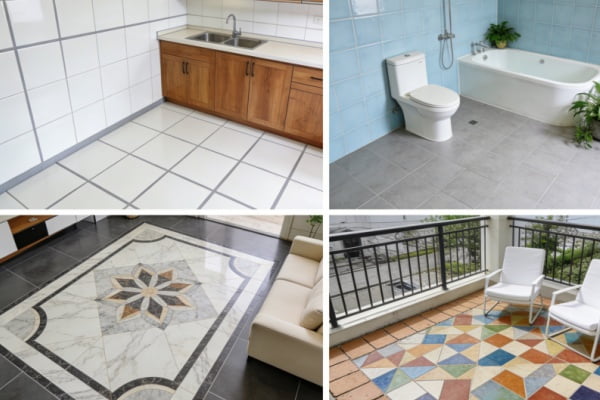
| Typical Commercial Uses | Floors, wet areas, exterior walls | Wall finishes, decorative areas |
1. Durability and Traffic Performance
In commercial environments, surface durability directly affects maintenance cycles, repair frequency, and operational downtime.
Porcelain tile’s high density and strength make it suitable for:
- High-traffic retail spaces
- Hotel corridors and lobbies
- Office common areas
- Public facilities
Ceramic tile performs well in:
- Low-impact wall applications
- Decorative feature walls
- Areas with limited physical stress
For floor installations exposed to rolling loads, carts, or frequent foot traffic, porcelain is generally the preferred specification.
2. Water Resistance and Environmental Exposure
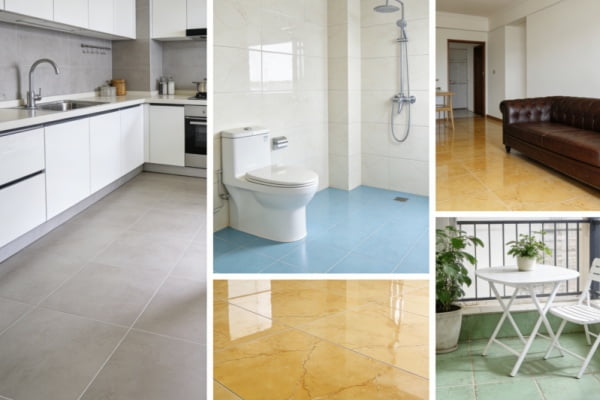
Moisture performance is a critical factor in bathrooms, kitchens, healthcare facilities, and exterior-adjacent spaces.
Porcelain tile is classified as impervious according to industry standards, making it appropriate for:
- Wet rooms and showers
- Commercial kitchens
- Laundry and utility spaces
- Exterior or semi-exterior applications (subject to system design)
Ceramic tile’s higher porosity limits its suitability in consistently wet or freeze-thaw environments unless additional waterproofing measures are applied.
3. Installation Complexity and Labor Considerations
From a construction management perspective, installation time and labor specialization significantly affect project schedules and budgets.
- Porcelain tile is harder and denser, often requiring wet saws with diamond blades and experienced installers.
- Ceramic tile is easier to cut and drill, allowing for faster installation in non-critical areas.
While ceramic may reduce short-term labor costs, porcelain can offset higher installation complexity through longer service life and reduced replacement needs.
4. Cost Perspective: Initial vs Lifecycle Value
Material selection decisions should extend beyond upfront cost comparisons.
- Ceramic tile typically offers lower material and installation costs at project start.
- Porcelain tile generally delivers greater long-term value through durability, reduced maintenance, and longer replacement cycles.
For commercial projects with extended operational timelines, lifecycle cost often outweighs initial savings.
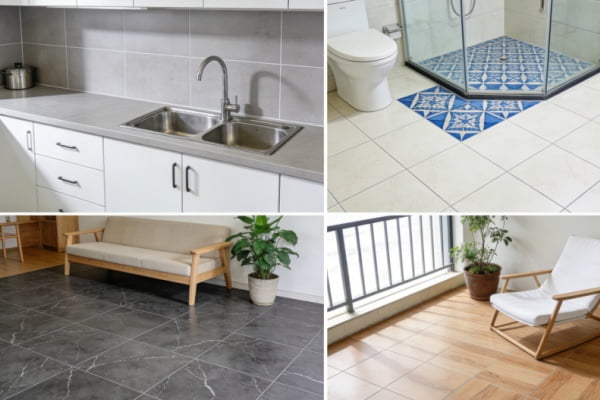
5. Typical Commercial Applications
Where Porcelain Tile Is Commonly Specified
- High-traffic flooring
- Hospitality public areas
- Bathrooms and wet zones
- Exterior wall cladding systems
- Spaces requiring high abrasion resistance
Where Ceramic Tile Is Commonly Specified
- Interior wall finishes
- Decorative backsplashes
- Feature walls
- Areas with limited mechanical impact
When Neither Porcelain nor Ceramic Is the Best Option
In some project conditions, neither porcelain nor ceramic tile may be optimal. Examples include:
- Weight-sensitive structures
- Curved or complex geometries
- Rapid renovation timelines
- Installations over existing finishes without demolition
In such cases, alternative lightweight or flexible surface solutions may be more appropriate, depending on design intent and performance requirements.
Key Takeaways for Professional Decision-Makers
- Porcelain tile excels in durability, moisture resistance, and long-term performance.
- Ceramic tile offers cost efficiency and ease of installation for low-impact applications.
- The correct choice depends on traffic, moisture exposure, substrate conditions, and project lifecycle expectations.
For commercial and architectural projects, the most successful specifications align material performance with real-world usage conditions—not just appearance or initial cost.
Final Thought
Porcelain and ceramic tiles are proven materials with established roles in modern construction. Understanding their differences at a technical and operational level allows project teams to reduce risk, control costs, and deliver more durable built environments.
Selecting the right tile is not about choosing a winner—it’s about choosing the right tool for the job.