The Ultimate Guide to Exterior House Stone
Natural Stone, Flexible Stone (Soft Stone) & How to Choose the Right Exterior Material
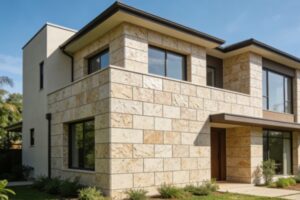
When designing or renovating a home’s exterior, material selection is one of the most critical decisions you will make. Exterior finishes define not only the aesthetic character of a building, but also its durability, maintenance requirements, and long-term value.
For centuries, natural stone1 has been the gold standard for exterior architecture. Today, alongside traditional stone, innovative materials such as flexible stone (also known as soft stone or soft porcelain stone) are expanding what is possible—especially for modern construction, renovations, and export-driven projects.
This guide is written to help homeowners, architects, developers, and contractors understand:
- The main types of exterior house stone2
- How different materials perform in real-world climates3
- When to choose natural stone vs. flexible stone4
- How to select the right exterior solution based on design, performance, and installation needs
Why Stone Remains One of the Best Exterior Materials
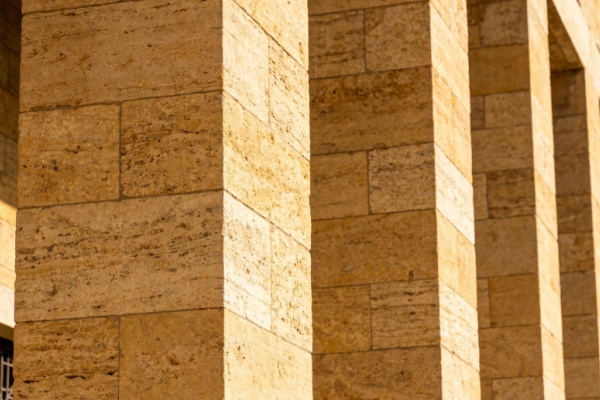
Stone—whether natural or engineered—continues to dominate exterior architecture for several reasons:
- Long-term durability
- Timeless visual appeal
- Resistance to UV, weather, and aging
- Strong perceived and real property value
Advances in processing and installation systems now allow both traditional natural stone veneers5: veneers and lightweight flexible stone panels to be used efficiently across residential and commercial projects worldwide.
Traditional Types of Natural Stone for Exterior Houses
Natural stone remains the first choice for projects prioritizing authenticity, permanence, and architectural depth.
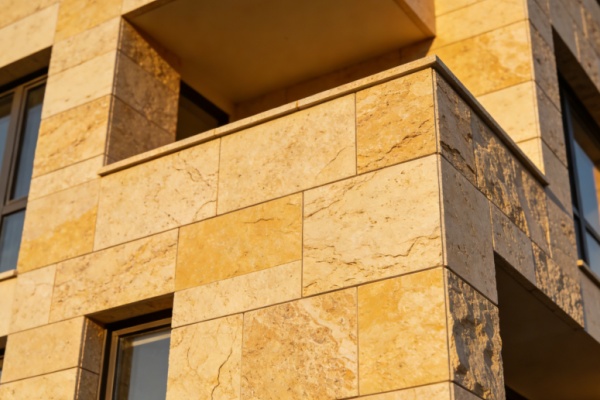
1. Limestone6 – Timeless Elegance for Exterior Facades
Limestone6 is widely used in both classical and modern architecture due to its refined appearance and versatility.
Key Characteristics:
- Subtle, uniform texture
- Colors range from white and cream to beige and light grey
- Suitable for precision cutting and large-format cladding
Best Applications:
- Full exterior facades
- Entryways and architectural features
- Modern and traditional homes
Climate Notes:
Dense, low-absorption limestone performs well outdoors when properly detailed, even in freeze–thaw climates.
2. Sandstone – Warm, Natural, and Textured
Sandstone offers a more organic appearance, defined by visible grain and warm tones.
Key Characteristics:
- Earthy colors and natural variation
- Strong compressive strength
- Rustic to transitional aesthetics
Best Applications:
- Villas, country homes, landscape-integrated architecture
- Accent walls and columns
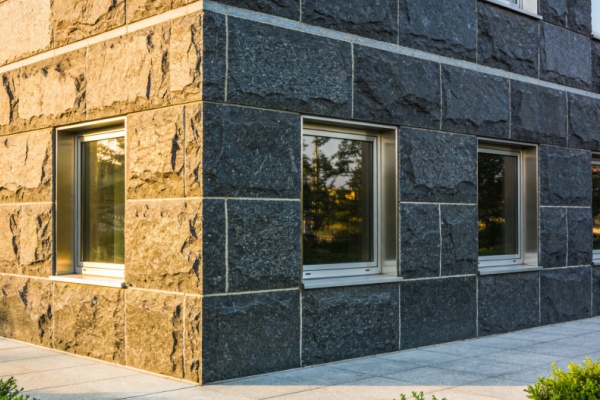
3. Granite7 – Maximum Strength and Durability
Granite7 is one of the most durable natural stone1s available for exterior use.
Key Characteristics:
- Extremely low water absorption
- High resistance to abrasion and weathering
- Suitable for harsh climates
Best Applications:
- Coastal homes
- Cold or high-UV regions
- Contemporary and monumental designs
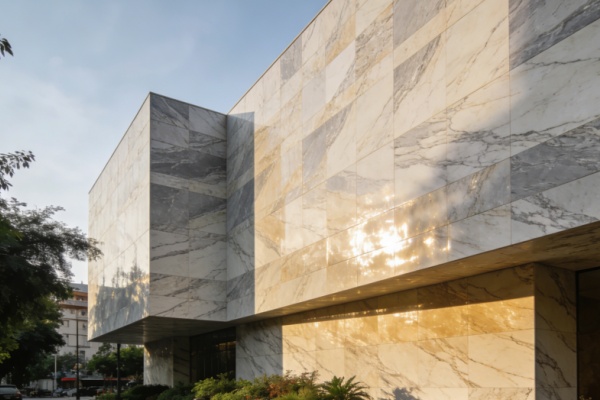
4. Marble8 – Luxury with Careful Exterior Use
Marble8 brings unmistakable sophistication and architectural presence.
Key Characteristics:
- Distinctive veining
- Smooth, refined surface
- Premium visual impact
Best Applications:
- Feature facades
- Accent zones
- Mild climates or protected exteriors
5. Slate9 – Contemporary Texture and Performance
Slate9 is valued for its layered texture and modern appeal.
Key Characteristics:
- Naturally cleft surface
- Dark, elegant color palette
- Excellent slip resistance
Best Applications:
- Modern homes
- Vertical wall cladding
- Feature elevations
6. Quartzite10 – Beauty Meets Performance
Quartzite10 combines the visual refinement of marble with granite-level strength.
Key Characteristics:
- Extremely hard and dense
- Low porosity
- Subtle natural sparkle
Best Applications:
- Luxury residences
- Coastal and extreme climates
- High-end architectural projects
7. Fieldstone – Rustic and Authentic
Fieldstone delivers an organic, handcrafted appearance.
Best Applications:
- Country estates
- Landscape walls
- Rustic or heritage-style architecture
8. Cobblestone – Old-World Character
Cobblestone evokes historic European construction and craftsmanship.
Best Applications:
- Traditional facades
- Driveways and boundary walls
- Architectural accents
9. Stone & Brick Combinations
Combining stone with brick creates visual balance and architectural depth, blending warmth with permanence.
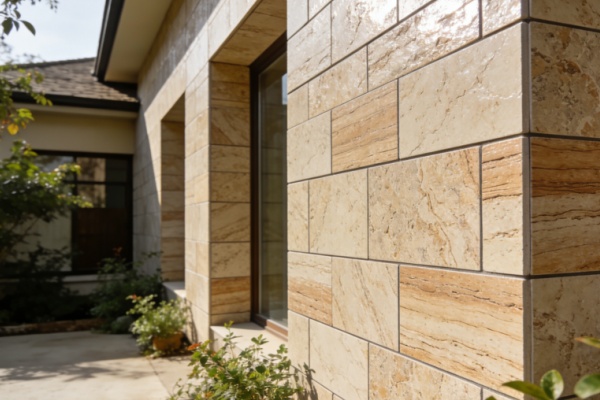
10. Travertine11 – Casual Elegance
Travertine11 offers soft tones and natural texture, ideal for warm climates and Mediterranean-inspired designs.
Beyond Traditional Stone: Flexible Stone (Soft Stone) for Exterior Applications
In recent years, flexible stone has emerged as a powerful alternative and complement to traditional natural stone1—especially for projects requiring lighter weight, faster installation, or complex surfaces.
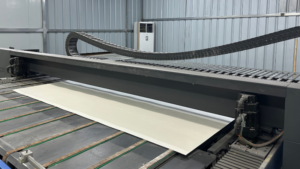
Flexible stone is made from thin layers of real stone or mineral composites reinforced with polymer backing, allowing it to bend and conform to curved or irregular surfaces.
Key Advantages of Flexible Stone for Exteriors:
- Ultra-lightweight compared to natural stone1
- Suitable for renovations and retrofits
- Can be installed on curved walls, columns, and special structures
- Reduced structural load
- Faster and more cost-effective installation
- Ideal for export projects and modular construction
Common Exterior Applications:
- Facades of residential and commercial buildings
- Villas and townhouses
- Exterior walls where weight is restricted
- Prefabricated or container-based structures
Flexible stone does not replace natural stone1—it expands design and engineering possibilities, especially where traditional stone is impractical.
Natural Stone vs. Flexible Stone: How to Choose
| Factor | Natural Stone | Flexible Stone |
|---|---|---|
| Authenticity | 100% natural | Real stone surface / engineered |
| Weight | Heavy | Very light |
| Installation | Skilled masonry | Faster, simplified |
| Curved Surfaces | Limited | Excellent |
| Renovation Projects | Challenging | Ideal |
| Export & Logistics | Higher cost | Highly efficient |
Many modern projects successfully combine both materials, using natural stone1 for focal areas and flexible stone for secondary or complex surfaces.
Key Factors to Consider When Choosing Exterior Materials
- Climate & Environment
- Structural Load
- Installation Method
- Maintenance Expectations
- Design Intent
- Project Budget & Timeline
Why Architects and Developers Choose YASIQI
At YASIQI, we specialize in export-oriented exterior wall solutions, supplying both:
- Architectural-grade natural stone1
- High-quality flexible stone (soft porcelain stone)
Our materials are used across residential, commercial, and hospitality projects worldwide, offering:
- Consistent quality control
- Stable supply for international markets
- Solutions tailored for modern construction methods
Final Thoughts
Exterior materials define how a building ages, performs, and is perceived.
Whether you choose the permanence of natural stone1 or the innovation of flexible stone—or a thoughtful combination of both—the right decision begins with understanding the material, the environment, and the project’s real needs.
With the right approach, exterior stone is not just a finish—it is a long-term architectural investment.
Explore the timeless appeal and durability of natural stone in architecture. ↩
Discover the various types of exterior house stone and their unique characteristics. ↩
Understand how climate affects the performance of exterior materials. ↩
Compare the advantages and disadvantages of natural and flexible stone. ↩
Explore the classic appeal and applications of natural stone veneers. ↩
Discover why limestone is a popular choice for both classical and modern architecture. ↩
Find out why granite is favored for its strength and durability in exterior applications. ↩
Learn about the luxurious appeal of marble in architectural designs. ↩
Explore the benefits of slate's texture and performance in modern homes. ↩
Understand the beauty and performance of quartzite in high-end projects. ↩
Discover how travertine adds elegance to warm climate designs. ↩