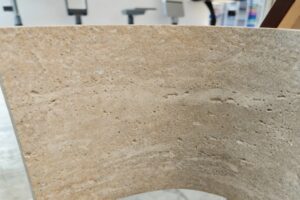
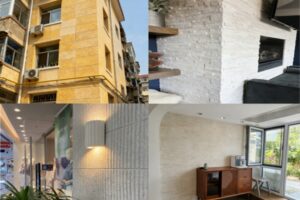
Are you considering stone for your building's exterior but worried about the challenges? The weight, cost, and complex installation can be a major headache for any project.
The main pros of stone cladding1 are its natural beauty, durability, and premium look. However, the cons are significant: it is extremely heavy, expensive, and complex to install. It requires a strong, costly support structure and is not inherently fire-resistant, increasing project costs and complexity.
So, you love the powerful look of natural stone, but the potential downsides are making you hesitate. This is a common dilemma I see with many developers and importers I work with.
The final decision impacts not just the look of the building, but the entire budget, timeline, and long-term maintenance plan. To make the best choice, you need to see the full picture.
Let's break down these points further to see if traditional stone cladding1 is truly the right choice for your next project.
Why is natural stone so popular for building facades?
Want your building to project an image of being grand and timeless? The choice of exterior material is absolutely critical. Using the wrong facade can make a building look cheap.
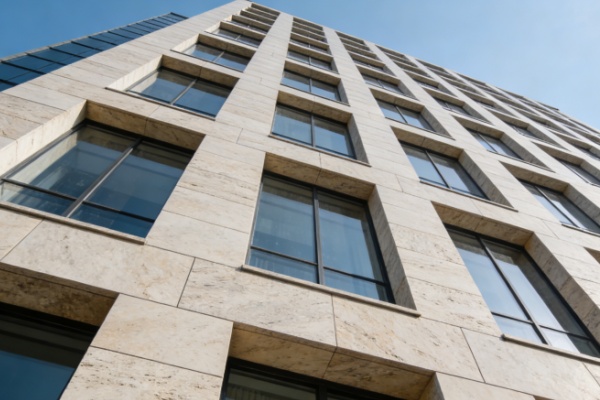
Natural stone is popular for its unique, elegant appearance that connects a modern structure to the earth. Materials like granite give a sense of stability and luxury. Its durability and natural texture are why we see it on government buildings, museums, and high-end commercial projects.
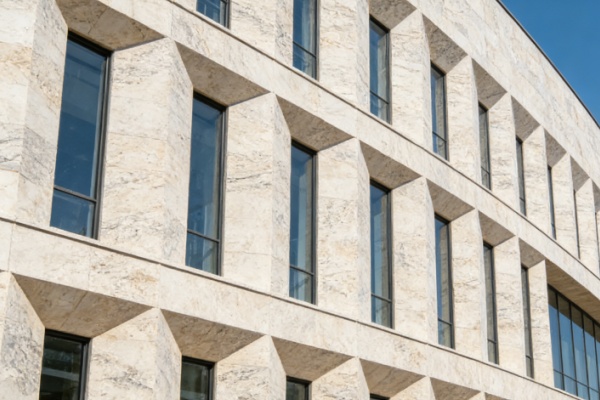
When we talk about stone facades, we are usually talking about a "curtain wall" system. This means the stone panels are an outer skin that hangs on the building's main structure.
They don't carry any of the building's load. Instead, they are held up by a separate support system of steel beams and connectors. The main job of this stone skin is to protect the building from the weather and create a specific look.
The reason stone is so loved for this job is its powerful aesthetic. A granite facade feels permanent, serious, and luxurious. For an institution like a bank, a government office, or a museum, this visual message is just as important as the building's function.
In my years of manufacturing, I've seen clients specifically request this "look of authority" for their projects. Granite is a top choice because it is an acidic rock that is very hard, dense, and has extremely low water absorption.
This makes it very durable and able to withstand harsh weather for decades.
| Stone Type | Best Use | Key Characteristics |
|---|---|---|
| Granite | Exterior Facades | High durability, weather-resistant, hard, formal look. |
| Marble | Interior/Lobbies | Softer, more porous, elegant veining, can stain. |
| Limestone | Exteriors/Interiors | Softer than granite, classic look, weathers over time. |
What are the biggest drawbacks of using stone cladding1?
Are you excited about using stone, but your budget and timeline are already tight? The hidden costs and structural needs of stone can easily derail your entire project schedule and budget.
The biggest drawbacks are its immense weight, high material and installation costs, and complex installation process. It requires a robust, expensive secondary support structure.
It's also not fire-resistant. These factors significantly increase project complexity, time, and budget, especially for large-scale buildings.
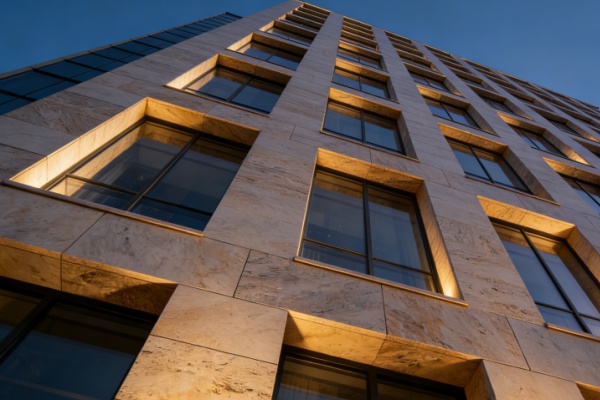
The weight is the source of many other problems. A single square meter of 3cm thick granite can weigh over 80 kg (175 lbs).
Now, imagine that covering a 20-story building. The building's primary structure must be engineered to support this massive extra load, which means more concrete and steel from the foundation up. This adds significant cost before you even buy the first stone panel.
Then there is the support structure itself, a complex grid of steel columns and beams that must be precisely installed on the building's exterior.
This requires specialized engineering and skilled labor, further driving up costs. I've consulted on projects where the cost of the support structure was nearly as much as the stone itself. Another critical point is fire resistance.
While stone doesn't burn, intense heat from a fire can cause it to crack, spall, or even explode. This failure can lead to heavy panels falling from the building, posing a huge safety risk.
This is a factor that building codes are paying more and more attention to.
| Project Phase | Impact of Stone Cladding |
|---|---|
| Design | Requires complex structural engineering for load-bearing. |
| Budgeting | High costs for material, transport, structure, and labor. |
| Construction | Needs heavy lifting equipment and specialized installation teams. |
| Safety | Risk of panels falling in a fire; heavy material handling. |
Is there a better alternative to traditional stone cladding1?
Do you love the classic stone look but hate the heavy weight and high costs? You might feel stuck choosing between the aesthetic you want and the budget you have to work with.
Yes, flexible porcelain tiles, often called "soft porcelain," are an excellent modern alternative. They offer the stunning aesthetic of natural stone but are incredibly lightweight, easier to install, and more cost-effective. They are perfect for both new construction and renovating old buildings.
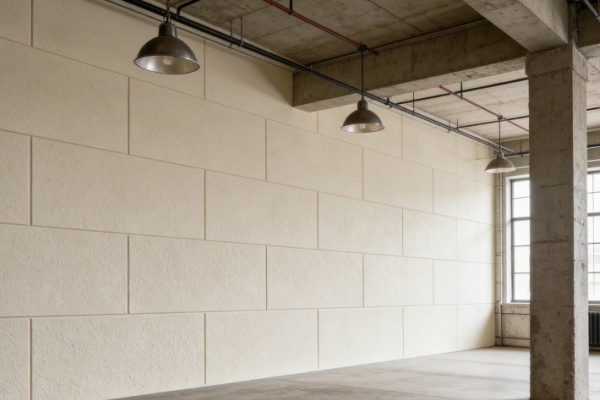
As a manufacturer who specializes in OEM/ODM porcelain tiles, I've seen a huge shift towards these advanced materials. Our clients, from importers to large-scale developers, are looking for solutions that solve problems.
Flexible porcelain tile does just that. Its biggest advantage is weight. It can be as little as 1/10th the weight of traditional stone. This is a game-changer. It means you don't need that massive, expensive steel support structure.
The tiles can often be applied directly to the substrate with a high-performance adhesive, drastically cutting down on structural costs, labor time, and the need for heavy machinery. This makes it an ideal solution for renovation projects, where adding tons of extra weight to an old building is simply not possible.
From a performance standpoint, as a manufactured product, we have total quality control. Our porcelain tiles have a water absorption rate of less than 0.5%, making them frost-proof and stain-resistant. The colors are fired at high temperatures, so they are UV-stable and won't fade.
Best of all, through our OEM services, we can replicate the look of almost any natural stone, giving you design consistency across thousands of square meters—something natural stone can never guarantee.
| Feature | Natural Stone | Our Flexible Porcelain Tile |
|---|---|---|
| Weight | Very Heavy (e.g., >80 kg/m²) | Very Light (e.g., <10 kg/m²) |
| Installation | Complex, requires steel frame, specialized labor | Simple, adhesive-based, faster, less labor |
| Structural Support | Extensive and expensive | Minimal to none |
| Suitability for Renovation | Poor, due to weight | Excellent, lightweight and versatile |
| Design Consistency | Varies from slab to slab | Perfectly consistent, controlled in production |
| Cost (Overall Project) | Very High | Moderate |
Conclusion
Stone cladding looks incredible but is heavy, expensive, and complex. Modern alternatives like flexible porcelain tiles offer the same great look with fewer problems, making them a smarter choice for many projects.
Understanding the pros and cons of stone cladding can help you make an informed decision about its suitability for your building project. ↩