Traditional stone is beautiful but heavy and rigid. This makes installation difficult and costly. Flexible stone offers a revolutionary, lightweight alternative that solves these problems.
Flexible stone, also known as MCM (Modified Clay Material)1, is primarily made from natural inorganic materials2 like soil, stone powder, and construction waste. These raw materials are modified and bonded with special additives, then shaped and fired at controlled temperatures to create a lightweight, flexible product.
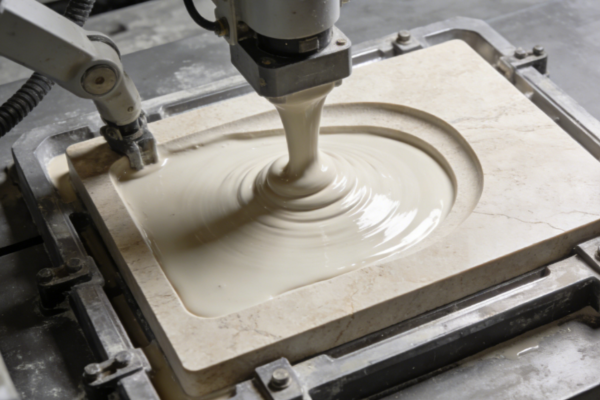
Now that you know the basic ingredients, you're probably wondering what makes this material so special. The manufacturing process3 is key to its unique properties. Let's explore how these raw materials are transformed and what benefits this brings to your projects. It's a fascinating process with incredible results.
How is flexible stone actually made?
The term "photochemical isomerization4" sounds complex and intimidating. This might make you question the material's reliability. But the core manufacturing process3 is actually a brilliant evolution of traditional ceramic-making.
Flexible stone is made by mixing raw materials like clay and stone powder. This mix is then modified and shaped. It is fired at over 400°C using a computer-controlled process5 that introduces flexibility, unlike the high-temperature sintering that makes traditional tiles hard and brittle.
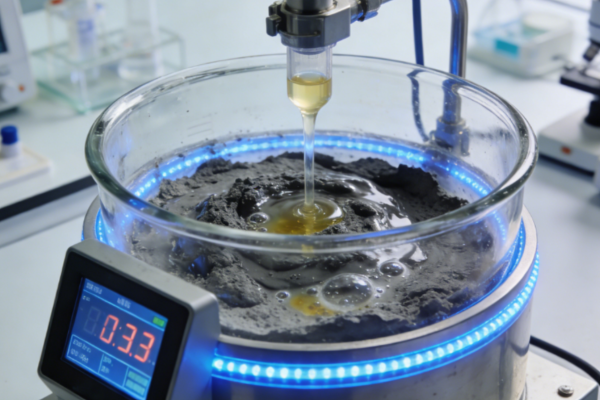
The journey from raw soil to a flexible stone panel is truly innovative. As a manufacturer, I've seen this process firsthand, and it’s what allows us to create such a unique product for our OEM partners. It begins with carefully selected inorganic powders. Think natural soil, stone dust, and even recycled construction materials like cement blocks and porcelain slag. This use of waste materials makes it a surprisingly sustainable option. We don't just melt them at extreme temperatures like with old-school tiles. The "magic" is in the modification.
The Core Transformation
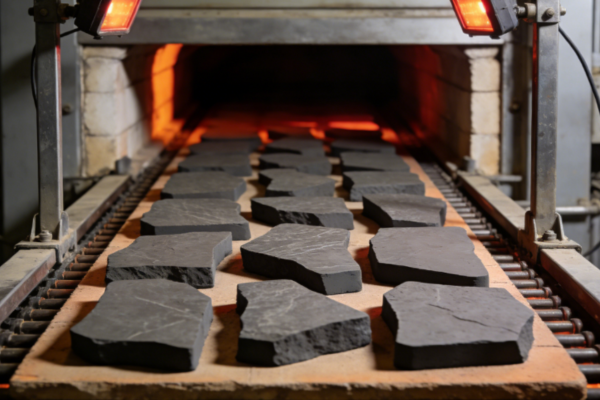
Instead of brute force heat, we use a special modification technology. This changes the molecular structure of the clay, making it receptive to a new form. After the raw materials are mixed and modified, the material is shaped into panels. Then, it passes through a unique firing process. The temperature is precisely controlled, usually around 400°C. This is much lower than the 1200°C or more needed for traditional ceramics, which saves a lot of energy. This controlled heating, often combined with light irradiation, is what gives the material its signature flexibility. The longer it's treated, the more pliable it becomes.
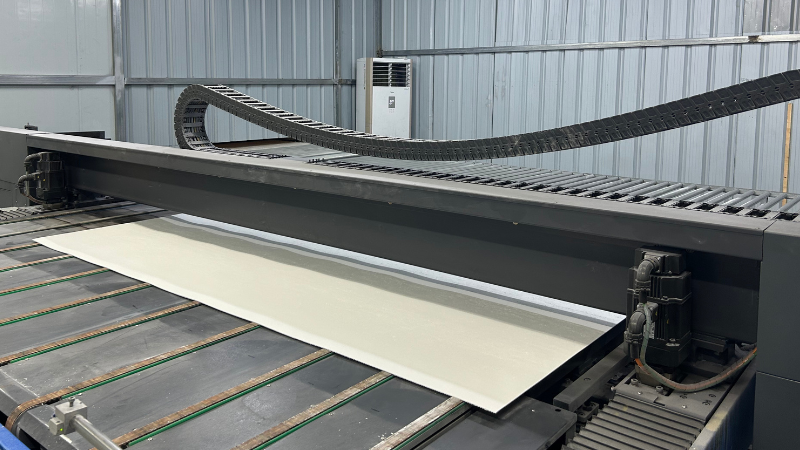
I remember the first time I walked through one of our partner factories. I was expecting giant, roaring kilns. Instead, it was a much cleaner, more controlled environment. Long conveyor belts moved sheets of material through chambers with specific light and heat, all managed from a central computer. It felt more like a high-tech lab than a brickyard. This precision is what allows us to guarantee consistency across massive orders for our international clients.
Here’s a simple comparison:
| Feature | Flexible Stone | Traditional Ceramic Tile |
|---|---|---|
| Main Material | Modified Clay/Inorganic Powder | Clay, Feldspar |
| Firing Temp | ~400°C | >1200°C |
| Key Property | Flexible, Elastic, Lightweight | Hard, Brittle, Heavy |
| Control | Computerized, Precise | High-Temp Kiln |
This process completely redefines what a "tile" can be, turning rigid earth into a versatile building skin.
What are the main benefits of using flexible stone?
Choosing facade materials is a huge decision. You worry about weight, installation complexity6, and long-term durability. A poor choice can lead to budget overruns and safety concerns.
The main benefits are its light weight, which reduces structural load and shipping costs. It's also easy to install, highly versatile in appearance, breathable, and very durable against weather and temperature changes. These features make it a safe, efficient, and adaptable building material.
Having worked with countless B2B clients, from building material distributors to construction contractors, I've seen how the advantages of flexible stone solve real-world problems. It’s not just about looks; it's about performance and practicality. Let's break down the most significant benefits we offer our OEM partners.
Practical Advantages in Application
The first thing contractors notice is the weight. At just 3-6 kg per square meter, it's about one-sixth the weight of standard ceramic tiles. For a 30-story building renovation project we supplied, using flexible stone saved the client from having to do costly structural reinforcements. That alone was a huge budget win. This light weight also makes handling on-site much safer and reduces transportation costs. Installation is also faster. We had a contractor who finished a large commercial facade two weeks ahead of schedule. His team loved working with it because they could cut it with a utility knife and didn't need heavy lifting equipment. It simply gets applied with a special adhesive.
Performance and Design Freedom
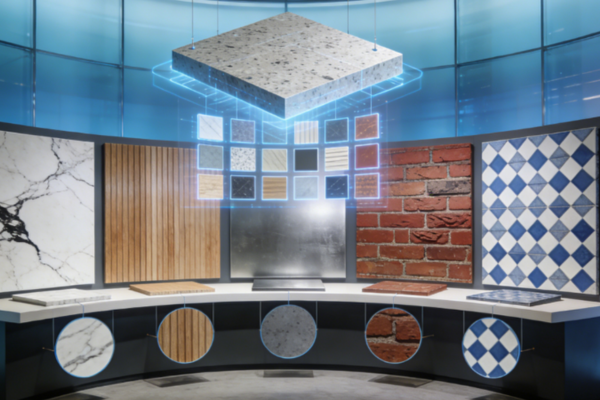
Beyond installation, its performance is key. The material is breathable, which helps regulate humidity and prevents moisture from getting trapped in the walls. It's also incredibly durable. We have installations in Southeast Asia with intense sun and humidity, and others in Northern Canada with extreme freeze-thaw cycles. The material performs exceptionally well in both, proving its incredible weather resistance without cracking or fading. This versatility extends to aesthetics. As an ODM supplier, this is where we really shine. One of our OEM clients in Europe wanted to launch a product line that looked like reclaimed barn wood. We developed a custom texture and color profile7 for them that became their bestseller. You simply can't get that level of custom detail with concrete or stucco.
Here’s a summary of its core strengths:
| Benefit | Impact on Projects |
|---|---|
| Lightweight | Safer handling, less structural stress, lower shipping costs. |
| Easy Installation | Faster project completion, lower labor costs, no heavy machinery. |
| Versatile | Mimics various materials (wood, stone, leather), broad design options8. |
| Durable | Resists weather, UV, and freeze-thaw; long lifespan, low maintenance. |
Are there any downsides to flexible stone?
No material is perfect for every single application. It's easy to get excited about the benefits, but ignoring the potential downsides can lead to disappointment later on.
Yes, there are a couple of downsides. Flexible stone has a lower surface hardness than traditional tiles, making it more susceptible to scratches from sharp objects. It can also be more expensive initially due to the complex manufacturing process3 and higher raw material costs.
I believe in being upfront with my B2B partners. While flexible stone is a fantastic material, it's important to understand its limitations to use it correctly. There are two main points we always discuss with clients before they commit to a large-volume order for their brand or project.
Surface Hardness
First, its flexibility comes at the cost of surface hardness. It's not as hard as porcelain or stone. This means it can be scratched by sharp, abrasive objects. This is why we always consult with our clients on the application. For a hotel lobby wall, an office interior, or a residential feature wall, it's perfect. For the floor of a high-traffic commercial kitchen or a mechanic's garage? We would recommend a different material. It's all about using the right tool for the right job. For many commercial wall applications where durability is a concern, we can work with our OEM partners to develop a protective top coating9 that adds an extra layer of scratch resistance without compromising flexibility.
Initial Cost
Second, the price point is generally higher than standard ceramic tiles. The conversation about price is always about Total Cost of Ownership (TCO)10. Yes, the per-square-meter cost for the material might be higher. This is due to the advanced modification technology, specialized raw materials, and the computer-controlled production process. However, when you factor in lower shipping costs (because it's so light), no need for heavy machinery on-site, and faster installation (which means fewer labor hours), the overall project cost is often very competitive. We help our clients run these numbers to see the full picture. The upfront investment in a higher-quality, easier-to-install material often pays off by reducing costs in other areas of the project budget.
| Consideration | Detail & Mitigation |
|---|---|
| Hardness | Softer than ceramic; can be scratched. Best for walls and low-impact areas. A protective coating can be added. |
| Price | Higher initial material cost. Offset by savings in shipping, labor, and structural requirements. |
Conclusion
Flexible stone is an innovative material made from modified clay. It offers incredible benefits in weight and flexibility, but it's important to consider its hardness and cost for your project.
Learn about MCM, its composition, and how it serves as a sustainable alternative in construction. ↩
Discover the role of natural inorganic materials in creating sustainable building products. ↩
Understand the innovative manufacturing process that gives flexible stone its unique properties. ↩
Delve into the complex process of photochemical isomerization and its significance in material flexibility. ↩
Explore how computer-controlled processes enhance precision and efficiency in manufacturing. ↩
Explore the factors that influence the ease of installation for various building materials. ↩
Learn how custom textures and colors can elevate the aesthetic appeal of building materials. ↩
Explore the versatility of flexible stone in achieving various aesthetic designs. ↩
Discover how protective coatings enhance the durability of flexible stone. ↩
Understand how TCO can influence material selection and project budgeting. ↩