Natural Stone Wallpaper?
Why B2B Projects Are Turning to Flexible Stone (Soft Ceramic)
Many architects, contractors, and sourcing managers search for “natural stone wallpaper” when they are actually looking for a lightweight, flexible, stone-like wall material.
In reality, natural stone wallpaper does not exist.
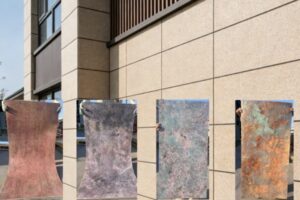
What the global construction and renovation industry is adopting instead is Flexible Stone, also known as Soft Ceramic (Flexible Stone Material) — a new-generation architectural surface designed for modern B2B projects.
Is Natural Stone Wallpaper Real?
No.
Wallpaper is a decorative surface made from paper, vinyl, or fabric. It may look like stone, but it lacks:
- Texture
- Durability
- Fire resistance
- Exterior performance
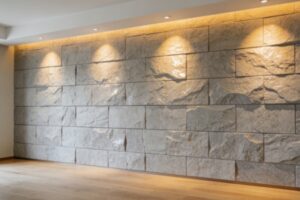
What buyers truly want is the appearance of natural stone combined with the installation convenience of wallpaper.
That demand is exactly where Flexible Stone / Soft Ceramic comes in.
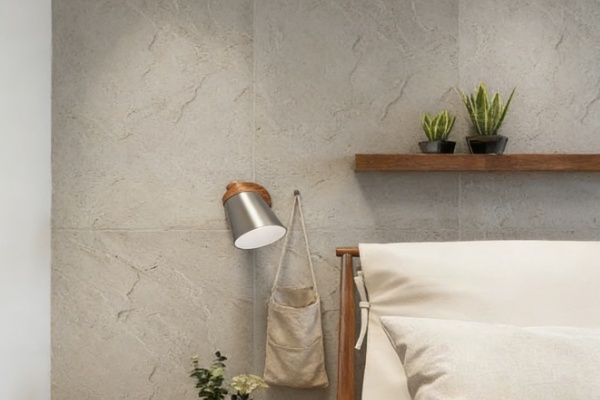
What Is Flexible Stone (Soft Ceramic)?
Flexible stone, often referred to as soft ceramic, is an eco-friendly architectural material made by compounding:
- Natural stone powder
- High-performance polymer materials
This advanced manufacturing process allows the material to retain the natural texture, color, and visual depth of stone, while achieving properties that traditional stone cannot offer.
Key Characteristics of Flexible Stone
- Ultra-lightweight: Over 70% lighter than traditional stone
- Ultra-thin: Thickness typically 1–3 mm
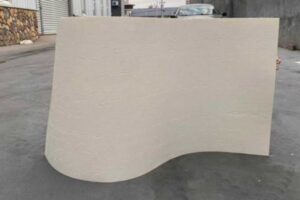
- Flexible & bendable: Can wrap around curved and irregular surfaces
- Cuttable: Easy to trim on-site
- Large-format sheets: Faster coverage, fewer joints
Flexible stone dramatically expands where and how stone-like materials can be used.
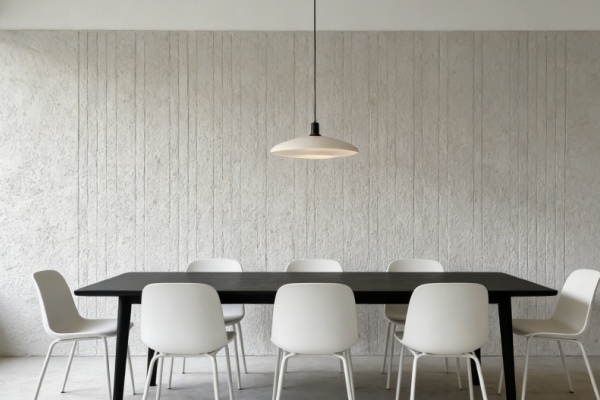
Flexible Stone vs Traditional Stone vs Wallpaper
| Feature | Wallpaper | Traditional Stone | Flexible Stone / Soft Ceramic |
|---|---|---|---|
| Material | Printed decorative layer | Solid natural stone | Stone powder composite |
| Thickness | < 1 mm | 15–30 mm | 1–3 mm |
| Weight | Very light | Very heavy | Ultra-light |
| Flexibility | Yes | No | Yes |
| Stone texture | No | Yes | Yes |
| Curved surfaces | Yes | No | Yes |
| Installation speed | Fast | Slow | Fast |
| Exterior suitability | No | Yes | Yes |
| B2B scalability | Limited | Costly | Excellent |
Why Flexible Stone Is Ideal for B2B & Export Projects
For commercial developments, large-scale renovations, and international projects, material efficiency matters as much as aesthetics.
1. Significant Weight Reduction
Flexible stone is over 70% lighter than traditional stone, which means:
- Lower shipping costs
- Easier handling on site
- Reduced structural load
- Ideal for high-rise and retrofit projects
This makes it especially attractive for export-oriented supply chains.
2. Faster Installation & Lower Labor Cost
Thanks to its thin, flexible structure:
- No heavy stone cutting equipment is required
- Installation can often be done directly over existing surfaces
- One installer can handle large areas efficiently
For contractors, this results in:
- Shorter project cycles
- Reduced labor dependency
- Lower overall installation cost
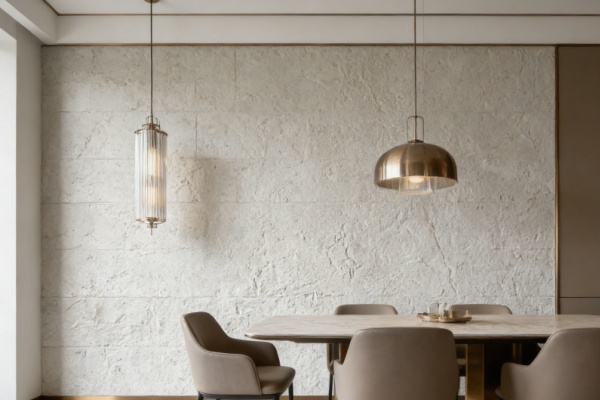
3. Design Freedom for Architects
Flexible stone can be applied to:
- Curved walls
- Columns and pillars
- Elevators
- Feature walls
- Irregular architectural surfaces
Design limitations imposed by rigid stone panels are eliminated.
4. Interior & Exterior Performance
When properly specified, flexible stone offers:
- Weather resistance
- UV stability
- Fire performance compliance
- Long-term durability
It is suitable for both interior and exterior wall applications across commercial and residential projects.
Common Applications of Flexible Stone
Flexible stone is widely used in:
- Commercial facades
- Hotel and hospitality interiors
- Retail chains
- Office buildings
- Residential developments
- Renovation and retrofit projects
Its combination of natural stone appearance + modern engineering performance makes it a preferred choice in contemporary construction.
When Flexible Stone Is Not the Best Option
A professional B2B supplier should be transparent.
Flexible stone is not designed for:
- Load-bearing structures
- Heavy-impact flooring
- Areas requiring extreme abrasion resistance
In these cases, full-body stone or porcelain slabs may be more appropriate.
Why the Global Market Is Moving Toward Flexible Stone
Modern construction is evolving toward:
- Lightweight systems
- Faster installation
- Lower environmental impact
- Smarter material usage
Flexible stone (soft ceramic) aligns perfectly with these trends by delivering stone aesthetics without stone limitations.
About YASIQI
YASIQI focuses on export-grade flexible stone and soft ceramic solutions for B2B clients worldwide.
We support:
- Distributors
- Contractors
- Developers
- OEM and private label partners
Our products are designed to meet project-level requirements, combining consistent quality, scalable production, and reliable global supply.
If you are sourcing a flexible, stone-like wall solution for commercial or large-scale applications, flexible stone is no longer an alternative — it is the future.
Looking for a Flexible Stone Supplier?
Contact YASIQI to discuss:
- Bulk orders
- Project specifications
- Custom textures and finishes
- Export and logistics support