Is your garage floor struggling to keep up with heavy vehicles, oil spills, and constant wear? Selecting the right surface is the difference between a dusty workshop and a high-end showroom. As a professional who has seen every coating fail, I can tell you that porcelain garage floor tiles are the ultimate solution for unmatched durability and style. In this guide, you’ll learn exactly why porcelain outperforms epoxy and how to achieve a professional finish that lasts a lifetime. Let’s dive right in.
What Are Porcelain Garage Floor Tiles?
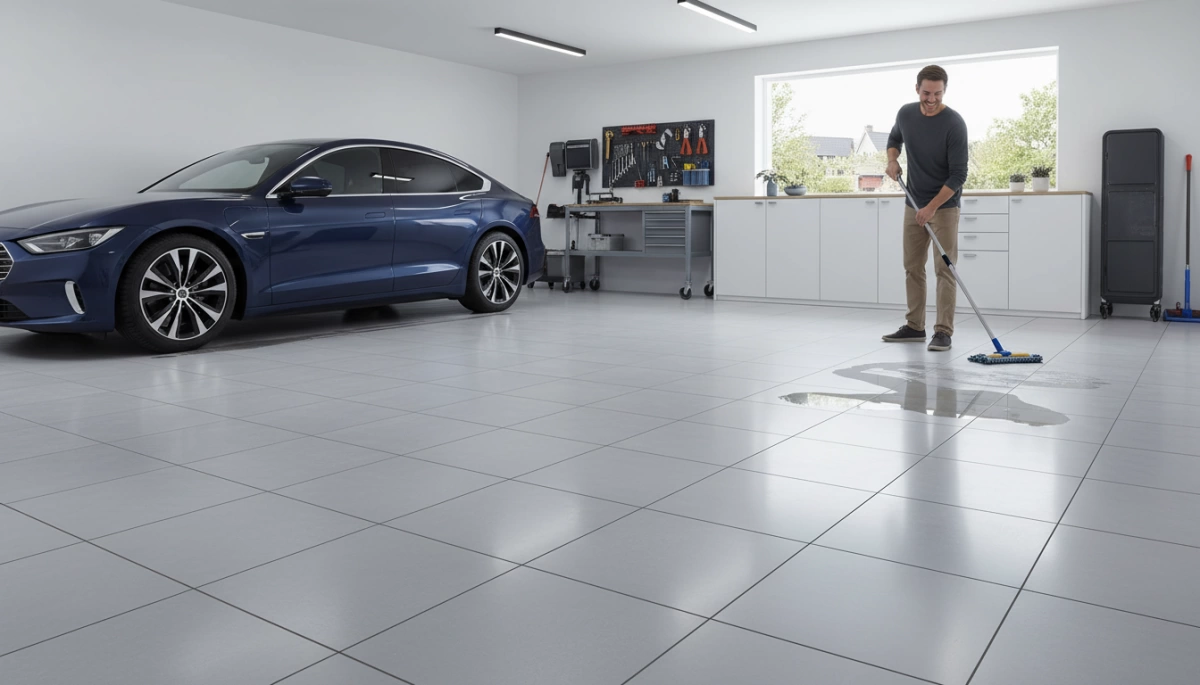
Porcelain garage floor tiles represent the pinnacle of high-performance garage flooring solutions. Unlike standard residential tiles, these are engineered to withstand the extreme pressures of vehicular traffic, chemical spills, and fluctuating temperatures. They provide a sophisticated, showroom-quality finish while maintaining the ruggedness required for a functional workspace.
What is Porcelain Tile Made Of?
Porcelain is a specialized subtype of ceramic, but it is far more dense and durable. The manufacturing process involves:
- Refined Raw Materials: A precise blend of fine kaolin clay, feldspar, and quartz sand.
- High-Pressure Pressing: The dust is compressed under immense pressure to eliminate air pockets.
- Extreme Kiln Firing: Tiles are fired at temperatures reaching 2,200°F to 2,500°F.
This process results in a vitrified material with an incredibly low water absorption rate (less than 0.5%), making it virtually impervious to moisture and frost.
How Thick Should Garage Porcelain Be?
To ensure long-term structural integrity under the weight of SUVs, trucks, and heavy machinery, thickness is a critical specification.
- Standard Residential Use: A minimum thickness of 8mm to 10mm is recommended for most home garages.
- Heavy-Duty or Commercial Use: For high-traffic environments or heavy equipment, 20mm (2cm) porcelain pavers offer superior load-bearing capacity.
- Technical Strength: Beyond thickness, look for tiles with high abrasion resistance and a high breaking strength rating to prevent cracking under point loads like jack stands.
Why Choose Porcelain Flooring for Your Garage?
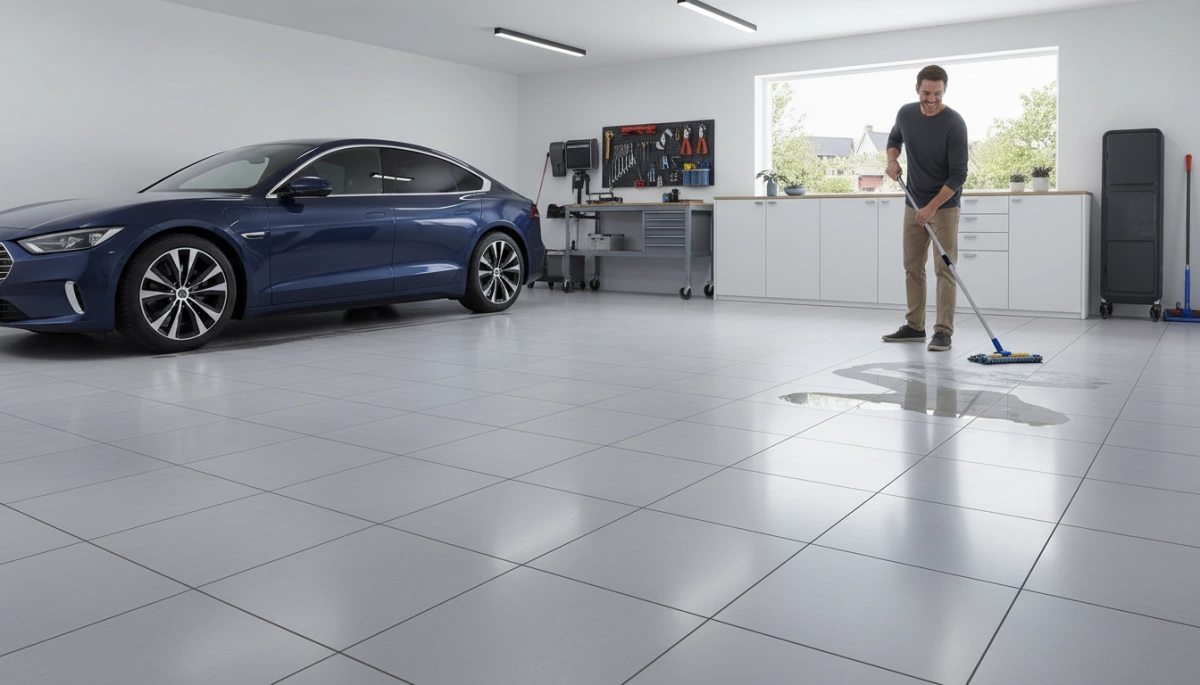
We believe your garage should be as tough as the vehicles parked inside it. Choosing porcelain garage floor tiles isn’t just about aesthetics; it’s about installing a surface that outperforms almost every other material on the market. From handling heavy SUVs to resisting chemical spills, these tiles are built for the demands of a high-traffic workspace.
Unmatched Durability for Vehicles and Heavy Tools
Porcelain is incredibly dense, making it the ideal garage flooring for heavy-duty use. Unlike standard ceramic, these tiles are fired at extreme temperatures to ensure high abrasion resistance. They won’t crack under the weight of a heavy truck or shatter if you drop a wrench.
- High Load Capacity: Easily supports the weight of multiple vehicles and heavy machinery.
- Impact Resistant: Denser than stone or ceramic, reducing the risk of chips.
- Scratch Proof: Resists marks from kickstands, floor jacks, and rolling toolboxes.
Non-Porous, Waterproof, and Stain-Resistant
One of the biggest headaches with concrete is how it soaks up oil and chemicals. Porcelain garage floor tiles solve this because they are virtually non-porous. Spilled motor oil, brake fluid, or road salt stays on the surface rather than seeping into the floor.
| Feature | Porcelain Tiles | Standard Concrete |
|---|---|---|
| Water Absorption | Less than 0.5% | High (Porous) |
| Stain Resistance | Excellent | Poor (Stains easily) |
| Chemical Resistance | High | Low (Corrodes) |
| Moisture Barrier | Waterproof | Absorbs moisture |
Easy Cleaning and Effortless Maintenance
We know you’d rather spend time working on your car than scrubbing the floor. Maintaining these tiles is simple. Because the surface is smooth and sealed by the firing process, dirt and grime have nowhere to hide.
- Sweep and Mop: Most messes come up with a simple broom or a damp mop.
- Pressure Washable: For deep cleans, you can safely use a pressure washer.
- No Re-sealing: Unlike epoxy or natural stone, porcelain never needs to be waxed or resealed.
Long-Term Value vs. Upfront Cost
While the initial investment for porcelain garage floor tiles might be higher than a DIY paint kit, the long-term savings are massive. Epoxy coatings often peel or “hot-tire pick up” within a few years. Porcelain is a permanent flooring solution that lasts as long as the house itself. You pay for the installation once and never have to worry about your garage floor again.
Porcelain Garage Tiles vs. Other Flooring Options
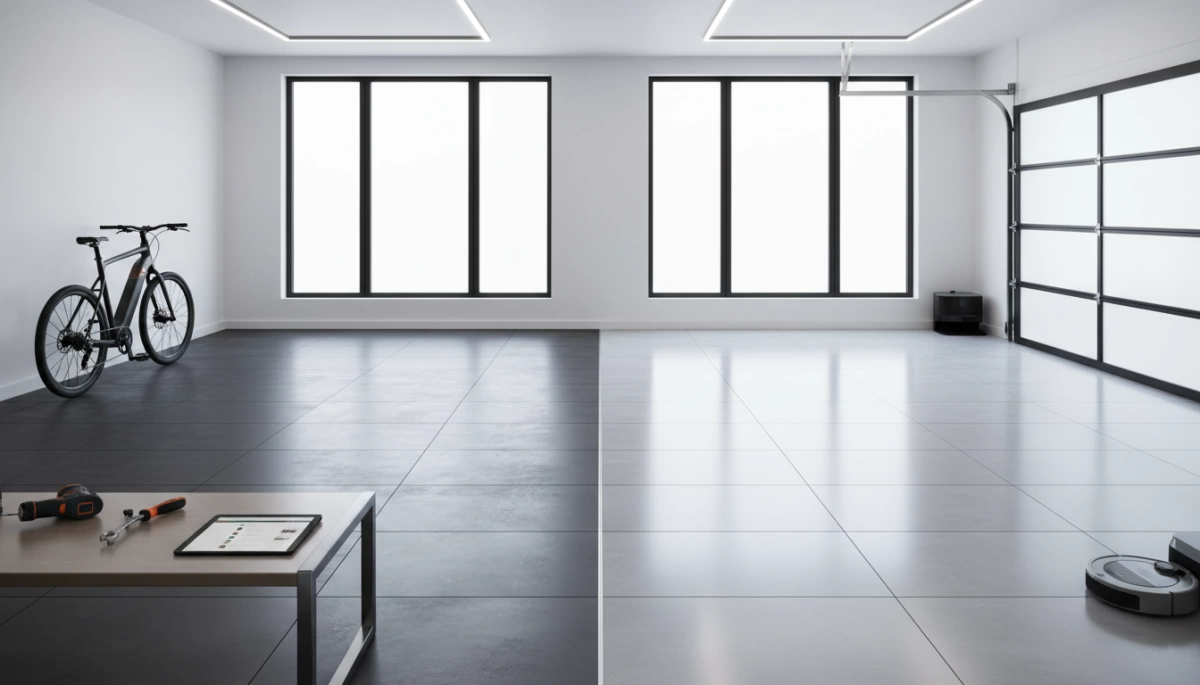
When choosing porcelain garage floor tiles, you are looking for a permanent solution rather than a temporary fix. Most garage flooring options fail because they cannot handle the weight of a vehicle or the chemicals found in a typical workshop. I have compared the most common alternatives to help you see why porcelain stands out.
Porcelain vs. Epoxy and Polyaspartic Coatings
While coatings are popular, they are notorious for failing over time. Even high-end polyaspartic coatings can eventually peel if the concrete wasn’t prepped perfectly.
- Longevity: Epoxy typically lasts 3–5 years before showing wear; porcelain lasts decades.
- Chemical Resistance: Porcelain is immune to “hot tire pick-up,” where warm tires peel the coating off the floor.
- Maintenance: Coatings can dull and scratch; porcelain maintains its finish regardless of foot or vehicle traffic.
Porcelain vs. Ceramic Garage Tiles
Many people mistake ceramic for porcelain, but in a garage setting, the difference is critical.
| Feature | Ceramic Tile | Porcelain Garage Tile |
|---|---|---|
| Density | Lower (Porous) | High (Impervious) |
| Strength | Brittle; prone to cracking | High breaking strength for vehicles |
| Water Absorption | > 0.5% | < 0.05% (Frost-proof) |
| Color | Surface glaze only | Through-body color (scratches don’t show) |
Ceramic is simply not rated for the weight of a car. If you drop a heavy wrench on ceramic, it will likely shatter. Porcelain is engineered to handle that impact.
Porcelain vs. Interlocking Plastic Tiles
Plastic tiles are often chosen for DIY installation, but they come with significant trade-offs in terms of cleanliness and feel.
- The “Hollow” Sound: Plastic tiles click and clack when walked on. Porcelain feels solid and permanent, just like the foundation of your home.
- Hygiene: Interlocking plastic tiles have gaps that allow dirt, liquids, and road salt to settle underneath, leading to mold or odors. Porcelain is grouted and sealed, creating a seamless, sanitary surface.
- Aesthetics: Plastic looks like a playroom; porcelain garage floor tiles create a high-end showroom finish that adds actual value to your property.
Design Ideas and Customization for Porcelain Floors
Your garage doesn’t have to look like a dusty storage unit. With porcelain garage floor tiles, you can transform a utility space into a high-end extension of your home. Because these tiles come in a massive variety of finishes, you have the creative freedom to design a space that looks like a professional gallery or a rugged workshop.
Modern and High-End Garage Floor Tile Ideas
To achieve a contemporary look, many of our clients lean toward large-format tiles. These minimize grout lines, creating a sleek, seamless appearance that makes the garage feel larger.
- Industrial Chic: Use concrete-look porcelain for a raw, urban vibe.
- Wood-Look Planks: High-definition porcelain can mimic hardwood, giving your garage a warm, “den-like” feel without the risk of rot or warping.
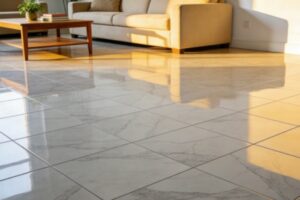
- Polished Stone: For a luxury car collection, marble-effect porcelain provides that high-gloss, elite aesthetic found in professional showrooms.
Choosing the Right Patterns, Textures, and Colors
The right choice depends on how you use the space. While aesthetics matter, functionality should guide your selection of colors and textures.
- Darker Grays and Anthracite: These are the gold standard for hiding tire marks and road grime.
- Matte and Textured Finishes: We recommend a natural or “grip” finish to ensure the floor isn’t slippery, especially if you live in a climate with rain or snow.
- Checkerboard Patterns: A classic racing look using alternating black and white or gray and black tiles never goes out of style.
Creating a Showroom Finish for Your Garage
To get that true “showroom” result, the secret lies in the details. Porcelain garage floor tiles allow for precision that coatings simply can’t match.
- Consistent Grout Lines: Use matching grout colors to make the floor look like one solid surface.
- Integrated Lighting: Pair your new floor with overhead LED hex lights to make the porcelain’s finish pop.
- Border Accents: Use a contrasting tile color around the perimeter of the room to frame your vehicles and give the installation a custom, professional touch.
Installing Porcelain Tiles in Your Garage
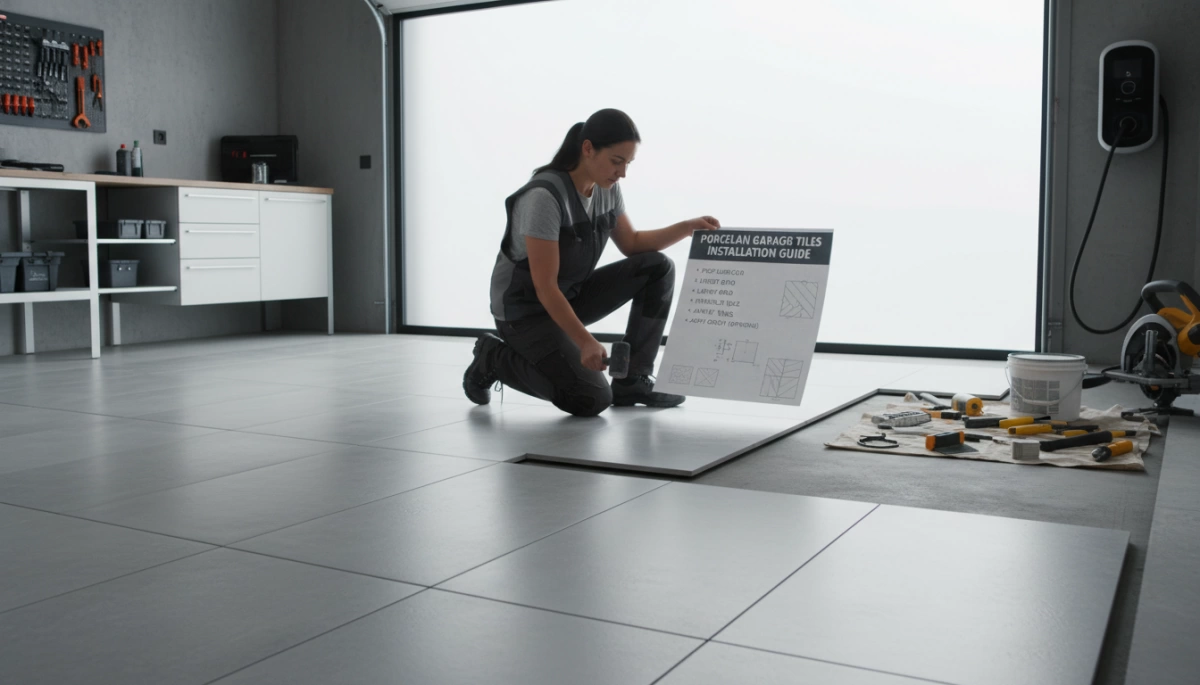
Installing porcelain garage floor tiles requires a solid foundation to ensure they last a lifetime. Unlike temporary mats, this is a permanent upgrade that demands proper technique to handle the weight of vehicles and equipment.
Can You Install Over Cracked or Uneven Concrete?
You cannot install porcelain directly over moving cracks or a bumpy floor. Because porcelain is rigid, any movement in the concrete slab will transfer to the tile, causing it to snap.
- Minor Cracks: These must be treated with a crack isolation membrane before tiling.
- Uneven Surfaces: Use a high-strength self-leveling compound to create a flat plane.
- Cleanliness: The slab must be free of oil, grease, and old paint for the adhesive to bond correctly.
Special Installation Requirements for High-Traffic Areas
For a garage to maintain high abrasion resistance and support heavy SUVs or toolboxes, the bond between the tile and the floor must be perfect. We use a “back-buttering” technique to ensure 100% mortar coverage, leaving no air gaps that could lead to cracking under pressure.
| Requirement | Why It Matters |
|---|---|
| Full Mortar Bed | Prevents “hollow spots” that break under car weight. |
| Large Format Thin-set | Supports heavier tiles and prevents sagging. |
| Epoxy Grout | Resists oil stains and chemicals better than standard grout. |
| Expansion Joints | Allows the floor to breathe during temperature shifts. |
How Long Does Installation Take?
While a DIY installation is possible for those with the right tools, it is a multi-day process. You cannot rush the curing time if you want the floor to stay put.
- Preparation (1 Day): Cleaning the slab and repairing any structural issues.
- Setting Tiles (1-2 Days): Carefully laying the porcelain and ensuring level lines.
- Grouting (1 Day): Filling the joints and cleaning off the haze.
- Curing (3 Days): You can usually walk on the floor after 24 hours, but wait at least 72 hours before driving a vehicle onto your new garage flooring.
Frequently Asked Questions
Are Porcelain Tiles Slippery When Wet?
It depends on the finish you choose. While polished porcelain can be slick, most porcelain garage floor tiles are manufactured with a matte or textured surface specifically to prevent slips.
- Look for the R-Rating: For a garage, we recommend an R10 or R11 slip-resistance rating.
- Textured Finishes: These provide excellent traction even when tires are dripping with rain or snow.
Can I Replace Just One Damaged Tile?
Yes, this is a major advantage over epoxy or concrete coatings. If a tile gets chipped or cracked by a heavy impact, you can replace it without touching the rest of the floor.
- Keep Spares: Always buy 10% more than you need so you have matching tiles from the same production batch.
- Simple Fix: You just chip out the broken piece, scrape away the old adhesive, and set a new tile in its place.
Do They Require Special Sealants?
The tiles themselves do not. Because porcelain garage floor tiles are fired at incredibly high temperatures, they are dense and non-porous. They won’t absorb oil, grease, or road salt, so there is no need to apply a surface sealer.
- Grout Care: While the tile is “set and forget,” we recommend using a high-quality epoxy grout.
- Stain Resistance: Epoxy grout is waterproof and stain-resistant, ensuring the lines between your tiles stay as clean as the porcelain itself.