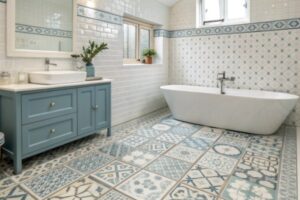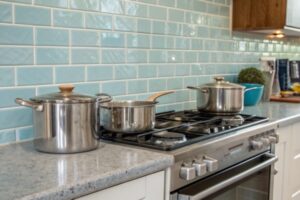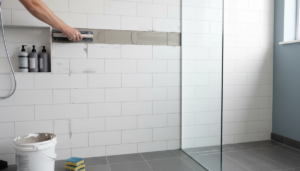
You might already know that sourcing building materials overseas can save you an absolute fortune…
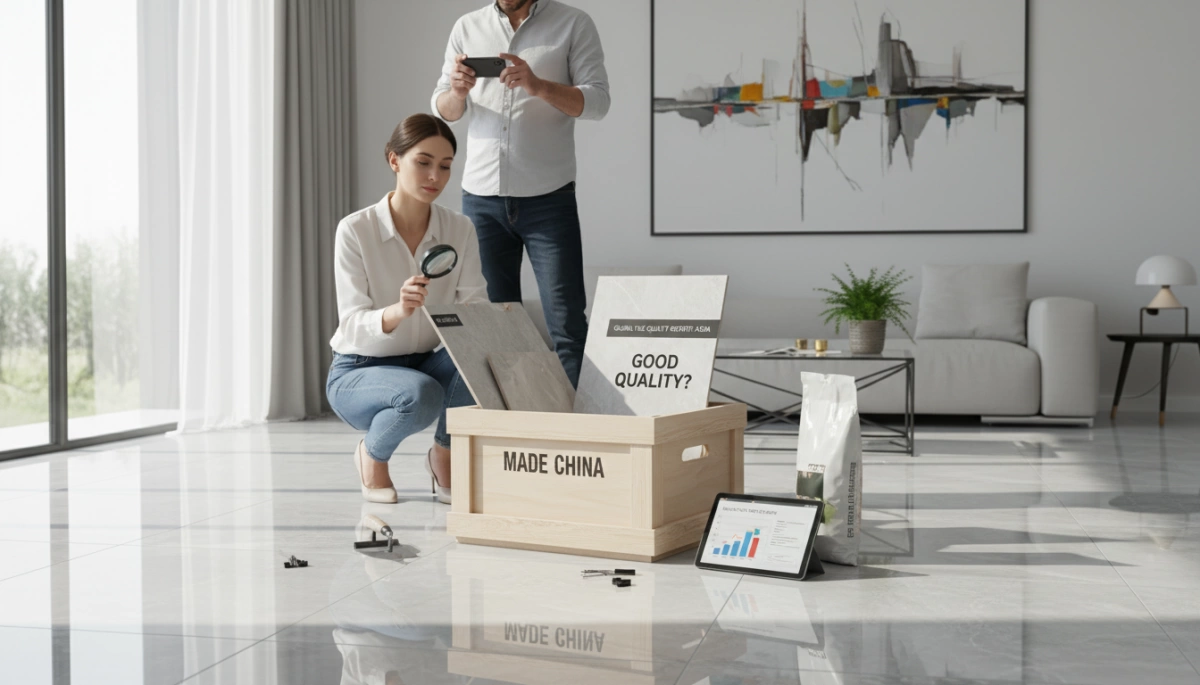
But it begs one massive question: Are porcelain tiles made in China good?
Well, you’re in for a treat because I’ve put together the complete breakdown to help you decide.
Whether you are trying to balance affordability with long-term durability, comparing Chinese tiles vs. Italian and Spanish tiles, or trying to figure out exactly how to buy and import tiles from China safely, getting the right materials can make or break your project.
In this guide, you are going to learn the truth about their quality standards, the most popular types of Chinese porcelain tiles, and the common sourcing pitfalls you need to avoid.
Let’s dive right in.
Understanding the Material: Ceramic vs. Porcelain Tiles
Before determining if porcelain tiles made in China are good for your next project, it is essential to understand the core material. While both ceramic and porcelain are made from clay and hardened by heat, modern tile manufacturing processes create distinct performance gaps. Porcelain is fired at much higher temperatures using specialized clays, resulting in a tougher, premium product built to meet strict global market demands.
Key Differences in Density and Water Resistance
The most critical distinction between these materials lies in their structural density and water absorption rates. Porcelain is formulated from finer, highly refined clays, making it heavily compacted and virtually impervious to moisture. This structural integrity makes it the superior choice for high-traffic areas and a massive driver in global floor tile exports.
| Feature | Standard Ceramic Tiles | Porcelain Tiles |
|---|---|---|
| Material Composition | Coarser clay mixtures | Ultra-fine, specialized clays |
| Density | Moderate | Extremely High |
| Water Absorption | > 0.5% | ≤ 0.5% |
| Durability | Prone to chipping under heavy impact | Highly impact and scratch-resistant |
| Ideal Applications | Indoor walls, low-traffic residential floors | Heavy commercial traffic, outdoor use, wet areas |
Glazed vs. Full-Bodied Porcelain Finishes
When sourcing from top manufacturers, you will encounter two primary surface categories. Selecting the right finish is vital for long-term project success.
- Glazed Porcelain: Features a protective, non-porous liquid glass coating baked directly onto the surface. This technique allows for high-definition digital printing, bringing intricate wood, stone, and geometric designs to life. Note: Deep impacts may expose the uncolored clay base beneath the glaze.
- Full-Bodied (Through-Body) Porcelain: The pigment and mineral mixture run completely through the tile’s entire depth. Even under severe commercial wear and tear, surface scratches remain virtually invisible. This uncompromised consistency makes full-bodied tiles and large porcelain slabs the industry standard for demanding environments.
Why Choose Chinese Porcelain Tiles?
If you are asking, “Are porcelain tiles made in China good?“, the short answer is a confident yes. As a leading source for global floor tile exports, China has completely transformed its ceramic industry. We consistently see contractors, developers, and homeowners worldwide choosing these tiles because they offer an unbeatable mix of performance and price.
Quality Standards and Modern Manufacturing Technology
The industry has moved far beyond cheap, mass-produced goods. Today’s top factories utilize state-of-the-art tile manufacturing processes that rival leading European plants.
- Advanced Equipment: Facilities use high-tonnage presses and HD inkjet printers.
- Performance: The end products feature ultra-low water absorption rates, making them frost-proof and highly stain-resistant.
- Strict Tile Quality Control: Reliable suppliers now run automated laser checks for flatness, size accuracy, and tone consistency before anything gets packed.
Balancing Affordability with Long-Term Durability
You get tough, long-lasting materials without blowing your budget. Whether you need standard formats or massive, seamless porcelain slabs, Chinese manufacturing delivers incredible density and wear resistance. They hold up flawlessly under heavy daily wear, making the investment highly secure over the long term.
Wide Variety of Designs and Styles Available
The design versatility is massive. Whatever trend is hitting the global market, Chinese manufacturers are already producing it.
- Wood-Look: Gives you the warmth of timber but the durability of stone.
- Marble & Stone Look: High-end luxury finishes for a fraction of real stone prices.
- Modern Industrial: Matte and concrete finishes for contemporary spaces.
Cost-Effectiveness for Residential and Commercial Projects
The pricing structure is where Chinese tiles truly shine.
- Residential: Homeowners can achieve premium kitchen and bathroom designs without the luxury price tag.
- Commercial: Developers outfitting hotels, malls, or large apartment complexes save thousands on bulk orders, significantly improving their project ROI.
Major Tile Production Regions in China
Knowing where your tiles come from helps you gauge the quality. Here is a quick look at the primary production hubs:
| Production Region | Specialty & Market Position |
|---|---|
| Foshan (Guangdong) | The absolute “Ceramic Capital.” Premium quality, best designs, and highest standards. |
| Fujian | Known for rustic floor tiles and exterior wall tiles. |
| Shandong | Great for highly affordable, standard commercial tiles. |
| Jiangxi | A fast-growing hub focused on large-scale, cost-effective volume production. |
Does the Country of Origin Matter for Tiles?
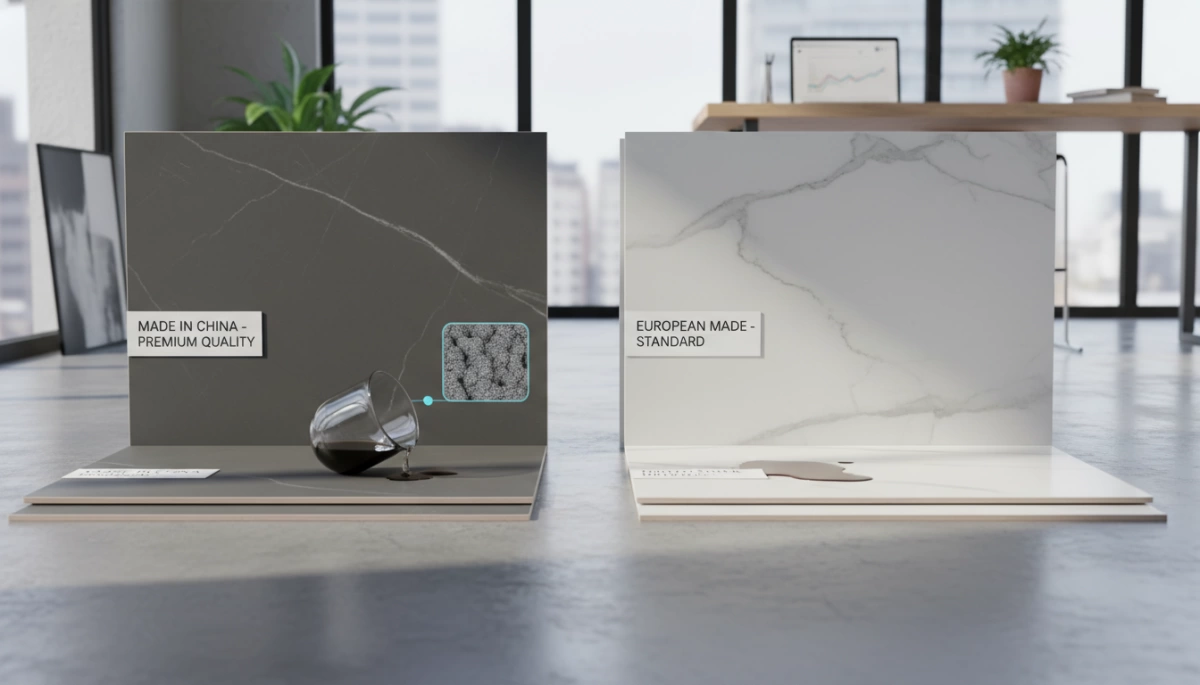
When people ask me, “Are porcelain tiles made in China good?“, my answer is a solid yes. The country of origin simply doesn’t dictate quality the way it used to. Thanks to advanced tile manufacturing processes, modern factories across the globe utilize the exact same cutting-edge machinery. Whether you are buying standard kitchen floors or massive, seamless porcelain slabs, what truly matters is the specific factory’s production standards, not the geographic location printed on the shipping crate.
Chinese Tiles vs. Italian and Spanish Tiles
For decades, Italy and Spain held the crown for premium ceramics. They still lead the industry when it comes to setting global design trends. However, Chinese manufacturers have aggressively closed the gap.
Here is a realistic breakdown of how they compare today:
- Design & Trendsetting: Italy and Spain often pioneer new, complex textures and patterns.
- Production Technology: Chinese factories regularly import and use the exact same Italian hydraulic press machines and high-definition inkjet printers.
- Market Value: Chinese floor tile exports dominate the global market because they deliver comparable structural integrity and visual appeal at a significantly lower price point.
The Importance of Quality Control and Certifications
The real secret to securing top-tier flooring isn’t picking the right country—it is rigorous tile quality control. When I evaluate a factory, I look straight at their spec sheets and international testing documentation.
Focus on these three core indicators to guarantee you are getting a premium product:
- Water Absorption Rate: True porcelain must have a water absorption rate of 0.5% or lower. This is the ultimate test of density, ensuring the tile is waterproof and highly stain-resistant.
- International Certifications: Look for standard ISO 9001, CE, or ISO 13006 certifications. These marks prove the factory follows strict, globally recognized safety and performance protocols.
- Precision Calibrations: Reliable manufacturers use laser-guided quality checks to ensure uniform thickness, perfectly rectified edges, and exact color consistency across every single batch.
Popular Types of Chinese Porcelain Tiles
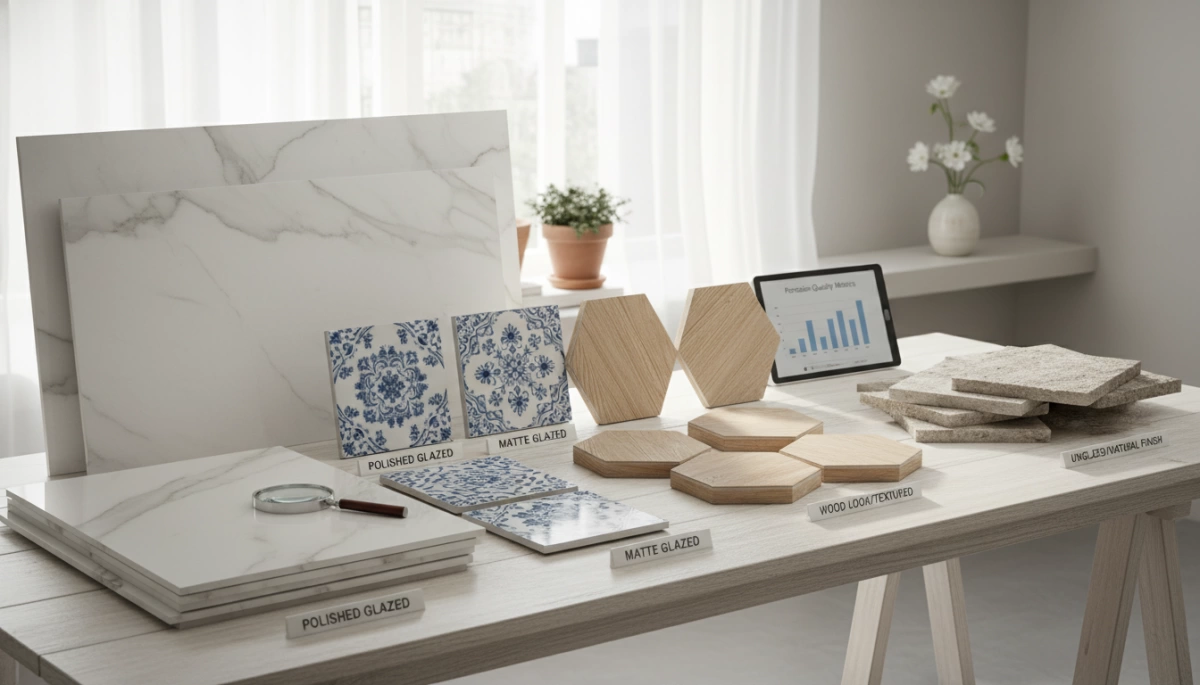
If you are wondering, are porcelain tiles made in China good, just look at the massive variety and high-tier quality dominating today’s floor tile exports. We constantly see manufacturers pushing the boundaries, producing everything from classic residential designs to ultra-modern commercial finishes.
Wood-Look and Stone-Look Porcelain Tiles
We all love the aesthetic of natural hardwood and authentic marble, but the real materials require heavy, expensive upkeep. Thanks to highly advanced tile manufacturing processes, Chinese wood-look and stone-look tiles replicate the exact grains and textures of natural materials without the daily hassle.
- Extreme Durability: They resist scratches, heavy impacts, and fading far better than real wood.
- Zero Upkeep: You get the luxury stone look without needing expensive sealants or specialized cleaners.
Large Format Floor Tiles
Big spaces demand big tiles. Oversized formats and massive porcelain slabs are currently top performers in the global market, especially for modern, open-concept builds.
- Seamless Aesthetics: Fewer grout lines instantly make any room look much larger, cleaner, and highly premium.
- High Versatility: These slabs work perfectly for expansive commercial floors, striking accent walls, and even durable kitchen countertops.
Outdoor and Anti-Slip Porcelain Tiles
For patios, pool decks, and commercial walkways, safety and weather resistance are non-negotiable. Strict tile quality control ensures these outdoor options meet rigorous international safety and durability standards.
- Low Water Absorption: With water absorption rates essentially at zero, these dense tiles will not absorb moisture or shatter during harsh winter freezes.
- Maximum Grip: Specially engineered textured finishes prevent slipping, keeping areas safe even when soaking wet.
- Stain Proof: The fired surface is completely impervious to outdoor dirt, mold, and chemical spills.
How to Buy and Import Tiles from China Safely
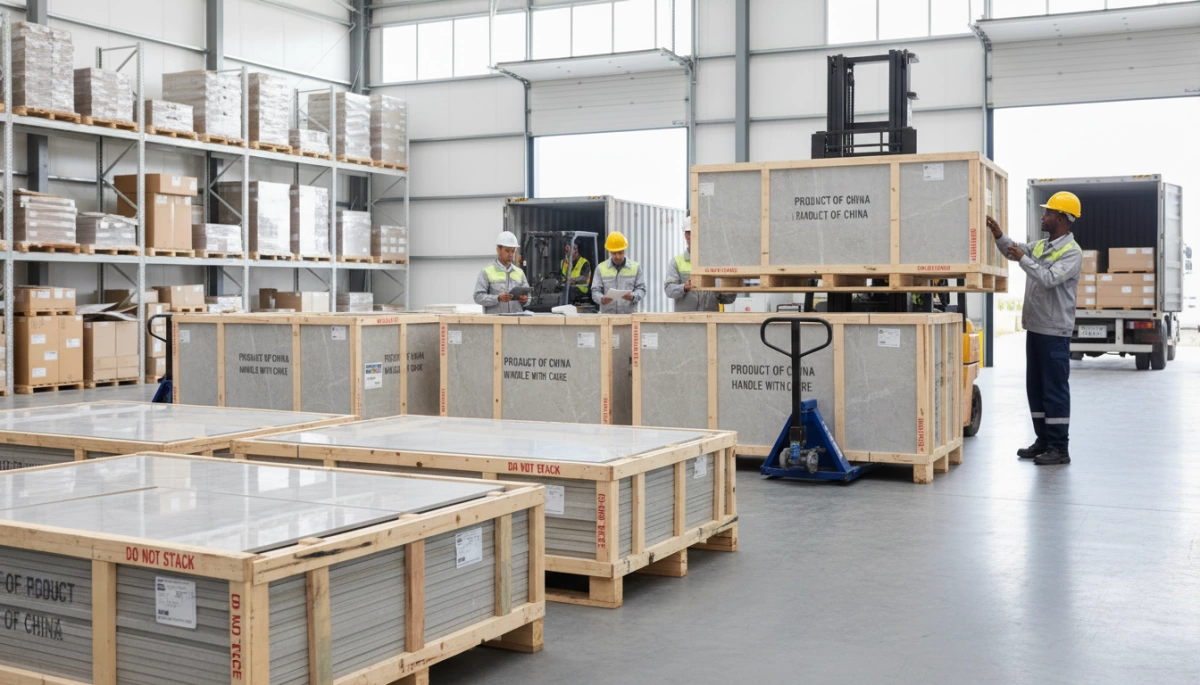
When people ask me, “Are porcelain tiles made in China good?” I tell them yes—but only if you know how to navigate the purchasing process. A safe import strategy is the backbone of a successful project, ensuring you get the quality you paid for without unexpected delays.
Finding Trusted Suppliers and Sourcing Agents
The global market for building materials is vast, and finding a reliable factory is your first major hurdle. A good local sourcing agent can act as your eyes and ears on the ground.
- Vet the factories: Take a close look at their specific tile manufacturing processes and facility certifications.
- Check their track record: Prioritize suppliers with a proven history of reliable floor tile exports to your country.
- Use a local agent: A trusted agent will physically verify tile quality control standards before your order ever gets loaded into a shipping container.
Before you place a massive order for large porcelain slabs, you must understand your local legal landscape. Tariffs can drastically alter your bottom line.
- Research local laws: Many regions, including the US and EU, have strict anti-dumping duties applied to Chinese ceramics.
- Consult a customs broker: I always rely on a licensed customs broker to handle the complex paperwork and prevent border hold-ups.
- Verify HS codes: Ensure your products are classified correctly based on features like their low water absorption rate to calculate precise tariff costs.
Estimating Shipping and Total Sourcing Costs
Tiles are incredibly heavy. Freight is going to be a substantial part of your final bill, so calculating the true landed cost upfront is critical.
- Quote Full Container Loads (FCL): Shipping less than a container load is rarely cost-effective for heavy materials.
- Factor in local logistics: Account for the trucking costs to move the cargo from your local port directly to your warehouse or job site.
- Secure marine insurance: Always insure your shipments to protect your investment against potential breakage during transit.
Common Pitfalls and How to Avoid Them
When clients ask me, “Are porcelain tiles made in China good?“, my answer is a solid yes—but only if you manage the sourcing process carefully. Even with today’s advanced tile manufacturing processes, international sourcing comes with logistical risks. Here is how I navigate the most common traps to ensure a smooth import experience.
Requesting Samples and Verifying Batch Consistency
Never skip the sample stage. What looks perfect in a digital catalog can look completely different under the lighting in your warehouse or project site.
- Order physical samples: Always verify the finish, texture, and color in person.
- Test the specifications: Independently check the water absorption rate to ensure it actually meets strict porcelain standards (under 0.5%).
- Confirm batch consistency: Tile colors can vary slightly between production runs. I always demand a pre-shipment sample from the exact batch being shipped to ensure rigorous tile quality control.
Ensuring Proper Packaging to Prevent Breakage
The biggest headache in floor tile exports is rarely the product itself; it is transit damage. Standard tiles and large porcelain slabs are incredibly heavy and fragile. If a supplier cuts corners on packaging to save a few dollars, you might open your container to find shattered inventory.
I always require my manufacturing partners to adhere to strict packaging guidelines before anything is loaded:
| Packaging Element | My Standard Requirement for Safe Transit |
|---|---|
| Pallets | Solid, fumigated wooden pallets built to handle heavy loads. |
| Corner Protection | Hard plastic or reinforced cardboard edge protectors on all pallets. |
| Wrapping | Heavy-duty shrink wrap securing the tiles tightly to the pallet. |
| Container Loading | Inflatable airbags or wooden bracing inside the shipping container to prevent any shifting during the ocean freight. |
Setting these exact packaging requirements in your initial contract prevents devastating losses and keeps your project timelines on track.