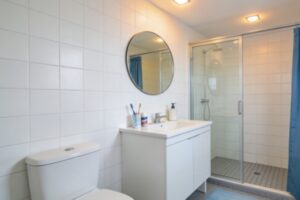
Bathroom and Shower Tiles for Commercial & Multi-Unit Projects
A Practical Specification and Selection Guide for B2B Buyers
Bathroom and shower areas are among the most demanding environments in any building project. Constant exposure to moisture, frequent cleaning, and high daily usage place strict requirements on tile performance, safety, and long-term durability.
For commercial, hospitality, multi-family, and mixed-use projects, selecting bathroom and shower tiles is not a matter of style alone. It is a technical and operational decision that directly affects safety, maintenance cost, and lifecycle performance.
This guide is written for B2B decision-makers—including developers, contractors, architects, and procurement teams—who need to specify bathroom and shower tiles that perform reliably at scale.
Who This Guide Is For
This article is intended for professionals involved in non-residential or multi-unit projects, including:
- Property developers and building owners
- General contractors and subcontractors
- Architects and interior designers
- Hospitality and facility management teams
- Procurement and sourcing managers
If your priority is risk control, compliance, and long-term value, this guide is designed for you.
Why Bathroom and Shower Tile Selection Is Critical in B2B Projects
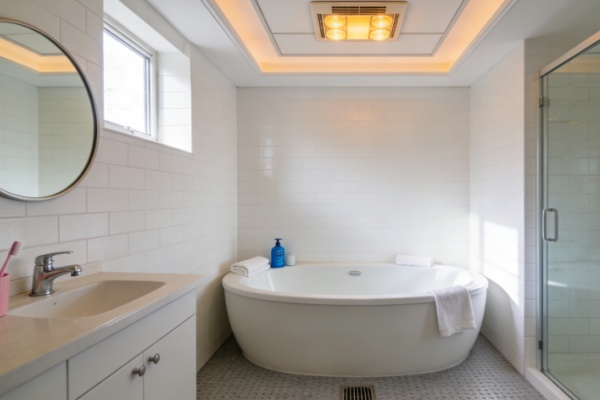
In commercial and multi-unit environments, bathrooms and showers are high-risk zones due to:
- Continuous moisture exposure1
- Slip-and-fall liability
- Intensive cleaning and chemical use
- High user turnover
Improper tile selection can result in increased maintenance costs, premature replacement, safety incidents, and operational downtime. Correct specification at the planning stage significantly reduces these risks.
Bathroom Floor Tiles: Performance First, Design Second
Bathroom floors in commercial and multi-unit projects must prioritize safety and durability over purely decorative considerations.
Key Requirements for Bathroom Floor Tiles
- Slip resistance suitable for wet conditions
- Low water absorption to prevent moisture damage
- High wear resistance for frequent foot traffic
- Ease of cleaning and maintenance
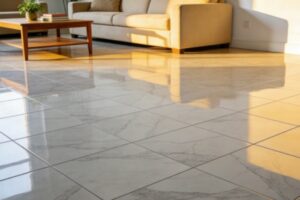
Porcelain tile is commonly specified due to its density, durability, and resistance to staining and moisture. Matte or textured surfaces2 are generally preferred to improve traction and reduce slip risk.
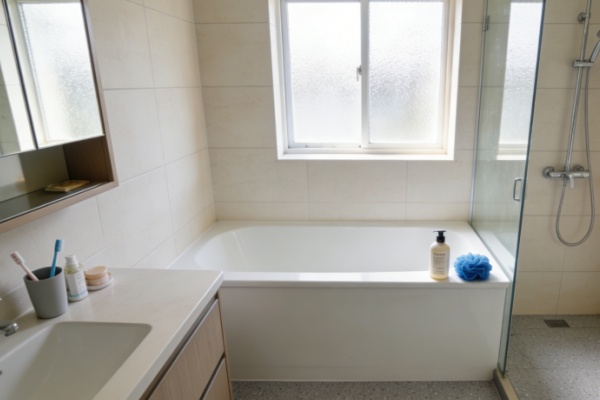
Shower Floor Tiles: Where Most Specification Errors Occur
Shower floors represent the most technically demanding tile application in bathroom design.
Critical Factors for Shower Floor Tiles
- Verified slip-resistance ratings3 for wet environments
- Smaller tile formats to improve drainage and slope control
- Textured or natural-finish surfaces to enhance grip
- Compatibility with waterproofing and drainage systems
Highly polished or smooth tiles, while visually appealing, are often unsuitable for commercial shower floors due to increased slip risk and maintenance challenges.
Bathroom Wall Tiles: Balancing Aesthetics and Maintenance
Bathroom wall tiles are exposed to moisture, cleaning agents, and frequent contact, especially in hospitality and shared facilities.
Key Considerations for Wall Tile Specification
- Resistance to moisture and cleaning chemicals
- Color and surface stability over time
- Grout joint minimization to reduce maintenance
- Visual consistency across large wall areas
Both matte and glossy finishes may be suitable for wall applications, provided cleaning protocols and lighting conditions are considered during design.
Commercial Shower Walls: Hygiene and Longevity
In commercial showers, wall tiles must support strict hygiene standards while maintaining appearance over time.
Recommended Characteristics
- Non-porous surfaces for easy sanitation
- Stain and chemical resistance
- Consistent sizing and calibration for large installations
- Compatibility with waterproof substrates
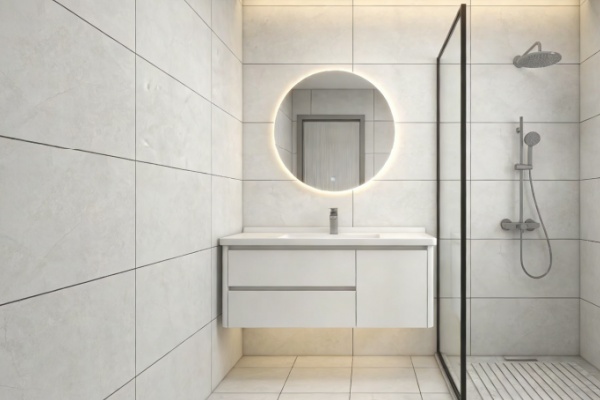
Large-format porcelain tile4s are increasingly specified to reduce grout lines and simplify long-term maintenance.
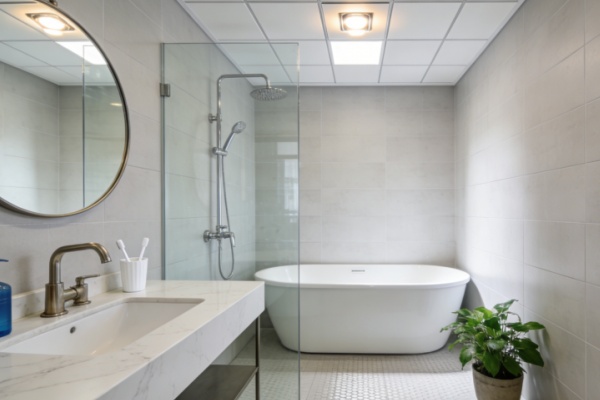
Bathroom and Shower Tiles: Commercial vs Residential Selection
Tiles marketed for residential bathrooms often fail to meet the performance requirements of commercial projects.
| Criteria | Residential Focus | Commercial / B2B Focus |
|---|---|---|
| Slip Resistance | Optional | Mandatory |
| Traffic Load | Low to Moderate | Moderate to Heavy |
| Maintenance Cycle | Occasional | Frequent |
| Lifecycle Expectation | Short to Medium | Long-Term |
| Specification Detail | Minimal | Critical |
For B2B projects, tiles should always be selected based on documented performance standards, not appearance alone.
Key Technical Specifications B2B Buyers Must Review
Before approving bathroom or shower tiles for a project, procurement and design teams should evaluate:
- Slip resistance ratings (DCOF / R-rating, where applicable)
- Water absorption rate
- Tile thickness and dimensional consistency
- Shade variation and batch control
- Compatibility with waterproofing systems
- Compliance with local building and safety codes
These factors directly influence installation quality, long-term performance, and liability exposure.
Total Cost of Ownership in Bathroom and Shower Areas
Initial tile cost represents only a portion of the total project expense.
Long-term cost drivers include:
- Installation labor complexity
- Cleaning frequency and labor intensity
- Replacement and repair cycles
- Operational downtime during maintenance
Durable, low-maintenance tiles often provide superior value over time, even when initial material costs are higher.
Common Mistakes in Commercial Bathroom and Shower Tile Projects
Despite careful planning, many projects encounter avoidable issues such as:
- Using decorative tiles not rated for wet commercial areas
- Overlooking slip resistance5 requirements
- Selecting finishes that show wear or residue quickly
- Inconsistent tile batches across large installations
Early coordination between designers, contractors, and suppliers is essential to prevent these problems.
Is Porcelain Tile the Right Choice for Your Project?
Porcelain tile is widely used in commercial bathrooms and showers due to its durability and moisture resistance. However, suitability depends on:
- Traffic volume and user profile
- Wet-area exposure level
- Maintenance resources
- Design intent versus operational reality
A clear understanding of these factors ensures porcelain tile4 is used where it delivers the greatest value.
Frequently Asked Questions (B2B Focus)
Are porcelain tile4s suitable for commercial shower floors?
Yes, when properly rated for slip resistance5 and installed with appropriate drainage and waterproofing systems.
Can wall tiles be used on shower floors?
In most cases, no. Wall tiles often lack the slip resistance5 and thickness required for floor applications.
How long do commercial bathroom tiles typically last?
With proper specification and installation, porcelain tile4s can last several decades in commercial environments.
Do large-format tiles reduce maintenance?
Yes. Fewer grout lines generally result in easier cleaning and lower long-term maintenance costs.
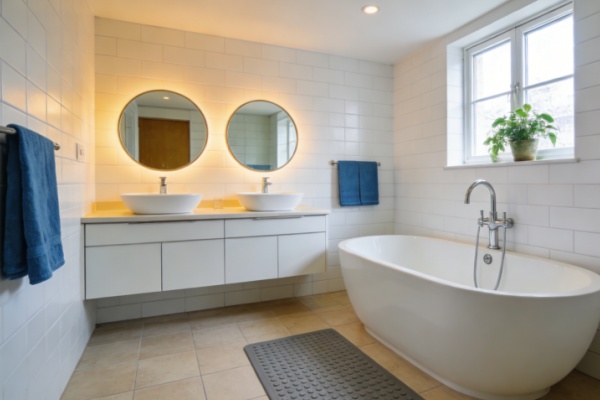
Final Thoughts
Bathroom and shower tiles in commercial and multi-unit projects must perform under constant stress while meeting safety, hygiene, and maintenance requirements.
By prioritizing technical performance, lifecycle value, and correct application, B2B buyers can reduce operational risk and ensure long-term success across their projects.
Selecting the right tile is not just a design decision—it is a strategic investment in building performance.
Understanding moisture exposure helps in selecting tiles that can withstand constant wet conditions, ensuring durability and safety. ↩
Textured surfaces enhance grip, reducing slip risks in wet areas, which is vital for safety compliance. ↩
Understanding slip-resistance ratings helps in choosing tiles that meet safety standards for wet environments. ↩
Porcelain tiles are durable and moisture-resistant, making them suitable for demanding commercial environments. ↩
Slip resistance is crucial for preventing accidents in wet areas, making it a key factor in tile selection for safety. ↩