Porcelain Tile for Commercial Projects: A Practical B2B Buying & Specification Guide
Porcelain tile is one of the most widely specified materials in commercial construction and renovation projects. Its durability, low maintenance requirements, and design versatility make it suitable for a broad range of high-traffic environments.
However, specifying porcelain tile for commercial use is fundamentally different from selecting tile for residential applications. Decisions must account for performance standards, lifecycle cost, compliance, and long-term project risk.
This guide is written specifically for B2B decision-makers—including contractors, architects, developers, and procurement teams—to help evaluate whether porcelain tile is the right choice and how to specify it correctly.
Who This Guide Is For
This article is intended for professionals involved in commercial and multi-unit projects, including:
- General contractors and subcontractors
- Architects and interior designers
- Property developers and building owners
- Facility and procurement managers
If your focus is on long-term performance, regulatory compliance, and cost control, this guide is designed for you.
Why Porcelain Tile Is Widely Used in Commercial Spaces
Porcelain tile is commonly specified in commercial environments due to its technical performance rather than purely aesthetic appeal.
Key advantages include:
- High density with low water absorption (typically ≤ 0.5%)
- Excellent abrasion resistance for heavy foot traffic
- Resistance to stains, chemicals, and moisture
- Fire resistance and compatibility with indoor air quality requirements
- Long service life, reducing replacement frequency
From a lifecycle perspective, porcelain tile often delivers a lower total cost of ownership compared to many alternative flooring materials.
Common Commercial Applications of Porcelain Tile
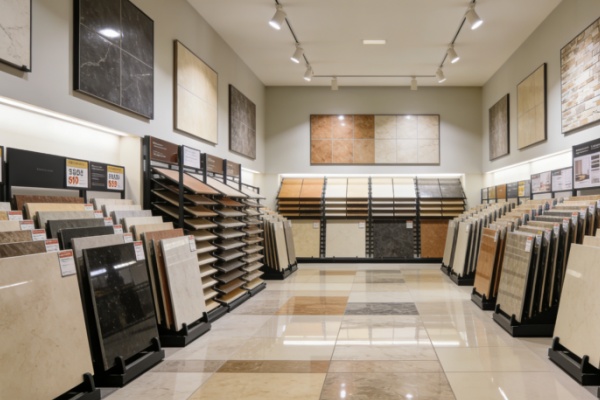
Retail and Shopping Centers
Retail environments require flooring that can withstand continuous foot traffic, rolling loads, and frequent cleaning cycles. Porcelain tile performs well due to its wear resistance and ability to maintain appearance over time.
Key considerations:
- Appropriate PEI rating for traffic levels
- Slip resistance in entrances and transition zones
-
Shade and caliber consistency across large floor areas
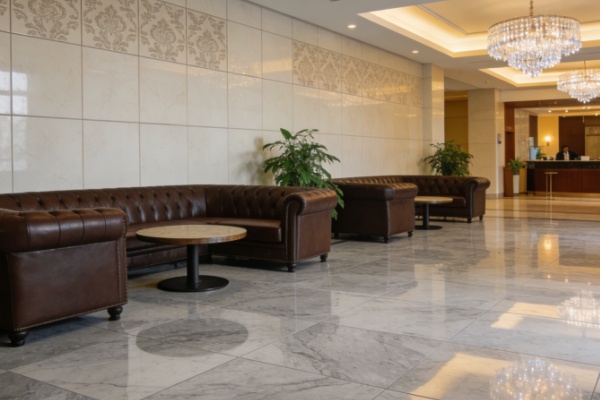
Hospitality: Hotels, Restaurants, and Public Areas
Porcelain tile is widely used in hospitality projects such as hotel lobbies, corridors, restaurants, and guest bathrooms, where durability and design flexibility are both essential.
Key considerations:
- Slip resistance in wet or food-service areas
- Ease of daily cleaning and maintenance
- Visual consistency across rooms and floors
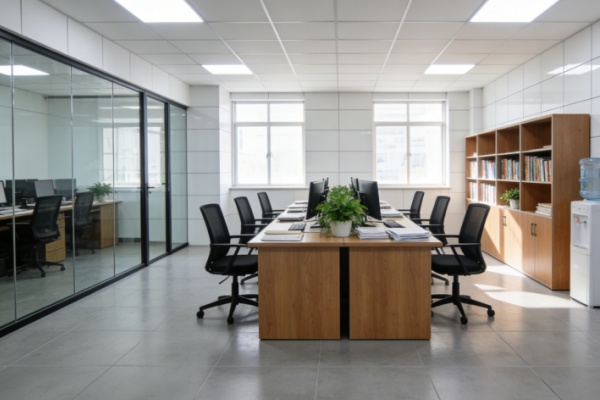
Office and Corporate Buildings
In office environments, porcelain tile is commonly used in lobbies, restrooms, and common areas where a professional appearance and long service life are required.
Key considerations:
- Timeless, neutral aesthetics
- Durability with minimal maintenance disruption
- Long replacement cycles to reduce operational downtime
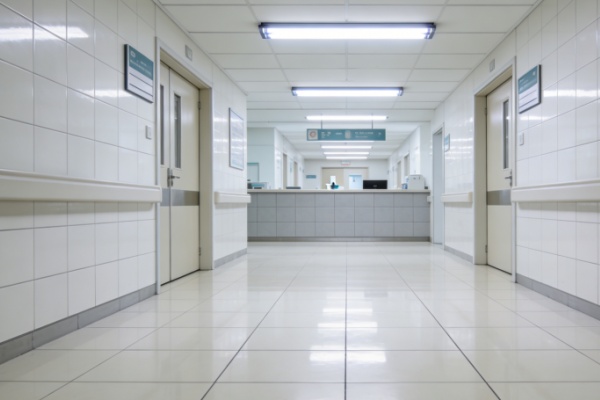
Healthcare and Education Facilities
Healthcare and educational facilities require flooring that meets strict hygiene, safety, and durability standards.
Key considerations:
- Resistance to chemicals and disinfectants
- Compliance with slip-resistance requirements
-
Easy-to-clean surfaces with controlled grout lines
Outdoor Commercial Areas
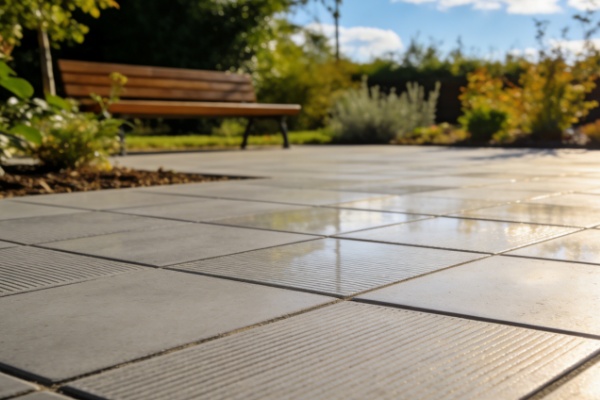
Certain porcelain tiles are designed for exterior commercial applications such as patios, walkways, plazas, and outdoor dining areas.
Key considerations:
- Frost and freeze-thaw resistance
- Textured, slip-resistant surfaces
- Proper installation methods and drainage design
Porcelain Tile vs Other Commercial Flooring Options
When selecting flooring for commercial projects, porcelain tile is often evaluated against alternatives such as ceramic tile, vinyl-based flooring, and natural stone.
| Flooring Type | Typical Lifespan | Maintenance Level | Installation Risk | Long-Term Cost |
|---|---|---|---|---|
| Porcelain Tile | 30–60 years | Low | Medium | Low |
| Ceramic Tile | 15–30 years | Medium | Low | Medium |
| LVT / SPC | 10–20 years | Low | Low | Medium–High |
| Natural Stone | 20–40 years | High | High | High |
Although porcelain tile may involve higher upfront costs, its durability and reduced maintenance often result in superior long-term value.
Key Technical Specifications B2B Buyers Must Evaluate
Specifying porcelain tile for commercial use requires attention to technical criteria that go beyond residential standards.
Wear Resistance (PEI Rating)
Ensure the tile is rated for the expected level of foot traffic, especially in public or high-use areas.
Slip Resistance
Evaluate DCOF or R-rating values based on local codes and the intended environment, particularly in wet or transitional zones.
Thickness and Load-Bearing Capacity
Tile thickness affects durability, installation methods, and suitability for heavy loads or wheeled traffic.
Shade and Caliber Consistency
For large-scale projects, batch consistency is essential to maintain uniform appearance across expansive floor areas.
Frost and Weather Resistance
Outdoor applications require tiles specifically rated for freeze-thaw conditions.
Certifications and Compliance
Depending on project requirements, certifications related to safety, sustainability, or building codes may be necessary.
Total Cost of Ownership: What Commercial Buyers Often Overlook
Many commercial flooring decisions focus primarily on material price, which can lead to higher long-term costs.
Key factors influencing total cost of ownership include:
- Installation labor complexity and duration
- Material wastage rates in large projects
- Maintenance frequency and cleaning labor
- Downtime or disruption during repairs or replacement
Porcelain tile’s long service life and low maintenance requirements often offset higher initial costs over time.
Common Mistakes in Commercial Porcelain Tile Projects
Even high-quality porcelain tile can underperform if improperly specified or installed.
Common issues include:
- Selecting residential-grade porcelain for commercial use
- Ignoring slip-resistance requirements in wet areas
- Mixing tile batches without controlling shade variation
- Underestimating cutting difficulty and installation timelines
Proper specification, coordination, and professional installation are critical to avoiding these risks.
Is Porcelain Tile Right for Your Project? A Decision Checklist
Before specifying porcelain tile, evaluate the following factors:
- Expected foot traffic and usage intensity
- Budget horizon (short-term cost vs long-term value)
- Indoor or outdoor application
- Maintenance resources and cleaning protocols
Clear answers to these questions help ensure porcelain tile is selected for appropriate applications.
Frequently Asked Questions (Commercial Focus)
Is porcelain tile suitable for heavy commercial traffic?
Yes. When correctly specified, porcelain tile performs well in high-traffic commercial environments.
Does porcelain tile meet commercial slip-resistance standards?
Many porcelain tiles are designed to meet commercial slip-resistance requirements, but specifications should be verified for each application.
How long does porcelain tile last in commercial use?
With proper installation and maintenance, porcelain tile can last 30–60 years or longer in commercial settings.
Can porcelain tile be used in outdoor commercial areas?
Yes, provided the tile is rated for exterior use and installed according to recommended methods.
Final Thoughts
Porcelain tile is not merely a design choice—it is a long-term performance decision in commercial construction and renovation projects.
When specified with appropriate technical criteria and installed correctly, porcelain tile offers durability, safety, and cost efficiency that few flooring materials can match. For B2B buyers, understanding specifications, lifecycle costs, and application-specific requirements is essential to minimizing risk and maximizing value.
