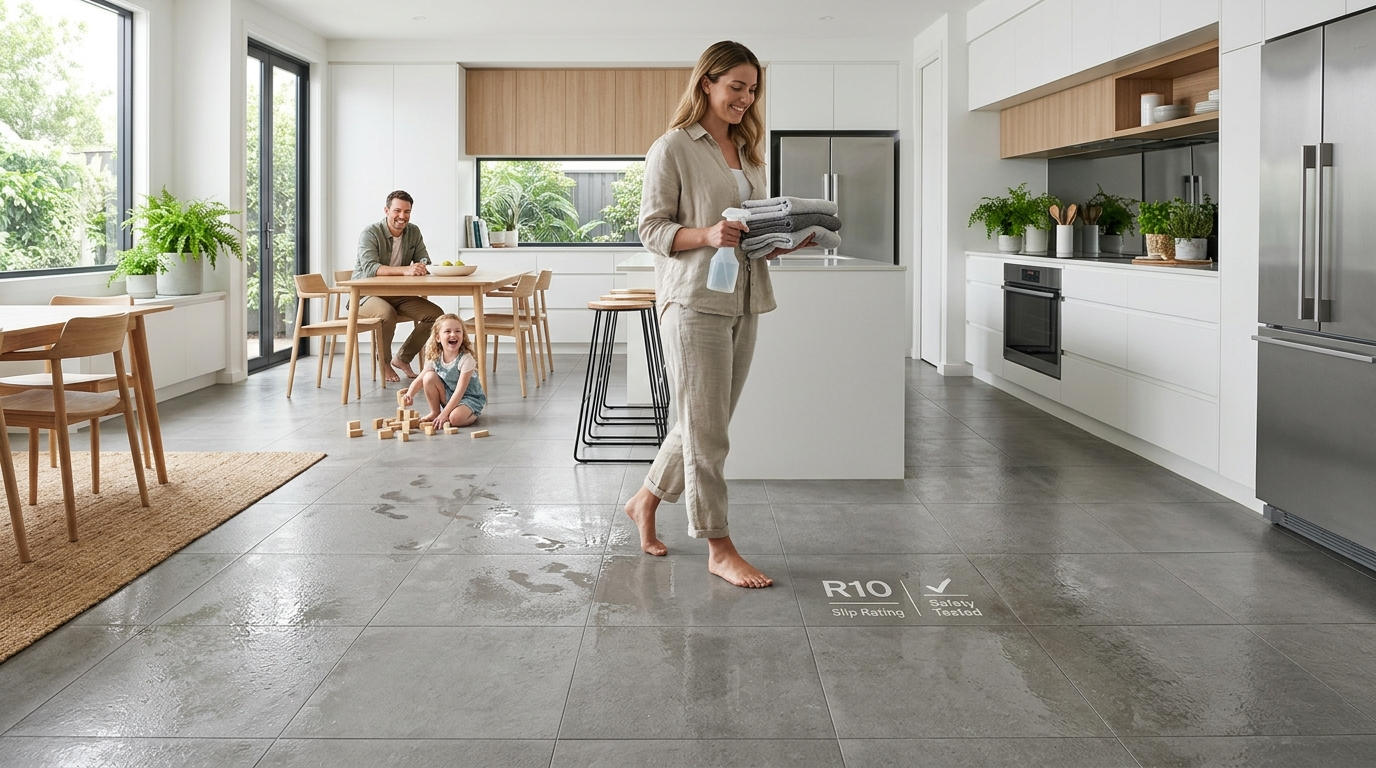
How Safe Are Porcelain Tiles? A Comprehensive Look at Slip Resistance
Porcelain is often misunderstood. While its sleek appearance might suggest a lack of grip, modern manufacturing has transformed porcelain into one of the safest flooring materials on the global market. As a leading porcelain tile manufacture and supplier, we prioritize engineering surfaces that balance high-end aesthetics with rigorous safety performance.
Debunking the Myth: Is Porcelain Inherently Slippery?
The idea that all porcelain is slippery is a common misconception. Slipperiness is a function of the surface finish, not the material itself.
- Polished Finishes: These provide a mirror-like shine and are best suited for dry areas or wall applications.
- Matte Finishes: A matte finish offers significantly higher friction and superior moisture resistance, making it the standard for safe flooring.
- Textured Porcelain: Specifically engineered with tactile patterns to provide maximum grip underfoot, even in wet conditions.
The Importance of Traction for Home and Commercial Safety
Traction is the primary defense against slip-and-fall accidents in both residential and commercial spaces. Ensuring your flooring meets specific safety standards is essential for:
- Risk Mitigation: Reducing the likelihood of injuries and subsequent liability in high-traffic business environments.
- Longevity: Slip-resistant tiles are often built with denser compositions that withstand heavy wear and tear.
- Accessibility: Providing a stable surface for children, the elderly, and those with mobility aids.
Identifying High-Risk Areas for Slips and Falls
Safety is a priority in “wet zones” where liquids frequently compromise surface stability. We recommend prioritizing high-traction porcelain in the following areas:
| High-Risk Zone | Primary Hazard | Recommended Grip Level |
|---|---|---|
| Bathrooms | Water, steam, and soap residue | High (Textured/Matte) |
| Kitchens | Cooking oils, grease, and liquid spills | Medium to High |
| Entryways | Rain, snow, and outdoor debris | High |
| Commercial Lobbies | Heavy foot traffic and tracked-in moisture | Professional Grade Matte |
By selecting the correct surface for the environment, porcelain becomes an incredibly safe, reliable, and durable flooring solution.
Understanding Slip Resistance Ratings: What Is DCOF?
When we look at how safe porcelain tiles are, we don’t rely on guesswork. We use a standardized measurement called DCOF to give you a clear picture of floor safety. As a porcelain tile manufacturer and supplier, I prioritize these ratings to ensure our products meet the rigorous demands of both homes and commercial spaces.
Dynamic Coefficient of Friction (DCOF) Explained
DCOF stands for Dynamic Coefficient of Friction. In simple terms, it measures the amount of friction present when an object (like your foot) is already in motion across a wet surface. While older standards measured static friction (standing still), DCOF is much more accurate because it reflects how we actually move in the real world. A higher DCOF value means more “grip” and a lower risk of sliding.
Current ANSI Standards for Residential and Commercial Use
The industry benchmark, specifically the ANSI A326.3 standard, sets the requirements for different environments. We use these numbers to categorize which tiles are safe for specific installs:
- DCOF < 0.42: Recommended for interior areas that remain dry, such as accent walls or decorative borders.
- DCOF ≥ 0.42: The “Gold Standard” for level interior floors expected to get wet, such as kitchens, bathrooms, and entryways.
- DCOF ≥ 0.60: Essential for outdoor walkways, pool decks, or ramps where high moisture resistance is a constant factor.
How Testing Procedures Determine Tile Safety Levels
We verify safety levels using a specialized device known as the BOT-3000E. This automated tester travels across the tile surface using a soapy water solution to simulate the most slippery conditions possible. This process is vital for verifying the performance of a matte finish or textured surface. By measuring the resistance in real-time, we can confidently certify that our porcelain tiles provide the stability required for high-traffic global markets.
Key Factors That Influence Porcelain Tile Slipperiness
When we look at slip resistance, the physical build of the tile is what really determines safety. As a porcelain tile manufacture and supplier, I’ve seen how different production techniques directly impact how much “grip” a floor provides underfoot.
The Role of Surface Finishes: Polished, Matte, and Textured
The finish is your first line of defense against accidents. While aesthetics matter, the texture dictates the friction level:
- Polished Finishes: These are high-gloss and stunning, but they offer the least resistance. They are best kept to walls or dry decorative areas.
- Matte Finishes: A high-quality matte finish is the standard for most residential flooring. It provides a smooth look while maintaining a reliable grip for bare feet and shoes.
- Textured Finishes: Also known as “anti-slip” or “R11” finishes, these have a gritty surface designed specifically to provide traction in wet conditions.
Glazed vs. Unglazed Porcelain Surfaces
The way we seal the tile surface changes its interaction with water. Both types offer excellent moisture resistance, but they feel different underfoot:
- Glazed Porcelain: Features a protective layer of liquid glass. While easy to clean, a high-sheen glaze can become slick. We recommend matte or specially treated slip-resistant glazes for high-traffic zones.
- Unglazed Porcelain: This tile is solid through and through. Because it lacks a glass coating, it has a naturally slip-resistant, slightly textured feel. This makes it a go-to for commercial spaces and industrial environments where safety is the priority.
How Tile Size and Grout Density Increase Stability
Many people overlook the “grid factor.” The safety of your floor isn’t just about the tile material; it’s about the layout.
- Grout as Traction: Grout lines act like “treads” on a tire. The more grout lines you have, the more friction points there are for your feet to catch.
- Small Format Advantages: Using smaller tiles, such as mosaics, is a smart move for wet areas. The high density of grout lines creates a non-slip surface even if the tile itself is relatively smooth.
- Large Format Caution: While large tiles look sleek, they have fewer grout lines, meaning the surface relies entirely on the tile’s finish for safety.
Choosing the Best Slip-Resistant Porcelain for Every Room
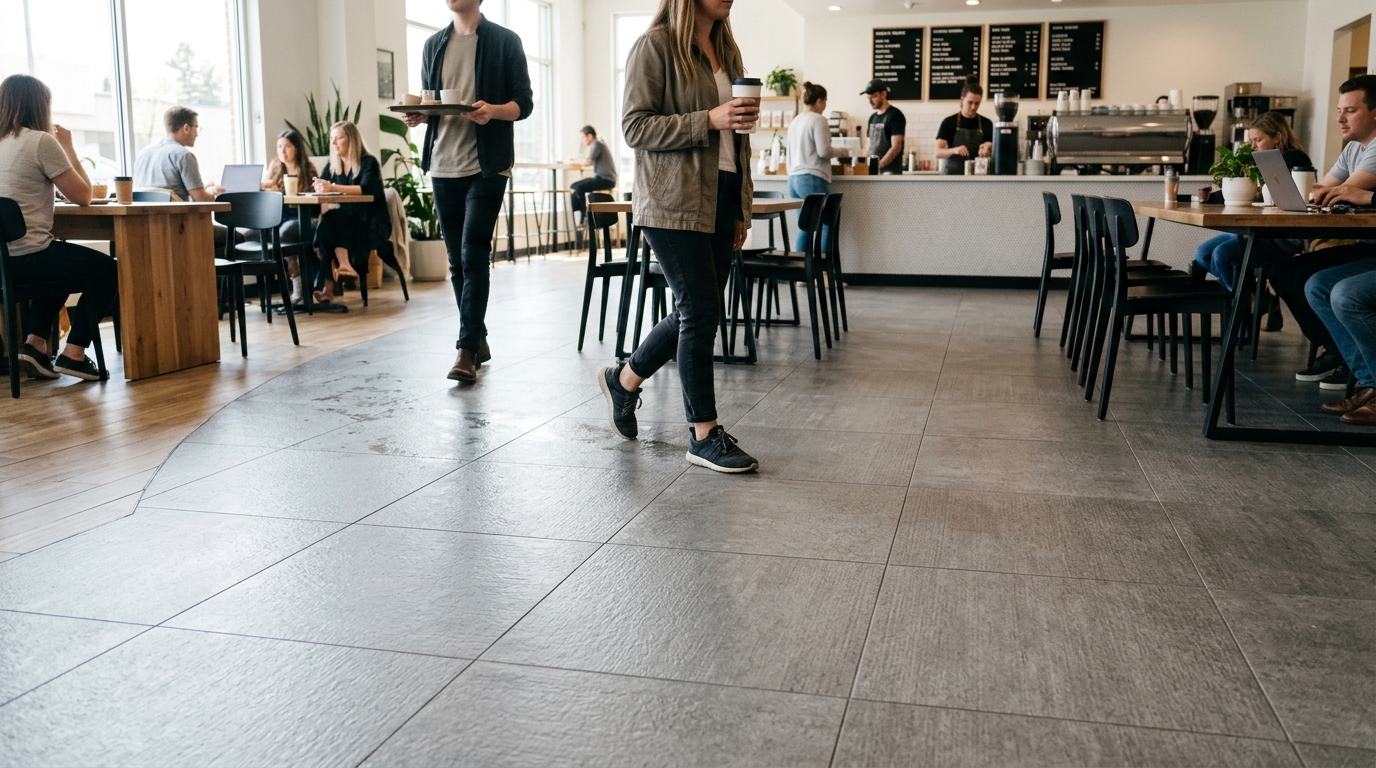
Picking the right porcelain tile isn’t just about the look; it’s about matching the tile’s grip to the room’s function. As a manufacturer and supplier, I always tell my clients that the best way to prevent slips is to look at how a space is actually used.
Safety Considerations for Shower Floors and Bathrooms
Bathrooms are the highest-risk zones due to constant water and soap suds. For these areas, we prioritize moisture resistance and high friction.
- Small Format Tiles: Using mosaics or smaller tiles increases the number of grout lines, which naturally provides more “bite” for your feet.
- Matte Finish: Avoid polished surfaces here. A matte finish or honed surface stays grippy even when wet.
- DCOF Rating: Look for a minimum rating of 0.42 for bathroom floors.
Selecting Secure Flooring for Kitchens and High-Traffic Zones
Kitchens and hallways deal with grease, spills, and heavy foot traffic. You need a balance between ease of cleaning and solid traction.
| Feature | Kitchen Recommendation | Why It Matters |
|---|---|---|
| Surface | Lightly Textured | Provides grip without trapping dirt. |
| Durability | Grade 4 or 5 PEI | Resists wear in commercial spaces and busy homes. |
| Finish | Matte or Satin | Reduces glare and hides scratches while staying safe. |
Safety Requirements for Outdoor Patios and Wet Areas
Outdoor porcelain must withstand rain, frost, and poolside splashes. Standard indoor tiles won’t cut it here.
- Anti-Slip Texture: Outdoor-specific porcelain often features a “rock” or “grip” texture that mimics natural stone.
- Thick Pavers: We recommend 20mm porcelain pavers for patios; they are incredibly dense and offer superior slip resistance in all weather conditions.
- Weatherproof: Ensure the tile has a high DCOF (0.60 or higher) to handle heavy rain or pool overflow.
How to Enhance the Safety of Existing Porcelain Floors
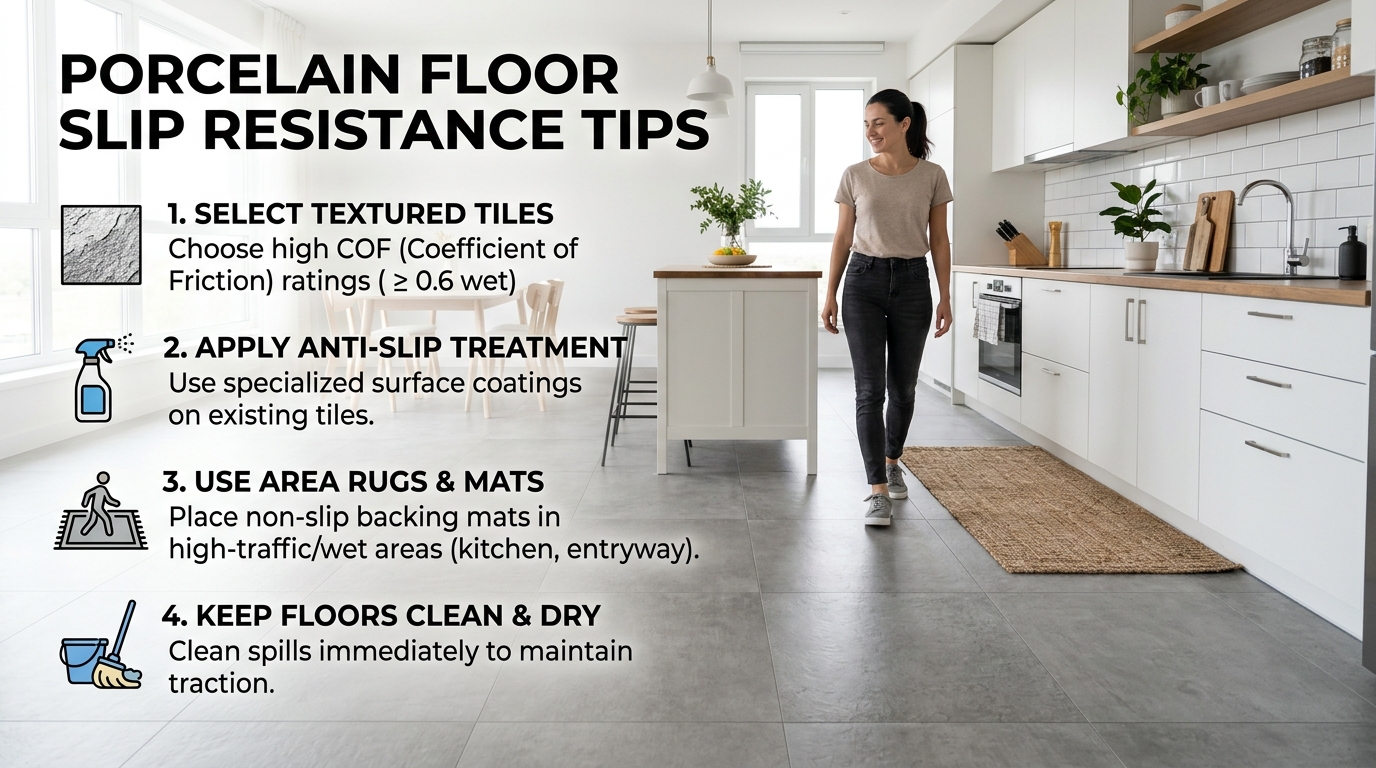
If you already have flooring installed and are worried about How Safe Are Porcelain Tiles? A Look at Slip Resistance becomes even more critical. You don’t always need to tear out a floor to make it safer; we often help clients upgrade their current surfaces with a few targeted adjustments.
Applying Anti-Slip Coatings and Chemical Treatments
I recommend anti-slip chemical treatments for floors that feel a bit too slick, especially polished surfaces. These treatments work at a microscopic level to increase the “tread” of the tile without changing how it looks.
- Topical Coatings: These add a clear, textured layer over the tile to boost grip immediately.
- Acid Etching: This creates tiny pores in the porcelain to increase friction, though it’s best handled by pros to keep the finish intact.
- Matte Sealers: Applying a sealer with a matte finish can provide a subtle texture boost while protecting the surface.
The Impact of Proper Cleaning and Maintenance on Grip
The biggest threat to slip resistance is actually invisible buildup. Over time, soap scum, grease, and dust create a film that makes even high-quality porcelain slippery.
- Degrease Regularly: In commercial spaces, using a heavy-duty degreaser is mandatory to keep the floor’s natural traction.
- Avoid Wax-Based Cleaners: These leave a shiny, dangerous residue. Stick to pH-neutral cleaners.
- Microfiber Mopping: This picks up dirt rather than just pushing it around, ensuring the tile surface stays “grabby.”
Managing Moisture and Environmental Factors
Even the best tiles fail if they are covered in standing water. Managing the environment is the simplest way to ensure moisture resistance works in your favor.
| Strategy | Benefit | Recommended For |
|---|---|---|
| Walk-off Mats | Traps water and dirt at the door | Entrances & High-traffic zones |
| Improved Drainage | Prevents pooling and puddles | Laundry rooms & Mudrooms |
| Dehumidifiers | Reduces condensation on tile surfaces | Basements & Indoor pools |
By combining these maintenance habits with the right treatments, you can significantly improve the safety profile of any existing porcelain installation.
Comparing Porcelain to Other Slip-Resistant Flooring Options
When you look at how safe porcelain tiles are, it helps to see how they stack up against the competition. As a porcelain tile manufacturer and supplier, we’ve tested our products against almost every material on the market. While porcelain is a top-tier choice for moisture resistance and durability, other materials offer different levels of grip.
Natural Stone and Pebble Tile Alternatives
Natural stones like slate, granite, or tumbled marble have inherent textures that provide solid traction. Pebble tiles are especially popular for shower pans because the high number of grout lines creates a “tread” effect for your feet.
- Pros: Naturally high slip resistance when unpolished.
- Cons: Requires frequent sealing and can be harder to clean than porcelain.
Textured Ceramic and Specialty Safety Tiles
Ceramic tiles are often confused with porcelain, but they are generally more porous. For commercial spaces where safety is the only priority, specialty safety tiles with aggressive grit or deep ribbing are used. However, our porcelain tiles with a matte finish provide a similar safety profile while being much easier to maintain and far more stylish for modern interiors.
Evaluating Vinyl and Rubber Options for Maximum Traction
Vinyl (LVP) and rubber flooring are often used in gyms or healthcare facilities because they offer a “soft” grip. While they are highly slip-resistant, they lack the permanent, premium feel of stone or tile and can degrade faster under heavy foot traffic.
| Flooring Type | Slip Resistance | Durability | Maintenance Level |
|---|---|---|---|
| Matte Porcelain | High | Excellent | Very Low |
| Natural Stone | High | Good | High (Needs Sealing) |
| Luxury Vinyl | Medium-High | Moderate | Low |
| Rubber | Very High | Moderate | Medium |
For most high-traffic or wet environments, a textured or matte finish porcelain tile offers the best balance of safety, hygiene, and long-term value. It provides the moisture resistance needed for bathrooms and kitchens without the heavy upkeep of natural stone.
