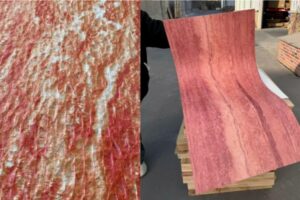
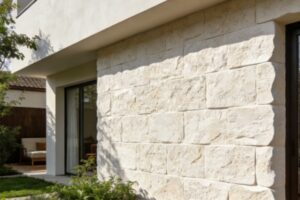
You invested in flexible stone, but you are afraid to cut it wrong and ruin the material. This is a common fear that leads to project delays.
To cut flexible stone correctly, measure and mark your lines clearly first. Then, use a woodworking table saw1 for long straight cuts or a handheld cutter with a diamond blade2 for on-site adjustments. Finally, smooth the rough edges with an angle grinder3 for a perfect finish.
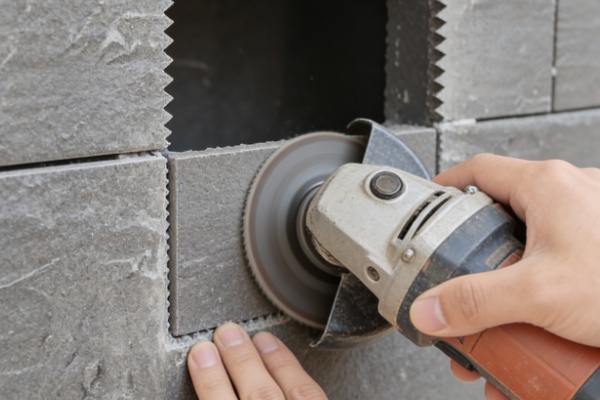
Many people think flexible stone is too soft or too hard to handle, but it just needs the right approach. If you rush, you lose money. If you use the wrong blade, you get ugly edges. I want to show you the exact steps we use in our factory and recommend to our clients. These steps work for large projects and small custom jobs.
How do I prepare the material before cutting?
You might think you can just grab a saw and start, but that causes mistakes. Poor preparation leads to wasted sheets and bad fits.
Before cutting, clean the surface of the flexible stone to remove dust. Use a high-quality tape measure and a straight edge to mark your cut lines with a pencil or marker. Accurate marking is the only way to ensure a tight installation.
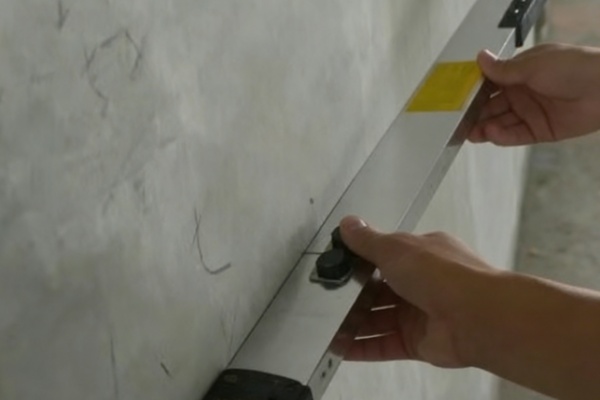
Preparation is the most important part of the process. In our manufacturing facility, we never skip this step. If the measurement is wrong, the cut is useless. You must start with a clean workspace4. If there is debris or dust on the flexible stone, your ruler might slip. This causes crooked lines.
First, lay the sheet flat on a stable table. Use a tape measure to find your dimensions. I always tell my team to measure twice5. It sounds simple, but it saves material. Once you have the measurement, use a long straight edge or a ruler. Draw the line with a pencil or a marker. The line must be thin and clear. If the line is too thick, your cut might be off by a millimeter. That gap looks bad on a wall.
Also, check the material itself. Make sure there are no cracks or defects where you plan to cut. If you cut through a weak spot, the whole piece might tear. We treat flexible stone with care. It is durable, but you must respect the material during the prep stage.
| Step | Tool Needed | Purpose |
|---|---|---|
| Clean | Dry Cloth | Removes dust to prevent slipping. |
| Measure | Tape Measure | Determines the exact size needed. |
| Guide | Straight Edge | Ensures the line is perfectly straight. |
| Mark | Pencil/Marker | Creates a visual guide for the saw. |
Which tools should I choose for the job?
Using the wrong tool will tear the edges of the flexible stone. You need specific equipment to get a clean, professional look.
Select a woodworking table saw1 for precise, straight factory cuts. For on-site flexibility, use a handheld cutting machine with a diamond blade. Use an angle grinder3 later to smooth out any rough edges left behind.
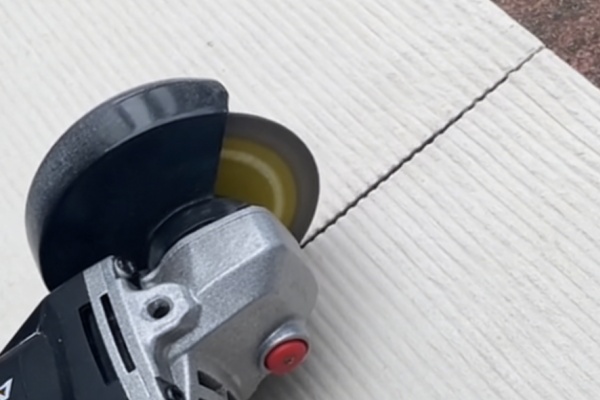
Choosing the tool depends on where you are working. In our factory, we use different machines than a contractor uses at a job site. You need to know the difference.
The Woodworking Table Saw This is the best tool for straight lines. If you have a lot of panels to cut to the same size, use this. It provides a stable platform. You push the material against the fence. This keeps the cut straight. It is great for mass production or large orders. The edge quality is usually very high with a table saw.
The Handheld Cutting Machine Sometimes you cannot bring a table saw to a room. This is when we use a handheld cutter. It is very flexible. You can do straight cuts or even slight curves. The most important thing here is the blade. We recommend a diamond cutting blade6. It cuts through the stone particles without ripping the flexible binder.
The Angle Grinder This is not for the main cut. This is for detailing. After you cut, the edge might be sharp. The angle grinder3 helps you fix that.
Here is a quick comparison to help you decide:
- Table Saw: Best for stability and long straight cuts.
- Handheld Cutter: Best for mobility and custom shapes.
- Angle Grinder: Best for finishing and polishing.
How do I perform the cut safely and effectively?
Cutting too fast or without stability will break the material. You must control the speed and the temperature to get a good result.
Keep the tool stable and move at a slow, consistent speed along your marked line. For long pieces, cut in segments to avoid snapping the board. Use water to cool the blade if necessary to prevent overheating.
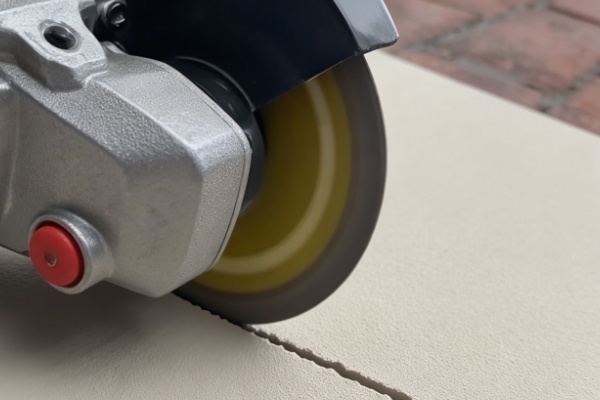
Now you are ready to cut. This requires a steady hand. If you are using a handheld machine, do not rush. I have seen many workers push the saw too hard. This causes the flexible stone to bunch up or crack. You must let the blade do the work.
Stability is Key Your hand must not shake. If the tool tilts, the edge will be beveled. You want a 90-degree edge. Keep the base of the cutter flat against the material. If you are using a table saw, keep the pressure against the fence7 constant.
Dealing with Heat Friction creates heat. Flexible stone has materials that can be sensitive to extreme heat. We suggest using water to cool the blade. This is wet cutting8. It reduces dust and keeps the blade sharp. If you dry cut, take breaks. Do not let the blade get red hot.
Segmented Cutting If you are cutting a very long board, do not do it all at once if the board is not supported. The weight of the cut piece can snap the final inch of material. We cut in sections or have a second person support the off-cut.
- Speed: Slow and steady.
- Pressure: Moderate. Do not force it.
- Cooling: Water spray is best.
- Support: Support both sides of the cut.
How do I finish the edges and ensure safety?
A raw cut is sharp and often has small chips. You need to refine the edge for a professional installation and stay safe while doing it.
Use an angle grinder3 or sandpaper to smooth the cut edges and remove burrs. Always wear protective glasses and gloves9. If you need high precision, perform a test cut10 on a scrap piece first.
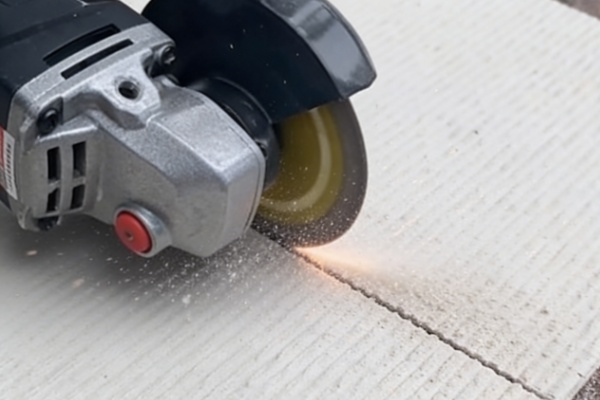
The cut is done, but the job is not finished. The edge might have "burrs" or rough spots. This makes the gap between tiles look bad. You want a smooth transition.
Edge Trimming Take your angle grinder3 with a sanding disc. Gently run it along the cut edge. You are not trying to remove material, just the rough bits. If you do not have a grinder, heavy-grit sandpaper works too. This makes the stone safe to handle. It also helps the grout11 sit better between the tiles.
Safety First I cannot stress this enough. We run a large factory, and safety is our top priority. When you cut flexible stone, dust flies everywhere. You must wear protective glasses. Small particles can damage your eyes. Also, wear gloves. The edges of the cut stone can be as sharp as a knife.
The Test Cut If you are working on a custom project with expensive material, do a test. Take a piece of scrap waste. Draw a line. Cut it. See how the material reacts. Does it chip? Is the blade fast enough? This small step saves you from ruining a full sheet.
Summary of Finishing Steps:
- Inspect: Look for chips or sharp points.
- Grind: Use a sanding pad to smooth the edge.
- Clean: Wipe away the dust from the edge.
- Protect: Keep your gloves on until the piece is installed.
Conclusion
To cut flexible stone, measure accurately, use the right saw, cut slowly with water cooling, and smooth the edges for a perfect result.
Learn how to use a woodworking table saw effectively to achieve precise cuts in flexible stone, ensuring a professional finish. ↩
Discover the benefits of using a handheld cutter with a diamond blade for on-site adjustments and custom shapes in stone cutting. ↩
Explore how an angle grinder can smooth rough edges, enhancing the final appearance and safety of your stone project. ↩
Learn how maintaining a clean workspace can prevent measurement errors and ensure precise cuts in flexible stone. ↩
Find out why double-checking measurements can save material and ensure a tight installation, preventing costly mistakes. ↩
Understand the advantages of using a diamond cutting blade to achieve clean cuts without damaging the flexible binder in stone. ↩
Understand how consistent pressure against the fence of a table saw can lead to precise, straight cuts in flexible stone. ↩
Discover how wet cutting reduces dust and keeps blades sharp, preventing overheating and ensuring a smooth cutting process. ↩
Find out how protective gear can safeguard against flying dust and sharp edges, ensuring safety during stone cutting. ↩
Explore how performing a test cut on scrap material can prevent costly mistakes and ensure the right approach for your project. ↩
Learn how smooth edges facilitate better grout application, ensuring a seamless and professional finish in stone installations. ↩