Choosing the perfect tile is only half the battle. The wrong grout1 can ruin the entire look, leading to cracks and stains that cheapen your hard work and investment.
To choose the right grout, you must consider its function, the tile joint width, and the installation area. Grout provides decoration, fills gaps to block water, and creates expansion joints2. Matching the grout type to these factors ensures a durable, professional, and beautiful finish.
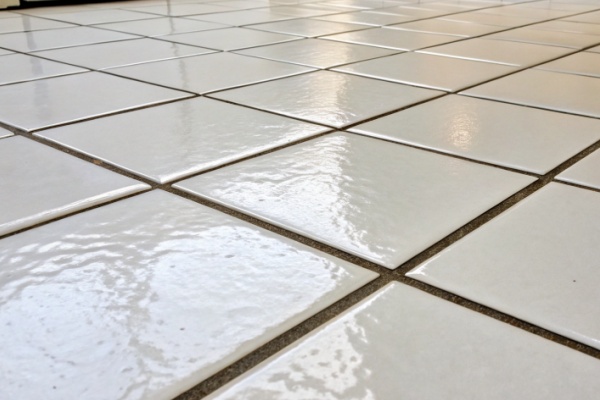
As a tile manufacturer, I've seen countless projects. The best ones always pay close attention to the small details, and grout is one of the most important. It’s not just filler; it’s a critical component that can make or break the final result. A great tile with bad grout looks unprofessional, while the right grout can elevate even simple tiles. Let's walk through how you can make the right choice every time, ensuring your projects look fantastic and last for years.
What Are the Main Functions of Grout?
You might think grout is just for filling the gaps between tiles. But it does much more, protecting your installation and adding to the design. It's a small detail with a huge impact.
Grout serves three critical functions: decoration, filling gaps, and creating expansion joints2. It works with your tiles to create a specific look, prevents water damage by sealing the installation, and absorbs movement to stop tiles from cracking under pressure. Understanding these roles is the first step.
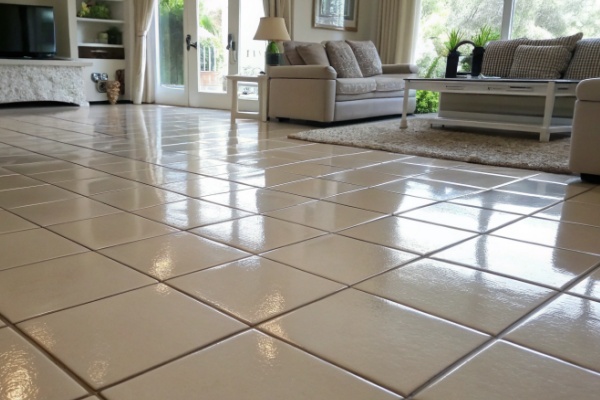
Let's dive deeper into why these three functions are so important for any tile project. In my years of experience, I've learned that overlooking any one of these can lead to problems down the road. Grout isn't just about aesthetics; it's about the structural integrity and longevity of the entire tiled surface. When we supply tiles for large-scale projects, we always discuss the grout plan with our clients because it's that crucial.
1. The Decorative Role
Grout color dramatically changes the final look. You can use a grout that matches the tile color to create a seamless, monolithic appearance. This is great for designs where you want the surface to look like one large, continuous slab. On the other hand, a contrasting grout color makes each tile stand out, highlighting the pattern and shape. Think of a classic white subway tile with dark gray grout; the contrast defines the grid pattern and gives it a bold, graphic look. This decorative choice is a powerful tool for achieving your design vision.
2. The Filling and Sealing Role
This is the most practical function. Grout fills the spaces between tiles completely, creating a solid surface. More importantly, it acts as a barrier, preventing water, dirt, and debris from getting underneath the tiles. If water seeps behind a tile, it can weaken the adhesive, leading to loose tiles. In wet areas like bathrooms and kitchens, this moisture can also cause mold and mildew to grow, which is a health hazard and looks terrible. A properly filled grout line is your first line of defense against water damage.
3. The Expansion Joint Role
This is a technical but vital function. All building materials, including the substrate, tile adhesive, tiles, and grout, expand and contract with changes in temperature and humidity. Without space to move, this pressure would build up and could cause tiles to crack, pop off the wall, or "tent" (push upward). Grout lines act as small expansion joints2, absorbing this movement and relieving the stress on the installation. This is why you can't just butt tiles up against each other without any gap. The grout line provides that necessary buffer.
Does Grout Joint Width Affect My Choice?
You've decided on a grout line width, but now you wonder if that changes the type of grout you need. Using the wrong grout1 for your joint width can cause cracking or scratch your tiles.
Yes, the width of the grout joint is a critical factor. Wider joints (over 4mm) require sanded grout3 to prevent shrinkage and cracking. Narrower joints (under 4mm) need unsanded grout3 for a smooth finish that fills the tight space properly and won't scratch delicate tile surfaces.
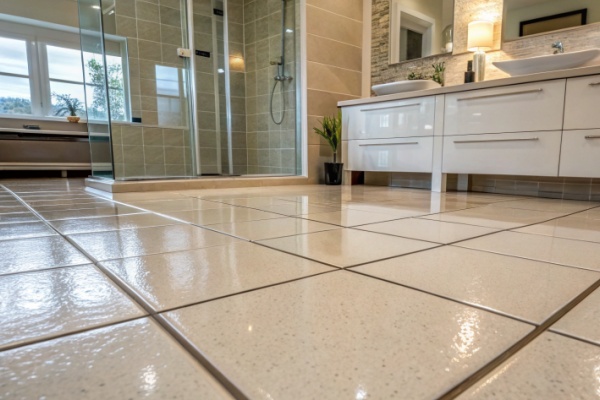
Choosing between sanded and unsanded grout3 is one of the most fundamental decisions you'll make. I remember a client who insisted on using a coarse, sanded grout3 for a 2mm joint on a high-gloss polished tile. The result? The sand particles scratched the tile surface during application, ruining the finish. This costly mistake could have been easily avoided. The rule is simple: the grout must fit the gap not just in color, but in composition. Let's break down why this is so important for the integrity of your project.
Sanded Grout for Wider Joints
For any grout line that is 4mm (about 1/8 inch) or wider, you should use sanded grout3.
- Why sand? The sand acts as an aggregate, much like the gravel in concrete. It adds bulk and strength to the grout mixture.
- Prevents Shrinkage: As grout cures and dries, it shrinks slightly. In a wide joint, this shrinkage can be significant, leading to a sunken appearance and hairline cracks. The sand in the mixture reduces this shrinkage, ensuring the joint remains full and strong.
- Increases Durability: The sand also makes the grout much more durable and resistant to wear and tear, which is especially important for floor tiles that see a lot of foot traffic.
Unsanded Grout for Narrower Joints
For grout lines that are 4mm or narrower, unsanded grout3 is the right choice.
- Why no sand? In a narrow joint, there isn't enough space for sand particles to pack in properly. Using sanded grout3 in a tight space can result in voids and a weak joint.
- Smooth Finish: Unsanded grout3 has a much finer, smoother texture. It flows easily into narrow gaps, ensuring a complete fill.
- Protects Delicate Surfaces: This is a key point. For tiles with a delicate or high-gloss surface, like polished porcelain or glass, you must use unsanded grout3 regardless of the joint width (though narrow joints are recommended). The abrasive sand particles in sanded grout3 can easily scratch and dull the finish during the application and cleanup process.
How Do I Choose Grout for Different Areas?
Your kitchen floor and your shower wall are exposed to very different things. It seems logical they might need different types of grout, but what are the specific requirements for each?
You must match the grout's properties to the demands of the environment. High-hygiene areas need non-absorbent, chemical-resistant grout4. Floors with heavy traffic require high-abrasion resistance5. Wet areas like kitchens and bathrooms demand grout that is both waterproof and mold-resistant for durability and health.

This is where we move from general rules to specific solutions. As an OEM/ODM supplier, we often create project-specific tiles, and the grout choice is always part of that conversation. For a hospital project, the grout needs to be completely different from the grout used in a residential living room. Thinking about the end-use of the space is not an option; it's a necessity for a successful, long-lasting installation. Let's look at a few common scenarios and the best grout for each.
Kitchens and Bathrooms
These are high-moisture areas6. The primary concerns are water penetration and mold growth.
- Requirement: You need a grout that is highly water-resistant or waterproof. It should also contain anti-microbial agents to prevent the growth of mold and mildew.
- Recommendation: Epoxy grout is an excellent choice here. It's waterproof, stain-proof, and inherently resistant to mold. High-performance cementitious grout7s with additives for mold and water resistance are also a good, more traditional option.
High-Traffic and Commercial Floors
Think of office lobbies, retail stores, or airport terminals. These floors endure constant foot traffic, heavy loads, and aggressive cleaning.
- Requirement: The grout must have high compressive strength and excellent abrasion resistance5. It can't crack under pressure or wear away from constant use and cleaning.
- Recommendation: A high-performance, fast-setting commercial-grade cementitious grout7 or an epoxy grout8 is ideal. Epoxy grout is particularly tough and can withstand chemicals and heavy wear, making it perfect for demanding commercial environments.
Pools and High-Hygiene Areas
Areas like swimming pools, commercial food preparation zones, and hospital operating rooms have the strictest requirements.
- Requirement: The grout must be completely waterproof, non-absorbent, and resistant to harsh chemicals (like chlorine in pools or strong disinfectants in hospitals).
- Recommendation: This is a job for reaction-type grouts, specifically 100% solids epoxy grout8. Unlike cement-based products, epoxy grout8 doesn't absorb anything, so it won't harbor bacteria and is easy to sterilize. It can also withstand constant submersion in water and exposure to chemicals.
What Are the Different Types of Grout Materials Available?
Walking down the aisle, you see cement grout, epoxy grout8, and even polyurea. With so many options, how do you know which chemical makeup is right for your project and budget?
The main grout types are cementitious, epoxy, and polyurea, each with unique properties. Cementitious is cheapest but least durable. Epoxy offers great water and stain resistance. Polyurea provides the ultimate durability and color stability, especially against sunlight, but at the highest cost.
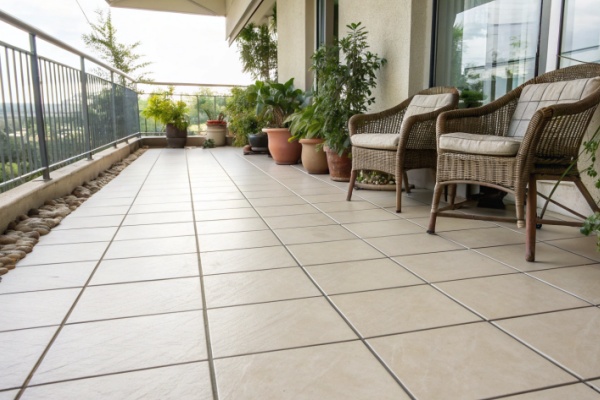
Understanding the core material of your grout is key to managing expectations for performance, cost, and installation. As a manufacturer, we see how material science has transformed tile installation. What was once just a mix of cement and water has evolved into a range of high-tech polymers. Choosing the right one ensures you get the performance you're paying for. Let's compare the most common types so you can decide what best fits your needs and budget.
| Grout Type | Core Composition | Pros | Cons | Best For |
|---|---|---|---|---|
| Cementitious Grout | Cement, Polymers, Pigments | Inexpensive, easy to install | Porous, stains easily, needs sealing, can mold | Low-budget projects where re-sealing is acceptable. |
| Epoxy Grout | Epoxy Resin, Hardener, Pigments | Waterproof, stain-proof, durable | More expensive, can yellow, harder to install | Kitchens, bathrooms, high-traffic areas, dark-colored tiles. |
| Epoxy Sanded Grout | Epoxy Resin, Hardener, Quartz Sand | Matte texture, very hard, durable | Expensive, can yellow, difficult to apply | All areas, especially wet zones with matte or rustic tiles. |
| Polyurea Grout | Aspartic Polyurea, Hardener | Extreme yellowing resistance, very hard | Very expensive, fast-curing, requires skill | Sun-exposed areas (balconies), light-colored tiles, whole-house. |
| Polyurea Sanded Grout | Aspartic Polyurea, Glass Microbeads | Best yellowing resistance, matte finish | Most expensive, fast-curing, professional install needed | Premium projects with light-colored matte tiles. |
Each of these materials has a place. Basic cementitious grout7 is the traditional, budget-friendly choice, but it requires regular sealing to resist stains and water. Epoxy grout was a major step up, creating a plastic-like, non-porous joint that is perfect for wet areas. However, standard epoxy can yellow over time when exposed to UV light.
This led to the development of polyurea grout9s. Polyurea is a more advanced polymer that is incredibly stable and does not yellow, making it the ultimate choice for outdoor applications, sun-drenched rooms, or with pure white tiles where color stability is paramount. The "sanded" versions of epoxy and polyurea simply add an aggregate for a matte, textured finish and even greater hardness.
Conclusion
Choosing the right grout protects your investment and completes your design. Consider its function, joint width, location, and material to ensure a lasting, beautiful result for your tiles.
Understanding the impact of using the wrong grout can help you avoid costly mistakes and ensure a professional finish. ↩
Explore how expansion joints prevent tile cracking and ensure the structural integrity of your tiled surfaces. ↩
Discover the benefits of using sanded grout for wider joints and how it prevents shrinkage and cracking. ↩
Explore how chemical-resistant grout withstands harsh cleaning agents and maintains its integrity. ↩
Discover the importance of abrasion resistance for grout used in high-traffic areas to ensure longevity. ↩
Learn about the best grout options for wet areas to prevent mold growth and water damage. ↩
Understand the advantages and limitations of using traditional cementitious grout in your projects. ↩
Discover why epoxy grout is a popular choice for its waterproof and stain-resistant properties. ↩
Learn about the superior durability and color stability of polyurea grout, especially in sun-exposed areas. ↩
