Choosing the right tile can be stressful, especially for wet areas. You worry about slips and falls, but you don't want to sacrifice style. Is porcelain the slippery culprit?
No, porcelain tile is not inherently more slippery than ceramic tile1. A tile's slip resistance2 is determined by its surface texture and finish, not its core material. A porcelain tile with a matte or textured finish3 offers excellent grip, often better than a smooth, glossy ceramic tile1.
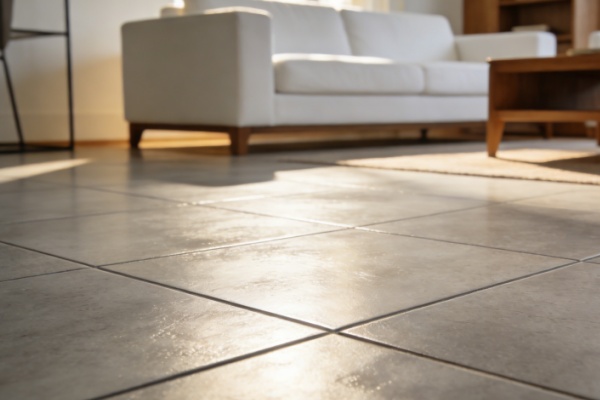
So, if it's not a simple case of 'porcelain vs. ceramic,' what really matters when you're sourcing tiles for a project? The answer lies in the details of the tile's surface and its fundamental properties. Understanding these factors is the key to preventing slips without compromising on design. Let's break down what truly determines a tile's grip, so you can make a confident and safe choice for your clients or your own product line.
How does the surface finish affect slip resistance2?
You've seen beautiful polished porcelain tiles, but you hesitate to use them. You fear they're an accident waiting to happen in a busy commercial space or a family bathroom.
The surface finish is the most critical factor for slip resistance2. A polished finish4 will always be the most slippery, especially when wet. In contrast, matte, unglazed, or textured finishes provide much more grip because they create a rougher surface with higher friction.
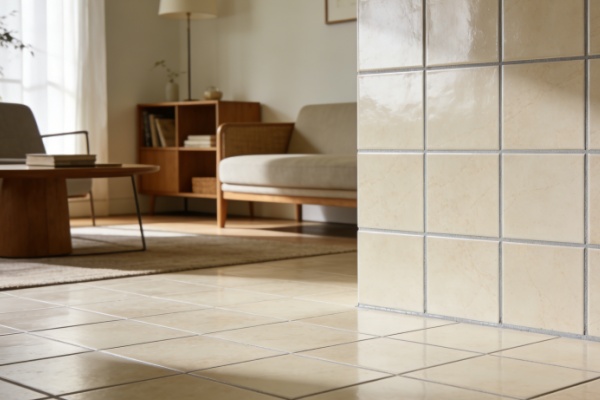
When we talk about slip resistance2, we are really talking about friction. A tile's ability to provide grip is directly related to its surface texture. As a manufacturer, we control this through different finishing processes, each designed for a specific look and function.
Comparing Common Tile Finishes
The finish on a tile can be the difference between a safe floor and a safety hazard. Polished tiles, for example, have a mirror-like surface because they are ground down and buffed until perfectly smooth. This process removes any natural texture, which is why they become very slippery when water is introduced.
On the other hand, matte and textured finishes are designed to increase friction. A matte glaze has microscopic peaks and valleys that scatter light and create a non-reflective, slightly rough feel. Textured tiles go a step further, with patterns or reliefs pressed into the tile before firing. These physical textures provide excellent grip, channeling water away from the point of contact. For professional buyers, it's helpful to look at the Dynamic Coefficient of Friction (DCOF)5 rating. A higher DCOF value means better slip resistance2, and this is the standard we test for to ensure our tiles are safe for commercial applications.
| Finish Type | Typical Slipperiness (Wet) | Best Use Case |
|---|---|---|
| Polished | High | Dry, low-traffic walls, decorative accents |
| Glossy Glazed | Medium-High | Interior walls, dry residential floors |
| Matte Glazed | Low-Medium | General floors, bathrooms, kitchens |
| Textured/Unglazed | Low | High-traffic commercial, outdoors, wet rooms |
Are there key differences between porcelain and ceramic tile1s I should know?
You're sourcing tiles for a large project and need to balance cost, durability, and function. The terms "ceramic" and "porcelain" seem almost the same, but they are not.
Yes, the main differences are density and water absorption. Porcelain is made from finer clays and fired at higher temperatures. This makes it much denser and harder, with a water absorption rate6 below 0.5%, making it perfect for floors and outdoor use. Ceramic is less dense and absorbs more water.
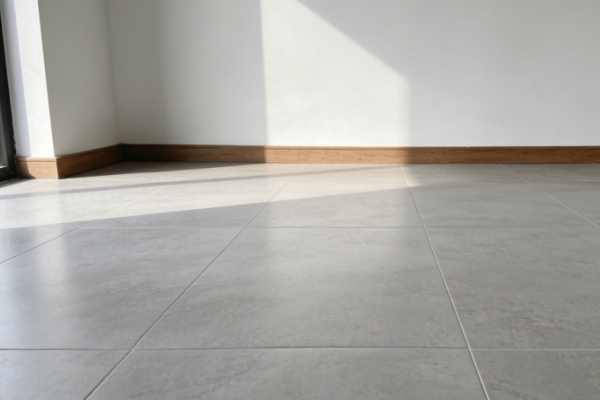
From my experience in the factory, the distinction between porcelain and ceramic starts with the raw materials and the manufacturing process. This is what gives them their unique performance characteristics, which are crucial for importers and developers to understand when building their product lines.
Core Material Properties
The most important technical difference is the water absorption rate6. We produce porcelain tiles to have an absorption rate of less than 0.5%. This process, called vitrification7, happens when we fire the tiles at very high temperatures (over 1200°C). The fine clay particles melt and fuse together, creating a glass-like body that is incredibly dense and does not allow water to penetrate. This is why porcelain is frost-proof8 and highly resistant to stains.
Ceramic tiles, in contrast, are typically made from less refined clays and fired at lower temperatures. They remain porous, with water absorption rate6s that can be 3% or even higher. This makes them unsuitable for outdoor use in freezing climates and more susceptible to staining. You can even hear the difference. If you tap a porcelain tile, it makes a clear, high-pitched ringing sound. A ceramic tile1 produces a duller, lower-pitched thud, which tells you it's less dense. This density directly translates to strength and durability.
| Feature | Porcelain Tile | Ceramic Tile |
|---|---|---|
| Water Absorption | Very Low (< 0.5%) | Higher (> 3%) |
| Density & Hardness | High | Medium |
| Best For | Floors, outdoors, high-traffic areas | Interior walls, low-traffic residential |
| Sound When Tapped | Clear, high-pitched | Dull, low-pitched |
When should I choose porcelain over ceramic for my project?
You need to source tiles for a mixed-use development with lobbies, bathrooms, and outdoor patios. You need a reliable, all-around solution that will perform for years.
Always choose porcelain tile for applications that demand high durability and near-zero water absorption. This includes all floors, especially high-traffic commercial spaces9, wet areas like shower floors, and any outdoor installation where it may be exposed to frost.
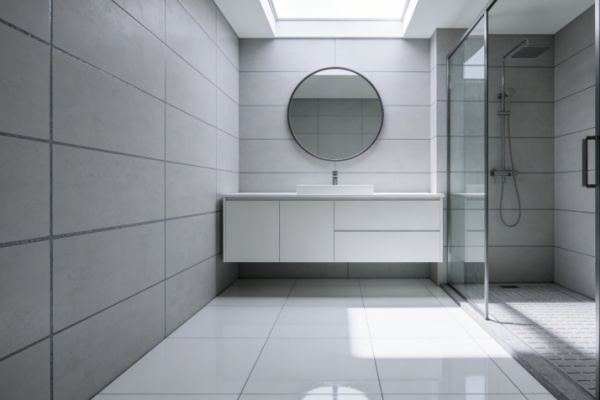
When I work with clients, whether they are international brands or contractors for large projects, the conversation always comes down to matching the product to the environment. Choosing the right tile type from the start saves money and protects reputations. While ceramic has its place, porcelain is the superior choice for almost any demanding application.
Making the Right Choice for Your Supply Chain
For our B2B partners, specifying the correct tile is a matter of performance and reliability. Porcelain's inherent properties make it the go-to choice for most modern building needs.
-
High-Traffic & Commercial Spaces: In places like airports, shopping malls, and hotel lobbies, floors need to withstand constant foot traffic, luggage carts, and cleaning machines. Porcelain's high density gives it superior breaking strength and abrasion resistance. We manufacture tiles that meet high PEI ratings10, ensuring they won't wear down or crack under pressure.
-
Wet & Hygienic Environments: For commercial kitchens, public bathrooms, and healthcare facilities, porcelain is the only choice. Its low water absorption means it won't harbor bacteria, mold, or mildew. It’s also resistant to stains and harsh cleaning chemicals.
-
Exterior Applications: Because porcelain is frost-proof8, it's perfect for building facades, outdoor patios, and walkways in any climate. It won't crack during freeze-thaw cycles like a more porous ceramic tile1 would.
As an OEM/ODM supplier11, we can engineer porcelain tiles to meet specific project needs, from creating a custom high-DCOF anti-slip finish12 for a pool deck to developing thin-profile tiles for renovation projects. This flexibility makes porcelain the ultimate problem-solver for professionals.
Conclusion
Slipperiness is about the finish, not the material. For durability and versatility in any project, porcelain's superior density and low water absorption make it the professional's choice.
Knowing the differences between ceramic and porcelain tiles helps you make informed choices for various applications. ↩
Understanding slip resistance helps you choose tiles that prevent accidents, ensuring safety without compromising style. ↩
Exploring matte or textured finishes can enhance safety in wet areas, offering better grip than polished surfaces. ↩
Discover why polished tiles are slippery to avoid safety hazards in wet or high-traffic areas. ↩
Learning about DCOF ratings helps you select tiles with optimal slip resistance for commercial applications. ↩
Understanding water absorption rates helps you choose tiles suitable for outdoor and wet environments. ↩
Vitrification enhances porcelain tiles' density and water resistance, making them ideal for demanding applications. ↩
Porcelain tiles' frost-proof nature makes them suitable for outdoor use in freezing climates, preventing cracking. ↩
Porcelain tiles' durability and slip resistance make them ideal for high-traffic commercial environments. ↩
PEI ratings indicate a tile's resistance to wear, helping you choose durable options for commercial spaces. ↩
OEM/ODM suppliers offer custom solutions, ensuring tiles meet specific project needs and performance standards. ↩
An anti-slip finish enhances tile safety, preventing accidents in wet or high-traffic areas. ↩