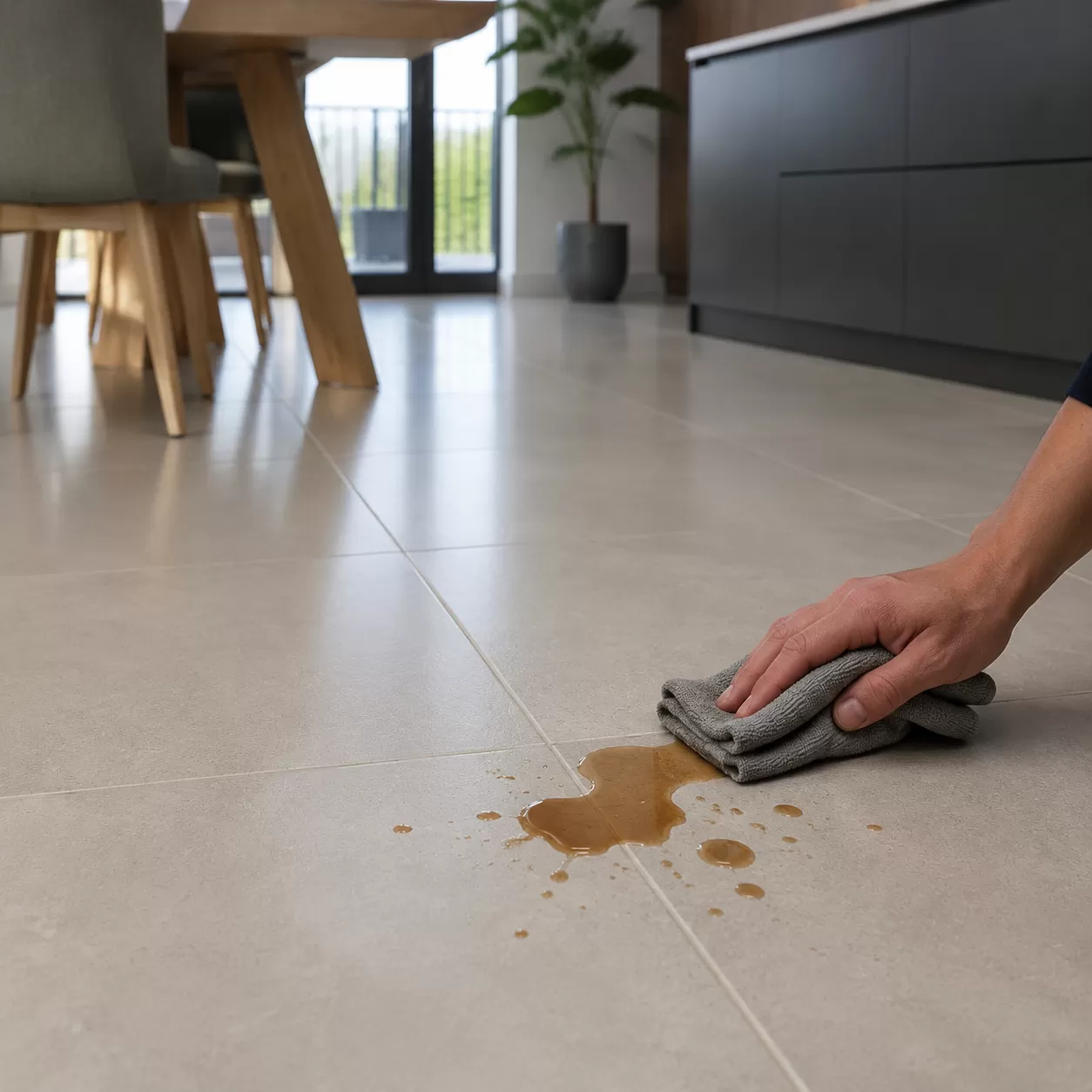
The Science of Stain Resistance: Why Porcelain Excels
When choosing flooring for high-traffic areas, the biggest worry is always the inevitable spill. You want to know: is porcelain tile resistant to stains? As a porcelain tile manufacturer and supplier, I can tell you the firm answer is yes. The secret to this extreme household spill resistance lies entirely in the science behind how we make it.
High-Temperature Kiln Firing
We craft porcelain tile using specialized, refined clays fired at extreme kiln firing temperatures, often reaching up to 2,200°F (1,200°C). This intense heat triggers a process called vitrification, turning the clay into a glass-like, liquid impervious surface.
Dense Microstructure
This extreme heat creates an incredibly dense microstructure. Unlike standard flooring materials, the density and compactness of porcelain mean there are virtually no microscopic voids left inside the tile body.
Water Absorption Rate (ASTM C373)
Because of this dense structure, the tile achieves a certified water absorption rate (ASTM C373 standard) of less than 0.5%.
| Performance Metric | Porcelain Tile Standard | Benefit to You |
|---|---|---|
| Water Absorption (ASTM C373) | < 0.5% (Impervious) | Liquids cannot penetrate the surface |
| Microstructure | Ultra-dense and compact | Prevents deep-set staining |
| Firing Temperature | Up to 2,200°F | Extreme durability and hardness |
Because liquids like red wine, coffee, or oils cannot soak into a non-porous surface, they sit on top instead. This makes porcelain tile inherently stain-resistant right out of the kiln, giving you a low maintenance floor tile that stands up to daily life.
Porcelain vs. Ceramic vs. Natural Stone: The Stain Showdown
When choosing high-traffic flooring, understanding how different materials handle everyday spills is crucial. As a porcelain tile manufacturer and supplier, we see firsthand how porcelain compares to standard ceramic vs porcelain tile options and natural stone alternatives. The differences in liquid impervious surfaces come down to how these materials are made.
Porcelain Tile Benefits
Porcelain is the ultimate winner for household spill resistance. Because of its dense microstructure, it features a virtually non-porous surface that stops liquids from penetrating the face of the tile.
- Zero surface sealing: Unlike other materials, porcelain never requires initial or periodic sealing to keep its stain-resistant properties.
- Low maintenance: It naturally repels deep stains from wine, coffee, and oils right out of the box.
Standard Ceramic Tile Risks
While standard ceramic shares a similar look, it behaves differently under the surface.
- High porosity: The clay body of standard ceramic is much more porous than porcelain.
- Glaze reliance: Ceramic relies entirely on its top glazed layer for stain protection. If that glaze chips or cracks, liquids seep into the core, causing permanent discoloration.
Natural Stone Drawbacks
Natural stone offers high aesthetic value but demands the highest maintenance in the group.
- High absorption: Marble, travertine, and limestone are naturally riddled with microscopic holes that eagerly drink up liquids.
- Periodic sealing required: To prevent permanent staining, natural stone must be treated with chemical sealers every six to twelve months, making it a demanding choice for busy homes.
| Feature | Porcelain Tile | Ceramic Tile | Natural Stone |
|---|---|---|---|
| Surface Porosity | Extremely Low (Non-porous) | Medium (Porous Core) | High (Very Porous) |
| Sealing Required? | No | Only if unglazed | Yes (Every 6-12 months) |
| Stain Resistance | Excellent | Good (Until glaze chips) | Poor (Stains easily) |
Does Finish Matter? Is Porcelain Tile Resistant to Stains in Every Style?
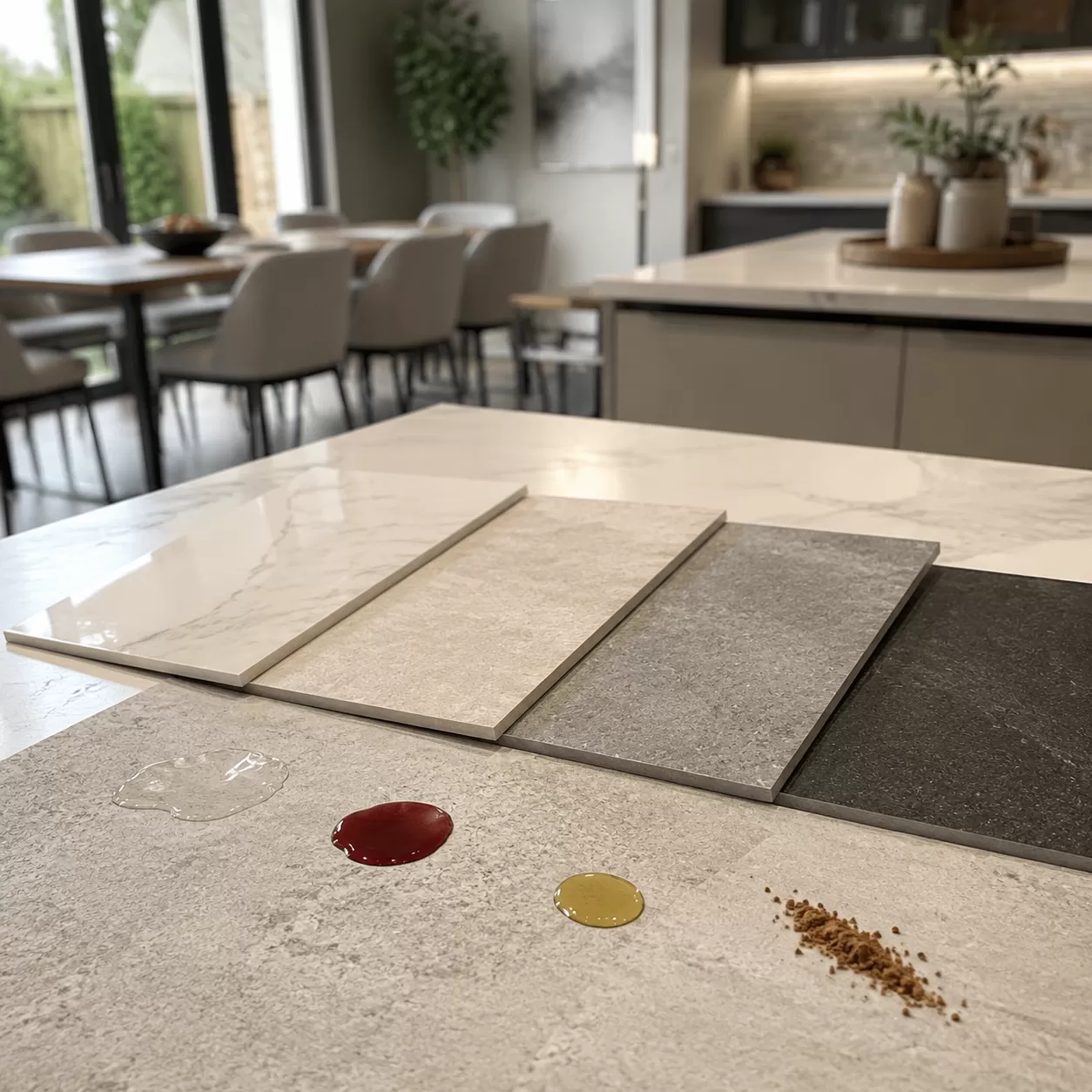
When we manufacture our floor tiles, we look closely at how different finishes handle everyday messes. Is porcelain tile resistant to stains across the board? The short answer is yes, but the surface finish changes how you maintain that household spill resistance.
Here is how the three main finishes stack up:
Glazed Porcelain Tile
- The Gold Standard: This finish features a glass-like protective layer baked onto the surface during the high-temperature kiln firing process.
- Stain Protection: It creates a completely liquid impervious surface. Food, wine, and oils cannot penetrate it.
- Maintenance: This is the ultimate low maintenance floor tile. It never requires sealing.
Matte and Textured Finishes
- The Trade-Off: Matte styles offer superior slip resistance, making them ideal for high-traffic flooring in bathrooms and entryways.
- Stain Protection: The material itself maintains a near-zero water absorption rate (ASTM C373), meaning liquids won’t soak in.
- Maintenance: The microscopic texture can trap surface dirt and grit over time. It won’t stain permanently, but it requires a bit more physical scrubbing to keep clean.
Polished Porcelain Care
- The Polish Factor: To get that high-gloss shine, the tile is ground down with diamond wheels. This process can open up tiny, microscopic pores on the surface.
- Stain Protection: While still a fantastic natural stone alternative, unsealed polished tiles can be vulnerable to deep staining liquids like ink or red wine.
- Maintenance: As a premium porcelain tile manufacturer, we apply advanced surface treatments to seal these micro-pores before shipping. For long-term care, using a pH-neutral tile cleaner keeps the brilliant shine intact without degrading the surface factory seal.
| Finish Type | Stain Resistance Level | Best Use Case | Sealing Required? |
|---|---|---|---|
| Glazed | Maximum | Kitchens, Living Areas | Never |
| Matte / Textured | High (Surface dirt clings) | Bathrooms, Patios, Commercial | No |
| Polished | Moderate to High | Luxury Spaces, Feature Floors | Only if factory seal wears off |
The Hidden Culprit: Why Grout Joint Staining Happens
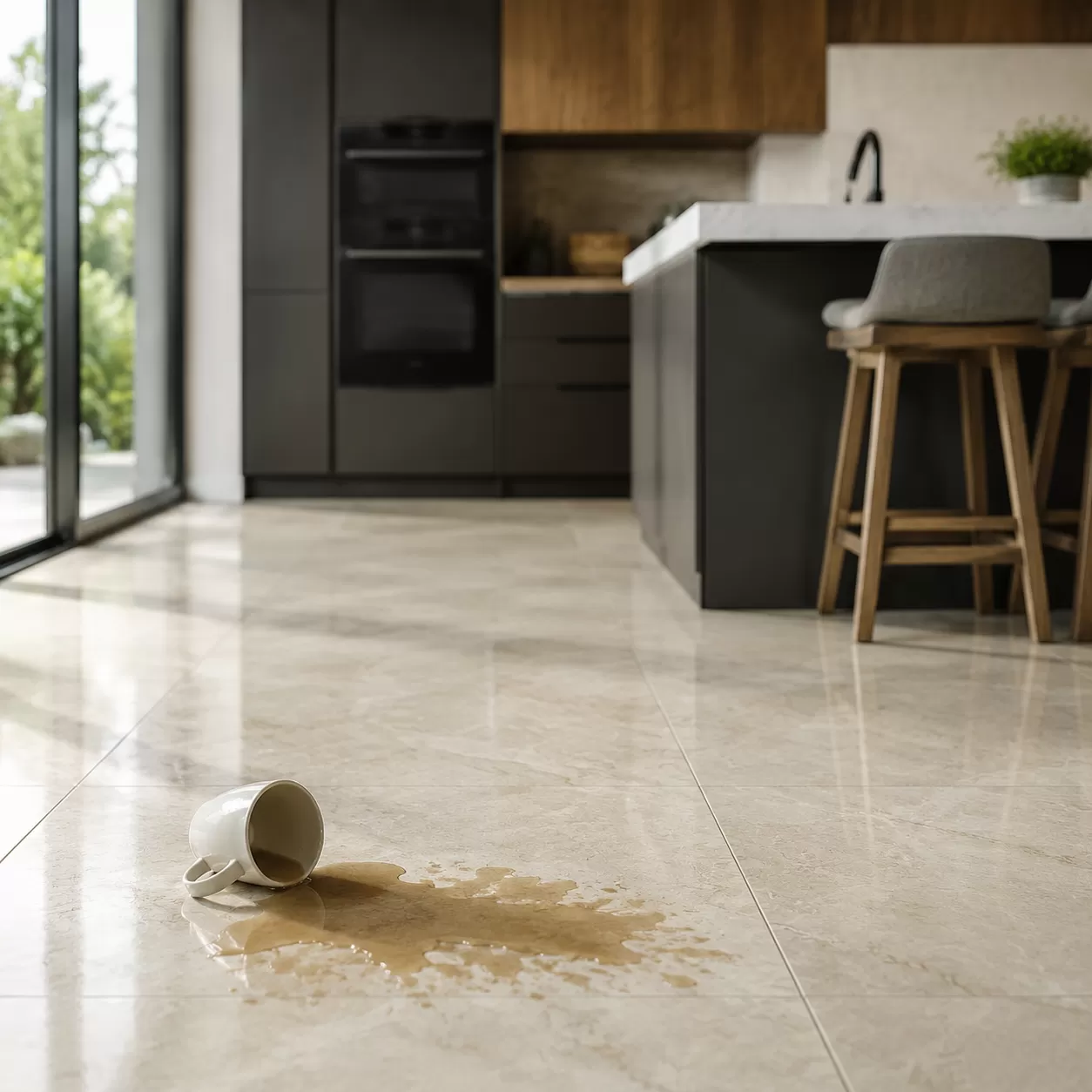
When homeowners complain about stains, they usually point at the floor. However, as a veteran porcelain tile manufacturer, I always tell clients the same thing: is porcelain tile resistant to stains? Absolutely. But your grout is a different story.
Traditional cement-based grout is highly porous. It acts like a sponge, absorbing dirty mop water, coffee spills, and tracked-in mud. While your porcelain tile remains completely unaffected, the grout joint staining can make the entire floor look dirty and neglected.
Smart Strategies to Protect Your Grout Lines
To maintain a truly low maintenance floor and protect your investment, you need to address the grout vulnerabilities directly:
- Apply a High-Quality Sealer: If you use standard cement grout, you must seal it immediately after installation. This creates a temporary barrier against liquid penetration.
- Reapply Regularly: Grout sealer degrades over time due to foot traffic and cleaning. Plan to reapply a penetrating sealer every 1 to 3 years.
- Upgrade to Epoxy Grout: For absolute peace of mind, skip cement grout entirely. Premium epoxy grout is made from acrylic resins. It is completely non-porous, naturally stain-resistant, and never requires sealing.
By pairing stain-impervious porcelain tiles with the right grout strategy, you ensure your floor stays pristine for decades.
Is Porcelain Tile Resistant to Stains in Real-World Tests?
We put our floor tiles through rigorous real-world testing to see how they handle everyday chaos. Because our porcelain tile manufacturer processes utilize extreme density, these liquid impervious surfaces stand up to the toughest household spill resistance tests.
Kitchen Hazards vs. Non-Porous Surfaces
The kitchen is the ultimate testing ground for stain resistance. We subjected our tiles to the worst offenders, and the results prove why porcelain is the premier natural stone alternative for high-traffic flooring:
- Cooking Oils & Tomato Sauces: Standard ceramic vs porcelain tile tests show that oils and acidic tomato sauces sit on top of porcelain without penetrating the surface.
- Coffee & Red Wine: These highly pigmented liquids wipe away effortlessly, even if left to dry overnight.
- Acidic Liquids: Vinegar and citrus juices won’t etch or dull the surface, keeping the original finish intact.
Bathroom, Mudroom, and Pet Messes
In damp, busy areas, our tiles act as a shield against deep-set discoloration.
- Cosmetics & Hair Dyes: High-pigment makeup, nail polish, and dyes cannot bond with the non-porous surface.
- Pet Accidents: Mud, urine, and tracked-in waste stay on the surface, making sanitation fast and foolproof.
- Wet Soils: Gritty, wet dirt from the mudroom wipes clean without scratching or leaving a dingy trail behind.
Outdoor Weathering and UV Resistance
Our porcelain tiles aren’t just for indoors. When used on patios or outdoor kitchens, they maintain their premium look regardless of the elements.
| Outdoor Threat | Porcelain Tile Performance |
|---|---|
| Direct UV Sunlight | Zero fading; colors stay vibrant permanently. |
| Barbecue Grease | Wipes clean with a basic degreaser; no permanent oil rings. |
| Bird Droppings & Leaves | Cannot penetrate the surface; easily power-washed away. |
Low-Maintenance Care Tips for Porcelain Tile Lifelong Beauty
Keeping your high-traffic flooring looking brand new doesn’t require hours of scrubbing. Because we engineer our tiles with a dense microstructure, dirt and grime stay right on the surface. Follow this straightforward routine to maintain that flawless, liquid impervious surface for decades.
Simple Daily Cleanup
For everyday messes, you can skip the harsh chemicals entirely. Is porcelain tile resistant to stains? Yes, and cleaning it is just as effortless.
- Sweep or vacuum regularly to remove loose dirt and grit that can act like sandpaper.
- Mop with warm water and a damp microfiber mop. Microfiber traps dirt instead of just pushing it around.
- Dry the floor with a clean towel if you have a polished finish to prevent minor water spots.
Deep Cleaning Routine
When life happens and you need a deeper clean for household spill resistance, opt for a specialized approach rather than generic grocery store cleaners.
- Use a pH-neutral tile cleaner diluted in warm water.
- Let the solution sit on the surface for two to three minutes to loosen stubborn grime.
- Scrub gently with a nylon-bristle brush along the grout joint areas.
- Rinse thoroughly with clean water to remove any leftover residue.
Bad Cleaning Habits to Avoid
To protect your investment and maintain the factory shine of your low maintenance floor tiles, keep these damaging tools and products away from your floor:
| What to Avoid | Why It Damages Porcelain | Better Alternative |
|---|---|---|
| Steel Wool & Metal Scrapers | Scratches the protective glaze or polished surface permanently. | Nylon scrubbing pads or soft bristles. |
| Waxy & Oil-Based Cleaners | Leaves a dulling film that actually traps dirt and attracts stains. | pH-neutral tile cleaner. |
| Ammonia & Bleach | Can erode the grout joints and discolor unglazed tile over time. | Mild, neutral detergents. |
FAQs About Porcelain Tile and Stains
Can red wine permanently stain unglazed porcelain tile?
Yes, it can if left to sit. While unglazed porcelain has a dense microstructure and a low water absorption rate (ASTM C373), it lacks a protective glaze. Liquid impervious surfaces aren’t completely bulletproof without that top barrier. If red wine pools on unglazed flooring for an extended period, the pigments can sink into the microscopic pores. Clean up spills immediately to avoid deep discoloration.
How often do you need to seal porcelain tile grout lines?
You should seal your grout lines every 1 to 3 years. While we offer highly durable, low-maintenance floor tiles, the traditional cement-based grout between them is highly porous. Grout joint staining is the number one complaint in high-traffic flooring installations. If you want to skip the sealing hassle entirely, we recommend using a premium epoxy grout during installation.
Will harsh chemical cleaners damage the tile surface shine?
Yes, over time they absolutely will. Corrosive chemicals, highly acidic liquids, and heavy bleach erode the surface finish, especially on a polished porcelain slab. To protect the factory shine and long-term durability of your floor tiles, always use a mild, pH-neutral tile cleaner for your maintenance routine.
What is the best way to remove stubborn dried stains from porcelain?
- Step 1: Soak the dried spill with warm water for 5 to 10 minutes to loosen it.
- Step 2: Scrub gently with a nylon brush or a microfiber cloth.
- Step 3: For greasy or sticky residues, apply a specialized pH-neutral tile cleaner.
- Step 4: Rinse thoroughly with clean water and dry the surface completely.
- What to avoid: Never use steel wool or abrasive scouring pads, as they will scratch the tile face.
