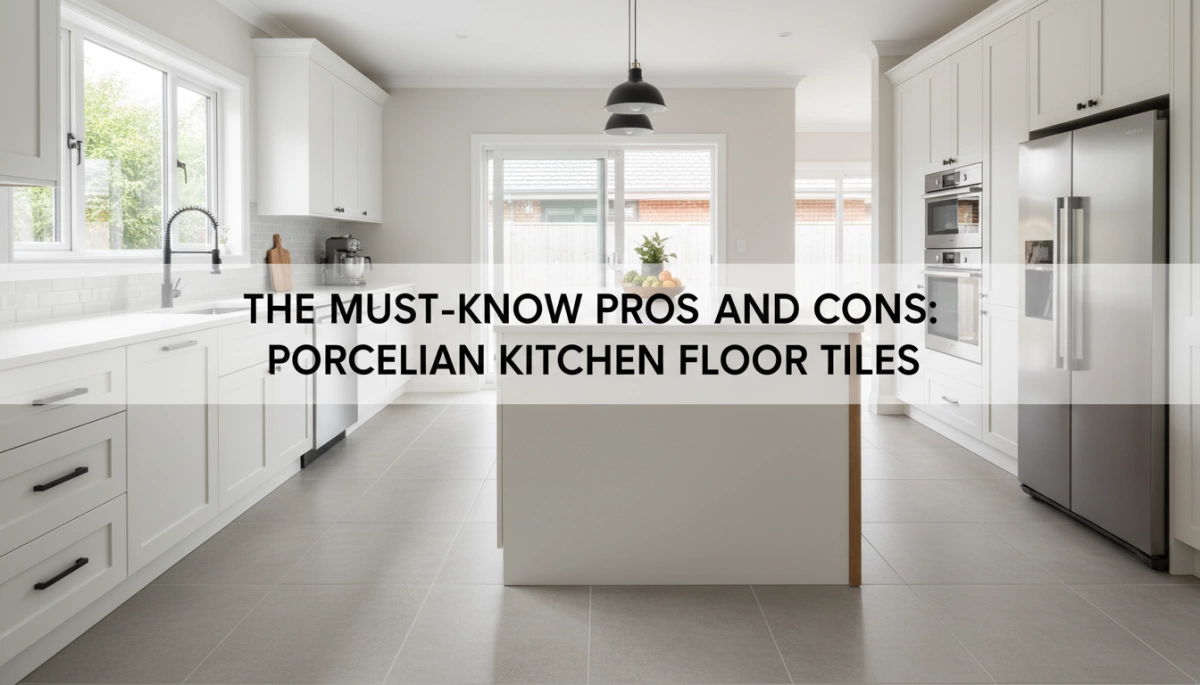
Thinking about upgrading your kitchen flooring? Porcelain kitchen floor tiles could be the perfect choice — but is it worth the investment? In this guide, I’ll walk you through everything you need to know: the benefits, the drawbacks, and how porcelain compares to other options. Whether you’re aiming for durability, style, or cost-efficiency, understanding the pros and cons of porcelain will help you make an informed decision that lasts. Let’s cut through the confusion and get straight to what matters for your kitchen remodel!
Understanding Porcelain Kitchen Floor Tiles
Porcelain kitchen floor tiles represent the gold standard in modern residential and commercial flooring. As a specialized porcelain tile manufacture and supplier, we understand that the kitchen is the highest-traffic area in any home, demanding a surface that balances aesthetic appeal with extreme technical performance.
What is Porcelain Tile?
Porcelain is a specific subtype of ceramic tile, but it is engineered to be much denser and more durable. It is crafted from highly refined clay and fired at significantly higher temperatures than standard ceramics. This intense manufacturing process results in a vitrified material with an incredibly low water absorption rate—typically less than 0.5%.
| Feature | Porcelain Tile Specification |
|---|---|
| Composition | Refined Kaolin clay, feldspar, and quartz |
| Firing Temp | 1,200°C to 1,400°C |
| Density | High (Vitrified) |
| Water Absorption | < 0.5% (Impervious) |
Why Choose Porcelain for Kitchen Floors?
The kitchen environment is prone to spills, dropped heavy cookware, and constant foot traffic. Porcelain is the premier choice because it is inherently waterproof and resistant to staining. Unlike natural stone, it does not require periodic sealing to maintain its integrity.
- Exceptional Hardness: Resistant to scratches from pets, furniture, and heavy appliances.
- Hygiene: Its non-porous surface prevents the growth of bacteria and mold.
- Easy Maintenance: Most spills can be wiped away with a damp cloth and mild detergent.
- Longevity: Designed to last for decades without showing signs of wear or fading.
Pros of Porcelain Kitchen Floor Tiles
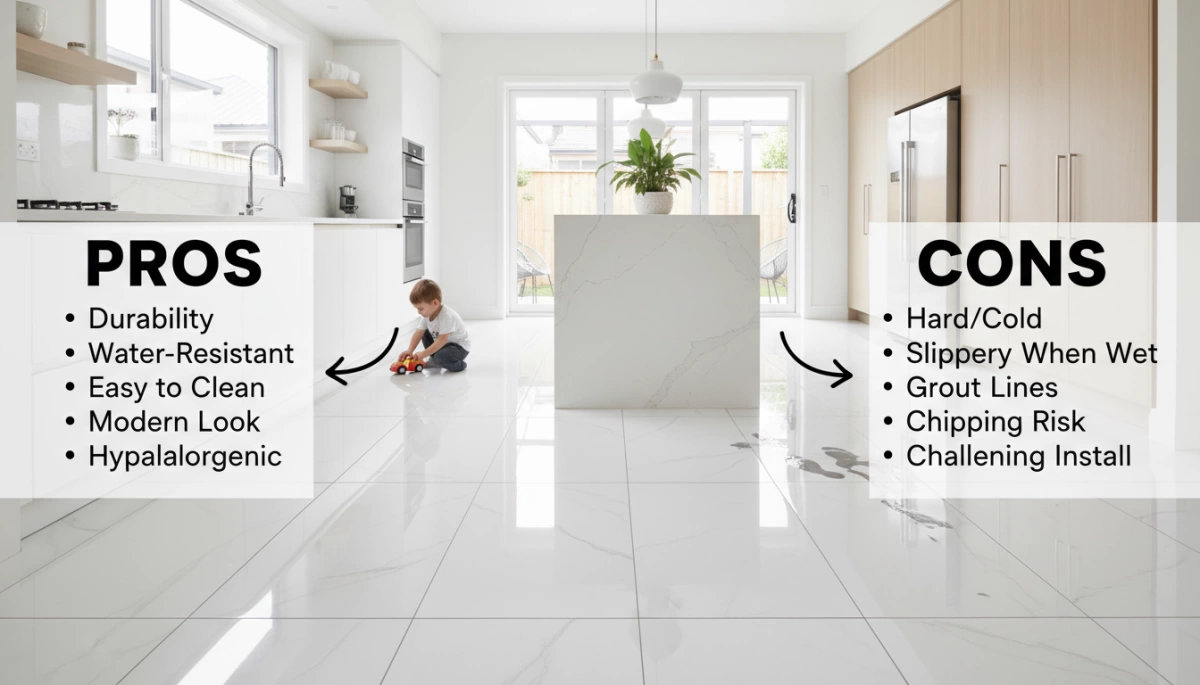
When upgrading your space, understanding the pros and cons of porcelain kitchen floor tiles is essential. As a porcelain tile manufacture and supplier, we see firsthand why this material remains a top choice for homes worldwide. Here is a breakdown of its biggest advantages.
Unmatched Durability and Longevity
Porcelain is fired at extremely high temperatures, making it significantly denser and harder than standard ceramic. It effortlessly handles heavy foot traffic, dropped utensils, and the daily chaos of a busy kitchen. A properly installed porcelain floor resists scratches and chipping, easily lasting for decades without losing its original appeal.
Superior Water and Heat Resistance
Kitchens are prone to spills, splashes, and temperature changes. Porcelain boasts an exceptionally low water absorption rate of less than 0.5%, making it completely waterproof. It will never warp, swell, or rot when exposed to moisture. Additionally, it handles heat beautifully, making it an ideal match for underfloor radiant heating systems.
Low Maintenance and Easy to Clean
You should enjoy your kitchen, not spend hours scrubbing it. Porcelain guarantees easy maintenance because dirt, liquids, and stains remain on the surface rather than soaking in.
- Stain-Resistant: Coffee, wine, and oil spills wipe away effortlessly.
- No Sealing Required: Glazed porcelain does not need the harsh chemical sealers required by natural stone.
- Hygienic: The ultra-dense surface prevents bacteria, mold, and allergens from taking root.
Versatile Design Options
You never have to compromise on aesthetics to get high performance. Advanced digital printing technology allows porcelain to flawlessly mimic high-end materials.
| Design Style | Why It Works in the Kitchen |
|---|---|
| Wood-Look | Delivers the cozy warmth of hardwood without the risk of water damage or scratching. |
| Natural Stone | Replicates the luxury of marble, slate, or travertine without the demanding upkeep. |
| Concrete-Look | Provides a sleek, industrial vibe perfect for modern and minimalist spaces. |
| Custom Patterns | Offers geometric and vintage prints to create a bold, personalized focal point. |
Cons of Porcelain Kitchen Floor Tiles
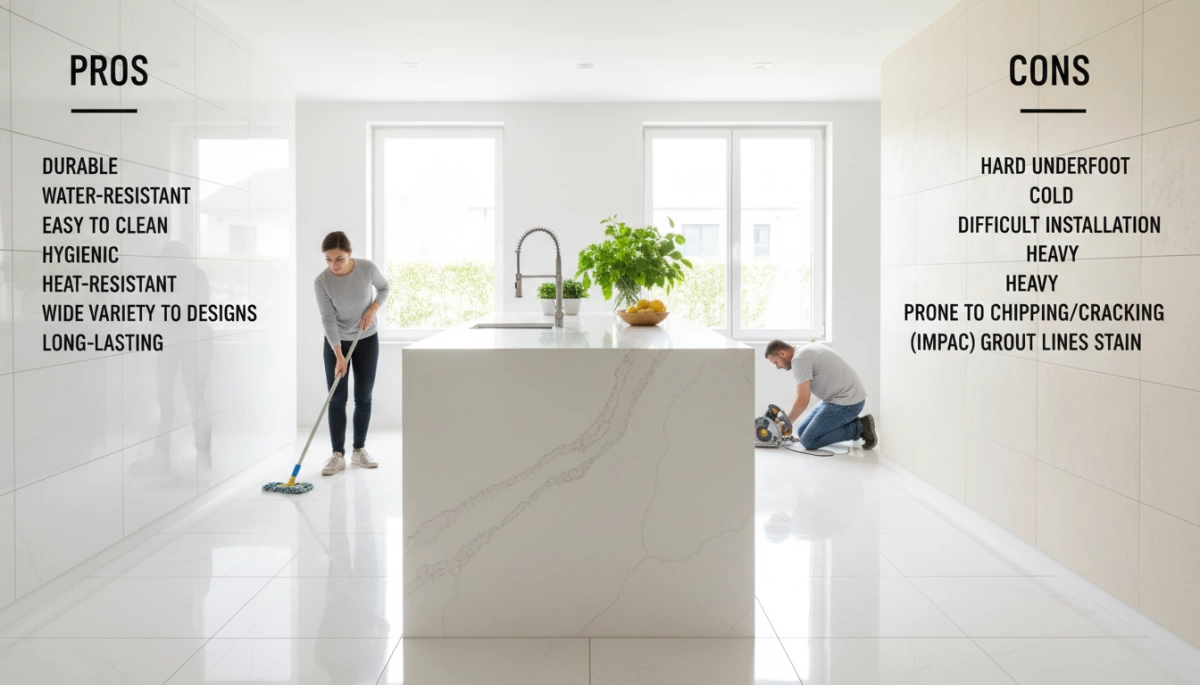
As we are a porcelain tile manufacture and supplier, we know our products inside and out. While porcelain is an incredible material, it is important to understand its few drawbacks so you can plan your kitchen upgrade effectively.
Higher Initial Cost
The upfront price tag for porcelain kitchen floor tiles is generally higher than standard ceramic or vinyl options.
- Premium Manufacturing: The high-heat firing process required to make porcelain drives up the material cost.
- Long-Term Value: Despite the initial expense, its extreme durability and easy maintenance make it a highly cost-effective investment over the lifespan of your home.
Difficult and Heavy Installation
Porcelain’s incredible density makes it a challenging material to handle and install.
- Heavyweight: The tiles are significantly heavier than other flooring types, requiring a strong subfloor.
- Hard to Cut: Due to its extremely low water absorption rate and rigid structure, cutting porcelain requires specialized diamond-blade wet saws. We always recommend hiring experienced professionals rather than attempting a DIY installation.
Cold and Hard Surface
The same density that makes porcelain durable also makes it completely unforgiving.
- Tough on Joints: Standing on a rigid floor for long periods while cooking can cause foot and back fatigue. Adding cushioned anti-fatigue mats in heavy prep areas is a simple fix.
- Temperature: The surface stays naturally cold. While this is great for warm climates, you may want to pair these tiles with radiant underfloor heating for colder winter months.
Slippery When Wet
Because the material is entirely waterproof, liquids sit directly on the surface rather than soaking in.
- Slip Hazards: High-gloss or polished porcelain finishes become extremely slippery when spills happen.
- The Solution: For active kitchen environments, always opt for matte or textured finishes to provide better traction and keep your space safe.
Porcelain Tile vs. Other Kitchen Flooring Options
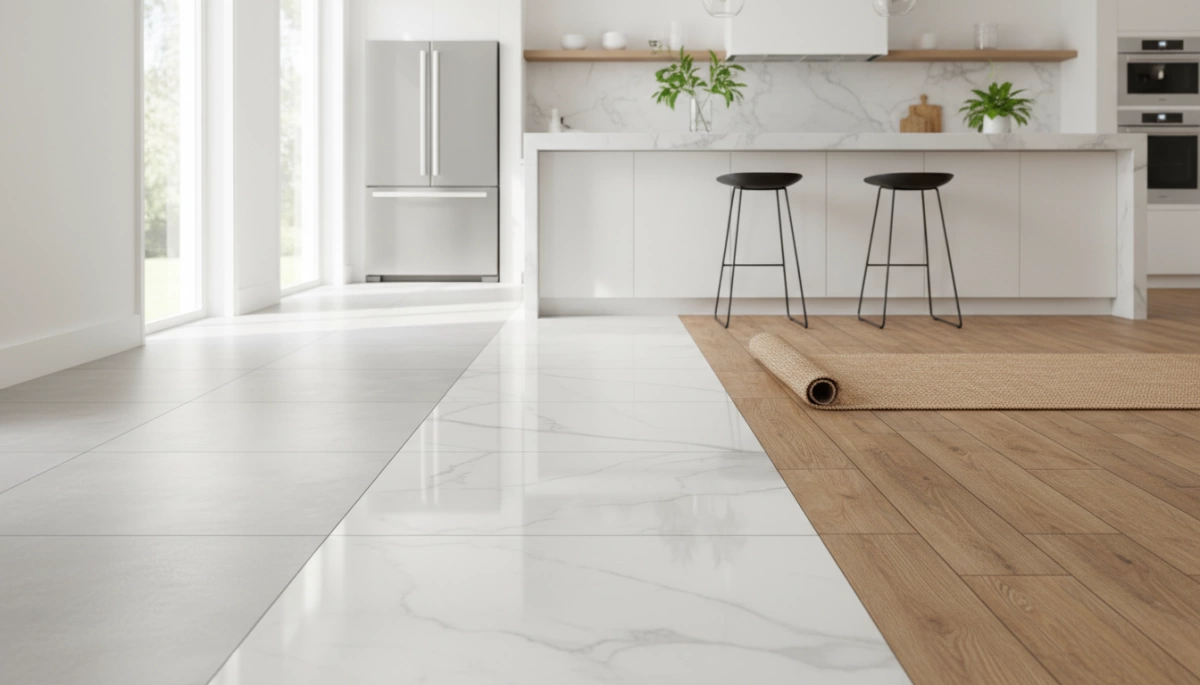
As a porcelain tile manufacturer and supplier, we often help customers compare materials to find the exact fit for their homes. Understanding how porcelain stacks up against other popular choices makes your flooring decision much easier.
Porcelain vs. Ceramic Tile
While they look similar and share the same clay-based origins, these two materials perform very differently under pressure.
- Density: Porcelain is fired at much higher temperatures, making it significantly denser and harder than standard ceramic.
- Water Absorption: Porcelain features an incredibly low water absorption rate (less than 0.5%), making it truly waterproof. Ceramic is more porous and prone to absorbing moisture.
- Durability: Porcelain handles heavy kitchen foot traffic effortlessly, resisting chips and deep scratches far better than ceramic.
Porcelain vs. Laminate Flooring
Laminate is a common budget-friendly option, but it falls short in active, spill-prone environments.
- Moisture Resistance: Laminate planks will swell, warp, and peel when exposed to standing water. Porcelain is 100% waterproof and unaffected by kitchen spills.
- Lifespan: Porcelain floors can last for decades. Laminate typically shows wear and needs replacing every 10 to 15 years.
- Upkeep: Both offer easy maintenance for daily sweeping, but porcelain can handle heavy-duty mopping without structural damage.
Porcelain vs. Natural Stone
Natural stone offers a high-end luxury feel, but it comes with strict and costly upkeep requirements.
- Maintenance: Real stone requires regular chemical sealing to prevent stains and moisture damage. Porcelain delivers incredibly easy maintenance with absolutely zero sealing required.
- Cost: Porcelain is generally more affordable to purchase and install than premium natural stone slabs.
- Design: Modern manufacturing allows porcelain to mimic marble, slate, or travertine flawlessly, giving you the exact look of stone without the fragile nature or high price tag.
Flooring Comparison Breakdown
| Feature | Porcelain Tile | Ceramic Tile | Laminate Flooring | Natural Stone |
|---|---|---|---|---|
| Waterproof | Yes (Extremely low absorption) | Moderate | No (Prone to warping) | Varies (Needs sealing) |
| Durability | Excellent | Good | Fair | Excellent |
| Maintenance | Very Easy | Easy | Easy | High (Requires sealing) |
| Price Point | Medium to High | Low to Medium | Low | High |
Porcelain Floor Tile Cost and Installation
Average Material and Labor Costs
When planning your kitchen remodel, understanding the financial side is crucial. As a porcelain tile manufacturer and supplier, we know that prices vary based on the style, size, and finish you choose.
Here is a quick breakdown of what you can expect to pay for porcelain kitchen floor tiles:
- Material Costs: Prices typically range from $3 to $10 per square foot. High-end textures or large-format tiles will push this number toward the higher end.
- Labor Costs: Professional installation usually runs between $5 and $15 per square foot, depending on your location and the complexity of the layout.
- Total Investment: Expect to spend about $8 to $25 per square foot fully installed.
DIY vs. Professional Installation
Deciding who puts the floor down is just as important as picking the tile itself. Porcelain is incredibly dense, which gives it an ultra-low water absorption rate, but it also makes it notoriously hard to cut and handle.
- Going the DIY Route: You save significantly on labor costs. However, you will need to rent specialized equipment, such as a diamond-blade wet saw. It is heavy, time-consuming work that requires a perfectly level subfloor to prevent future cracking.
- Hiring a Professional: Paying for an expert ensures the job is done right the first time. Professionals handle the heavy lifting, make precise cuts around kitchen islands and cabinets, and ensure proper grouting. This guarantees your floor remains 100% waterproof and delivers the easy maintenance you expect from premium porcelain.
Is Porcelain Tile Right for Your Kitchen?
As a porcelain tile manufacturer and supplier, I always tell clients that choosing the right flooring comes down to balancing your daily lifestyle with your long-term goals. Porcelain is a premium choice, but you need to make sure it practically fits your specific space.
Evaluating Your Budget and Comfort
You have to weigh the initial price tag against the lifespan of the floor. Porcelain requires a higher upfront investment, but its completely waterproof surface and near-zero water absorption mean it outlasts almost every other material. It will not warp, swell, or stain over time.
Comfort is the other major factor to evaluate. Because porcelain is incredibly dense and hard, standing on it for hours while cooking or baking can be tough on your joints. I highly recommend placing anti-fatigue gel mats in high-traffic prep zones, like directly in front of the stove or sink, to keep your kitchen comfortable.
Tips for Selecting the Best Style
Finding the right look is about merging safety with aesthetics. Keep these practical tips in mind when finalizing your design:
- Prioritize matte or textured finishes: High-gloss tiles look sleek but get very slippery when wet. A matte finish offers better traction for a busy, spill-prone kitchen.
- Upsize your tiles: Opting for large-format tiles minimizes the number of grout lines. Fewer grout lines guarantee incredibly easy maintenance and create a more seamless, expansive look in your room.
- Leverage high-definition printing: You do not have to sacrifice style for durability. Choose wood-look or natural stone-look porcelain to get the exact aesthetic you want without the fragile nature of real hardwood or marble.
