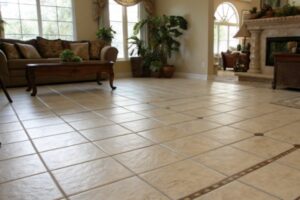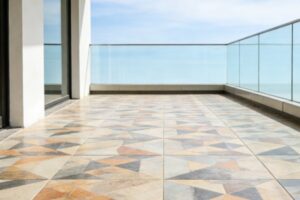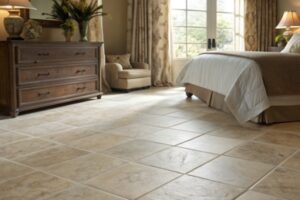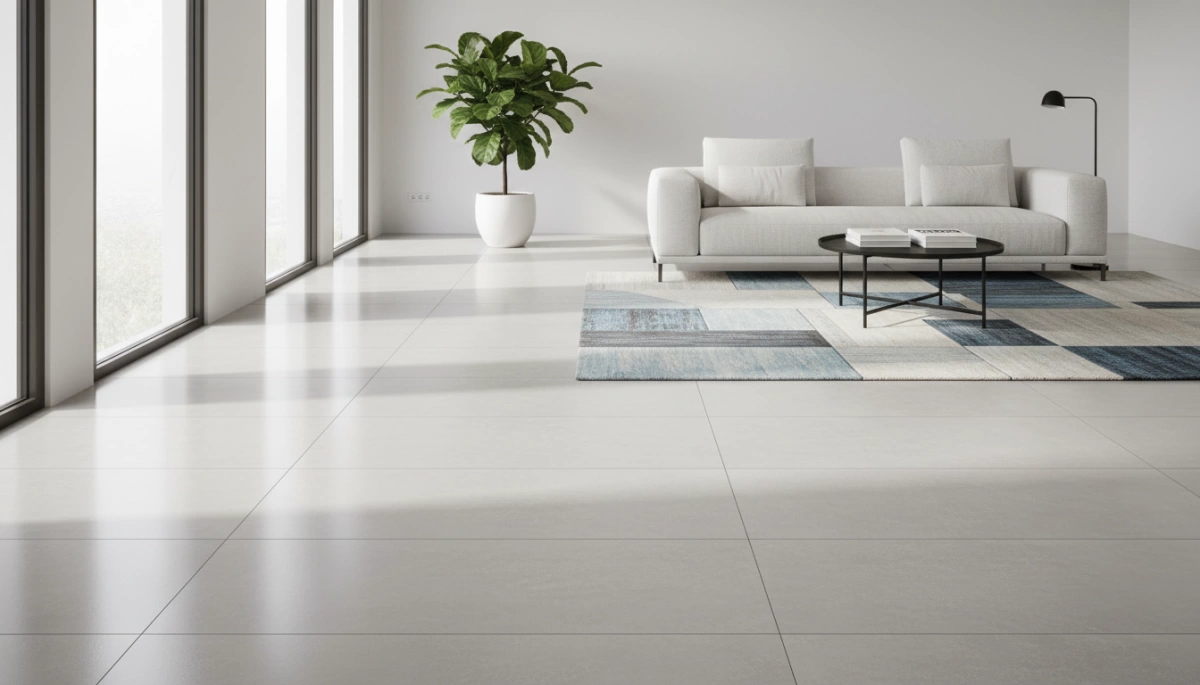
What is Porcelain Tile Flooring?
Porcelain tile flooring represents the pinnacle of durability and architectural elegance. As a highly refined, premium category of ceramic tile, it is engineered to deliver unmatched structural integrity and visual appeal for both residential and commercial spaces.
How Porcelain Tile is Made
The superior strength of porcelain lies in its rigorous, high-performance manufacturing process.
- Raw Materials: Crafted from finely ground, highly purified clays, sand, and feldspar.
- The Firing Process: Baked in kilns at extreme temperatures, frequently exceeding 2,300°F (1,260°C).
- The Result: This intense heat forces out moisture and fuses the materials together, resulting in a remarkably dense product that boasts exceptional water resistance and lifelong durability.
Glazed vs. Unglazed Porcelain
Selecting the correct finish guarantees peak performance and aesthetic value for your specific environment.
| Tile Type | Key Characteristics | Best Application |
|---|---|---|
| Glazed Porcelain | Features a fused liquid glass surface coating. Delivers limitless design possibilities, vibrant colors, and intricate patterns. | Ideal for bathroom floors, kitchen flooring, and stylish residential interiors. |
| Unglazed Porcelain | The color and texture run consistently through the entire body of the tile. Naturally conceals chips or scratches. | Perfect for high-traffic commercial zones and outdoor areas requiring maximum slip resistance. |
Rectified vs. Non-Rectified Edges
The edge treatment of the tile directly dictates the final visual impact and precision of your installation.
- Rectified Edges: These tiles are mechanically precision-cut after the firing process to ensure exact, uniform dimensions. This engineering allows for razor-thin grout lines and a flawless, seamless finish—highly recommended when installing sleek large format tile.
- Non-Rectified Edges: These tiles retain their natural, slightly rounded edges straight from the kiln. Because of microscopic size variations during baking, they require wider grout lines, providing a softer, more traditional aesthetic.
Pros and Cons of Porcelain Tile Flooring
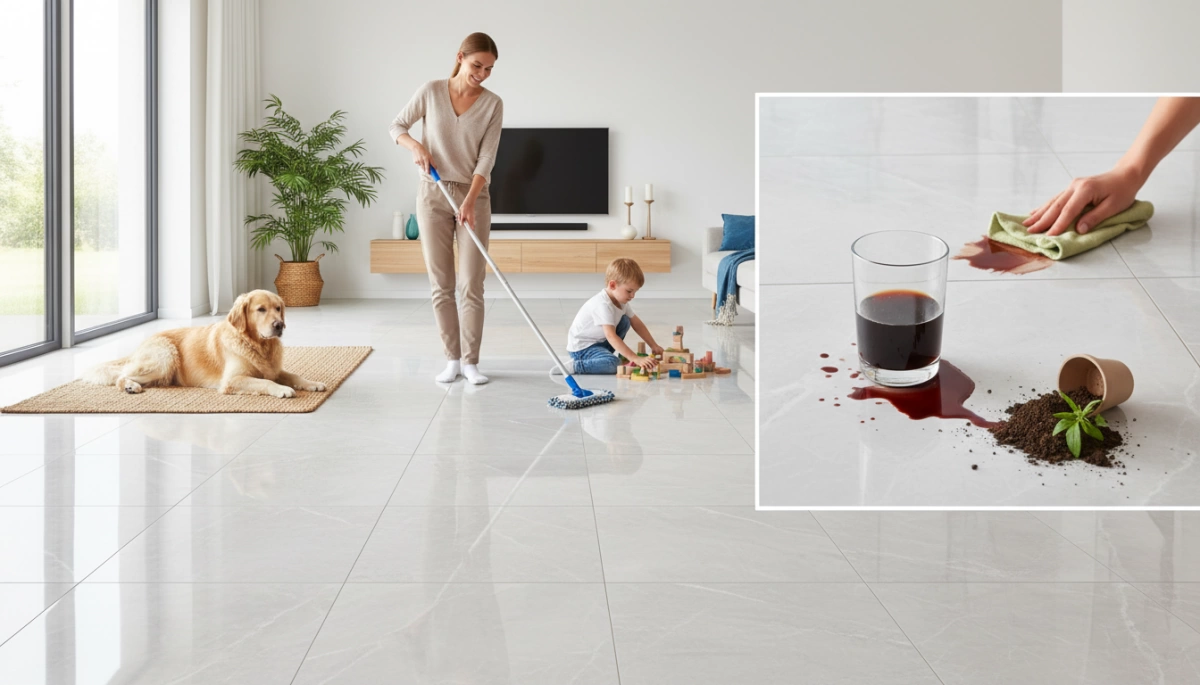
When I weigh the options for modern homes and commercial spaces, the advantages of porcelain tile flooring clearly outshine the few drawbacks, such as its heavier weight and slightly higher upfront cost. Here is exactly what you get when you choose this material.
Unmatched Durability and Lifespan
I always highlight the sheer strength of porcelain. Because it is manufactured with highly refined clay and fired at extreme temperatures, it is significantly denser than standard ceramic tile.
- Scratch and Dent Proof: It easily withstands heavy foot traffic, pet claws, and sliding furniture.
- Decades of Use: This is a permanent upgrade that won’t show wear paths or fade over time.
- Structural Integrity: Whether you install standard planks or a modern large format tile, the dense core resists cracking under pressure.
Water Resistance for Wet Areas
Superior water resistance is exactly why I trust this material in the most active and messy zones of a property. It boasts a water absorption rate of less than 0.5%, meaning it practically repels moisture.
| Ideal Application | Why It Excels |
|---|---|
| Bathroom floors | Safely handles daily steam, high humidity, and direct shower splashes without warping. |
| Kitchen flooring | Completely blocks out spilled liquids, cooking grease, and dropped food. |
| Entryways & Mudrooms | Rainwater and melting snow sit on the surface without seeping into the subfloor. |
Maintenance and Ease of Cleaning
You don’t need expensive chemicals or heavy machinery to keep these floors looking brand new. The upkeep is incredibly straightforward, which is exactly what busy property owners demand.
- Effortless Routine: A quick sweep and a warm, damp mop clear away daily dirt and grime.
- Stain Blocking: The naturally hard surface stops spills from penetrating, so accidents wipe right off.
- Zero Sealing: Unlike porous natural stone, you never have to strip or apply topical sealers to protect the finish.
Porcelain vs. Ceramic Tile
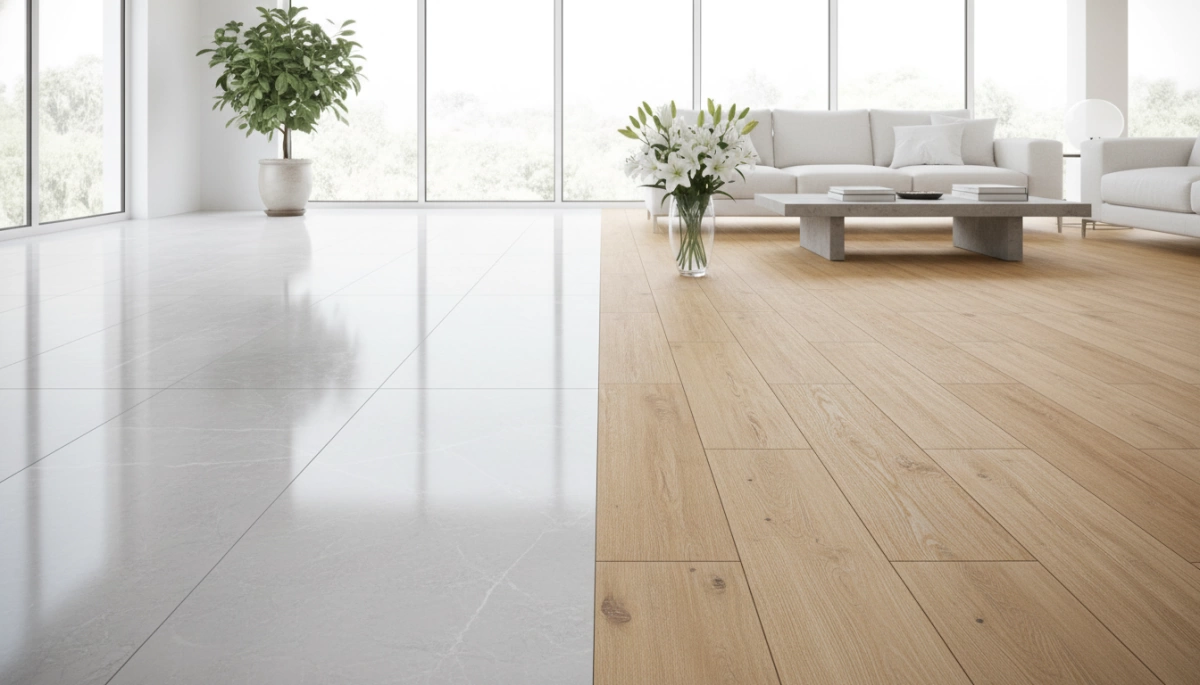
When choosing floors for your space, the debate between porcelain tile flooring and ceramic tile always comes up. As an industry supplier, I see customers struggle with this choice daily. The right option depends entirely on your environment, but the physical differences between the two are undeniable.
Construction and Density
The core difference lies in the clay and the firing process.
- Porcelain Tile: Made from highly refined, purified clay and fired at extreme temperatures. This creates a hyper-dense, solid material.
- Ceramic Tile: Made from coarser clay and fired at lower temperatures, resulting in a softer, more porous finish.
Because of this ultra-dense construction, porcelain delivers superior water resistance, blocking out moisture that standard ceramic might absorb.
Handling Heavy Foot Traffic
If you are outfitting a busy residential or commercial property, you need materials that fight back against wear and tear.
- High-Traffic Winner: Porcelain easily withstands heavy footfalls, dropped items, and pet claws. It is the gold standard for active kitchen flooring and main living areas.
- Low-Traffic Alternative: Ceramic is better suited for areas with lighter use. It is perfectly fine for guest bathroom floors, but it is more prone to cracking under heavy impact.
Installation and Cost Comparison
Density impacts both the price tag and the labor required to lay the floor. Because porcelain is incredibly hard, cutting it requires specialized diamond blades—especially if you are installing a trendy large format tile.
| Feature | Porcelain Tile Flooring | Ceramic Tile |
|---|---|---|
| Material Cost | Higher upfront investment | Very budget-friendly |
| Installation | Difficult to cut; professional needed | Easier to score and snap; DIY-friendly |
| Durability | Maximum lifespan; highly scratch-resistant | Moderate lifespan; chips easier |
| Ideal Usage | Heavy traffic, wet zones, outdoor spaces | Walls, backsplashes, light-traffic rooms |
Popular Porcelain Tile Styles and Designs
We know that upgrading your space means finding the perfect balance between aesthetics and performance. Porcelain tile flooring delivers incredible design versatility, making it easy to match any architectural style worldwide.
Natural Wood and Stone Looks
Advanced manufacturing has completely transformed how we design our floors. You can now get the exact look of nature but with the engineered strength of porcelain.
- Wood-Look Tile: Enjoy the rich, warm texture of hardwood without the fear of moisture damage. It is an incredibly smart choice for kitchen flooring where spills, heavy foot traffic, and dropped items are a daily reality.
- Stone-Look Tile: Achieve the high-end luxury of marble, slate, or limestone. Unlike actual natural stone, porcelain requires zero sealing and resists staining perfectly.
Trending Colors and Finishes
Selecting the right finish changes the entire feel of a room. Here is what is driving the global market right now:
- Matte Finishes: These offer a modern, understated aesthetic. They provide superior slip resistance, making them a highly practical and safe option for wet areas like bathroom floors.
- Polished Finishes: High-gloss tiles bounce light around the room, instantly making smaller spaces feel more expansive and premium.
- Color Trends: Warm earthy neutrals, cool industrial grays, and bold, high-contrast veining remain our most requested styles across all regions.
Standard and Large Format Tile Sizes
The physical size of your tile impacts both the installation process and the final visual flow of the room. Using a large format tile is a major trend right now because it drastically reduces the number of grout lines, resulting in a cleaner, uninterrupted surface.
| Tile Size Category | Typical Dimensions | Best Application |
|---|---|---|
| Standard | 12″x12″, 12″x24″ | Traditional layouts, smaller rooms, and complex, angled floor plans. |
| Large Format | 24″x24″, 24″x48″+ | Open-concept living areas, modern commercial spaces, and seamless designs. |
| Planks | 6″x36″, 8″x48″ | The absolute best choice for achieving realistic, staggered wood-floor aesthetics. |
Best Rooms for Porcelain Tile Flooring
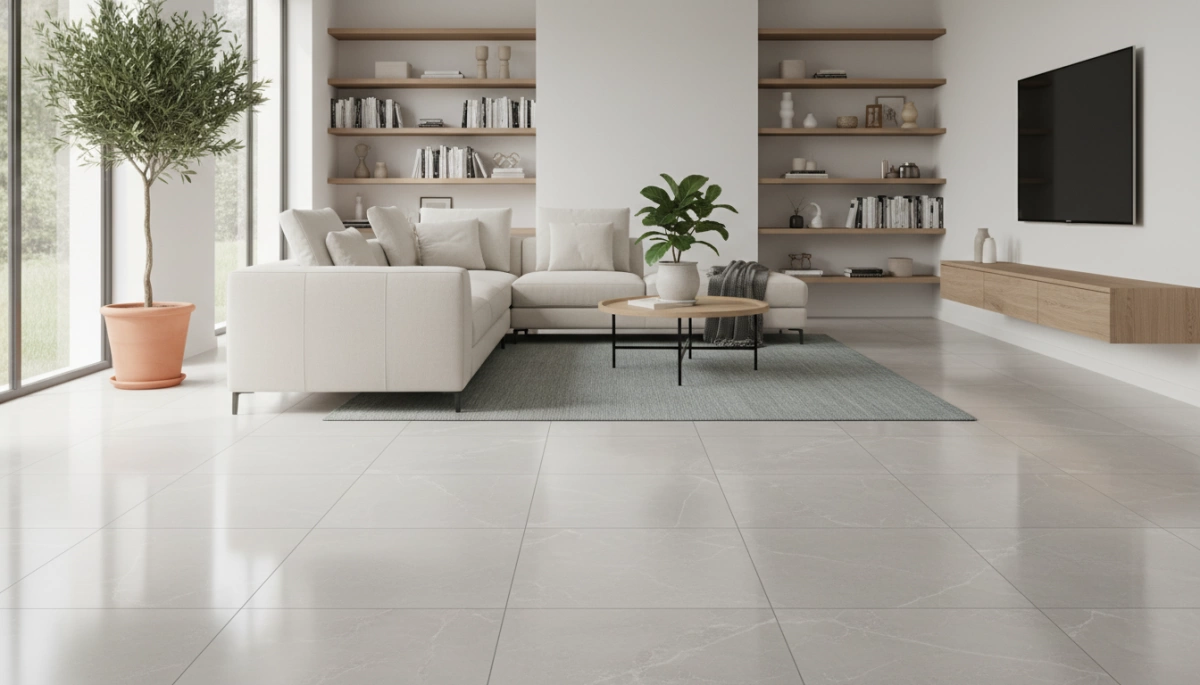
I always recommend porcelain for spaces that demand both style and serious durability. It handles moisture and foot traffic much better than standard ceramic tile, making it incredibly versatile for almost any project.
Kitchen Floors and High-Traffic Areas
Your kitchen takes a daily beating. Porcelain tile flooring is dense enough to handle dropped pots, pet claws, and constant movement without showing wear.
- Maximum Durability: It resists scratches and scuffs in busy entryways, hallways, and living rooms.
- Stress-Free Maintenance: Food spills and messes on your kitchen flooring wipe right up without leaving permanent stains.
Bathroom Walls and Wet Spaces
Because of its near-zero moisture absorption, porcelain offers unmatched water resistance. It is the ultimate shield against mold and structural water damage.
- Bathroom Floors: Textured finishes provide excellent slip resistance for wet, bare feet.
- Shower Enclosures: I love using large format tile on bathroom walls because fewer grout lines mean way less scrubbing and a seamless, modern look.
Outdoor Patios and Pavers
Porcelain isn’t just for the indoors. Special exterior-grade pavers are built to withstand harsh weather conditions globally.
| Outdoor Application | Why Porcelain Works |
|---|---|
| Patios and Walkways | Highly UV-resistant, ensuring the color won’t fade under direct sunlight. |
| Pool Decks | Frost-proof construction stands up to freezing temperatures and harsh pool chemicals without cracking. |
Porcelain Tile Flooring Installation and Care
When we talk about porcelain tile flooring, doing the job right the first time pays off. Because it is considerably denser and heavier than standard ceramic tile, installation takes a bit more muscle and precision. Here is how to handle the setup and keep the surface looking brand new for decades.
Subfloor Prep and Requirements
Your new floor is only as strong as what is underneath it. A weak or uneven subfloor inevitably leads to cracked tiles and ruined grout lines.
- Keep it flat: The surface must be perfectly level. This is absolutely critical if you are installing heavy large format tile.
- Make it rigid: Concrete slabs or a thick cement backer board work best. Any deflection (bouncing) in the floor joists will snap the tile.
- Clean the surface: Always sweep and vacuum up dirt, dust, and old adhesive before laying down your thinset mortar.
DIY Installation vs. Hiring a Professional
Should you tackle this yourself or call in the experts? Cutting dense porcelain requires a specialized wet saw with a diamond blade. If you are laying out complex bathroom floors with drains or managing large kitchen flooring projects, bringing in a pro saves time and prevents expensive material waste.
| Feature | DIY Installation | Hiring a Professional |
|---|---|---|
| Overall Cost | Lower (paying for materials only) | Higher (paying for labor and materials) |
| Time Investment | Takes several days or weekends | Much faster, usually finished in 1-2 days |
| Skill Required | High (cutting dense tile is difficult) | Expert precision, leveling, and cutting |
| Best Suited For | Small, straightforward, square rooms | Complex layouts, wet rooms, large formats |
Daily Cleaning and Grout Maintenance
One of our favorite things about this material is the incredibly easy upkeep. Thanks to its built-in water resistance, spills, pet accidents, and daily dirt do not penetrate the surface.
- Sweep regularly: Use a soft-bristle broom to keep loose dirt and grit off the floor, preventing micro-scratches.
- Mop weekly: Use warm water mixed with a mild, neutral cleaner. Skip the harsh chemicals, bleach, or oil-based soaps that leave a dull film.
- Seal the grout: While the tile itself will not absorb water, standard grout lines will. Apply a quality penetrating grout sealer once a year to lock out stains and mildew.