Understanding Stone Look Porcelain Tile
The Evolution of Imitation Stone Flooring
The journey of imitation stone flooring has been one of remarkable technological advancement. Decades ago, early attempts to replicate natural stone often resulted in repetitive patterns and artificial-looking surfaces that lacked depth. Today, high-definition digital inkjet printing technology has revolutionized the industry. Modern manufacturing allows for the creation of stone look porcelain tile that captures the intricate veining, subtle color variations, and authentic textures of quarried rock with microscopic precision.
This evolution means homeowners and designers no longer have to compromise on aesthetics for the sake of durability. We have moved beyond simple mimicry to creating surfaces that rival the visual complexity of slate, travertine, and marble, offering a sophisticated foundation for any interior design scheme without the unpredictability of natural materials.
Natural Stone vs. Stone Effect Porcelain
While natural stone possesses an undeniable organic charm, it comes with significant maintenance challenges. It is porous, prone to staining, and requires regular sealing to maintain its integrity. Stone effect porcelain offers a superior alternative by resolving these inherent weaknesses while preserving the visual appeal.
Here is a quick comparison of why porcelain often outperforms the real thing:
- Porosity: Natural stone absorbs liquids easily, leading to stains. Porcelain is virtually non-porous (less than 0.5% water absorption), making it impervious to spills and moisture.
- Maintenance: Real stone demands specific pH-neutral cleaners and periodic resealing. Porcelain requires only basic cleaning with standard household products.
- Durability: Natural slabs can crack along fault lines. Porcelain is engineered for high breaking strength and scratch resistance, ideal for high-traffic areas.
- Consistency: While variation is beautiful, natural stone can vary wildly in quality. Porcelain offers controlled variation, ensuring the product you receive matches your design vision.
Why Choose Stone Effect Tiles?
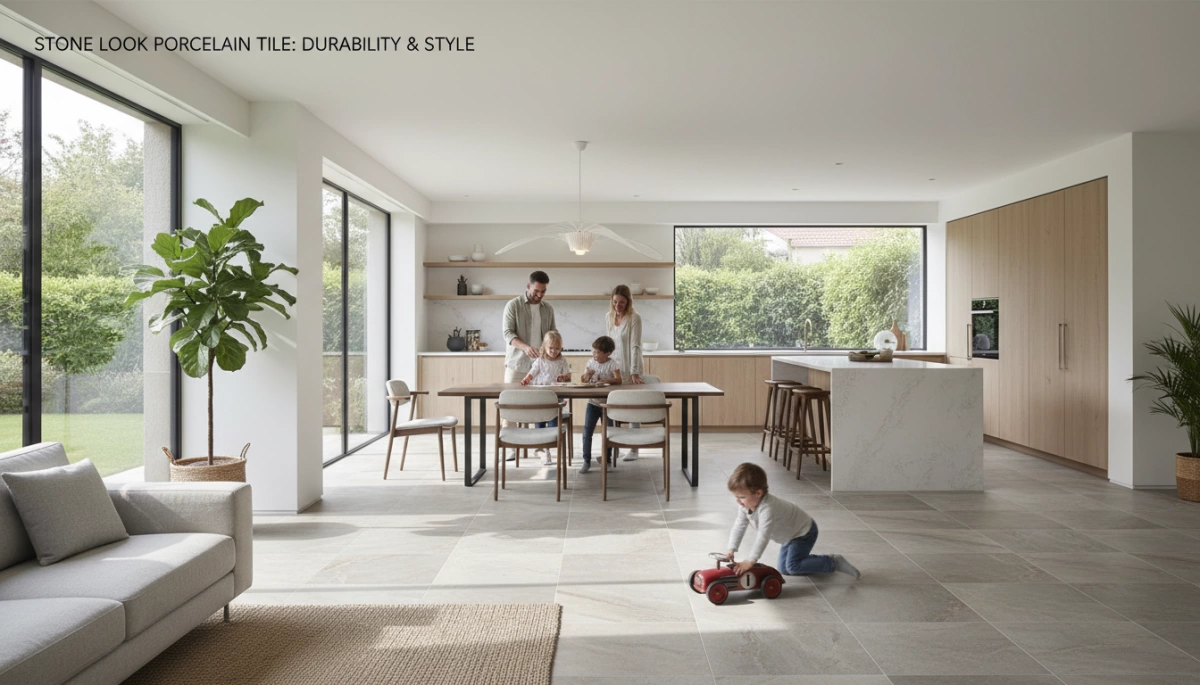
When I advise clients on home remodeling, the conversation often circles back to finding a balance between aesthetics and practicality. Stone effect tiles have emerged as the dominant solution because they solve the biggest headache of natural materials: vulnerability. We aren’t just choosing a floor; we are choosing a lifestyle that doesn’t involve constant worrying about spills or scratches.
Unmatched Durability and Low Maintenance
Real stone is porous. It stains easily, requires regular sealing, and can crack under pressure. Stone look porcelain tile, on the other hand, is engineered to be nearly indestructible in a residential setting. It is fired at extremely high temperatures, resulting in a dense, non-porous surface that resists moisture, stains, and heavy foot traffic.
For busy households, the difference in maintenance is night and day. You don’t need special pH-neutral cleaners or annual resealing appointments. A simple sweep and mop are usually all it takes to keep these floors looking brand new.
Comparison: Natural Stone vs. Stone Look Porcelain
| Feature | Natural Stone | Stone Look Porcelain |
|---|---|---|
| Water Absorption | High (Needs sealing) | Extremely Low (<0.5%) |
| Maintenance | High (Regular sealing required) | Low (Easy clean) |
| Scratch Resistance | Varies (Softer stones scratch easily) | High (Hard wearing) |
| Stain Resistance | Low (Absorbs liquids) | High (Impervious surface) |
Timeless Beauty for Classic and Contemporary Spaces
The visual technology behind stone effect flooring has advanced to the point where it is often indistinguishable from the real thing. We can now capture the subtle veining of marble, the rugged texture of slate, or the warm, earthy tones of travertine with incredible precision. This versatility allows these tiles to anchor any design scheme, whether you are aiming for a sleek, modern minimalist vibe or a rustic, traditional farmhouse look.
Because porcelain is UV resistant, the colors won’t fade over time like some natural materials or vinyl might. This ensures that the aesthetic investment you make today remains just as striking ten years down the line. It provides the high-end look of luxury materials without the fragility, making it a smart foundation for any interior design project.
Exploring Colors, Finishes, and Formats
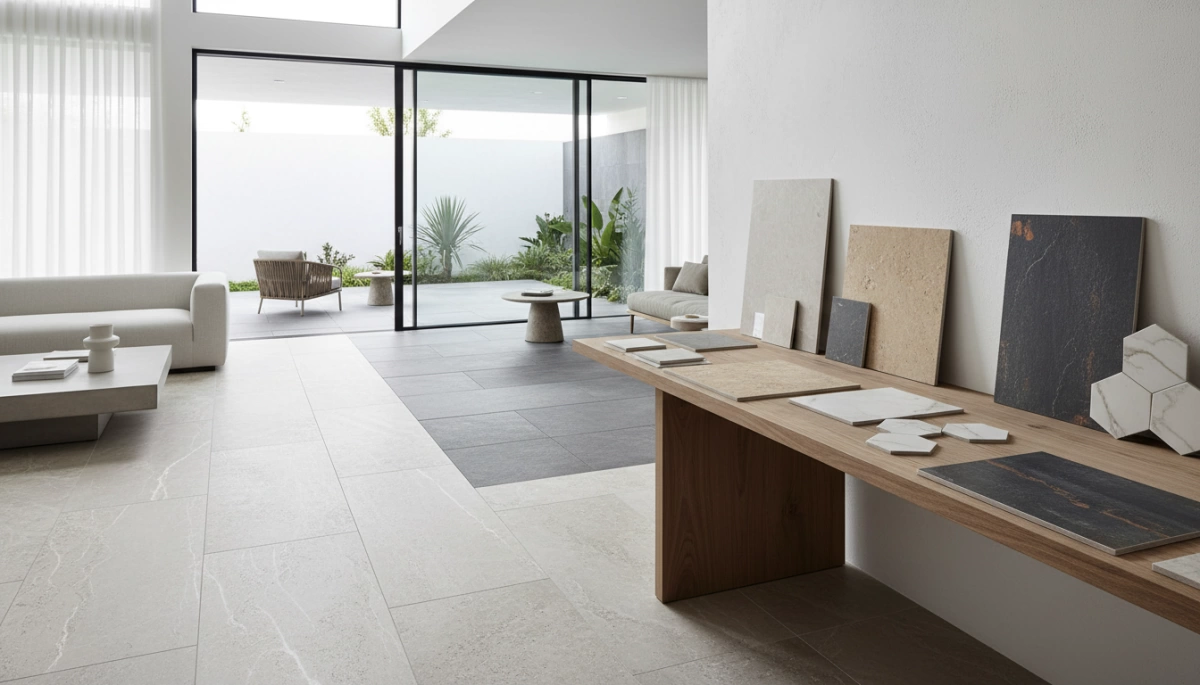
When we talk about designing a space, the visual impact of the floor or wall is huge. Stone look porcelain tile offers an incredible range of options that go far beyond what you might expect. It’s not just about mimicking grey slate anymore; it’s about capturing the nuance of the world’s most beautiful quarries without the headache of sealing and maintenance.
Popular Stone Effect Colors and Textures
The variety available today is staggering. We aren’t just limited to basic beige or grey. Modern digital printing technology allows us to replicate the intricate veining of marble, the rugged grain of granite, and the soft, sedimentary layers of limestone with scary accuracy.
- Marble Look: Classic white with grey veining (like Carrara or Calacatta) remains a top seller for luxury bathrooms and entryways. It brings brightness and elegance.
- Slate and Basalt: Deep charcoals, blacks, and dark greys are perfect for contemporary, industrial designs. These often come with a textured finish that feels authentic to the touch.
- Travertine and Limestone: Warm creams, beiges, and soft earthy tones create a cozy, organic feel. These work exceptionally well in living areas and kitchens where you want a neutral backdrop.
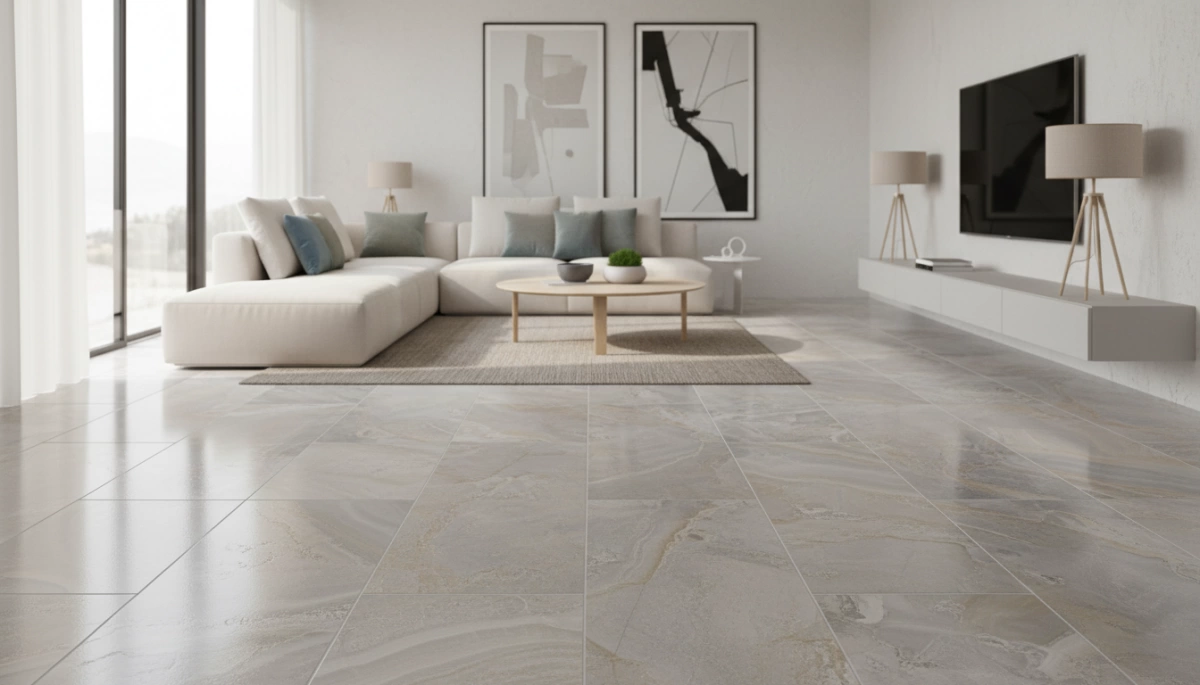
Texture plays a massive role here. You can choose a polished finish for a high-gloss, reflective look that mimics polished marble, or a matte/honed finish for a more understated, natural stone appearance that offers better slip resistance.
Large Format Stone Effect Porcelain Slabs
One of the biggest shifts I’ve seen in the industry is the move toward porcelain slabs. We are talking about tiles that are massive—often 120x120cm, 120x240cm, or even larger.
Why go big? It’s all about continuity.
- Fewer Grout Lines: Large slabs mean fewer interruptions in the pattern. This creates a seamless, monolithic surface that looks incredibly high-end.
- Visual Expansion: Using large format tiles in a smaller room can actually make the space feel bigger because the floor isn’t chopped up by a grid of grout lines.
- Modern Aesthetic: The clean, expansive look of a large slab is a hallmark of modern luxury design. It turns a floor into a canvas rather than just a surface.
Choosing the Right Tile Size and Shape
Selecting the right size isn’t just about what fits in the box; it’s about scale and proportion. While large slabs are trending, they aren’t the only option.
- Rectangular Planks: Often used for wood looks, but also effective for stone styles to create directional flow in a hallway or corridor.
- Standard Squares (60x60cm): The workhorse of the tile world. Easy to install, cost-effective, and fits well in most standard-sized rooms like bedrooms or utility areas.
- Mosaic and Small Formats: Great for shower floors or backsplashes where you need extra grip or want to create a detailed feature wall.
Pro Tip: If you are tiling a small bathroom, don’t be afraid of larger tiles. A 30x60cm or 60x60cm tile often looks better than a tiny 20x20cm tile because it reduces visual clutter. Always consider the shape of your room; rectangular tiles can make a short room look longer if laid lengthwise.
Interior Applications for Stone Look Surfaces
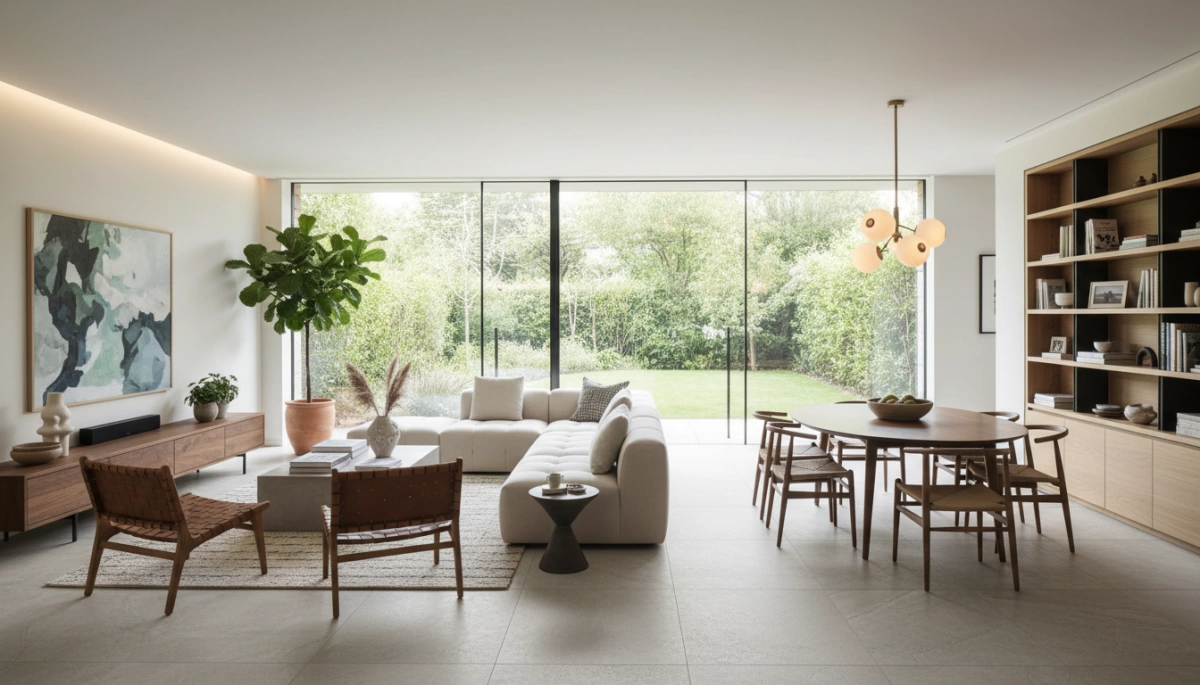
When we talk about bringing the outdoors in, nothing does it quite like stone look porcelain tile. It bridges the gap between raw, natural beauty and modern practicality. I’ve seen these surfaces completely change the character of a home, moving from cold and sterile to warm and grounded without the headache of sealing real stone every year.
Stone Effect Floor and Wall Tiles
The versatility here is massive. You aren’t limited to just the ground beneath your feet. We frequently use the same stone effect flooring material on the walls to create a seamless, monolithic look that makes rooms feel larger and more cohesive.
- Living Rooms: Large format tiles can mimic expansive slabs of limestone or slate, anchoring the furniture and withstanding high foot traffic.
- Feature Walls: A textured, split-face stone look on a fireplace surround or behind a TV adds depth and architectural interest without the weight of real masonry.
- Hallways: This is where durability matters most. Porcelain resists the scratches and mud that ruin softer materials, keeping that entryway looking pristine.
Using floor tiles that extend up the wall creates a “wrapped” effect, a design trick that is incredibly popular in modern minimalist homes.
Decorating Kitchens with Timeless Tiles
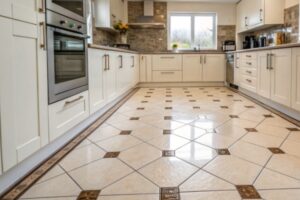
The kitchen is the heart of the home, but it’s also a mess zone. Spilled wine, dropped pans, and constant movement. Real marble stains if you look at it wrong, but a marble look tile made of porcelain? It handles everything.
For kitchen renovations, I always recommend considering:
- Backsplashes: Use a polished finish here to reflect light and make cleaning grease splatters easy.
- Islands: Cladding the sides of a kitchen island in stone look slabs creates a luxury focal point.
- Flooring: Go for a matte or honed finish to hide crumbs and prevent slipping when things get wet.
This material allows you to have the elegance of Travertine or Carrara marble right next to your stove, without the anxiety of ruining it while cooking dinner.
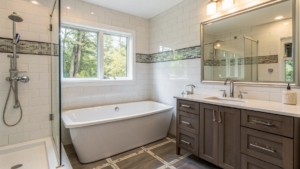
Transforming Bathrooms into Luxurious Retreats
Bathrooms are where stone look porcelain tile truly shines. We are essentially building waterproof sanctuaries. Because porcelain has a water absorption rate of less than 0.5%, it is the superior choice for wet environments compared to porous natural stone.
To achieve that spa-like vibe:
- Walk-in Showers: Use large format tiles to minimize grout lines. Fewer grout lines mean less scrubbing and a cleaner, more expansive visual.
- Soaking Tub Surrounds: Create a dramatic backdrop for a freestanding tub with a dark, moody slate effect or a bright, veined marble look.
- Heated Floors: Porcelain conducts heat beautifully. Installing radiant heating under your stone effect tiles eliminates the shock of cold floors in the morning.
Whether you are doing a full home remodeling project or just updating a powder room, these tiles deliver the high-end aesthetic of a five-star hotel bathroom with the durability required for daily family life.
Redefining Outdoors with Stone Look Porcelain
Taking the beauty of natural stone outside doesn’t have to mean signing up for a lifetime of pressure washing and sealing. We are seeing a massive shift in landscape design where homeowners want that seamless flow from their living room to the backyard. Stone look porcelain tile is the game-changer here, allowing us to extend interior aesthetics into the open air without compromising on performance.
Durable Outdoor Patio Paving
When I talk to clients about outdoor spaces, their biggest worry is usually weather resistance. Traditional stone, like slate or limestone, can crack during freeze-thaw cycles or fade under intense UV exposure. Stone look porcelain tile solves these issues head-on. These tiles are fired at incredibly high temperatures, creating a dense, non-porous material that is virtually impervious to water absorption.
For outdoor patio paving, we specifically use 20mm thick porcelain pavers. They offer the structural integrity needed for high-traffic exterior zones and can be installed on grass, gravel, or sand, as well as traditional adhesive methods.
Why porcelain beats natural stone outdoors:
- Frost Resistance: Because they absorb almost no water, they don’t crack when the temperature drops below freezing.
- Fade Resistance: The digital print technology is locked into the glaze, meaning the sun won’t bleach the color over time.
- Stain Proof: BBQ grease, red wine, and leaf tannins wipe right off without specialized cleaners.
- Load Bearing: Thicker 2cm slabs are engineered to withstand heavy furniture and foot traffic.
Anti-Slip Finishes for Pool Areas
Safety is non-negotiable around water. While polished marble look tile is stunning indoors, it is a hazard on a wet pool deck. This is where specialized grip finishes come into play. We offer stone effect flooring with R11 anti-slip ratings specifically designed for wet areas.
These tiles mimic the texture of rough-hewn stone or flamed granite, providing essential traction underfoot even when completely soaked. The best part is that you don’t lose the visual appeal. You can have a smooth, matte finish inside your home and transition to the exact same color and pattern in a grip finish for the pool surround. This creates that high-end, continuous visual plane that makes a property feel expansive and cohesive.
Key benefits for pool surrounds:
- High Grip Surface: Rated R11 or higher to prevent slips and falls.
- Cooler to Touch: Light-colored porcelain reflects heat better than dark concrete or asphalt, protecting bare feet.
- Chemical Resistance: Chlorine and salt water won’t etch or damage the surface of the tile.
Buying Guide: Finding the Perfect Tile
Selecting the right flooring isn’t just about picking a color you like; it’s about ensuring the material performs well in your specific environment. When shopping for stone look porcelain tile, the sheer variety can be overwhelming. Breaking down your choices by design intent and practical category makes the process much smoother.
Matching Material Style to Your Design Need
Every home remodeling project has a unique “vibe,” and your tile needs to anchor that feeling. I always advise clients to start with the end goal in mind. Are you aiming for a rustic farmhouse kitchen or a sleek, modern lobby?
- Rustic and Traditional: Look for tiles with high variation (V3 or V4 ratings). These mimic the randomness of natural slate or travertine, offering warm, earthy tones and textured surfaces that hide dirt well.
- Modern and Minimalist: Go for marble look tile or limestone effects with rectified edges. These allow for extremely thin grout lines, creating a seamless, continuous surface that makes rooms feel larger.
- Industrial: Concrete-stone hybrids are perfect here. They offer the grit of industrial design but with the easy cleaning of porcelain.
Don’t just look at the pattern; look at the finish. A polished finish screams luxury and reflects light, while a matte or honed finish offers a more understated, contemporary feel that is generally less slippery.
How to Filter and Select by Category
When you are browsing through hundreds of options, efficient filtering saves time. You shouldn’t just scroll aimlessly; you need to filter by the technical specs that matter for your installation.
Here is a quick checklist to narrow down your search for the best stone effect flooring:
- Application: Filter by “Wall” vs. “Floor.” While most floor tiles can go on walls, wall tiles are often too thin or slippery for foot traffic.
- PEI Rating: This measures abrasion resistance. For residential hallways and kitchens, ensure you select PEI 3 or 4. For commercial spaces, stick to PEI 5.
- Size and Format: If you want fewer grout lines, filter immediately for porcelain slabs or large formats like 24×48 inches (60×120 cm).
- Rectified vs. Pressed: Always choose rectified edges if you want that precise, sharp look with minimal grout joints (1/16 inch). Pressed edges are better if you prefer a slightly softer, more traditional look with wider grout.
By focusing on these categories, you move past the pretty pictures and ensure you are buying a product that fits the technical demands of your space.
Frequently Asked Questions
Are stone effect tiles hard to clean?
Absolutely not. One of the primary reasons I recommend stone look porcelain tile over natural stone is the ease of maintenance. Unlike real travertine or slate, which are porous and require regular sealing to prevent stains, porcelain is virtually impervious to moisture and dirt.
For daily upkeep, a simple sweep and mop with warm water and a neutral cleaner are all you need. You don’t need specialized pH-balanced soaps or expensive stone sealers. Whether you have a textured slate finish or a polished marble look tile, the cleaning process remains straightforward. This low-maintenance quality makes stone effect flooring a favorite for busy households where spills and muddy footprints are just part of life.
Can stone look porcelain be used in wet areas?
Yes, and it is often the superior choice for these spaces. Stone look porcelain tile is engineered to have an extremely low water absorption rate (usually less than 0.5%), making it ideal for bathrooms, wet rooms, and pool decks.
When selecting tiles for wet areas, pay attention to the finish:
- Matte or Textured Finishes: These provide essential grip and slip resistance, which is crucial for shower floors and outdoor patios.
- Durability: Porcelain resists mold and mildew growth far better than natural stone, which can harbor bacteria in its pores.
This material allows you to achieve that high-end spa aesthetic with floor tiles that won’t warp or degrade when exposed to constant humidity and water.