Technical and Commercial Advantages of Porcelain Tile in Contemporary Construction
Material selection in contemporary construction is no longer based solely on visual appeal.
Architects, developers, contractors, and procurement teams evaluate surface materials based on measurable performance, lifecycle cost, scalability, and supply chain reliability.
Porcelain tile stands out as one of the most technically resilient and commercially viable surface solutions in global construction markets.
This article outlines both the engineering performance and the business value that make porcelain tile a strategic material category for B2B stakeholders.
1. Technical Performance Advantages
1.1 Low Water Absorption and Structural Stability1
Porcelain tile is fired at extremely high temperatures, resulting in a dense body structure with water absorption typically below 0.5%.
This provides:
- Superior resistance to moisture penetration
- Frost resistance in freeze–thaw climates
- Reduced risk of cracking
- Long-term dimensional stability
For commercial developers, this translates to reduced structural risk and longer service life.
1.2 High Mechanical Strength2
Porcelain tile demonstrates:
- High breaking strength
- Strong impact resistance
- Surface abrasion resistance (high PEI ratings)
- Scratch resistance
These properties make it suitable for:
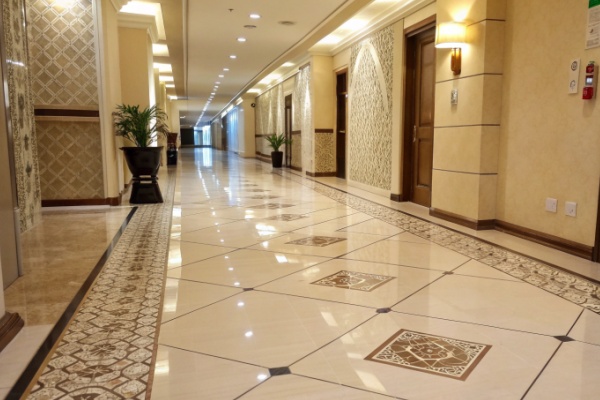
- Shopping malls
- Airports
- Hotels
- Office lobbies
- Educational and healthcare facilities
In high-traffic environments, durability directly reduces maintenance and replacement frequency.
1.3 Fire Resistance and Safety Compliance3
As a kiln-fired ceramic product, porcelain tile is:
- Non-combustible
- Heat resistant
- Smoke-free under fire conditions
This simplifies compliance with modern building codes and safety regulations in commercial and institutional projects.
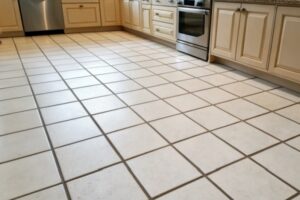
1.4 Hygienic and Low Maintenance Properties4
Porcelain tile offers:
- Non-porous surfaces
- Stain resistance
- Easy cleaning
- Mold and bacteria resistance
This makes it particularly valuable in:
- Healthcare facilities
- Hospitality environments
- Commercial kitchens
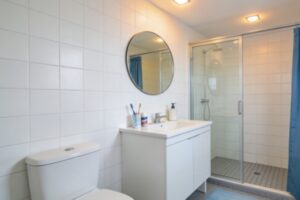
- Public restrooms
Lower maintenance requirements reduce operational costs over the building lifecycle.
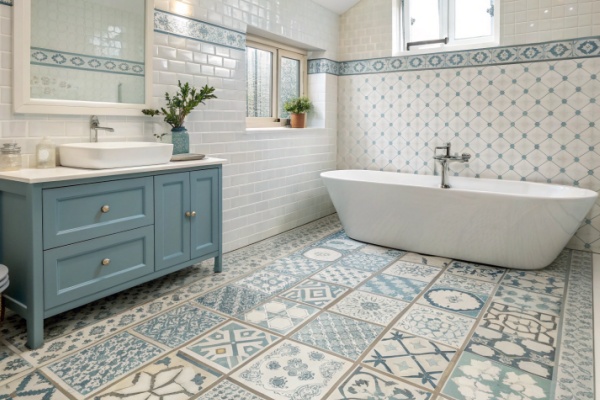
2. Design Versatility in Modern Architecture5
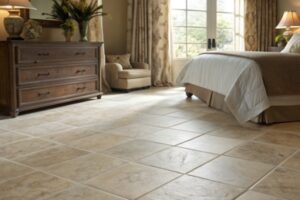
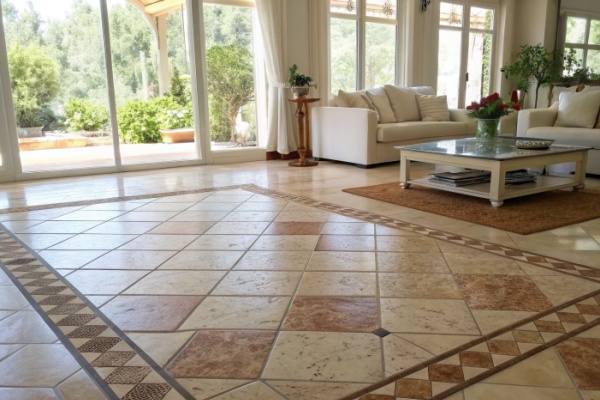
Advanced digital glazing and printing technologies enable porcelain tile to replicate:
- Natural marble
- Limestone
- Concrete finishes
- Wood textures
- Industrial aesthetics
This allows architects and developers to achieve:
- Luxury visuals
- Consistent batch production
- Budget control compared to natural materials
- Design continuity across large-scale developments
Large-format slabs and rectified edges further support minimal grout lines and seamless surface transitions.
3. Commercial Advantages for Developers and Contractors
3.1 Lifecycle Cost Efficiency6
Although initial material cost varies by specification, porcelain tile offers:
- Long service life
- Minimal refinishing requirements
- Low maintenance expense
- Reduced replacement cycles
When evaluated over a 10–20 year period, porcelain tile often delivers a lower total cost of ownership compared to alternative flooring materials.
3.2 Installation Efficiency7
Modern production standards support:
- Precision-cut rectified edges
- Thin-body formats
- Large-format panels
These characteristics reduce:
- Installation time
- Grout usage
- Surface leveling challenges
For contractors, installation efficiency improves project timelines and labor optimization.
3.3 Suitability for Indoor-Outdoor Integration8
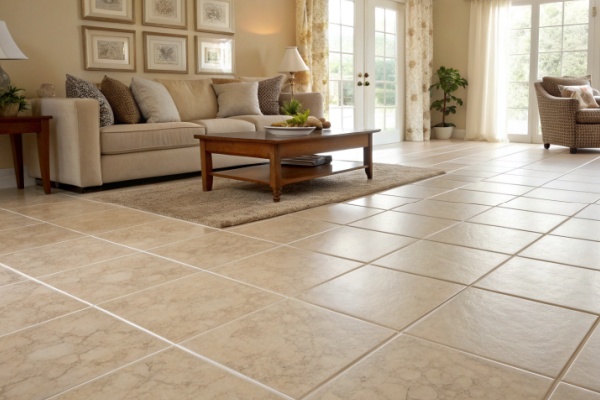
Due to its low absorption rate and strength, porcelain tile can be specified for:
- Exterior facades
- Patios
- Balconies
- Walkways
This allows developers to maintain aesthetic continuity between indoor and outdoor environments while simplifying material sourcing.
4. Supply Chain and Distribution Advantages
From a B2B perspective, porcelain tile offers operational reliability:
- Standardized industrial production
- Consistent quality control
- High container loading efficiency
- Predictable global demand
For distributors and importers, this means:
- Diversified SKU strategies
- Stable reorder cycles
- Scalable volume supply
- Cross-market compatibility
Porcelain tile remains one of the most globally traded and specification-approved surface materials.
5. Strategic Value in Contemporary Construction
In today’s construction landscape, stakeholders prioritize:
- Performance certification
- Cost transparency
- Material longevity
- Installation efficiency
- Regulatory compliance
Porcelain tile aligns with these priorities while offering architectural flexibility and global sourcing scalability.
It is not merely a decorative finish.
It is a performance-driven surface system that supports modern construction economics.
Conclusion
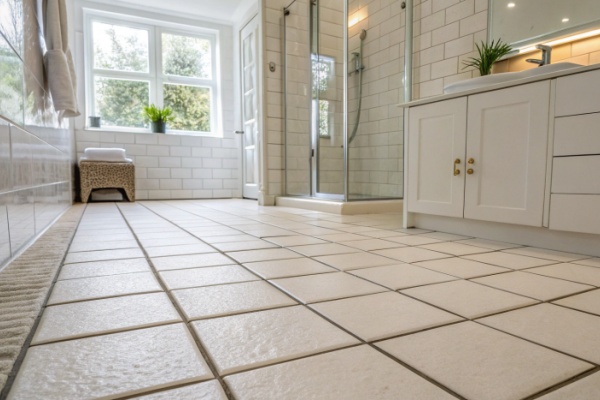
Porcelain tile continues to deliver both technical integrity and commercial reliability across residential, commercial, and institutional projects worldwide.
For B2B partners seeking:
- Durable, compliant surface materials
- Predictable lifecycle costs
- Scalable distribution opportunities
- Broad application flexibility
Porcelain tile represents a proven, specification-ready solution for contemporary construction environments.
In a market defined by efficiency, performance, and long-term value, porcelain tile remains a strategic material investment.
Explore how low water absorption and structural stability enhance the durability and longevity of porcelain tiles in various construction environments. ↩
Discover why high mechanical strength makes porcelain tiles ideal for high-traffic areas, reducing maintenance and replacement needs. ↩
Learn how fire resistance and safety compliance of porcelain tiles simplify adherence to building codes and enhance safety in commercial projects. ↩
Understand the hygienic benefits and low maintenance requirements of porcelain tiles, making them suitable for healthcare and hospitality environments. ↩
Explore the design versatility of porcelain tiles, allowing architects to achieve luxury visuals and design continuity in large-scale developments. ↩
Find out how porcelain tiles provide a lower total cost of ownership over time, making them a cost-effective choice for developers. ↩
Learn about the installation efficiency of porcelain tiles, which reduces project timelines and optimizes labor for contractors. ↩
Discover how porcelain tiles maintain aesthetic continuity between indoor and outdoor spaces, simplifying material sourcing for developers. ↩