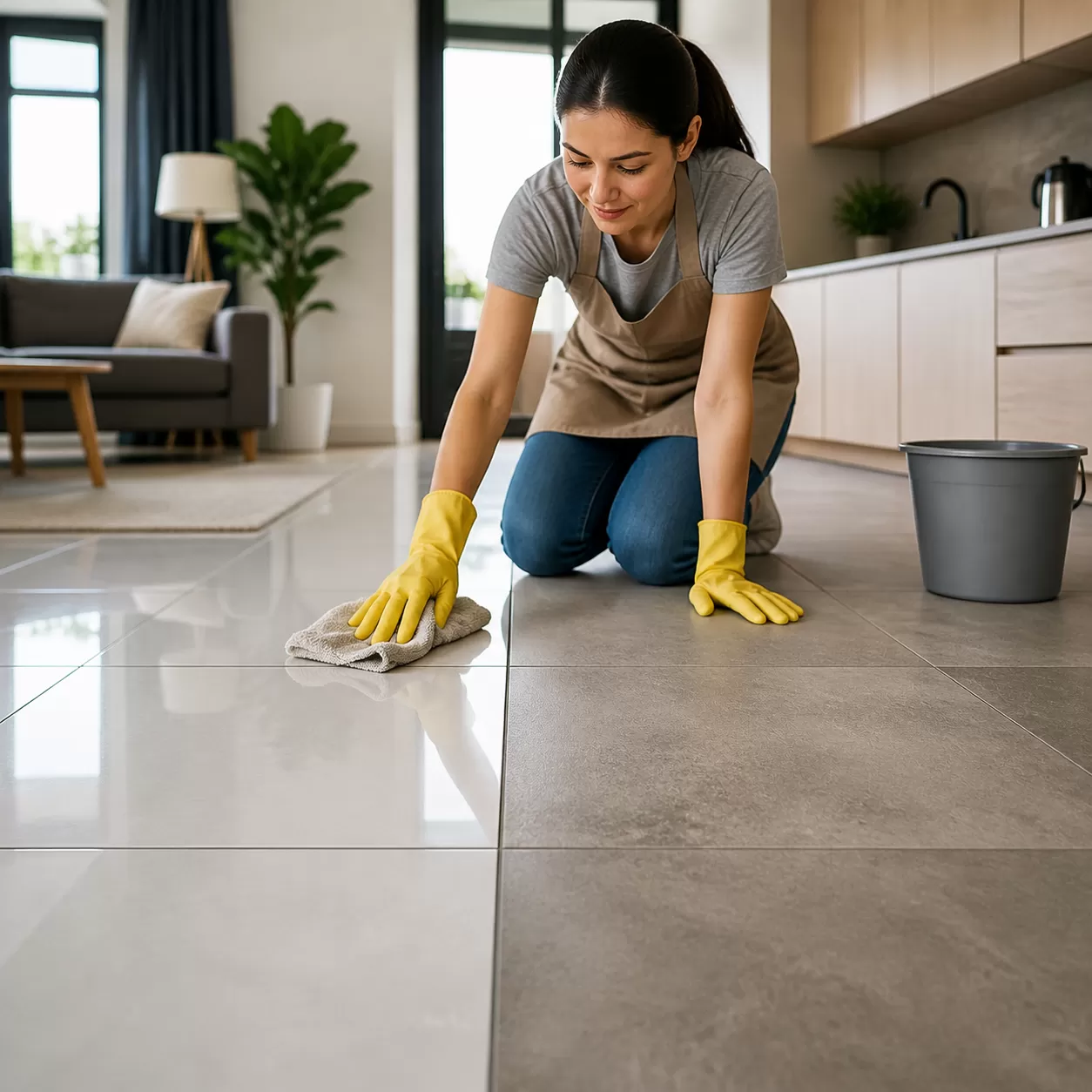
Are you torn between the visual drama of a polished finish and the daily practicality of a matte-finish tile?
Choosing the wrong surface can mean the difference between a quick wipe-down and a lifetime of battling water spots and streaks. One finish is a “wipe-and-go” dream that shows every fingerprint, while the other is a smudge-proof surface that hides a week’s worth of dust but demands more elbow grease during a deep clean.
In this guide, I’m going to break down the porcelain tile maintenance secrets that showrooms often overlook. You’ll learn exactly how to balance bathroom floor safety with that high-end look, and which finish is truly the best to clean for your specific lifestyle.
Let’s dive right in.
The Glossy Finish: The “Wipe-and-Go” Surface
I’ve seen firsthand how the right surface choice transforms a home’s maintenance routine. Glossy porcelain tiles are the gold standard for homeowners who want a “wipe-and-go” experience. Because the surface is polished to a high sheen, it is essentially non-porous, meaning spills, oils, and pigments sit right on top instead of soaking into the tile body.
The Physics of High-Shine Maintenance
The cleaning advantage of a polished finish comes down to its smoothness. Since there is no texture to trap dirt, your daily upkeep routine is significantly faster than with other materials.
- Microfiber Efficiency: For most liquid spills, a dry or slightly damp microfiber cloth is all you need to lift the mess without heavy scrubbing.
- Stain Resistance: The dense, glass-like surface acts as a barrier against stubborn substances like red wine or coffee.
- Sanitization: Because the surface is so flat, it’s easier to ensure you’ve wiped away 100% of bacteria during a quick clean.
The “Spotlight” Effect
While glossy tiles are the easiest to physically clean, they are also the most honest. I call this the “Spotlight” effect. The highly reflective surface will highlight:
- Water spots and streaks from improper drying.
- Oily fingerprints and smudge marks.
- Dust layers that would otherwise disappear on a textured floor.
Best Use Cases for Light Amplification
I recommend using glossy tiles in darker or smaller spaces. Their ability to bounce light around a room makes them a powerful design tool for cramped bathrooms or kitchens with limited natural light. When you prioritize a reflective surface, you aren’t just getting an easy-to-clean backsplash; you’re effectively brightening the entire room.
| Feature | Glossy Finish Impact |
|---|---|
| Surface Porosity | Extremely Low (Resists Stains) |
| Cleaning Effort | Low (Wipe-and-Go) |
| Visibility of Smudges | High (Shows streaks easily) |
| Light Reflection | Maximum (Brightens spaces) |
The Matte Finish: The Master of Disguise
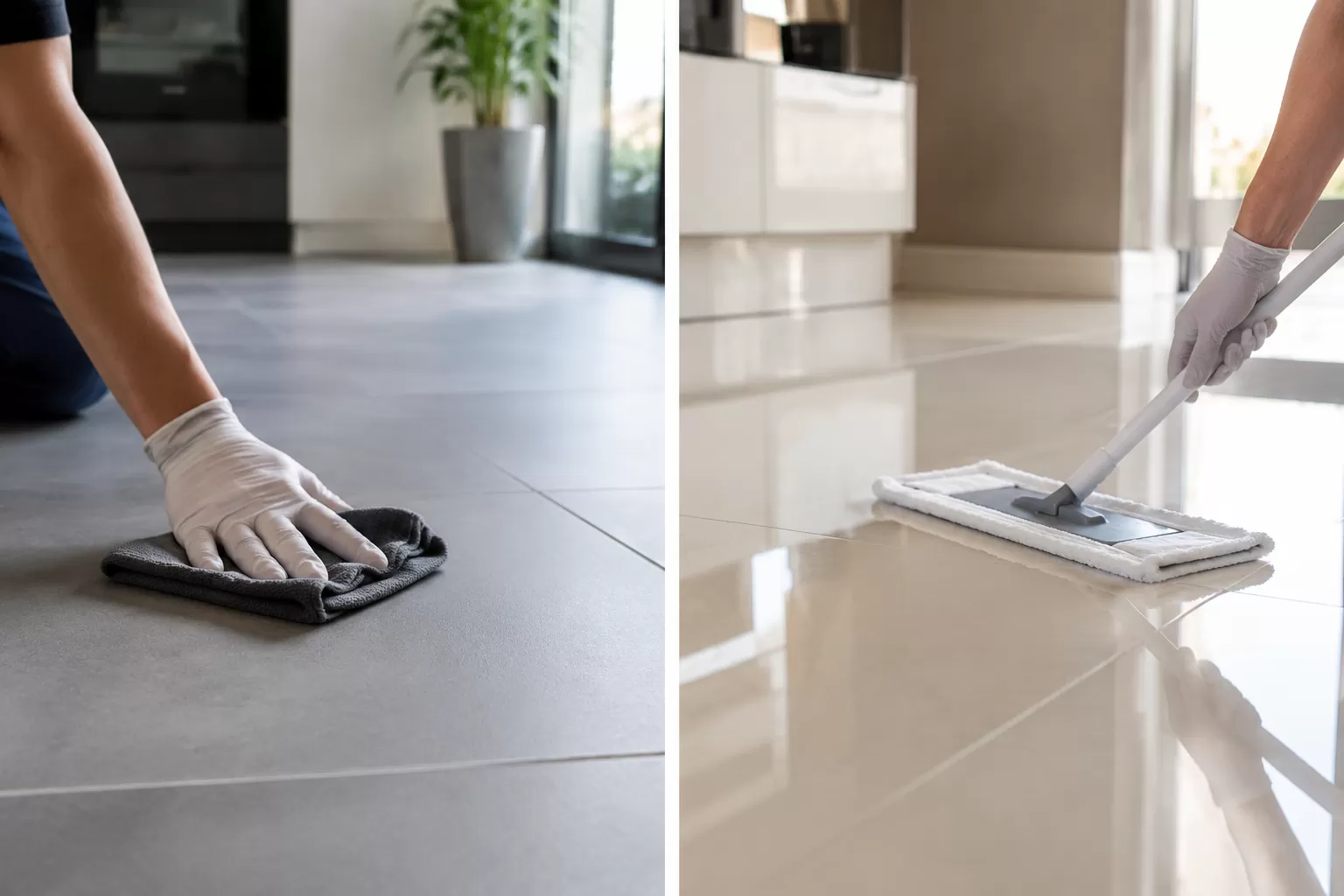
If you want a floor that looks clean even when you haven’t mopped in a few days, a matte-finish tile is the way to go. In our experience as a porcelain tile manufacturer, we see most homeowners choose matte for its incredible ability to hide the “lived-in” look of a busy house.
Texture and Light Absorption
The secret to the matte look is how it handles light. Because the surface is non-reflective, it doesn’t create a “spotlight” on daily grime and dust. While a glossy tile screams about every smudge, the textured tile finishes on matte porcelain diffuse light, making it a truly smudge-proof surface. It’s the perfect choice if you have kids or pets and don’t want to spend your life chasing footprints.
The “Deep Clean” Challenge
I’ll be direct: while matte tiles stay looking “okay” longer, they do require a bit more effort when it’s time for a deep clean. The same texture that hides dirt can also trap it.
- Pro Tip: Don’t just use a flat mop. Use a soft-bristle brush or a high-quality microfiber mop to get into the micro-textures of the tile.
- Avoid: Using oily cleaners, which can leave a film that actually attracts more dirt over time.
Safety First: Slip Resistance and R-Values
One of the biggest reasons we recommend matte for bathroom flooring is safety. These tiles typically have a higher slip resistance rating (R-value).
- R9-R10: Ideal for general indoor living areas.
- R11+: Necessary for wet rooms, showers, and outdoor patios.
Durability in High-Traffic Zones
For high-traffic flooring like entryways and mudrooms, matte porcelain is a workhorse. It doesn’t show scratches or “traffic lanes” where the finish has worn down. This makes porcelain tile maintenance much lower stress in the long run, as the surface maintains its integrity even under heavy foot fall and outdoor debris.
| Feature | Matte Finish Performance |
|---|---|
| Hiding Dust | Excellent (Light-absorbing) |
| Slip Resistance | High (Superior R-values) |
| Scuff Resistance | High (Great for pets/shoes) |
| Cleaning Effort | Moderate (Requires agitation) |
Room-by-Room Maintenance Strategy
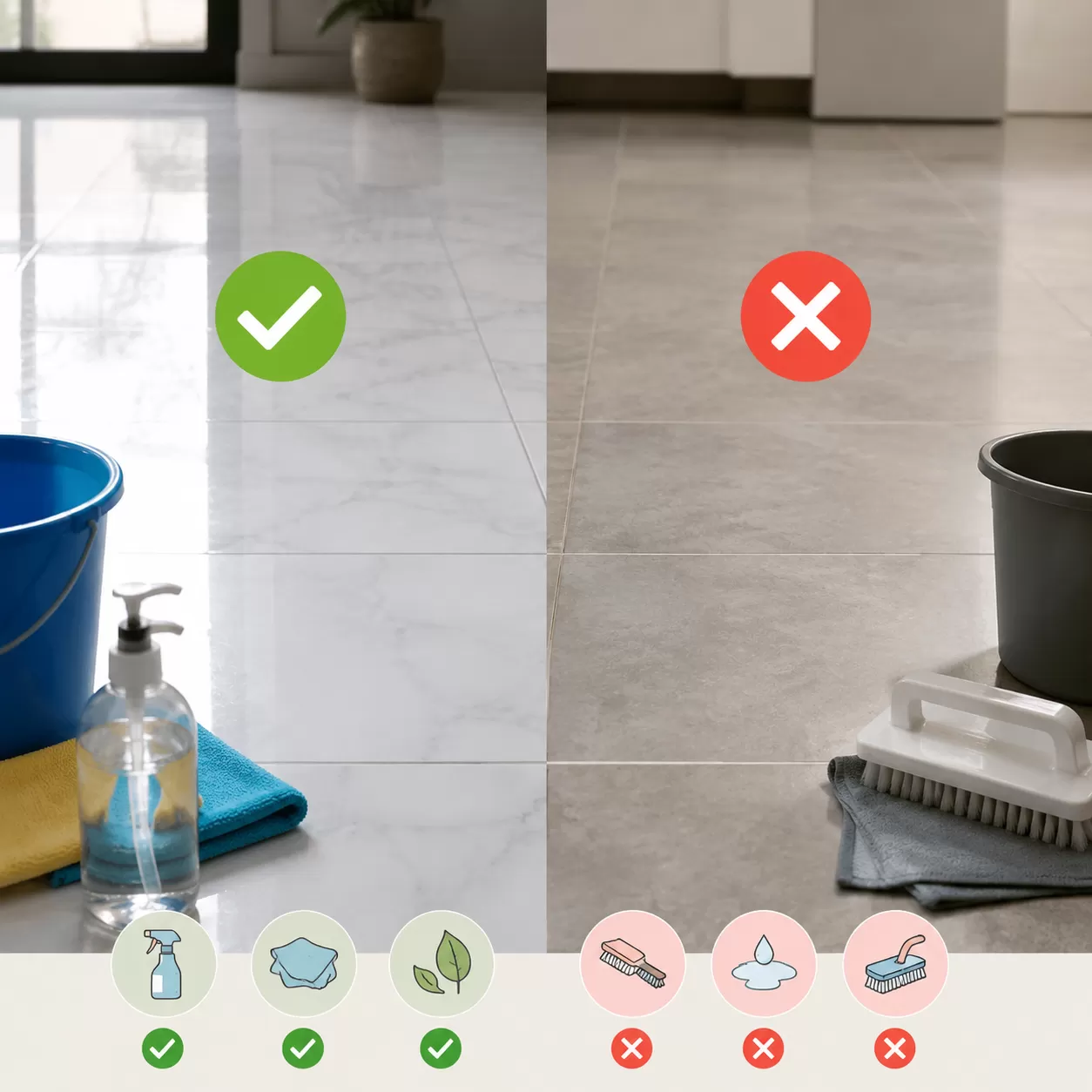
Choosing whether glossy tile or matte-finish tile is the best to clean depends entirely on how you use the space. From my experience as a supplier, a one-size-fits-all approach doesn’t work; you need to match the finish to the mess.
Kitchen Backsplash: Glossy Tiles for Grease
For a kitchen backsplash, I always recommend a polished finish. Cooking produces airborne grease and oil that settle on the nearest surface. Glossy porcelain is non-porous, meaning the grease stays on top rather than sinking in. A simple wipe with a damp cloth usually does the trick.
- Maintenance Level: Low.
- Key Benefit: Effortless grease removal.
- Best For: Areas behind the stove or sink.
Entryway Flooring: Matte for High-Traffic
The entryway is where your floors face the toughest battle against mud and scuffs. Matte-finish tiles are the masters of disguise here. They don’t reflect light directly, which means they hide footprints, dried rain spots, and outdoor debris that would stand out immediately on a polished surface.
The Bathroom Strategy: Mixing Finishes
For bathroom flooring, safety and upkeep must go hand-in-hand. I suggest a hybrid strategy to get the best of both worlds:
| Area | Recommended Finish | Why It Works |
|---|---|---|
| Bathroom Floor | Matte | High slip resistance rating and hides hair or dust. |
| Bathroom Walls | Glossy | Makes the room feel brighter and is easy to wipe dry. |
| Shower Walls | Glossy or Satin | Simple to scrub when dealing with soap scum buildup. |
Shower Walls: Water Streaks vs. Soap Scum
The shower is a unique challenge. While glossy tiles are incredibly easy to wipe down, they are prone to water spots and streaks. If you have hard water, these spots will be visible. On the other hand, matte tiles hide those streaks perfectly, though the slight texture may require a soft brush once a month to ensure no soap residue builds up in the “pores” of the finish. For most of my clients, a high-quality glossy tile on the walls remains the standard for that “always clean” look.
Maintenance Pro-Tips for Tile Upkeep
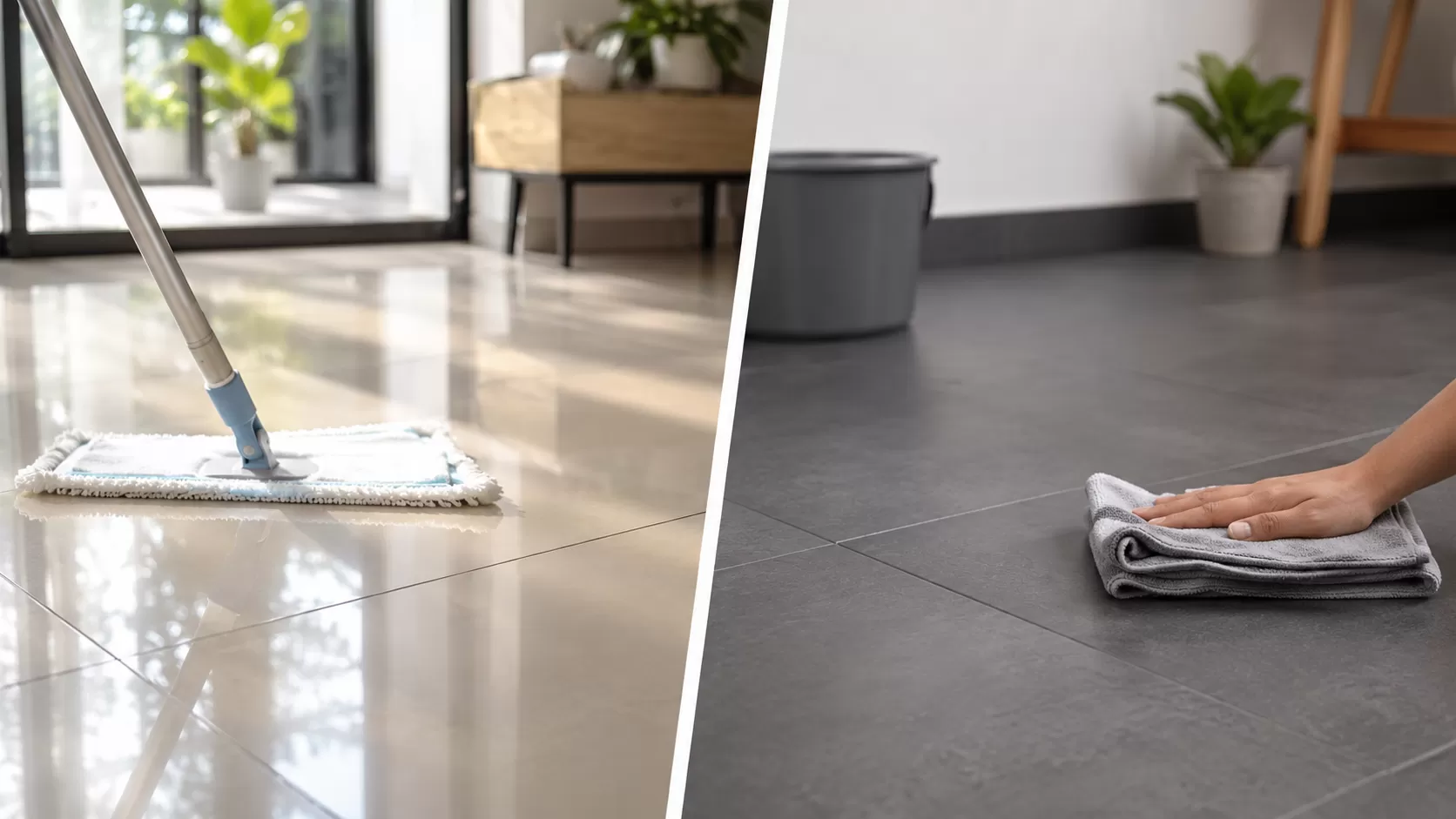
Knowing whether is glossy tile or matte-finish tile the best to clean often comes down to your daily routine. As a manufacturer, we’ve seen that the right technique saves more time than the tile choice itself. Here is how to maintain that “just-installed” look for years.
The Secret to Streak-Free Glossy Porcelain
The biggest headache with a polished finish is the hazy residue left behind by generic soaps. To keep your surfaces crystal clear:
- Use pH-neutral cleaners: Avoid acidic or alkaline chemicals that can eat away at the glow. A neutral solution ensures a streak-free result.
- Microfiber is king: Always finish with a dry microfiber mop to buff out any remaining moisture before it turns into a water spot.
Revitalizing Matte Surfaces
While matte-finish tile hides dust well, its texture can eventually trap microscopic debris.
- Soft-bristle deep cleaning: Instead of a flat mop, use a soft-bristle brush to gently agitate the surface. This lifts dirt out of the “valleys” of the tile texture.
- Avoid the wax: Never use wax-based products or oil-based “shine enhancers.” These create a sticky film that attracts pet hair and grime, making the tile harder to scrub over time.
The Grout Factor in Cleaning Routines
Your porcelain tile maintenance is only as easy as your grout lines.
- Spacing matters: We recommend narrow grout joints (2mm or less) to minimize the area where dirt can collect.
- Color strategy: If you choose matte flooring for high-traffic areas, pair it with a darker or epoxy-based grout to hide stains and reduce the need for heavy bleaching.
| Tool/Product | Best For Glossy | Best For Matte |
|---|---|---|
| Cleaner Type | pH-Neutral Liquid | Diluted Degreaser |
| Scrub Tool | Microfiber Cloth | Soft-Bristle Brush |
| Finish Step | Dry Buffing | Air Dry |
| Avoid | Abrasive Pads | Wax-Based Polishes |
FAQ: Is Glossy Tile or Matte-Finish Tile the Best to Clean?
When deciding between these two popular options, I often see customers get stuck on the technicalities. Here is the straight talk on how these surfaces actually perform in a busy home.
Is glossy tile more slippery than matte when wet?
Yes. Glossy porcelain has a highly polished finish that becomes quite slick when even a small amount of water is present. For bathroom floor safety, I always recommend checking the slip resistance rating (R-value). Matte tiles offer much better traction, making them the smarter choice for “wet zones” like walk-in showers or entryways.
Do matte tiles stain more easily than polished ones?
Not necessarily, but the cleaning method differs.
- Glossy Tiles: These are generally non-porous, meaning liquids sit on the surface rather than soaking in. However, they are prone to water spots and streaks.
- Matte Tiles: While they are great smudge-proof surfaces, the slight texture can trap dirt over time if not scrubbed. High-quality porcelain is inherently dense, so as long as you aren’t leaving spills to sit for days, staining isn’t a major issue for either.
Which finish is better for homes with shedding pets?
Matte-finish tile is the clear winner for pet owners.
- Hides Hair: Matte surfaces diffuse light, so pet hair and dander don’t stand out.
- Scratch Resistance: The “polished” layer on glossy tiles can occasionally show fine micro-scratches from claws under direct sunlight.
- Grip: Your pets will have an easier time running across a matte floor without sliding.
Can I mix glossy and matte tiles in the same room?
Absolutely. In fact, this is a top kitchen backsplash trend and a smart bathroom flooring strategy. I suggest using glossy tiles on the walls to reflect light and make the room feel larger, while keeping matte tiles on the floor for durability and safety. This “hybrid” approach gives you the best of both worlds: a high-end look that is still practical for daily upkeep routines.
| Feature | Glossy Finish | Matte Finish |
|---|---|---|
| Best For | Walls, Splashbacks | Floors, High-traffic areas |
| Visual Benefit | Brightens dark rooms | Hides scuffs and dust |
| Slip Risk | High when wet | Low (Better grip) |
| Maintenance | Easy wipe, shows streaks | Needs scrubbing, hides grime |
