Best Outdoor Deck Tiles: Rubber vs Porcelain vs Stone
A Complete Buyer & Project Guide for Residential & Commercial Decks
Choosing the right outdoor deck tiles1 is one of the most critical decisions for any deck, terrace, or balcony project. The wrong material can lead to cracking, slipping, fading, or costly maintenance, while the right choice can deliver decades of durability, safety, and visual appeal2.
This guide provides a professional, project-oriented comparison3 of the most popular outdoor deck tile materials — rubber, composite, natural stone, porcelain, and vinyl — helping homeowners, designers, and contractors make the right decision based on performance, climate, lifespan, and cost4.
Why Outdoor Deck Tile Selection Matters
Outdoor decks are exposed to conditions far harsher than indoor floors:
- UV radiation and extreme heat
- Rain, humidity, and standing water
- Freeze–thaw cycles
- Heavy foot traffic and furniture load
Unlike interior flooring, outdoor deck tiles1 must prioritize performance first, not just appearance.
Outdoor Deck Tile Comparison Overview
| Material | Typical Thickness | Slip Resistance | Lifespan | Maintenance | Best Use |
|---|---|---|---|---|---|
| Rubber Tiles | 15–30mm | ★★★★☆ | 10–15 years | Low | Playgrounds, gyms |
| Composite Tiles | 22–25mm | ★★★☆☆ | 10–20 years | Low | DIY decks |
| Natural Stone Tiles | 20–30mm | ★★★★☆ | 15–25 years | Medium | Luxury outdoor spaces |
| Porcelain Deck Tiles5 | 20mm | ★★★★★ (R11/R12) | 25–35 years | Very Low | Decks, hotels, pools |
| Vinyl Flooring | 5–8mm | ★★☆☆☆ | 5–10 years | Low | Budget projects |
📌 Porcelain deck tiles consistently outperform other materials in durability, safety, and long-term value.
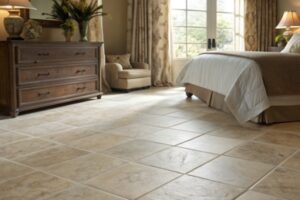
<img src="https://purrlacafe.com/wp-content/uploads/2026/01/16-1-300x200.jpg" alt="" width="300" height="200" class="alignnone size-medium wp-image-740" />
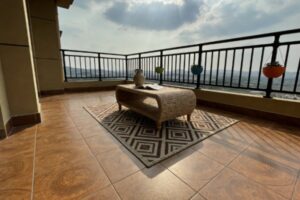
<img src="https://purrlacafe.com/wp-content/uploads/2026/01/16-2-300x200.jpg" alt="" width="300" height="200" class="alignnone size-medium wp-image-741" />
Rubber Deck Tiles
What Are Rubber Deck Tiles?
Rubber deck tiles are made primarily from recycled rubber and are commonly used in recreational and safety-focused areas. Their flexibility allows installation over concrete, wood, or asphalt.
Advantages
- Excellent shock absorption
- Slip-resistant when wet
- Easy DIY installation
Disadvantages
- Can retain heat in hot climates
- Limited aesthetic appeal
- Possible odor during early use
Best Applications
- Playgrounds
- Gym terraces
- Utility balconies
<img src="https://purrlacafe.com/wp-content/uploads/2026/01/16-2-300x200.jpg" alt="" width="300" height="200" class="alignnone size-medium wp-image-741" />
Interlocking Composite Deck Tiles
What Are Composite Deck Tiles?
Composite tiles are made from wood-plastic composites (WPC), combining wood fibers and plastic resins. They typically feature snap-lock systems for easy installation.
Advantages
- Simple installation
- Resistant to rot and insects
- Minimal maintenance
Disadvantages
- Color fading under UV exposure
- Expansion and contraction in extreme temperatures
- Shorter lifespan compared to porcelain
Best Applications
- DIY residential decks
- Temporary renovations
Natural Stone Deck Tiles
What Are Stone Deck Tiles?
Stone deck tiles include granite, slate, limestone, sandstone, and quartzite. They provide an authentic natural appearance and premium feel.
Advantages
- Natural aesthetics
- High compressive strength
- Long lifespan when properly maintained
Disadvantages
- Heavy weight
- Requires sealing and maintenance
- Higher installation cost
Lifespan by Stone Type
- Granite: 20–30 years
- Limestone: 10–20 years
- Slate: 5–10 years
Best Applications
- Luxury residential decks
-
Landscape-integrated patios
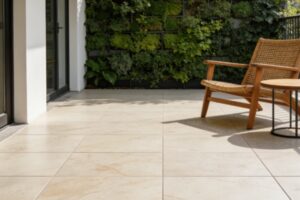
<img src="https://purrlacafe.com/wp-content/uploads/2026/01/16-3-300x200.jpg" alt="" width="300" height="200" class="alignnone size-medium wp-image-742" />
Porcelain Deck Tiles5 (Best Overall Choice)
What Are Porcelain Deck Tiles5?
Porcelain deck tiles are high-density, kiln-fired tiles6 engineered specifically for outdoor use. Modern outdoor porcelain tiles are typically 20mm thick, providing exceptional structural strength.
Key Performance Advantages
- Water absorption < 0.5%
- R11 / R12 anti-slip rating
- Excellent frost resistance
- UV-stable colors (fade-resistant)
- Fire-resistant and non-combustible
Why Porcelain Outperforms Other Materials
Unlike stone, porcelain does not require sealing. Unlike composite or vinyl, porcelain does not warp or degrade under UV exposure. Its density ensures exceptional load-bearing capacity, making it suitable for commercial decks and hotel terraces.
Typical Applications
- Residential decks and patios
- Pool decks and wet areas
- Hotel, resort, and commercial terraces
- Rooftop decks and balconies
Vinyl Flooring for Decks
What Is Vinyl Deck Flooring?
Vinyl deck flooring is made from PVC materials designed to resist moisture and stains. Outdoor-rated vinyl must be specifically engineered for exterior use.
Advantages
- Low cost
- Waterproof surface
- Easy cleaning
Disadvantages
- Poor heat resistance
- Warping under temperature fluctuations
- Short lifespan compared to tile solutions
Best Applications
- Budget-conscious projects
- Covered outdoor spaces
Best Outdoor Deck Tiles by Climate
Hot Climates (Middle East, Africa)
Recommended: 20mm porcelain deck tiles
- Heat-resistant
- UV-stable
- Minimal thermal expansion
Cold & Freeze–Thaw Regions (EU, North America)
Recommended: Porcelain deck tiles or granite
- Frost-resistant
- Low water absorption
Pool Decks & Wet Areas
Recommended: Textured porcelain tiles (R11/R12)
- Superior slip resistance7
- Mold and chemical resistance
High-Traffic Commercial Decks
Recommended: 20mm porcelain deck tiles
- High load-bearing strength
- Long service life
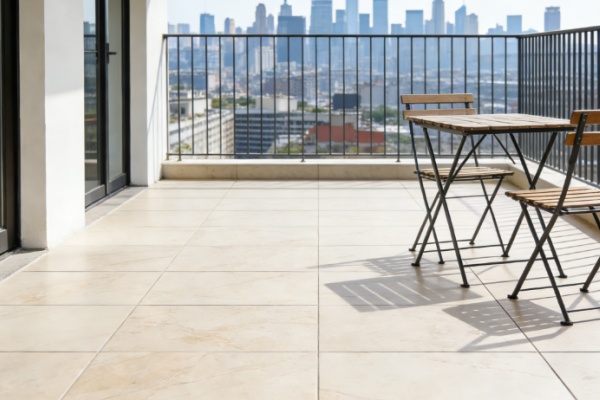
<img src="https://purrlacafe.com/wp-content/uploads/2026/01/16-4-300x200.jpg" alt="" width="300" height="200" class="alignnone size-medium wp-image-743" />
B2B & Project FAQ
What Thickness Is Best for Outdoor Deck Tiles?
For outdoor decks, 20mm thickness is the industry standard for durability and load resistance.
Are Porcelain Deck Tiles5 Slippery When Wet?
High-quality outdoor porcelain tiles feature textured surfaces with R11 or R12 anti-slip ratings, making them safe even in wet conditions.
How Long Do Porcelain Deck Tiles5 Last?
With proper installation, porcelain deck tiles can last 25–35 years with minimal maintenance.
Are Porcelain Deck Tiles5 Suitable for Commercial Projects?
Yes. Their high compressive strength, fire resistance, and low maintenance make them ideal for hotels, malls, and public spaces.
Final Thoughts
Selecting the right outdoor deck tile is a long-term investment. While rubber, composite, stone, and vinyl all have specific use cases, porcelain deck tiles deliver the best overall balance of durability, safety, aesthetics, and lifecycle cost.
For projects that demand performance, reliability, and professional-grade quality, porcelain remains the preferred choice.
Explore this link to discover top-rated outdoor deck tiles that combine durability and visual appeal. ↩
Learn how specific materials can enhance the longevity and safety of your outdoor spaces. ↩
Find expert comparisons to help you choose the best outdoor deck tiles for your project. ↩
Understand the key factors influencing your choice of outdoor deck tiles. ↩
Explore the advantages of porcelain tiles for outdoor applications. ↩
Learn about the manufacturing process and benefits of high-density tiles. ↩
Learn why slip resistance is crucial for safety in outdoor environments. ↩