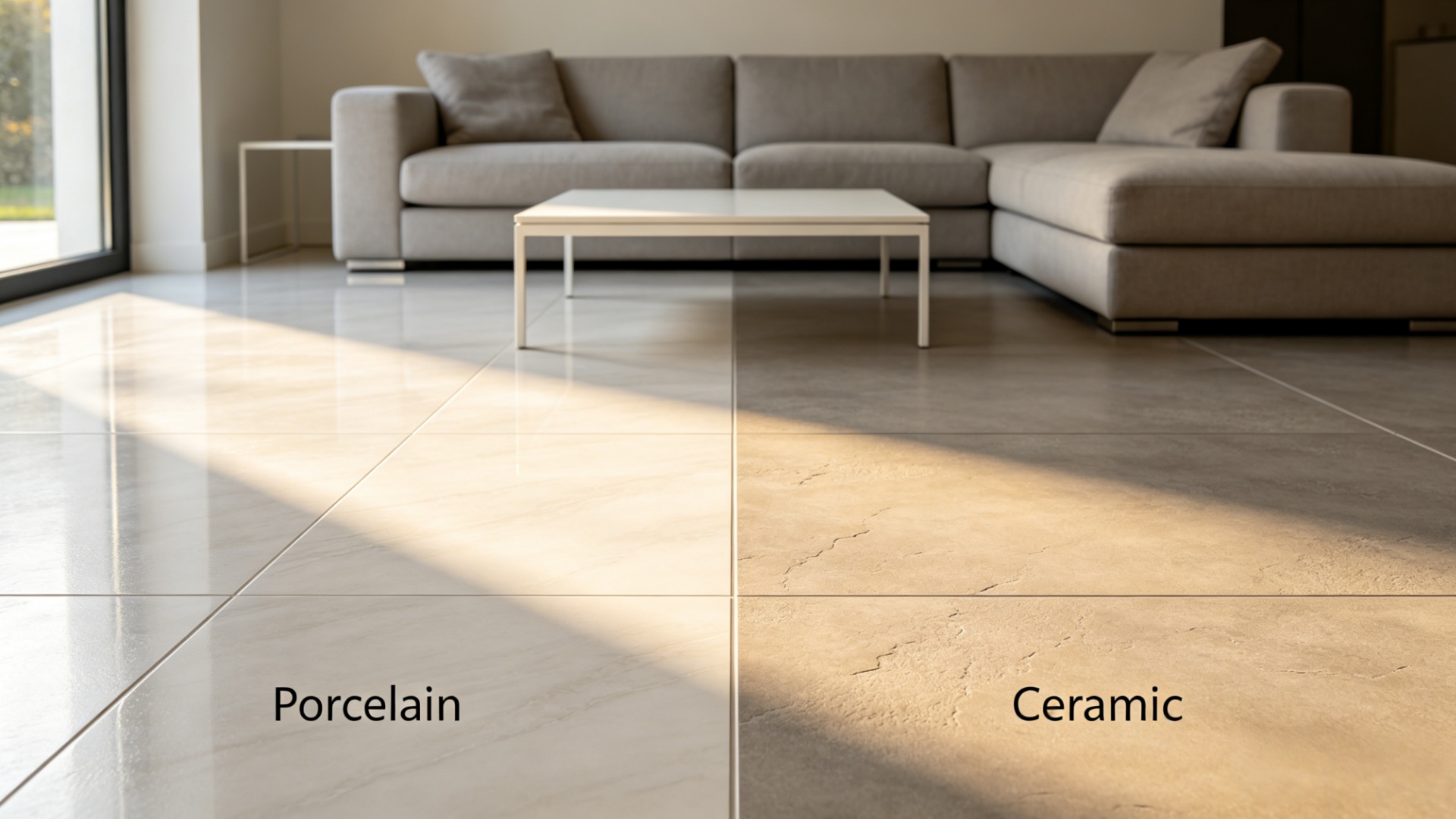
Are you struggling to choose between porcelain vs ceramic floor tile for your next project? Selecting the wrong material can lead to cracked surfaces and moisture damage that ruins your investment. As a flooring expert, I know that understanding the technical differences in durability, water absorption rates, and PEI ratings is the only way to ensure your floors last a lifetime. In this guide, you’re going to learn exactly how to weigh cost against performance to find the perfect fit for your space. Let’s dive right in.
Understanding the Basics: What Are Porcelain and Ceramic Tiles?
Choosing between porcelain vs ceramic floor tile begins with understanding their composition. While both are crafted from clay and fired in a kiln, the specific materials and processing methods define their performance and suitability for different environments.
What is Ceramic Tile?
Ceramic tile is primarily composed of natural red, brown, or white clay mixed with minerals. It is generally softer and less dense than porcelain, making it an excellent choice for interior walls and residential floors with moderate foot traffic. Because it is easier to cut, it is a favorite for intricate DIY projects and decorative installations.
- Composition: Natural clay and water.
- Texture: Typically features a glazed surface to seal the porous body.
- Best Use: Indoor living areas, backsplashes, and wall applications.
What is Porcelain Tile?
As a leading porcelain tile manufacturer and supplier, we define porcelain as a specialized, high-performance evolution of ceramic. It is made from more refined “kaolin” clay and fired at extreme temperatures. This results in a product that is significantly harder, more durable, and highly water resistant, making it suitable for both indoor and outdoor use.
- Composition: Fine porcelain clays, feldspar, and silica.
- Density: High-density body with very low porosity.
- Best Use: High-traffic commercial floors, bathrooms, and exterior patios.
The Manufacturing Process: Heat and Density Differences
The fundamental difference lies in the “dust-pressed” method and the firing temperature. Porcelain is subjected to higher pressure and heat, which creates a vitrified (glass-like) structure that repels moisture.
| Feature | Ceramic Tile | Porcelain Tile |
|---|---|---|
| Firing Temperature | Approx. 1,800°F – 2,000°F | Approx. 2,200°F – 2,400°F |
| Pressure Applied | Standard | High-Pressure Pressing |
| Density | Moderate | Extremely High |
| Porosity | Higher (More absorbent) | Lower (Less than 0.5% absorption) |
| Durability | Good for residential | Superior for heavy-duty use |
By utilizing advanced manufacturing techniques, we ensure that our porcelain products achieve a density that stands up to the most demanding environments, providing a long-lasting flooring solution that outperforms standard ceramic in longevity and moisture protection.
Key Performance Differences: Durability and Water Resistance
When comparing porcelain vs ceramic floor tile, the real differences show up in how they handle stress and moisture. As a manufacturer, we focus on density and composition to determine where a tile will actually last. Porcelain is built for toughness, while ceramic offers a lighter, more flexible option for standard home use.
Water Absorption Rates and Moisture Protection
Porcelain is the clear winner for wet environments. To be officially classified as porcelain, a tile must have a water absorption rate of 0.5% or less. This makes it nearly waterproof and frost-resistant. Ceramic is more porous, meaning it absorbs more moisture and is better suited for dry indoor areas.
| Feature | Porcelain Tile | Ceramic Tile |
|---|---|---|
| Water Absorption | < 0.5% (Impervious) | > 0.5% (Porous) |
| Moisture Resistance | Extremely High | Moderate |
| Best Use | Showers, Patios, Mudrooms | Bedrooms, Hallways |
PEI Ratings: Measuring Hardness and Wear Resistance
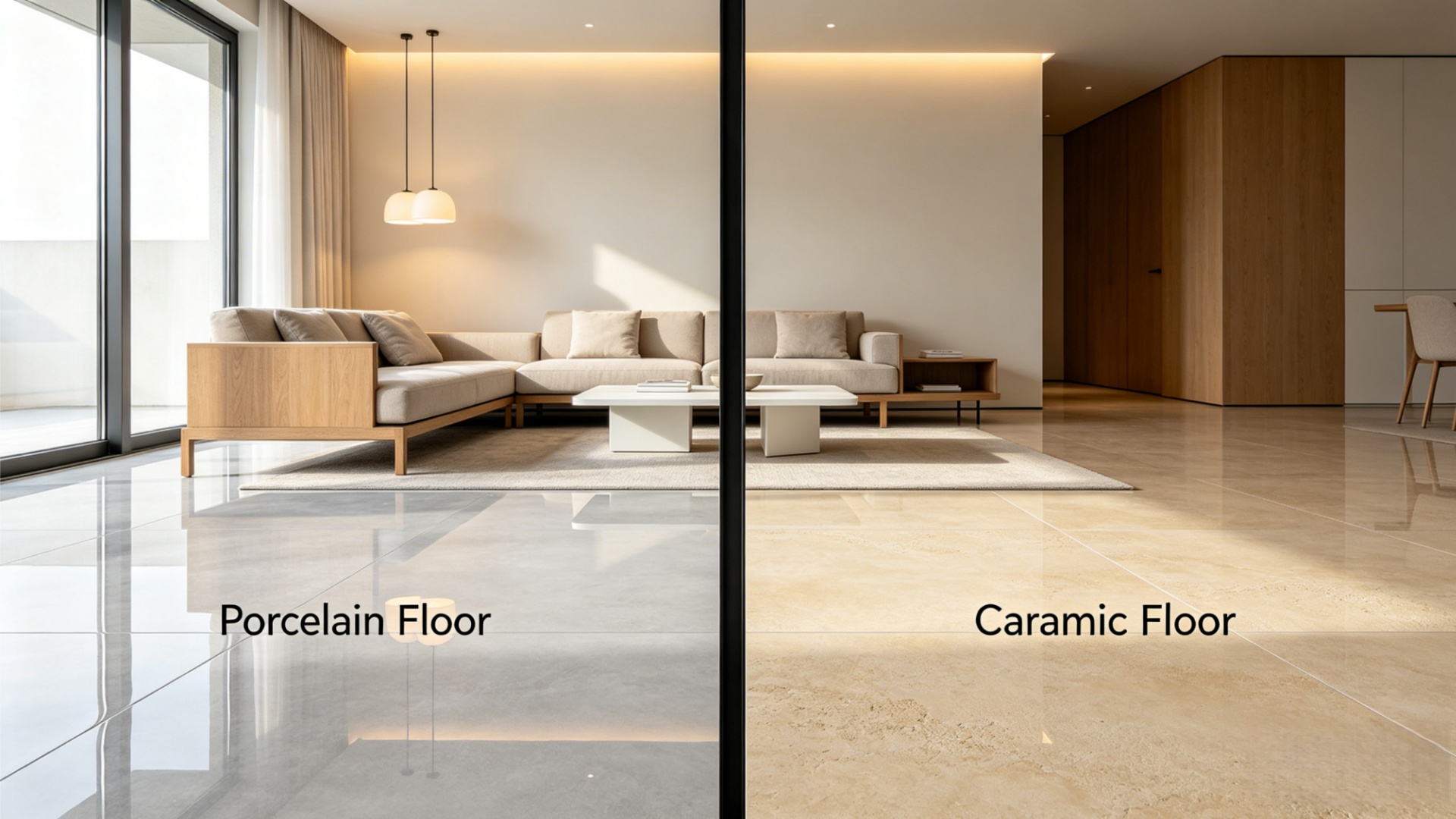
We use the PEI (Porcelain Enamel Institute) rating to define how much foot traffic a tile can handle before the surface wears down.
- Ceramic Tiles: Typically fall between PEI 3 and 4. These are perfect for residential spaces but may struggle in high-intensity commercial zones.
- Porcelain Tiles: Often reach PEI 5. They are incredibly durable and designed to withstand heavy equipment and constant foot traffic in retail or industrial settings.
Through-Body vs. Glazed Composition
The internal structure of the tile determines how it looks after years of use, especially if an accident occurs.
- Through-Body Porcelain: The color and pattern run through the entire thickness of the tile. If you chip it, the damage is nearly invisible because the material underneath matches the surface.
- Glazed Ceramic: The color is only a “skin” on the top. If a ceramic tile chips, the red or tan clay body underneath will show through, making the damage very obvious.
- Durability Factor: Because porcelain is fired at higher temperatures, it is much denser and less likely to crack under heavy loads compared to ceramic.
Design and Aesthetic Options for Modern Flooring
Modern manufacturing has closed the gap between style and functionality. Whether you are looking for a sleek contemporary vibe or a rustic farmhouse feel, the design flexibility of porcelain vs ceramic floor tile ensures there is a perfect match for every room. We focus on delivering visuals that are indistinguishable from natural materials while maintaining the durability of engineered stone.
Color, Texture, and Pattern Variety
We use advanced high-definition inkjet printing to apply intricate designs to the surface of our tiles. Ceramic tiles often feature brighter, more vivid glazes because they are fired at lower temperatures, which preserves certain pigments. Porcelain, while fired hotter, offers incredible depth and “through-body” color options where the pattern remains visible even if the tile is slightly chipped.
Popular Trends: Wood-Look and Stone-Look Tiles
The demand for natural aesthetics without the high maintenance has made wood-look and stone-look tiles our top sellers. These options allow you to enjoy the beauty of organic materials in areas where they typically wouldn’t survive.
- Wood-Look: Long planks with realistic grain textures that work perfectly in “wet” areas like bathrooms where real hardwood would warp.
- Stone-Look: Replicates the elegant veining of Carrara marble or the ruggedness of slate at a fraction of the cost and upkeep.
- Concrete-Look: Perfect for industrial or minimalist designs, providing a clean and seamless appearance.
Finish Options: Matte, Polished, and Textured Surfaces
The finish dictates both the “feel” of the room and the safety of the floor. Choosing the right surface is a balance between your design vision and the practical needs of the space.
| Finish Type | Visual Effect | Practical Use |
|---|---|---|
| Matte | Soft, non-reflective | Ideal for high-traffic areas; hides scratches and water spots effectively. |
| Polished | High-shine, mirror-like | Makes small rooms feel larger and more luxurious; best for dry areas. |
| Textured | Rugged, tactile | Essential for outdoor use or wet rooms to provide maximum slip resistance. |
We recommend selecting a finish based on the specific lighting and moisture levels of your space to ensure your flooring is both beautiful and functional.
Application Scenarios: Choosing the Right Tile for Your Space
Picking the right material depends entirely on where the tile will live. While both look great, their physical limits determine whether they will last a decade or crack within a year. As a supplier, we always look at the specific environment before making a recommendation.
Best Tiles for High-Moisture Bathrooms and Showers
In wet zones like walk-in showers and main bathrooms, porcelain floor tile is the gold standard. Because it is nearly waterproof, it prevents moisture from seeping into the subfloor, which stops mold and structural rot before they start.
- Porcelain: The only choice for shower floors and high-steam environments.
- Ceramic: Works perfectly for bathroom walls or dry half-baths where water doesn’t pool.
High-Traffic Kitchens and Entryways
Kitchens and entryways take a beating from heavy boots, dropped groceries, and constant movement. In the porcelain vs ceramic floor tile comparison for these areas, porcelain’s density gives it the edge.
- Impact Resistance: Porcelain is less likely to chip if a heavy cast-iron skillet hits the floor.
- Wear and Tear: For the busiest parts of your home, porcelain maintains its finish longer than most ceramic options.
Outdoor Patios and Commercial Environments
For outdoor use, we only recommend porcelain. Ceramic is porous; it soaks up rainwater, which then expands when it freezes, causing the tile to snap.
- Weatherproof: Porcelain is frost-resistant and can handle extreme temperature swings without failing.
- Commercial Strength: In retail stores or restaurants, porcelain is the industry standard. It handles heavy foot traffic and rolling loads that would quickly wear down a standard ceramic glaze.
Installation Considerations: DIY vs. Professional
Deciding between porcelain vs ceramic floor tile often comes down to how much work you want to do yourself. From my experience as a supplier, the physical properties of these materials completely change the installation game. Ceramic is generally more “user-friendly” for a weekend warrior, while porcelain requires a more specialized touch and heavy-duty equipment.
Cutting and Handling Difficulty
The density that makes porcelain so durable also makes it a challenge to cut.
- Ceramic Tile: It is relatively soft. You can usually use a manual snap cutter to get clean breaks. It’s lightweight and easy to maneuver, making it the go-to for DIY first-timers.
- Porcelain Tile: This material is incredibly hard and brittle. Using a manual cutter often results in jagged edges or shattered tiles. You almost always need a motorized wet saw to get through it. It’s also significantly heavier, which can wear you out quickly during a large-scale installation.
Tools and Materials Required for Installation
To get a professional finish, you need the right gear. The requirements differ based on the tile’s density:
- Wet Saw with Diamond Blade: Non-negotiable for porcelain to prevent chipping.
- Manual Snap Cutter: Sufficient for most ceramic jobs.
- Polymer-Modified Thin-set: Because porcelain is nearly waterproof, it doesn’t “grab” standard mortar well. You must use a high-quality, polymer-modified thin-set to ensure a permanent bond.
- Leveling Systems: Essential for large-format tiles to prevent “lippage” (uneven tile edges), which is a common issue with heavier porcelain slabs.
When to Hire a Professional Installer
While I support the DIY spirit, some scenarios demand an expert. You should consider hiring a professional if:
- You chose Large-Format Porcelain: These tiles require a perfectly flat subfloor and double-buttering techniques that are difficult to master.
- Intricate Patterns: If your design involves herringbone, chevron, or complex mosaics, a pro will save you from massive waste and frustration.
- Outdoor or Commercial Spaces: For outdoor use, the substrate preparation is critical to prevent cracking during freeze-thaw cycles.
- Lack of Specialized Tools: If you don’t want to invest in or rent a wet saw and heavy-duty mixers, the labor cost of a pro is often worth the precision they bring to the project.
Cost Analysis: Price Points and Long-Term Value
When comparing porcelain vs ceramic floor tile, the budget is often the deciding factor. However, the initial price tag only tells half the story. As a supplier, I always advise looking at the total project cost, including labor and future durability.
Average Cost per Square Foot Comparison
Ceramic is generally more affordable because the manufacturing process is less intensive. Porcelain carries a higher price point due to the specialized clays and high-pressure firing required to make it dense and durable.
| Tile Type | Average Material Cost (sq. ft.) | Primary Value Prop |
|---|---|---|
| Ceramic Tile | $0.50 – $6.00 | Budget-friendly, easy to replace |
| Porcelain Tile | $3.00 – $12.00+ | High durability, moisture-proof |
Installation and Labor Expenses
The “hidden” cost of flooring is the installation. Because porcelain is significantly harder and denser than ceramic, it is more difficult to cut and drill.
- Ceramic Installation: Softer material allows for faster cutting with standard tools. Labor costs are typically lower.
- Porcelain Installation: Requires professional-grade wet saws with diamond blades. Because it is harder to work with, installers usually charge a 20% to 30% premium for labor compared to ceramic.
- Adhesives: Porcelain requires high-bond thin-set mortars to adhere properly to the subfloor, which adds a small but notable increase to material costs.
Long-Term Maintenance and Lifespan ROI
If you plan on staying in your home for more than five years, porcelain often provides a better Return on Investment (ROI).
- Durability: Porcelain resists chips and cracks in high-traffic areas. If a heavy object drops on ceramic, the glaze often chips, revealing the red or tan clay underneath. Porcelain is often through-body, meaning the color is consistent throughout the tile.
- Moisture Resistance: In wet environments, porcelain’s near-zero water absorption prevents structural damage and mold growth, saving you from expensive repairs down the line.
- Resale Value: High-quality porcelain flooring is a major selling point for modern buyers, often recouping a higher percentage of its cost during a home sale compared to basic ceramic.
Maintenance and Care Requirements
Keeping your floors looking brand new doesn’t have to be a chore. Whether you choose porcelain vs ceramic floor tile, both options are famous for being low-maintenance compared to natural stone or hardwood. However, their physical builds mean they handle dirt and damage slightly differently.
Daily Cleaning and Stain Resistance
For everyday upkeep, both tile types are straightforward. We recommend a quick sweep or vacuum to remove grit, followed by a damp mop using a pH-neutral cleaner. Avoid harsh chemicals that can strip the finish over time.
| Feature | Ceramic Tile | Porcelain Tile |
|---|---|---|
| Stain Resistance | High (due to top glaze) | Superior (extremely dense) |
| Cleaning Method | Mild detergent & water | Mild detergent & water |
| Deep Cleaning | Occasional scrubbing | Rarely needed |
Porcelain tile has a slight edge in stain resistance because it is less porous. If you spill red wine or oil, porcelain gives you a longer window to clean it up before a permanent stain sets in.
Sealing Requirements for Grout and Tile
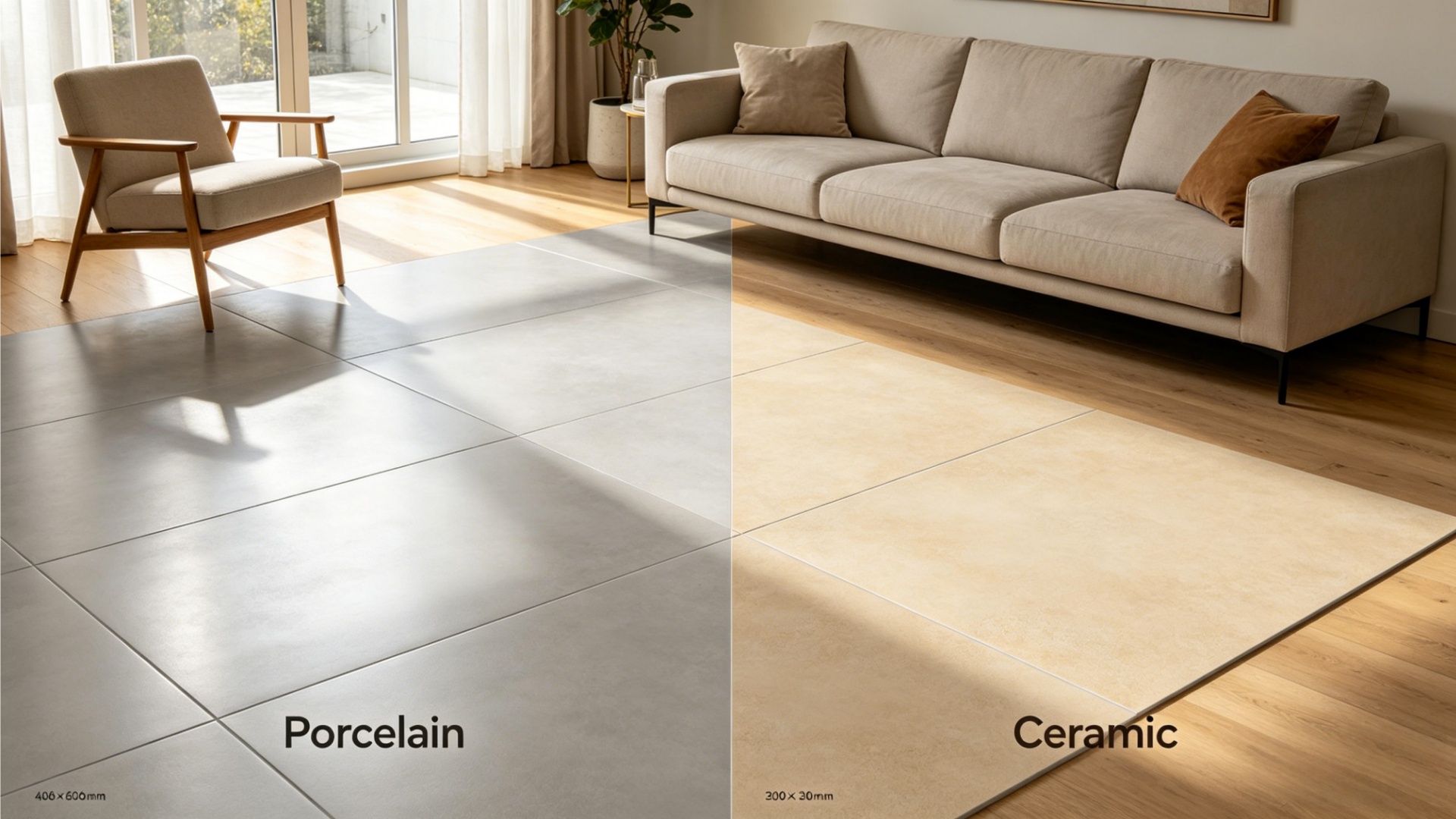
A common misconception is that the tile itself always needs sealing. In reality, it’s usually the grout that requires the most attention.
- Glazed Tiles: Most ceramic and porcelain tiles are glazed and do not require sealing.
- Polished Porcelain: Some polished porcelain has microscopic pores created during the polishing process. We suggest applying a specialized sealer to prevent “ghosting” or deep stains.
- Grout Lines: Grout is naturally porous. To prevent mold and discoloration, seal your grout lines every 6 to 12 months. This creates a moisture barrier that keeps the floor hygienic.
Repairing Chips and Cracks
Life happens—heavy pots drop or furniture gets dragged. When comparing porcelain vs ceramic floor tile durability during accidents, the “body” of the tile matters:
- Ceramic Chips: Since the color is only on the surface glaze, a chip will reveal the red or tan clay underneath. This makes the damage very visible.
- Porcelain Chips: Many porcelain tiles are “through-body,” meaning the color is consistent from top to bottom. If a small chip occurs, it blends in and is much harder to notice.
- The Fix: For minor nicks, use a color-matched tile repair kit or epoxy. For structural cracks, the best move is to pop out the damaged piece and replace it with a spare from your original installation. Always keep a “waste box” of extra tiles for this exact reason.
Verdict: How to Decide Between Porcelain and Ceramic
Deciding between porcelain vs ceramic floor tile comes down to your specific environment and your long-term goals for the space. As a manufacturer and supplier, I’ve seen both materials excel when placed in the right setting. The “better” tile is simply the one that fits your lifestyle and budget.
When to Choose Ceramic Tile
Ceramic is the practical choice for many interior residential projects. I recommend going with ceramic if you are focusing on the following:
- Budget-Friendly Renovations: If you need to cover a large area indoors without breaking the bank.
- DIY Installation: Ceramic is softer and significantly easier to cut with a manual snap cutter, making it ideal for homeowners doing the work themselves.
- Low-Traffic Areas: It performs beautifully in bedrooms, guest bathrooms, or on wall applications like backsplashes.
- Vertical Surfaces: Because it is lighter than porcelain, it is often easier to install on walls.
When Porcelain is Worth the Extra Investment
If your project involves heavy use or exposure to the elements, porcelain is the superior choice. It is worth the higher price tag for:
- High-Moisture Zones: Its density makes it exceptionally water resistant, which is a requirement for walk-in showers and mudrooms.
- Outdoor Use: Porcelain is frost-resistant and can handle freeze-thaw cycles, making it the only choice for patios or walkways.
- High-Traffic Flooring: In kitchens, entryways, or commercial spaces, the durable nature of porcelain prevents wear and chipping over decades.
- Long-Term Value: It maintains its appearance longer than almost any other flooring material, providing a better return on investment.
Checklist for Your Flooring Project
Use this table to quickly determine which material aligns with your project requirements:
| Feature | Ceramic Tile | Porcelain Tile |
|---|---|---|
| Primary Usage | Indoor walls and light-duty floors | Indoor/Outdoor floors and heavy traffic |
| Durability | Moderate; prone to chipping in high-traffic | High; extremely durable and dense |
| Water Resistance | Good (absorbs more water) | Excellent (water resistant) |
| Installation | Easy; DIY-friendly cutting | Difficult; requires diamond blades |
| Outdoor Use | Not recommended | Highly recommended for outdoor use |
| Cost | Lower initial cost | Higher initial cost; better long-term value |
