Are you struggling to choose the perfect tile for your next renovation?
You might already know that durability matters, but do you really understand how a tile’s water absorption rate dictates its survival in your home?
There is a lot of confusing advice out there. Some are proven industry standards. Others are just bad showroom speculation.
Well, you’re in for a treat because I’ve put together the ultimate guide on Water Absorption and Tiles: Myths Vs Facts!
In this post, you’re going to learn exactly how to decode tile classification standards, debunk common misconceptions about waterproofing and glazing, and separate fact from fiction when it comes to wet areas and outdoor installations.
So if you want to avoid costly water damage and choose the right high-absorption or low-absorption tiles with absolute confidence, this guide is for you.
Let’s dive right in.
Understanding Tile Water Absorption
When selecting materials for your next project, the physical properties of the tile dictate its lifespan and performance. One of the most critical metrics is how the material interacts with moisture.
What is the Water Absorption Rate?
The water absorption rate measures how much moisture a specific tile can hold relative to its weight. This metric is expressed as a percentage and serves as a direct indicator of the tile’s density. Simply put, it tells you whether a tile is highly porous or nearly impervious to water. Understanding this rate is essential before installing materials in demanding, high-traffic, or wet environments.
What Causes Tiles to Absorb Water?
A tile’s tendency to absorb water comes down to its manufacturing process and raw materials. Here are the primary factors:
- Internal Porosity: Microscopic air pockets left inside the clay during the shaping process trap moisture.
- Firing Temperature: Tiles fired at extreme temperatures (like porcelain) fuse together to become highly dense, resulting in low water absorption. Tiles fired at lower temperatures remain more porous.
- Material Composition: Different natural clay mixtures yield varying levels of inherent density.
- Surface Glaze: A liquid glass coating acts as a protective barrier against top-down moisture, though it does not change the internal porosity of the tile body itself.
Why Does Water Absorption Matter for Durability?
Moisture compromises structural integrity. When a porous tile absorbs water, it becomes inherently vulnerable to severe long-term issues.
- Freeze-Thaw Damage: If water trapped inside an outdoor tile freezes, it expands. This expansion causes the tile to crack, shatter, or pop off its substrate.
- Mold and Mildew: High moisture retention creates a breeding ground for bacteria and mold, which is disastrous for bathroom tiles and kitchen tiles.
- Staining and Weakness: Absorbed water carries dirt, spills, and cleaning chemicals deep into the tile body, weakening the material over time and causing permanent discoloration.
Choosing dense materials ensures you are investing in highly durable, near-waterproof tiles capable of withstanding heavy daily use, spills, and harsh environmental conditions.
How Tiles Are Classified by Water Absorption
Professional Tile Classification Standards
When we talk about tile quality, we aren’t just guessing; we rely on specific global standards. The industry uses a straightforward classification system based on how much water a tile absorbs relative to its weight. This isn’t just technical jargon—it determines where you can safely install your tiles.
The American National Standards Institute (ANSI) and ISO standards break this down into four main categories. Knowing these helps you avoid costly mistakes, like putting a porous tile on a patio that freezes in winter.
- Non-vitreous (Low density): Absorbs more than 7% water. These are strictly for indoor, dry areas.
- Semi-vitreous (Medium density): Absorbs between 3% and 7%. Good for most indoor applications but risky in wet zones.
- Vitreous (High density): Absorbs between 0.5% and 3%. These are standard for indoor and outdoor use in non-freezing climates.
- Impervious (Extremely high density): Absorbs 0.5% or less. This is the gold standard for porcelain tiles, suitable for heavy-duty use and wet environments.
High-Absorption vs. Low-Absorption Tiles
The difference between high and low absorption isn’t just about water; it’s about the density of the clay body.
Low-Absorption Tiles (Porcelain & Vitreous):
These are fired at extremely high temperatures, fusing the clay particles until they are almost glass-like. Because they are so dense, liquids can’t penetrate easily. If you are looking for waterproof tiles for a shower or an outdoor deck, this is your category. They resist staining and cracking from freeze-thaw cycles because water doesn’t get inside to expand and break the tile.
High-Absorption Tiles (Ceramic & Non-Vitreous):
These are more porous. While they are often more affordable and easier to cut, they act a bit like a sponge. If you use a high-absorption tile in a bathroom without proper sealing, moisture can seep through to the substrate, leading to mold or structural damage. However, they are perfectly fine for living room walls or backsplashes where water exposure is minimal.
How to Test Water Absorption at Home
You don’t need a lab coat to get a rough idea of a tile’s quality. While this doesn’t replace official lab ratings, a simple home test can tell you if a sample is thirsty or resistant.
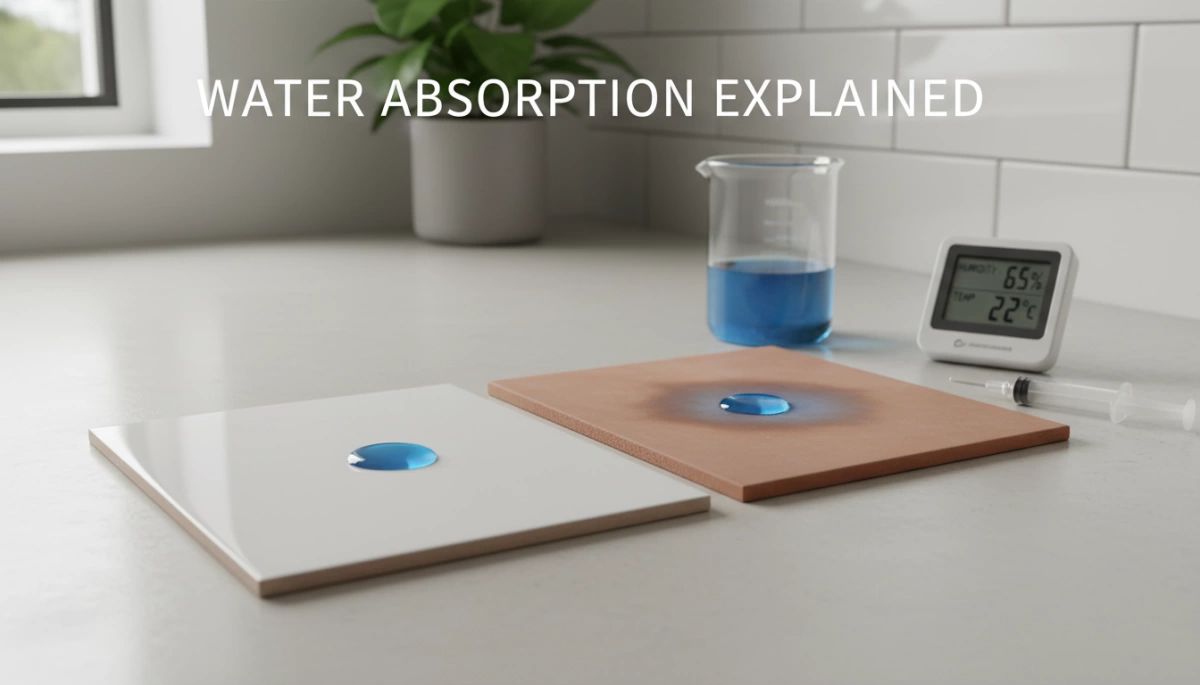
The Water Drop Test:
- Take a sample tile and lay it flat.
- Flip it over to the unglazed back (the body of the tile).
- Pour a spoonful of water onto the back.
- Wait for 5 minutes.
The Results:
- Impervious/Low Absorption: The water beads up and sits on the surface. When you wipe it off, the clay underneath looks dry or barely changed color. This indicates a high-quality, likely porcelain body.
- High Absorption: The water disappears quickly, soaking into the clay. The spot turns dark and stays dark even after wiping. This tile will need significant sealing if used anywhere near moisture.
Debunking Common Myths About Tile Water Absorption
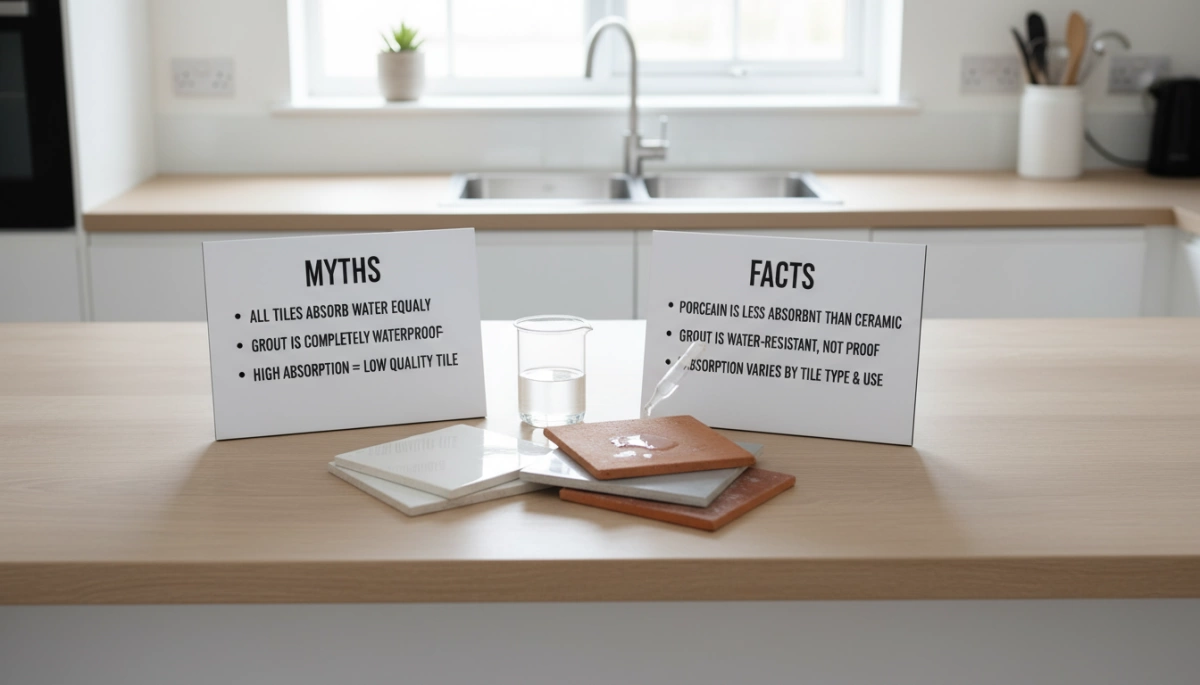
There is a lot of confusion out there about what water absorption actually means for your floors and walls. Let’s clear up the biggest misconceptions so you don’t waste money on the wrong materials.
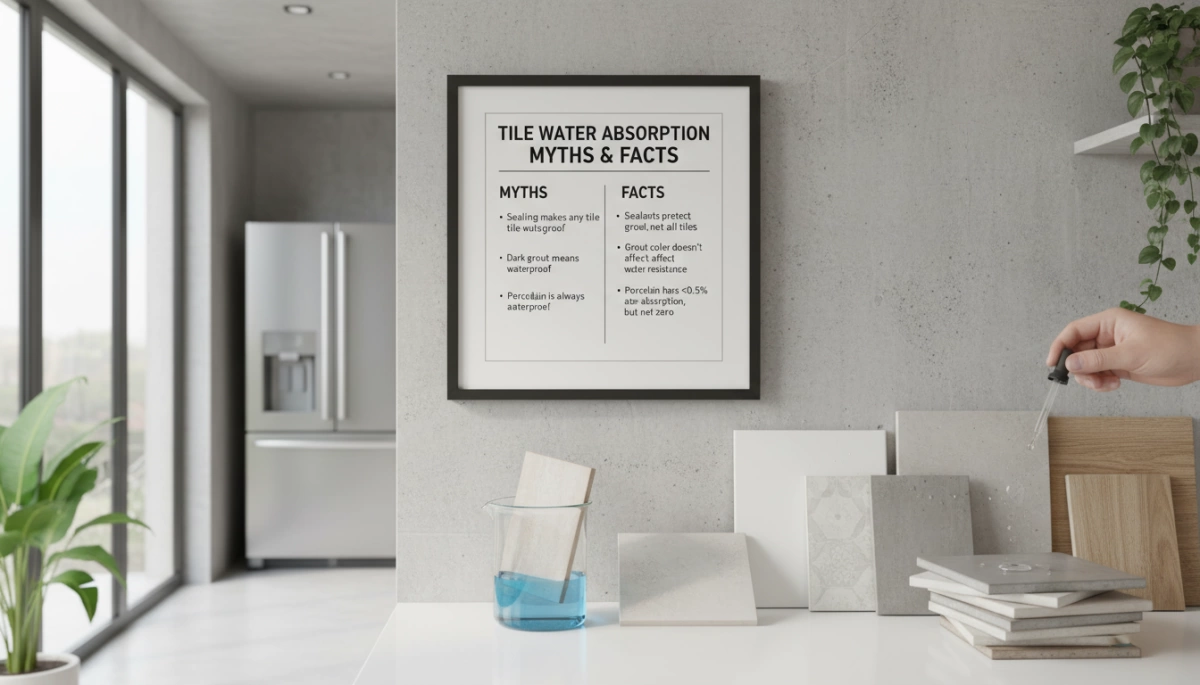
Myth vs Fact: Does Absorbed Water Damage Tiles?
Myth: If a tile absorbs any water at all, it will eventually rot, crumble, or break apart inside your home.
Fact: Water absorption itself isn’t the enemy; the environment is.
Ceramic and natural stone tiles are porous materials. Absorbing a small amount of moisture is natural. In a standard indoor environment like a living room or bedroom, absorbed water simply evaporates back into the air without causing structural damage.
However, the real danger arises in freeze-thaw cycles. If you install a tile with a high water absorption rate outdoors in a cold climate, the water trapped inside will freeze, expand, and crack the tile. Indoors, unless you have a constant leak or standing water issue, standard absorption rarely leads to catastrophic failure.
Myth vs Fact: Are High-Absorption Tiles Always Inferior?
Myth: You should always buy porcelain with the lowest possible absorption rate because anything else is “low quality.”
Fact: High absorption does not mean low quality; it just means different utility.
Non-vitreous tiles (those with high absorption rates, often over 7%) include many beautiful ceramic wall tiles and handcrafted artisan tiles. These products are designed specifically for vertical surfaces where foot traffic and standing water aren’t issues.
- Porcelain (Low Absorption): Essential for floors and wet areas.
- Ceramic Wall Tile (High Absorption): Perfect for backsplashes and accent walls.
If you use a high-absorption ceramic tile on a bathroom floor, you might have staining issues, but using it on a kitchen backsplash is perfectly safe and often more affordable. It’s about matching the spec to the job, not judging quality solely by density.
Myth vs Fact: Does Glazing or Sealing Make Tiles Waterproof?
Myth: I can use a porous tile in a shower as long as I seal it or if it has a glossy glaze on top.
Fact: Glazing and sealing help the surface, but they do not make the tile body waterproof.
A glaze is essentially a layer of glass on top of the clay body. While that top layer is impervious to water, the tile body underneath remains porous. If there are any cracks in the grout, chips in the glaze, or if moisture seeps in from the sides or underneath (which happens often in showers), the tile body will still suck up that water.
Similarly, sealers are temporary. They reduce the rate of absorption and help prevent stains, but they do not turn a porous stone or ceramic into a waterproof tank. Relying solely on a sealer to protect a high-absorption tile in a steam shower is a recipe for mold and moisture problems down the line. Always choose a tile with an inherently low water absorption rate for wet zones.
Separating Fact from Fiction in Tile Applications
When it comes to where you can actually put these tiles, there’s a lot of confusion. People often assume that if a tile absorbs water, it’s useless, or that any “hard” tile works outside. Let’s clear up exactly where different absorption rates fit into real-world projects.
Myth vs Fact: Can High-Absorption Tiles Go in Wet Areas?
Myth: You can never use high-absorption tiles, like ceramic or terracotta, in a shower or backsplash.
Fact: You absolutely can, provided they are glazed and sealed correctly.
While it is true that low water absorption tiles like porcelain are the “set it and forget it” choice for wet zones, high-absorption tiles have been used in bathrooms for centuries. The key is the surface barrier. A quality glaze prevents water from ever reaching the porous clay body underneath.
However, there is a catch: if the glaze cracks or the grout lines fail, the tile body will suck up moisture like a sponge. This can lead to staining or mold behind the tile. So, while you can use them, they require more vigilant maintenance than a dense porcelain tile.
Myth vs Fact: Does Absorption Only Matter in Bathrooms?
Myth: If I’m tiling a living room or a hallway, water absorption rates don’t matter at all.
Fact: Absorption rates impact stain resistance and durability in every room, not just wet ones.
Think about your kitchen or dining area. Spills happen—wine, coffee, oil. If you install a highly porous, unsealed stone or tile in a kitchen, that liquid isn’t just sitting on top; it’s seeping in. A tile with a high water absorption rate is also more prone to holding onto stains deeply.
Furthermore, absorption relates to density. In high-traffic areas like hallways, a denser, low-absorption tile is generally harder and more resistant to chipping and wear. Ignoring absorption ratings in “dry” rooms can lead to floors that look dirty permanently or wear out prematurely.
Myth vs Fact: Can Any Tile Be Safely Used Outdoors?
Myth: Any stone or ceramic tile is fine for a patio as long as it looks good.
Fact: Using high-absorption tiles outdoors in freezing climates is a recipe for disaster.
This is the most dangerous myth to believe. If you live in an area with freeze-thaw cycles, water absorption is the single most critical factor. Here is why:
- The Science: Water expands when it freezes.
- The Result: If a tile absorbs water (rain or snow melt) and the temperature drops below freezing, that water expands inside the tile.
- The Damage: The internal pressure cracks the tile from the inside out.
For outdoor use in cold climates, you must use tiles with extremely low water absorption (usually impervious porcelain with a rate of 0.5% or less). In tropical climates that never freeze, you have more flexibility, but you still risk mold and algae growth on porous tiles. Always check the frost resistance rating, which is directly tied to absorption.
Choosing the Right Tiles: Water Absorption and Tiles Myths Vs Facts!
Best Tiles for High-Moisture Environments
When sourcing materials for global projects, I always prioritize a low water absorption rate for wet zones. Relying on facts rather than myths is the only way to prevent structural damage over time.
- Porcelain: The absolute industry standard. Its incredibly dense body acts as highly effective waterproof tiles.
- Glazed Ceramic: Perfect for standard indoor walls and mild moisture areas.
- Glass: Offers zero moisture penetration, making it ideal for targeted splash zones.
Matching Tile Properties to Room Requirements
You must match the water absorption rate directly to the room’s daily demands. Ignoring this leads to premature tile failure. Here is the strict baseline I enforce for my clients:
| Space | Recommended Application | Target Absorption Rate |
|---|---|---|
| Bathroom tiles | Shower floors, wet walls | Less than 0.5% (Impervious) |
| Kitchen tiles | Backsplashes, heavy traffic floors | 0.5% to 3% (Vitreous) |
| Living Areas | General flooring, accent walls | 3% to 7% (Semi-vitreous) |
Long-Term Value and Maintenance Considerations
High-density, low-absorption options deliver unmatched long-term value. Choosing the right material ensures your space survives heavy daily use without failing.
- Stain Resistance: Dense tiles naturally lock out spills, grime, and grease.
- Weather Durability: Minimal moisture penetration prevents cracking in varying global climates.
- Low Maintenance: Less porous surfaces require only standard sweeping and mopping, completely eliminating the need for harsh chemical treatments.