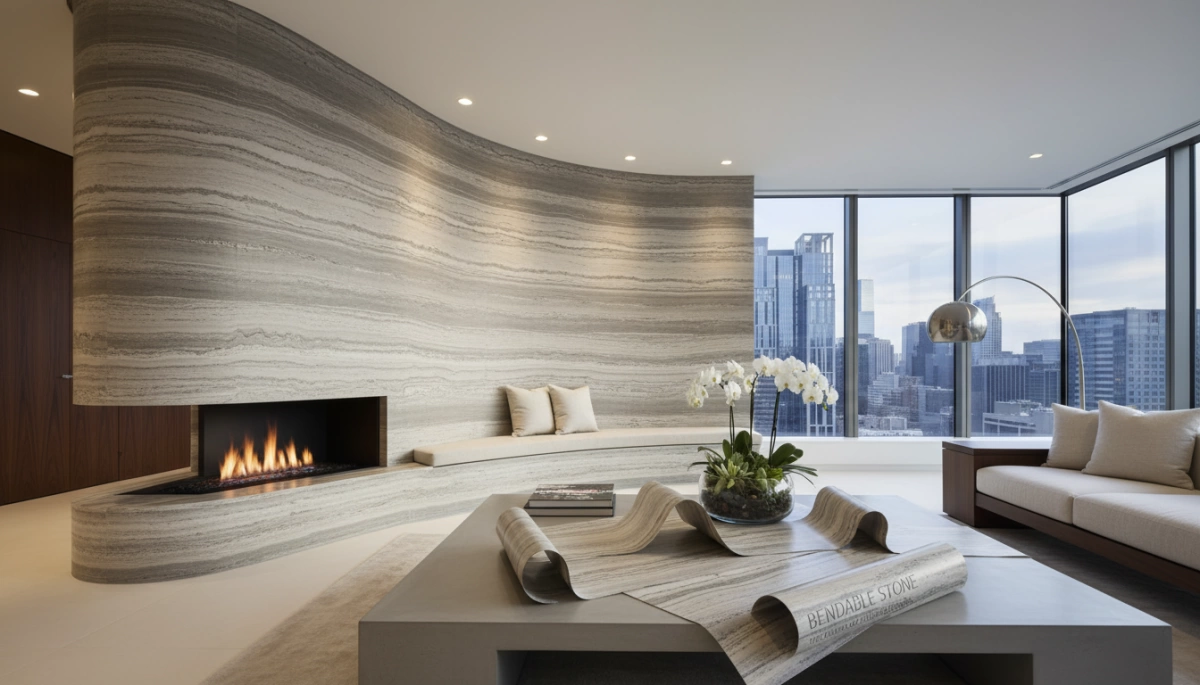
What is Bendable Stone?
Bendable stone is a revolutionary architectural surface that bridges the gap between natural aesthetics and modern structural demands. It offers the authentic texture and visual appeal of natural rock without the heavy, rigid constraints of traditional masonry, making it a cornerstone of flexible design.
Origins and Core Material Composition
The foundation of this innovative material lies in its unique hybrid structure. We utilize advanced extraction techniques to peel ultra-thin layers of real natural stone, such as slate, quartzite, or marble. These micro-veneers are then permanently bonded to a specialized flexible backing material, typically composed of fiberglass and advanced polymer resins.
- Natural Stone Surface: Provides 100% authentic texture, mineral shine, and unique color variations.
- Fiberglass Resin Backing: Ensures structural integrity while allowing the material to flex and bend.
- Ultra-Thin Profile: Usually measuring between 1.5mm to 3mm in total thickness, significantly reducing weight.
How Advanced Manufacturing Creates Flexibility
The secret to transforming rigid rock into a versatile flexible tile lies in our proprietary manufacturing process. By applying precise heat and pressure, the polymer backing is fused with the stone veneer at a molecular level. This advanced engineering allows the final product to bend seamlessly around columns, curved walls, and complex architectural features without cracking or compromising the stone’s natural face. The result is a highly adaptable, sustainable building material that completely redefines the boundaries of modern construction and interior design.
Key Advantages of Flexible Stone
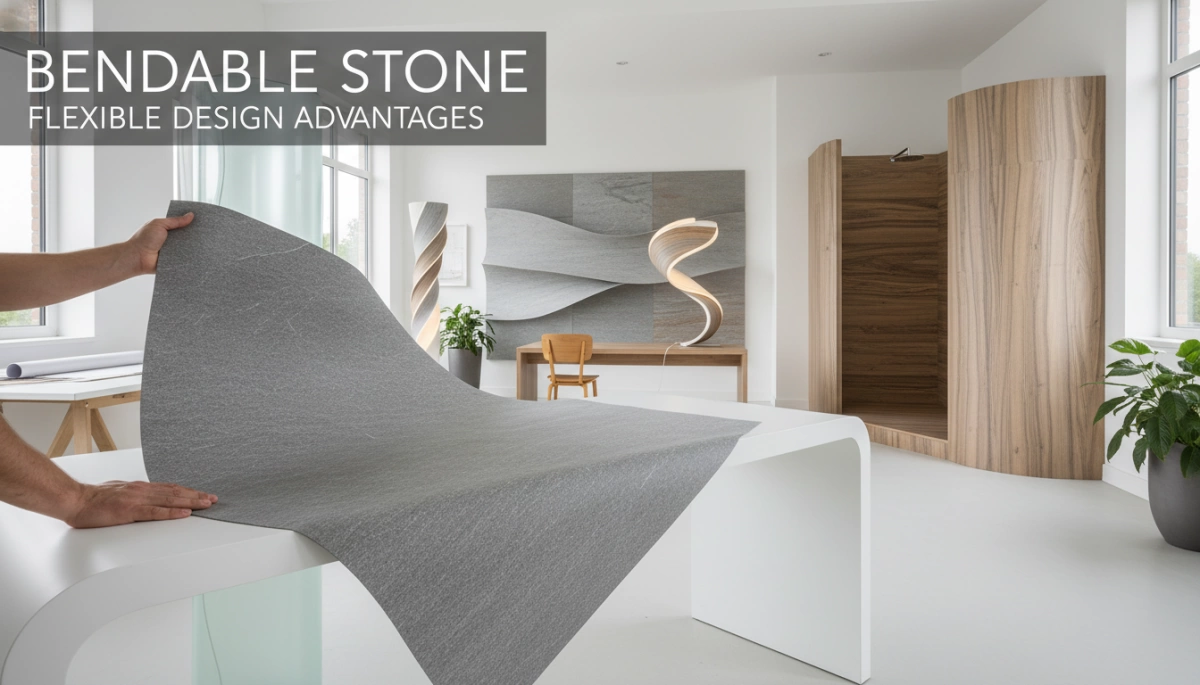
When we talk about upgrading spaces, traditional stone often feels like a compromise between beauty and practicality. Bendable stone changes that conversation entirely. It isn’t just a quirky alternative; it solves the fundamental headaches builders and designers have dealt with for decades. Here is why this material is rapidly becoming a staple in modern architecture.
Unmatched Adaptability for Curved Surfaces
The biggest selling point here is right in the name: flexibility. If you have ever tried to clad a round column or a curved reception desk with standard granite or marble, you know the struggle—it requires expensive cutting, faceting, and endless labor.
Flexible stone eliminates that friction. Because of its ultra-thin layers and specialized flexible backing material, these sheets can wrap around columns, arches, and organic shapes without snapping. It behaves more like a heavy-duty wallpaper than a slab of rock. This opens up a world of creative freedom for interior design, allowing for seamless curves that were previously impossible or prohibitively expensive to achieve with natural stone.
Lightweight Profile for Simplified Handling
Transporting traditional stone is a logistical nightmare. It’s heavy, fragile, and expensive to ship. Flexible stone flips the script on logistics.
- Weight Reduction: A standard sheet weighs a fraction of traditional stone, often less than 2-3 kg per square meter.
- Easier Transport: You can fit significantly more product on a pallet, slashing shipping costs.
- Safer Handling: Workers can carry sheets easily without heavy machinery, reducing job site injuries and fatigue.
This lightweight profile means you can install it on structures that couldn’t support the dead load of heavy masonry, such as elevator interiors or lightweight partition walls.
Exceptional Durability and Weather Resistance
Don’t let the flexibility fool you; this material is tough. We engineer these surfaces to withstand harsh environments, making them suitable for both high-traffic interiors and demanding exteriors.
The surface is resistant to impact, abrasion, and UV radiation. Whether it is facing the scorching sun in Dubai or the freezing dampness of Northern Europe, the flexible tile maintains its integrity. It doesn’t crack under thermal expansion like rigid tiles often do because the material moves slightly with the building. It is a set-it-and-forget-it solution for long-term performance.
Eco-Friendly and Sustainable Production
Sustainability isn’t just a buzzword anymore; it is a requirement for global projects. Traditional stone quarrying is invasive and energy-intensive. Our approach to sustainable building materials focuses on maximizing yield.
By peeling ultra-thin layers from the source rock rather than cutting thick slabs, we get vastly more square footage from the same amount of raw stone. This efficient use of resources means:
- Less Waste: We utilize nearly 100% of the quarried material.
- Lower Carbon Footprint: Reduced weight means significantly less fuel is burned during transportation.
- Minimal Processing Energy: The manufacturing process consumes less power than traditional stone cutting and polishing.
Choosing bendable stone allows projects to meet green building standards without sacrificing the premium look of natural stone.
Solving Traditional Design Limitations
Overcoming Cracking Issues in Wall Materials
We have all seen it—beautiful stone facades or rigid tiles that develop hairline fractures after just a few seasons. Traditional rigid materials simply cannot handle the natural movement of a building. Whether it’s thermal expansion from the sun or subtle structural settling, rigid stone fights against these forces and eventually loses, resulting in unsightly cracks.
Bendable stone changes this dynamic completely. Because of its unique composition, it doesn’t fight the movement; it moves with it. The material possesses a high degree of ductility, meaning it can absorb the stress that would normally shatter a standard ceramic tile or slab.
- Impact Resistance: Unlike brittle ceramics, flexible stone absorbs impact rather than cracking.
- Thermal Expansion: It expands and contracts with temperature changes without compromising structural integrity.
- Seismic Safety: In areas prone to tremors, the flexibility prevents dangerous shattering and detachment.
By using a flexible backing material, we eliminate the brittleness that plagues traditional masonry. This isn’t just about aesthetics; it’s about long-term structural health. You stop worrying about expensive repairs and start trusting that your walls will look as good in ten years as they do today.
Achieving Seamless Architectural Aesthetics
One of the biggest headaches in interior design and architecture is dealing with curves. Traditionally, if you wanted a curved stone wall, you were looking at expensive custom cutting, segmented facets that ruin the flow, or heavy materials that require massive structural support. It often forced designers to compromise their vision.
With flexible tile technology, those compromises are gone. We can now wrap columns, arches, and undulating walls with a continuous stone surface. The material bends around corners and curves effortlessly, creating a fluid, organic look that was previously impossible or prohibitively expensive.
Key Aesthetic Benefits:
- Continuous Flow: Wrap columns without ugly vertical grout lines or segmented “pixelated” edges.
- Ultra-Thin Profile: The ultra-thin layers allow for installation over existing surfaces without adding bulk, preserving the room’s dimensions.
- Design Freedom: Architects can finally execute complex, non-linear designs using natural-looking stone textures.
This capability allows for a truly seamless visual experience. We are no longer limited to flat planes and right angles. We can bring the elegance of stone to organic shapes, creating spaces that feel modern, sophisticated, and uninterrupted.
Diverse Applications in Modern Design
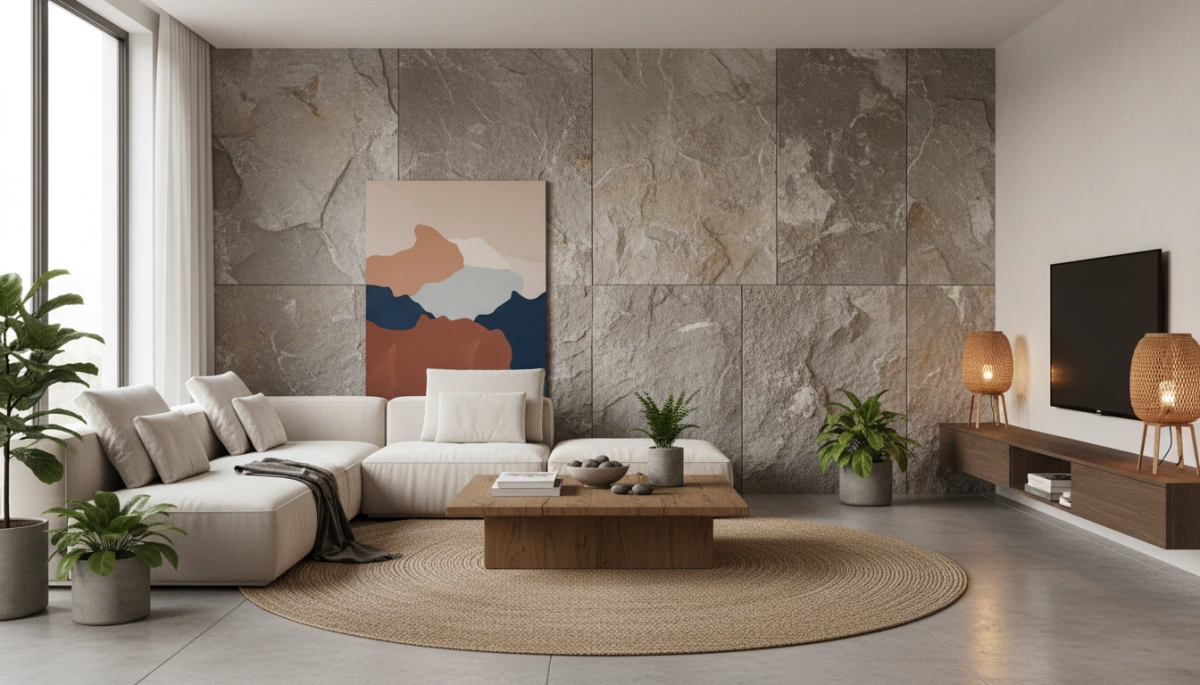
Stunning Interior Feature Walls and Kitchens
In the world of interior design, the ability to break free from flat, rigid surfaces is a massive advantage. I have found that bendable stone completely changes how we approach focal points in a home. We are no longer limited to flat slabs. Because these sheets utilize ultra-thin layers of natural stone, we can wrap them around curved kitchen islands, circular columns, or archways with ease.
- Seamless Flow: Create continuous stone surfaces that wrap around corners without unsightly joints.
- Kitchen Islands: Transform a standard island into a stone masterpiece by applying flexible veneers to curved cabinetry.
- Backsplashes: Install quickly over existing tiles for an instant kitchen upgrade without the demolition mess.
This material brings the raw, organic beauty of nature into spaces where heavy stone was previously impossible to install.
Durable Exterior Facades and Cladding
When we move to the exterior, the priorities shift to longevity and structural integrity. Traditional stone cladding is heavy and requires expensive anchoring systems. Bendable stone acts differently; it functions almost like a robust skin for the building. It is lightweight enough to be applied to high-rise facades without adding significant structural load.
This material is engineered to handle thermal expansion and contraction. Unlike rigid tiles that might crack under shifting temperatures, this flexible tile solution moves slightly with the building. It offers superior weather resistance, protecting the structure from UV rays and rain while maintaining that premium stone aesthetic for decades.
Transforming Commercial Spaces and Wet Areas
Commercial projects like hotels, lobbies, and retail spaces demand materials that are tough yet quick to install. I often recommend flexible stone here because it minimizes downtime. We can apply it directly over existing substrates, which is a huge cost-saver during renovations.
Crucially, the flexible backing material combined with proper sealing makes this an excellent choice for wet areas.
- Spa & Bathrooms: Ideal for curved shower walls or bathtub surrounds where rigid tiles would require difficult, jagged cuts.
- High-Traffic Zones: Resistant to impact and wear, making it suitable for busy hotel reception desks or elevator interiors.
- Waterproof Barrier: Once sealed, it becomes impervious to moisture, preventing mold and water damage behind the facade.
Installation and Maintenance Guidelines for Bendable Stone
When we talk about Bendable Stone: The Future of Flexible Design, the conversation naturally shifts to how easy it is to work with. Unlike traditional heavy masonry, this material completely changes the game for contractors and DIY enthusiasts alike.
Step-by-Step Installation Techniques
Installing a flexible tile doesn’t require specialized heavy machinery. The flexible backing material allows it to conform to curves and flat surfaces with ease. Here is our straightforward approach to getting it right every time:
- Surface Preparation: Ensure the wall or substrate is clean, dry, and free of dust.
- Cutting to Size: Measure your space and cut the stone sheets using standard tin snips or a wet saw.
- Applying Adhesive: Use a high-quality polymer adhesive. Spread it evenly on the back of the stone and the wall using a notched trowel.
- Positioning: Press the stone firmly onto the surface. Use a rubber roller to eliminate air bubbles and ensure full contact.
- Sealing the Joints: Apply a color-matched grout or sealant between the seams for a flawless, watertight finish.
Time and Labor Savings for Builders
Time is money on any job site. Because bendable stone features ultra-thin layers, it is incredibly lightweight. Builders no longer need to reinforce walls or hire specialized lifting equipment.
- Faster Turnaround: Projects that used to take weeks can now be finished in days.
- Reduced Transport Costs: Lighter materials mean cheaper shipping and easier handling on-site.
- No Structural Reinforcement: You can apply it directly over existing substrates, skipping costly demolition phases.
Best Practices for Easy Cleaning and Care
Whether you are using it for exterior cladding or high-end interior design, keeping bendable stone looking pristine is simple. As one of the most practical sustainable building materials on the market, it requires minimal upkeep.
- Routine Cleaning: Wipe down the surface with warm water and a pH-neutral stone cleaner. Avoid harsh, acidic chemicals that can degrade the surface.
- Soft Tools Only: Always use a soft microfiber cloth or a non-abrasive sponge to prevent scratching.
- Periodic Sealing: Depending on the environment (especially in wet areas), we recommend applying a penetrating stone sealer every few years to maintain its moisture and stain resistance.
The Future of Flexible Design Innovations
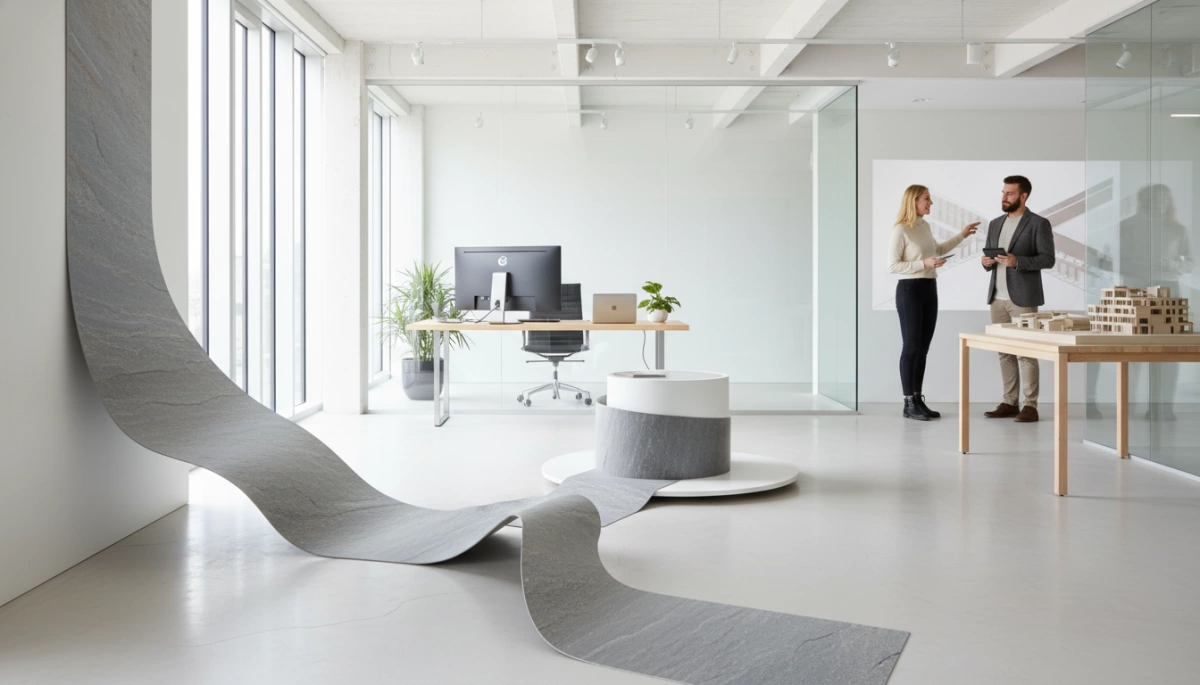
We are constantly pushing the boundaries of what Bendable Stone can achieve. It isn’t just about making stone flexible anymore; it is about engineering a material that anticipates the needs of tomorrow’s architecture. As we look ahead, the evolution of this material focuses heavily on safety, durability, and seamless integration with modern technology.
Enhanced Fire and Moisture Resistance Technology
Safety standards in global construction are stricter than ever, and our development roadmap reflects that. While traditional stone is naturally fire-resistant, the flexible backing material used in bendable stone requires sophisticated engineering to match those properties. We are now seeing the next generation of flexible tile solutions that incorporate advanced fire-retardant composites directly into the substrate.
Similarly, moisture resistance is moving beyond simple surface sealants. The latest innovations involve hydrophobic treatments at the molecular level during the manufacturing process. This means the stone doesn’t just repel water on the surface; it resists moisture penetration throughout its ultra-thin layers.
- Class A Fire Ratings: Aiming for the highest non-combustible standards for high-rise cladding.
- Hydrophobic Core: Preventing mold and structural degradation in humid climates or wet areas like bathrooms.
- Thermal Stability: Ensuring the material doesn’t warp or delaminate under extreme temperature fluctuations.
Digital Customization and Smart Building Integration
The intersection of interior design and digital technology is where things get really exciting. We are moving away from “one-size-fits-all” production toward bespoke manufacturing driven by digital data. Designers can now envision complex, organic shapes, and we can cut Bendable Stone with laser precision to fit those exact dimensions before it even reaches the job site.
Furthermore, the concept of “smart surfaces” is becoming a reality. Because these stone veneers are so thin and lightweight, they can easily conceal sensors or lighting elements without the bulk of traditional masonry.
- 3D Modeling Integration: Architects can feed BIM (Building Information Modeling) data directly into production lines for perfect custom cuts.
- Backlit Capabilities: Leveraging the translucency of certain stone veneers to create integrated ambient lighting.
- Smart Sensors: Embedding touch or proximity sensors behind the stone layer for interactive walls in commercial spaces.
This shift transforms sustainable building materials from passive elements into active components of a smart, responsive environment.
Cost Efficiency and Long-Term Value Assessment
Comparing Bendable Stone vs. Traditional Materials
When we look at the bottom line, traditional stone often comes with hidden costs that go beyond the price tag on the shelf. Heavy slabs require specialized transport, reinforced structural support, and skilled masons who charge premium rates for labor-intensive installation. In contrast, Bendable Stone changes the math entirely. Because of its lightweight profile and ultra-thin layers, shipping costs drop significantly—you can fit far more material into a single container compared to bulky granite or marble.
The real savings, however, happen on-site. Traditional stone is rigid and unforgiving; one mistake during cutting can ruin an expensive slab. Flexible tile solutions allow for easier handling and faster application, often adhering directly over existing surfaces without demolition. This reduces labor hours and waste, making the total installed cost much friendlier to project budgets.
Assessing Return on Investment for Global Projects
For developers and architects working on a global scale, ROI isn’t just about the initial build; it’s about longevity and maintenance. Bendable Stone offers a compelling value proposition because it combines the premium look of natural stone with the durability of modern engineering. In high-traffic commercial spaces or residential developments, the resistance to cracking and weathering means fewer repairs over the building’s lifecycle.
Furthermore, using sustainable building materials like flexible stone can increase a property’s market value. Modern tenants and buyers are increasingly looking for eco-conscious design choices. By choosing a material that lowers the carbon footprint of transport and installation while delivering a high-end aesthetic, you are future-proofing your investment. Whether it’s a hotel renovation in Europe or a new office complex in Asia, the reduced maintenance costs and timeless visual appeal ensure the project retains its value for decades.
