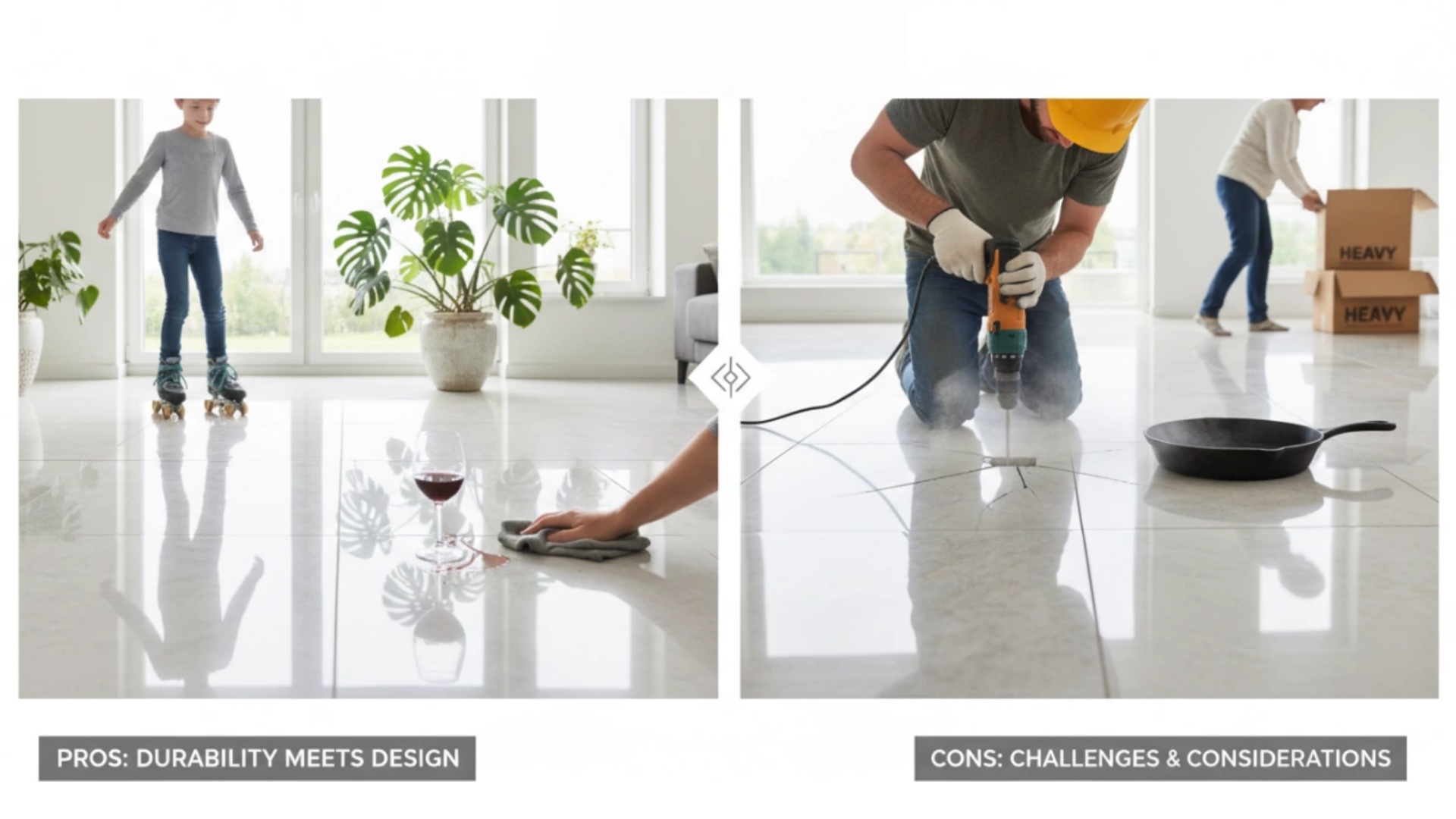
What is Porcelain Tile? Understanding the Basics
When evaluating the pros and cons of porcelain tile: durability meets design is the central theme you will encounter. Porcelain tile is a premium surface material celebrated for its incredible structural strength and aesthetic versatility. As an experienced porcelain tile manufacture and supplier, we know that making the right flooring decision starts with understanding exactly what makes this material so resilient.
How Porcelain Tile is Manufactured
The secret to the exceptional performance of porcelain lies entirely in its manufacturing process. It is engineered to withstand heavy wear and tear, making it a superior choice for modern construction.
- Refined Materials: The process begins with highly refined, dense clay mixed with finely ground natural minerals like feldspar and quartz.
- Extreme Pressure: This mixture is pressed into molds under immense pressure to remove air pockets and increase density.
- High-Temperature Firing: The tiles are fired in kilns at extreme temperatures exceeding 2,300°F (1,260°C).
- Vitrification: This intense heat causes the materials to vitrify, creating a glass-like, non-porous internal structure.
Porcelain vs. Standard Ceramic: The Key Differences
While both materials belong to the broader ceramic family, porcelain floor tiles are engineered to a much higher standard. The defining metric that separates porcelain from standard ceramic is its water absorption rate. Porcelain absorbs 0.5% or less of water, making it virtually waterproof. This non-porous nature naturally provides exceptional mold and mildew resistance, extending the lifespan of your installation.
Here is a quick breakdown of the core differences:
| Feature | Porcelain Tile | Standard Ceramic Tile |
|---|---|---|
| Material Composition | Highly refined, dense clay | Coarser, less refined clay |
| Water Absorption | ≤ 0.5% (Impervious) | > 0.5% (More porous) |
| Durability | Exceptional; resists heavy impacts | Moderate; prone to chipping |
| Best Applications | Heavy traffic areas, outdoor spaces | Light traffic, indoor walls |
| Color Body | Often carries color throughout the tile | Color is usually only on the top glaze |
Understanding these fundamental differences is crucial for selecting the right material for your specific architectural or interior design needs.
The Pros of Porcelain Tile: Where Durability Meets Design
As a porcelain tile manufacture and supplier, we constantly see how this material transforms modern spaces. When evaluating the pros and cons of porcelain tile: durability meets design perfectly in this category. It offers a rare combination of tough performance and high-end aesthetics that fits seamlessly into both residential and commercial projects worldwide.
Unmatched Durability and Longevity
Porcelain is engineered to last. Because it is crafted from highly dense clay and fired at extreme temperatures, the final product is incredibly hard and resilient.
- Scratch Resistant: It handles heavy foot traffic, pets, and moving furniture with ease.
- Crack Resistant: The dense structure withstands heavy impacts far better than standard materials.
- Decades of Use: Once installed correctly, these tiles can easily last a lifetime without showing significant wear.
High Resistance to Water, Heat, and Stains
One of the biggest advantages of porcelain is its near-zero water absorption rate, making it a powerhouse for practical daily use.
- Waterproof Core: Ideal for wet environments like bathrooms, showers, and kitchens.
- Mold and Mildew Resistance: The non-porous surface naturally blocks moisture penetration, preventing bacteria and fungi buildup.
- Weatherproof: It handles freezing temperatures and direct sunlight, making it an excellent choice for outdoor spaces.
- Stain Proof: Coffee, wine, and oil spills wipe right up without leaving permanent marks.
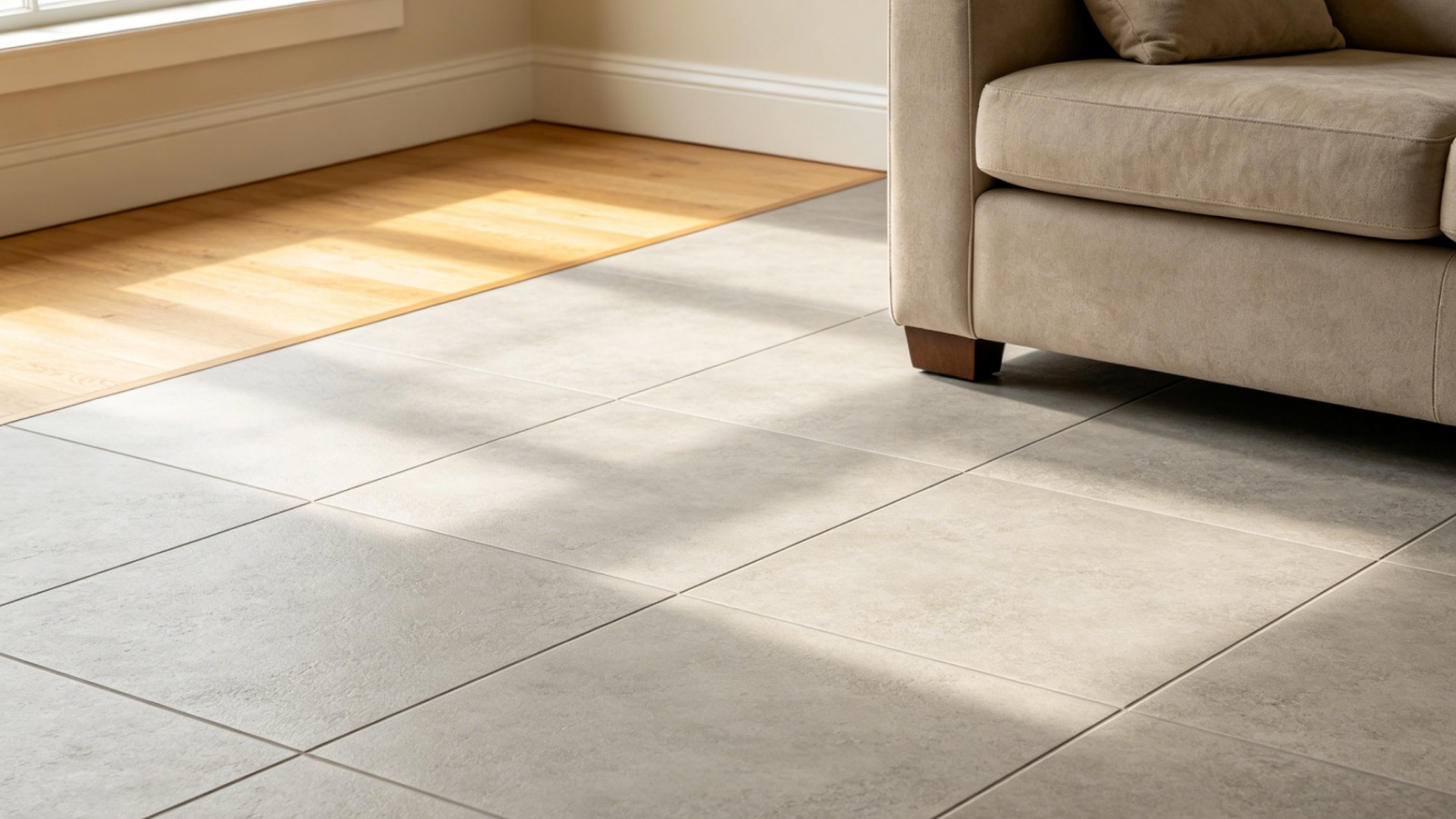
Endless Design Versatility and Visual Appeal
You do not have to sacrifice looks for strength. Advanced digital printing technologies allow porcelain floor tiles to replicate almost any high-end architectural material.
- Wood-Look: Get the warmth and texture of natural hardwood without the risk of water damage or warping.
- Stone-Look: Achieve the luxury of marble, travertine, or slate without the fragile nature and high maintenance of real stone.
- Custom Finishes: Available in matte, polished, or textured surfaces to match any global design trend.
Low Maintenance and Easy Cleaning
Keeping porcelain looking brand new requires minimal effort, saving you both time and money in the long run.
- No Sealing Required: Unlike natural stone, porcelain does not need regular chemical sealing to protect its surface.
- Simple Cleaning Routine: A quick sweep and a damp mop with warm water and mild soap are all it takes.
- Chemical Resistant: Standard household cleaners will not strip the color, fade the pattern, or damage the finish.
The Cons of Porcelain Tile to Consider
As a porcelain tile manufacturer and supplier, we believe in complete transparency. Truly understanding the pros and cons of porcelain tile: durability meets design means looking closely at the potential drawbacks before making your final decision.
Higher Initial Purchase Cost
Porcelain floor tiles generally come with a higher upfront price tag than standard ceramic options. The specialized manufacturing process, which involves firing highly refined, dense clay at extreme temperatures, naturally drives up production costs. While the initial investment is higher, the extended lifespan usually offsets the cost over time.
Heavy Weight and Installation Challenges
The incredible density of porcelain brings specific installation hurdles.
- Difficult to cut: Shaping these tiles requires specialized equipment, such as a wet saw equipped with a diamond blade.
- Labor-intensive: The sheer weight makes transporting and setting the tiles physically demanding.
- Pro installation needed: Due to these challenges, hiring experienced contractors is highly recommended over a DIY approach.
Cold and Hard Surface Characteristics
The same structural integrity that makes porcelain last for decades also makes it an unforgiving surface.
- Shatter risk: Dropped dishes or glasses will almost certainly break upon impact.
- Physical fatigue: Standing on such a rigid surface for long periods can cause discomfort without the use of anti-fatigue mats.
- Temperature: The material stays naturally cold. While ideal for warm climates, you may need to install radiant floor heating for comfort in cooler regions.
Potential Slipping Hazards When Wet
Highly polished porcelain can become dangerously slick when exposed to moisture. While the material offers incredible mold and mildew resistance, safety must remain a priority. If you are installing tiles in bathrooms, pool decks, or other outdoor spaces, it is crucial to select a matte or textured finish with a high slip-resistance rating to prevent accidents.
Porcelain Tile vs. Other Flooring Options
When evaluating the pros and cons of porcelain tile: durability meets design, it helps to see how it directly compares to other popular materials. As a porcelain tile manufacture and supplier, we see firsthand how different environments demand specific flooring solutions. Here is how porcelain floor tiles stack up against the competition.
Porcelain vs. Traditional Ceramic Tile
While both belong to the ceramic family, they perform very differently under stress.
- Material Composition: Porcelain is made from highly refined, dense clay fired at extreme temperatures. Standard ceramic uses less dense clay.
- Water Absorption: Porcelain is nearly waterproof, making it ideal for wet areas. Traditional ceramic is more porous and absorbs more moisture.
- Wear and Tear: Porcelain easily handles heavy foot traffic and resists chipping, whereas traditional ceramic is better suited for lighter residential use.
Porcelain vs. Natural Stone
Natural stone offers a classic, earthy look, but it requires significant ongoing upkeep.
- Maintenance: Stone requires regular chemical sealing to prevent stains and damage. Porcelain delivers the exact same high-end aesthetic but remains practically maintenance-free.
- Hygiene: Thanks to its completely non-porous surface, porcelain offers exceptional mold and mildew resistance in damp environments.
- Versatility: While both materials work outside, porcelain withstands harsh freeze-thaw cycles in outdoor spaces much better without cracking or fading.
Porcelain vs. Luxury Vinyl Tile (LVT)
LVT is a budget-friendly, easy-to-install option, but it lacks the permanence and structural integrity of real tile.
- Longevity: Porcelain floor tiles can easily last a lifetime. LVT typically wears out and needs replacing after 10 to 20 years.
- Surface Resilience: Porcelain cannot be easily scratched by pets or dented by heavy furniture, unlike softer vinyl materials.
- Property Value: While LVT is cheaper upfront, porcelain is a premium building material that adds higher long-term resale value to a property.
Quick Material Comparison
| Feature | Porcelain Tile | Ceramic Tile | Natural Stone | LVT |
|---|---|---|---|---|
| Durability | Extremely High | Moderate | High | Moderate |
| Water Resistance | Excellent | Good | Varies (Requires Sealing) | Excellent |
| Maintenance Level | Very Low | Low | High | Low |
| Expected Lifespan | 50+ Years | 20+ Years | 50+ Years | 10-20 Years |
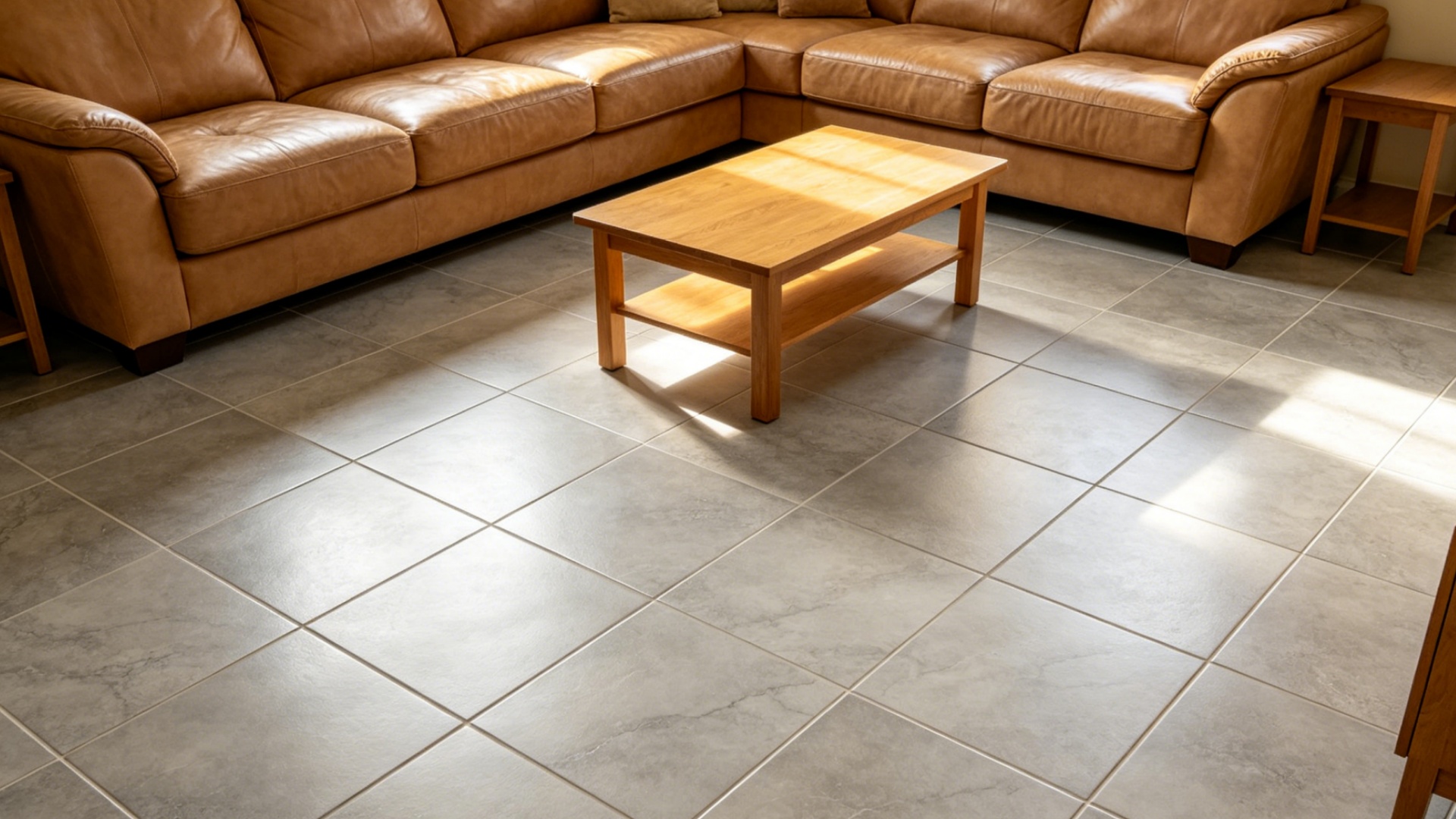
Best Application Scenarios for Porcelain Tile
When evaluating the pros and cons of porcelain tile: durability meets design most effectively in areas that demand both tough performance and visual appeal. Because we are a porcelain tile manufacture and supplier, we see firsthand exactly where these materials deliver the highest value for global homeowners and builders.
High-Traffic Kitchens and Entryways
Your kitchen and front entry take the hardest hits every single day. Between muddy shoes, dropped pots, and constant movement, you need flooring that fights back.
- Scratch Protection: Dropped keys, dragged chairs, or pet claws will not leave a mark.
- Heavy Load Ready: High-quality porcelain floor tiles easily support heavy kitchen appliances and relentless daily foot traffic without wearing down.
- Stain Defense: Spilled wine or cooking oils wipe away easily without leaving permanent damage.
Moisture-Prone Bathrooms and Showers
Bathrooms demand completely waterproof solutions. Standard flooring simply cannot survive constant humidity and direct water exposure.
- Zero Water Damage: Because it is forged from highly refined, dense clay, porcelain absorbs virtually no water.
- Hygienic Surface: The non-porous nature of the tile provides excellent mold and mildew resistance, keeping your showers and bathroom floors fresh and sanitary.
- Easy Upkeep: Soap scum and hard water stains clean off with minimal effort.
Durable Outdoor Patios and Walkways
Porcelain is not limited to interior rooms. It is engineered to survive harsh environmental elements, making it a premium choice for exterior upgrades.
- Weatherproof: The dense structure prevents water absorption, meaning the tiles will not crack during harsh freeze-thaw cycles.
- Fade Resistant: Direct sunlight and UV rays will not dull the finish over time.
- Seamless Transitions: Using matching tiles for both your interior rooms and your outdoor spaces creates a beautiful, unified look across your entire property.
Is Porcelain Tile the Right Choice for Your Project?
When weighing the pros and cons of porcelain tile: durability meets design perfectly, but the final decision always comes down to your specific project requirements. As a porcelain tile manufacture and supplier, we know that matching the right material to your specific environment is the key to a successful, long-lasting renovation.
Evaluating Your Budget and Installation Needs
Porcelain floor tiles are a premium investment. Because they are fired from extremely dense clay, they require specialized handling and preparation.
- Upfront Budgeting: Expect higher initial costs for both the materials and the labor compared to standard ceramics. However, the exceptional lifespan easily offsets these early expenses over time.
- Professional Installation: The heavy, hard nature of this material means DIY installation is not recommended. Hiring an experienced contractor ensures the tiles are cut and set correctly.
- Subfloor Preparation: Your subfloor must be perfectly level and rigid to support the heavy weight and prevent any future cracking.
Tips for Choosing the Perfect Style and Finish
Finding the right aesthetic is simple given the massive variety available on the global market, but functionality must guide your final choice.
- Focus on Texture: For wet areas or demanding outdoor spaces, always select a textured or matte finish to maximize slip resistance and safety.
- Embrace the Look: Wood-grain and natural stone patterns give you luxury aesthetics coupled with superior mold and mildew resistance.
- Edge Details: Look for rectified tiles. These are cut with absolute precision, allowing for ultra-thin grout lines and a clean, seamless appearance across your rooms.
